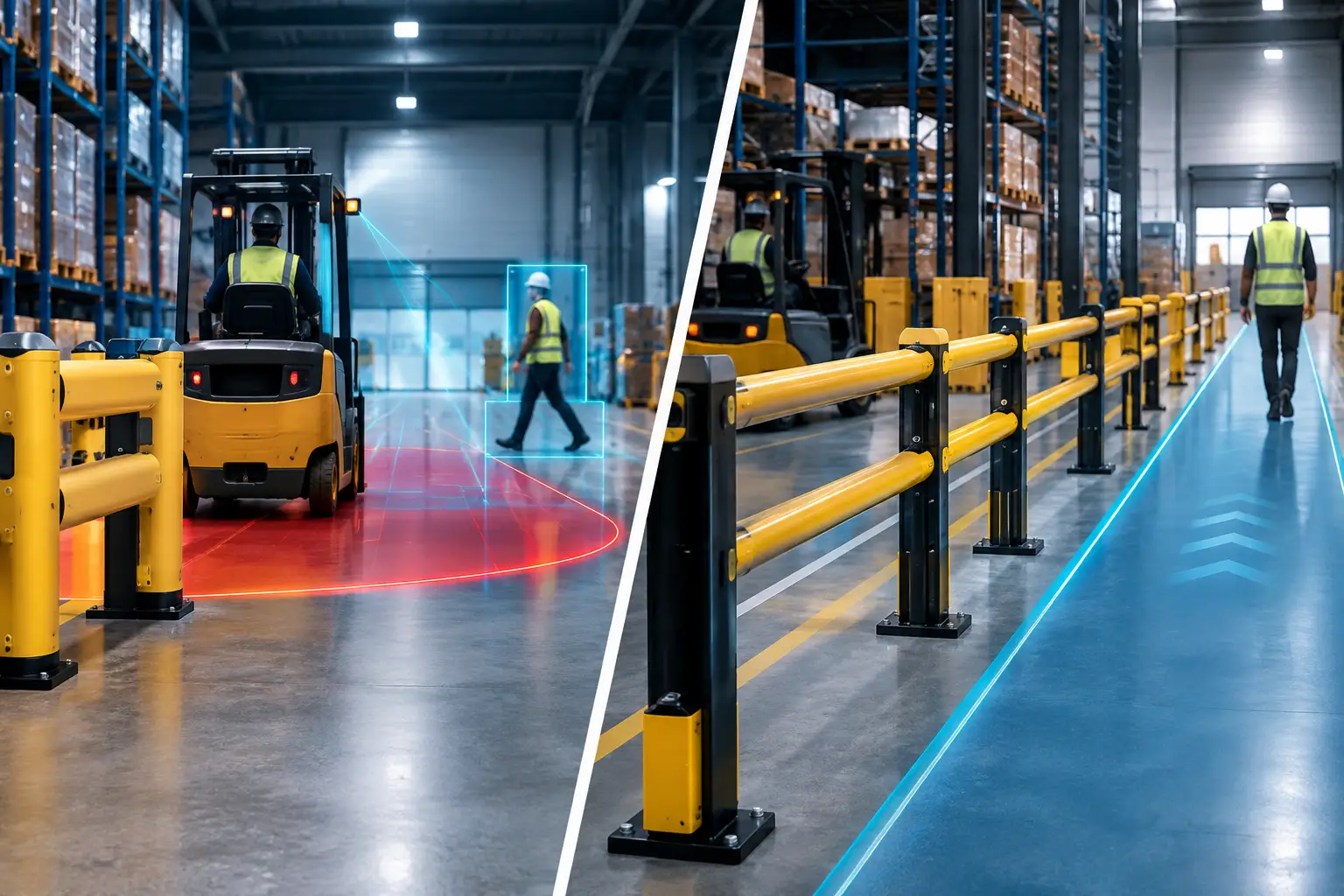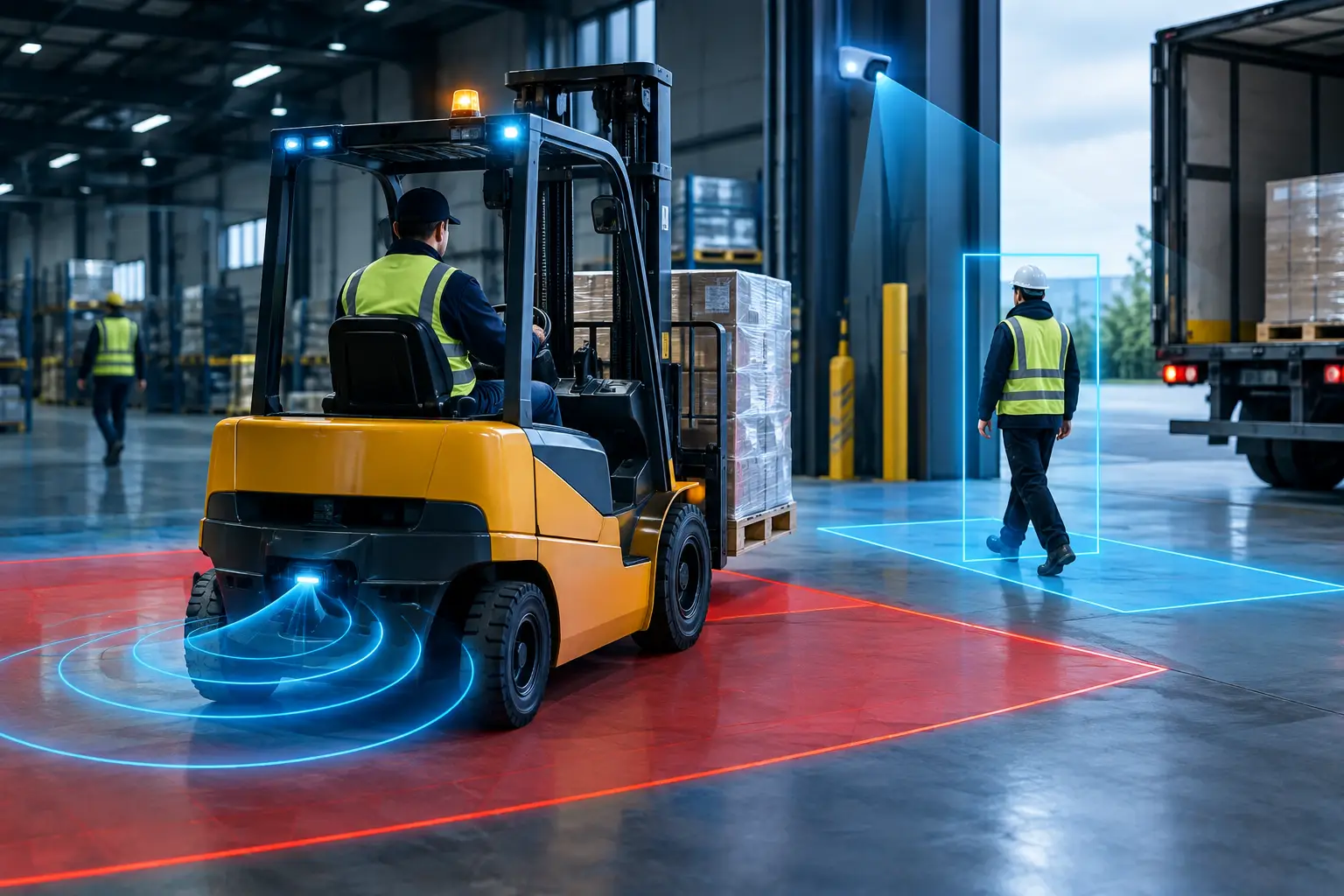

A pedestrian steps out from the end of a rack aisle, a forklift reverses with a load that blocks part of the driver’s view, and both have less than a second to react. In that moment, forklift blinking warning lights get more attention in warehouses because they create an immediate visual cue that cuts through noise, motion, and distraction.
Warehouses are full of competing signals. There are backup alarms, radios, conveyor noise, pallet movement, and workers focused on picking, scanning, and staging. Audible alerts still matter, but they do not always carry well through a busy facility. Visual warnings, especially blinking lights, tend to stand out faster because the human eye is naturally drawn to movement and change. That simple fact is one reason flashing visual alerts are now a standard part of many forklift safety strategies.
Why forklift blinking warning lights get more attention in warehouses
The answer starts with visibility. A steady light can blend into the background, especially in bright facilities or areas with fixed lighting overhead. A blinking warning light creates contrast. It changes state repeatedly, which makes it more noticeable to pedestrians and nearby drivers, even in peripheral vision.
That matters in real warehouse conditions. People are rarely standing still and looking directly at a forklift. They are walking between aisles, checking labels, wrapping pallets, or moving toward dock doors. A blinking light does not depend on someone hearing an alarm clearly or facing the truck directly. It gives a stronger chance of being noticed early enough to support a safer decision.
There is also a behavioral factor. Workers quickly become used to static conditions. They may stop consciously registering fixed signs, painted floor markings, or constant ambient noise after repeated exposure. A flashing signal interrupts that pattern. It tells the brain that something is changing nearby and that attention is required now, not later.
Visual alerts solve a real warehouse problem
In many facilities, forklift incidents happen not because operators ignore safety rules, but because people and vehicles enter the same space under time pressure. Sightlines are limited. Loads block views. Corners create blind spots. Intersections near staging zones become congested. During peak periods, even well-run operations can have moments where risk rises sharply.
Blinking warning lights help close that gap between hazard and response. They can project visible light on the floor ahead or behind the truck, signal vehicle movement at intersections, and reinforce operator presence in shared traffic zones. Used correctly, they support awareness before a near miss turns into an injury, equipment strike, or rack impact.
This is where many safety investments either work or fail. If an alert is technically present but not noticed, its value drops fast. Getting attention is not a cosmetic feature. It is the point.
Why motion-based signals are easier to detect
A blinking light creates a pulse. That pulse is easier to detect than a constant source because the visual system is tuned to spot motion and change. In a warehouse, where workers may only catch a partial view of an approaching forklift, that difference matters.
For example, a pedestrian crossing an aisle opening may not see the full vehicle body right away. They may, however, catch a flashing blue or red light on the floor before the forklift reaches the crossing. That extra fraction of a second can change the outcome. The worker slows down. The operator sees the pedestrian hesitate. Both gain time.
The same principle applies at loading areas, battery charging zones, and high-turn corners. In each case, the light is not replacing good driving, traffic control, or physical separation. It is strengthening situational awareness where people are most exposed.
Where blinking warning lights perform best
Not every warehouse risk is the same, and warning lights should not be treated as a one-size-fits-all control. Their strongest value usually appears in environments with mixed traffic, frequent blind spots, and elevated ambient noise.
Busy cross aisles are one example. These are common conflict points because forklifts and pedestrians often approach from different directions with limited visibility. A blinking light gives advance notice before the vehicle itself is fully visible.
Dock areas are another. Trailer movement, staging pressure, and multiple simultaneous tasks can create a crowded and distracting environment. Visual alerts help identify active forklift movement even when workers are focused on loading, scanning, or load checks.
Facilities with seasonal peaks also benefit. During surges, temporary staff, higher traffic density, and tighter turnaround expectations can increase incident potential. A clear, high-visibility warning system helps standardize safety communication when experience levels vary.
What blinking lights can and cannot do
Blinking warning lights are effective, but they are not a substitute for a full safety system. They improve detection, not judgment. They make vehicle presence more obvious, but they do not physically stop a collision.
That distinction matters for managers choosing controls. In some areas, a warning light may be enough to strengthen an already disciplined traffic plan. In others, the risk may justify more layers, such as pedestrian barriers, speed controls, intersection alerts, or AI-enabled detection systems.
It also depends on the environment. In a low-light warehouse, certain visual warnings may stand out clearly. In a brightly lit facility with reflective surfaces, the light pattern, mounting position, and color need more careful selection. Poor placement can reduce effectiveness. So can overuse. If every device flashes in every zone, workers may stop responding with the urgency the system was meant to create.
Choosing a warning light that earns attention
The best systems are not chosen by catalog alone. They are selected based on traffic behavior, line of sight, operating speed, and the specific interaction between people and equipment.
Light color plays a role, but so do flash pattern and placement. A projected floor spot may work well behind reversing trucks. A directional arc may help communicate exclusion zones around turning equipment. A beacon mounted too high, too low, or in the wrong orientation may still flash, but fail to warn the people who need to see it first.
Durability also matters more than many teams expect. Warehouses are harsh environments. Vibration, dust, impact, and temperature shifts can reduce product performance over time. If a light becomes dim, misaligned, or unreliable, workers quickly lose trust in it. Once trust drops, response drops with it.
That is why implementation should be practical, not theoretical. Safety managers need solutions that hold up in daily use, fit existing truck fleets, and support maintenance without constant adjustment.
The operational case for better visual warnings
When a forklift incident occurs, the cost is never limited to the immediate event. There is injury risk, possible equipment damage, rack impact, product loss, investigation time, disruption to throughput, and pressure on teams already managing tight schedules. Even a near miss can slow confidence and productivity in a high-traffic area.
Blinking warning lights are a relatively focused intervention, but their effect can be broader than it first appears. They support safer behavior at the point of movement. They reinforce traffic discipline. They help facilities signal that pedestrian protection is active, visible, and taken seriously.
For decision-makers, that means the conversation is not only about compliance. It is about preventing downtime, protecting infrastructure, and reducing the variability that comes from unmanaged risk. Safety and operational continuity are closely connected on the warehouse floor.
Why integration matters more than the device alone
The strongest results usually come when blinking lights are part of a wider safety strategy. That includes route design, speed management, operator training, pedestrian awareness, signage, and physical protection where separation is needed.
A consultative approach tends to work best because every facility has different constraints. Some need help at intersections. Some need stronger dock protection. Others need a layered approach across forklift travel paths, rack ends, and mixed-use zones. A provider with engineering depth can assess where visual alerts will have the greatest impact and where additional controls are necessary.
This is where industrial experience matters. A safety solution should fit the workflow, not fight it. SysGuard approaches this with the understanding that effective prevention must work in real operations, under real pressure, with equipment that runs every day.
Forklift blinking warning lights get more attention in warehouses because they match how people actually notice danger – through movement, contrast, and immediate visual change. When they are selected well and integrated into a broader safety plan, they do more than flash. They give workers a better chance to react, and that is often where accidents are prevented before they begin.