A loading dock can appear stable right up to the moment a trailer moves unexpectedly. A forklift may be inside the trailer, a worker may be crossing the dock plate, and a few inches of movement can turn a routine transfer into a serious incident. That is why understanding what is a vehicle restraint system matters to every facility responsible for loading and unloading operations.
A vehicle restraint system is a dock safety device that physically secures a truck or trailer at the loading bay while materials are being transferred. It helps prevent the vehicle from pulling away, creeping forward, or moving away from the dock before loading is complete. Used alongside clear procedures, dock communication, and properly maintained equipment, it is one of the most effective controls for reducing loading bay risk.
What Is a Vehicle Restraint System?
A vehicle restraint system, often called a trailer restraint or dock restraint, is installed at the loading dock to hold a trailer in position. Most systems engage with the trailer’s rear impact guard, also known as the ICC bar or underride guard. Once engaged, the restraint limits unintended vehicle movement until personnel have completed the loading or unloading process.
The principle is straightforward: the trailer should not leave the dock while a forklift, pallet jack, worker, or materials handling equipment is still operating across the dock opening. However, the safety value goes beyond holding a vehicle in place. A properly selected restraint system creates a controlled sequence for vehicle arrival, docking, loading, release, and departure.
This is particularly important in high-throughput warehouses, distribution centers, manufacturing facilities, and logistics hubs, where loading bays may handle dozens of vehicles per shift. Repetition can create complacency. Physical restraint provides a dependable layer of protection when verbal instructions, hand signals, or driver awareness alone are not enough.
Why Unrestrained Trailers Create Loading Bay Hazards
The most serious risk is premature departure. A driver may believe loading is complete and pull away while a forklift is still inside the trailer. This can create a gap between the trailer and dock, causing equipment or workers to fall. The consequences can include severe injury, damaged forklifts, damaged dock equipment, product loss, and lengthy operational disruption.
Trailer creep is another common problem. Repeated forklift entry and exit can gradually push a trailer away from the dock, especially where brakes are poorly applied, surfaces are uneven, or the trailer is lightly loaded. Wheel chocks can help in certain operating conditions, but they rely heavily on correct placement, surface conditions, and consistent human action. They may also be difficult to use effectively in wet, uneven, or high-traffic loading areas.
A restraint system provides a more positive control by mechanically securing the trailer. It does not replace good docking practices, but it reduces dependence on individual behavior at a critical point of risk.
How Vehicle Restraint Systems Work
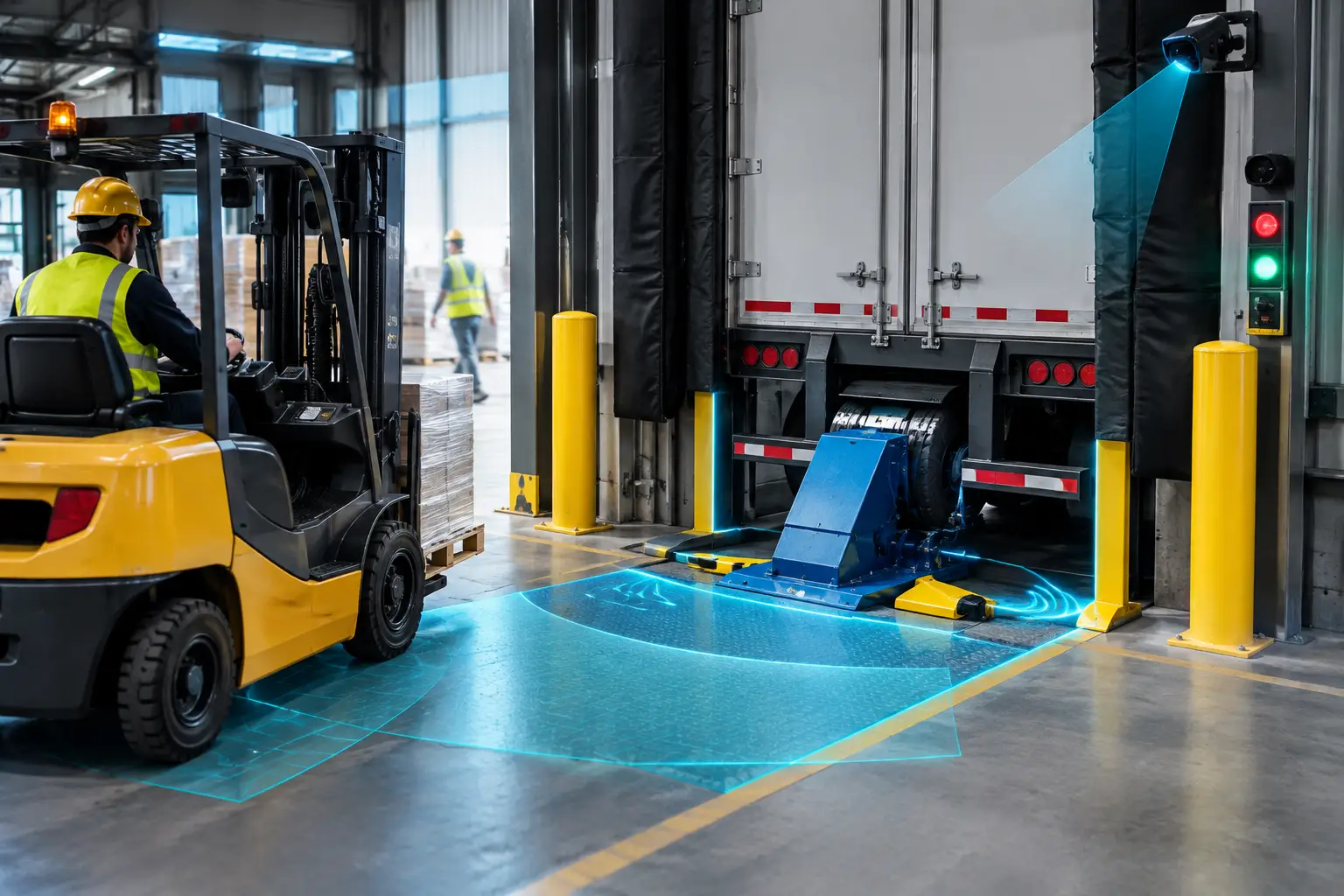
Most vehicle restraints are mounted to the dock face or positioned at ground level. When a truck reverses into the loading position, the system detects or is activated to engage the trailer’s rear impact guard. A hook, barrier, or other mechanical engagement device then holds the trailer from moving away from the dock.
The system typically includes visual indicators for the driver and dock team. For example, an external signal can instruct the driver to remain in place, while an internal indicator confirms to warehouse personnel that the restraint is engaged and loading can begin. When loading is complete, the dock team releases the restraint, changes the signal, and allows the driver to depart.
This sequence matters. The best loading dock safety measures make safe behavior easier to follow and unsafe actions harder to perform. Clear interlocked communication reduces uncertainty between drivers and warehouse teams, particularly when they do not share the same language, employer, or shift schedule.
Common Types of Trailer Restraints
The appropriate system depends on the trailers visiting the facility, dock design, traffic volume, operating conditions, and the level of control required. Common options include:
- Hook-style restraints, which capture the trailer’s rear impact guard and prevent it from pulling forward.
- Barrier-style restraints, which rise in front of the trailer’s rear tires or impact guard area to limit movement away from the dock.
- Automatic restraints, which engage with minimal operator intervention and are suited to frequent, repeatable dock activity.
- Manual or semi-automatic systems, which may be practical for lower-volume operations where equipment compatibility and operating discipline can be closely managed.
No restraint type is universally suitable. Some trailers have damaged, missing, unusually high, or non-standard rear impact guards. Facilities receiving a mixed fleet should assess compatibility carefully rather than assuming one system will secure every vehicle. In some cases, a combination of restraint technology, wheel chocks, dock procedures, and traffic controls may be required.
What Risks Does a Vehicle Restraint System Help Control?
A restraint system is designed primarily to address unintended trailer movement at the dock. It can reduce the likelihood of early truck departure, trailer creep, and separation between the trailer and dock leveler during material transfer.
It also supports safer forklift operation. Forklift drivers frequently travel between the warehouse floor and trailer bed, often carrying heavy palletized loads with limited visibility. A stable trailer position helps keep the dock leveler properly supported and reduces the chance of sudden changes in the travel path.
Beyond injury prevention, restraint systems can protect assets. A trailer pulling away can damage dock levelers, dock doors, bumpers, forklifts, racking near the loading area, and the building structure itself. Avoiding one serious dock incident can prevent significant repair costs and unplanned downtime.
For operations leaders, this is an important distinction: loading bay safety is not separate from productivity. Incidents interrupt schedules, delay outbound orders, consume management time, and place pressure on already tight transport windows. Effective controls protect people first while helping operations remain predictable.
Selecting the Right System for Your Facility
A vehicle restraint should be selected through a site-specific risk assessment, not a catalog comparison alone. Start by reviewing the types of vehicles using each dock. Consider trailer rear guard condition and geometry, suspension behavior, wheelbase variation, loading frequency, and whether vehicles arrive from multiple transport providers.
Dock conditions also matter. Evaluate approach gradients, pavement quality, drainage, bay space, dock leveler type, and exposure to rain, debris, or impact. A restraint must be positioned correctly and remain accessible for inspection and maintenance. Poor installation can compromise performance even when the equipment itself is well designed.
The operating process deserves equal attention. Who confirms the trailer is secured? What does the driver see outside the dock? What signal does the forklift operator see inside? What happens if the restraint cannot engage because the trailer is incompatible or the rear guard is damaged? These questions should have clear, documented answers before the system enters service.
Integration With Other Dock Safety Controls
Vehicle restraint systems work best as part of a layered loading bay safety strategy. Dock lights and communication signals help coordinate drivers and dock teams. Dock levelers provide a controlled bridge between the facility and trailer. Wheel guides help vehicles align with the dock, while barriers and markings can separate pedestrians from vehicle paths.
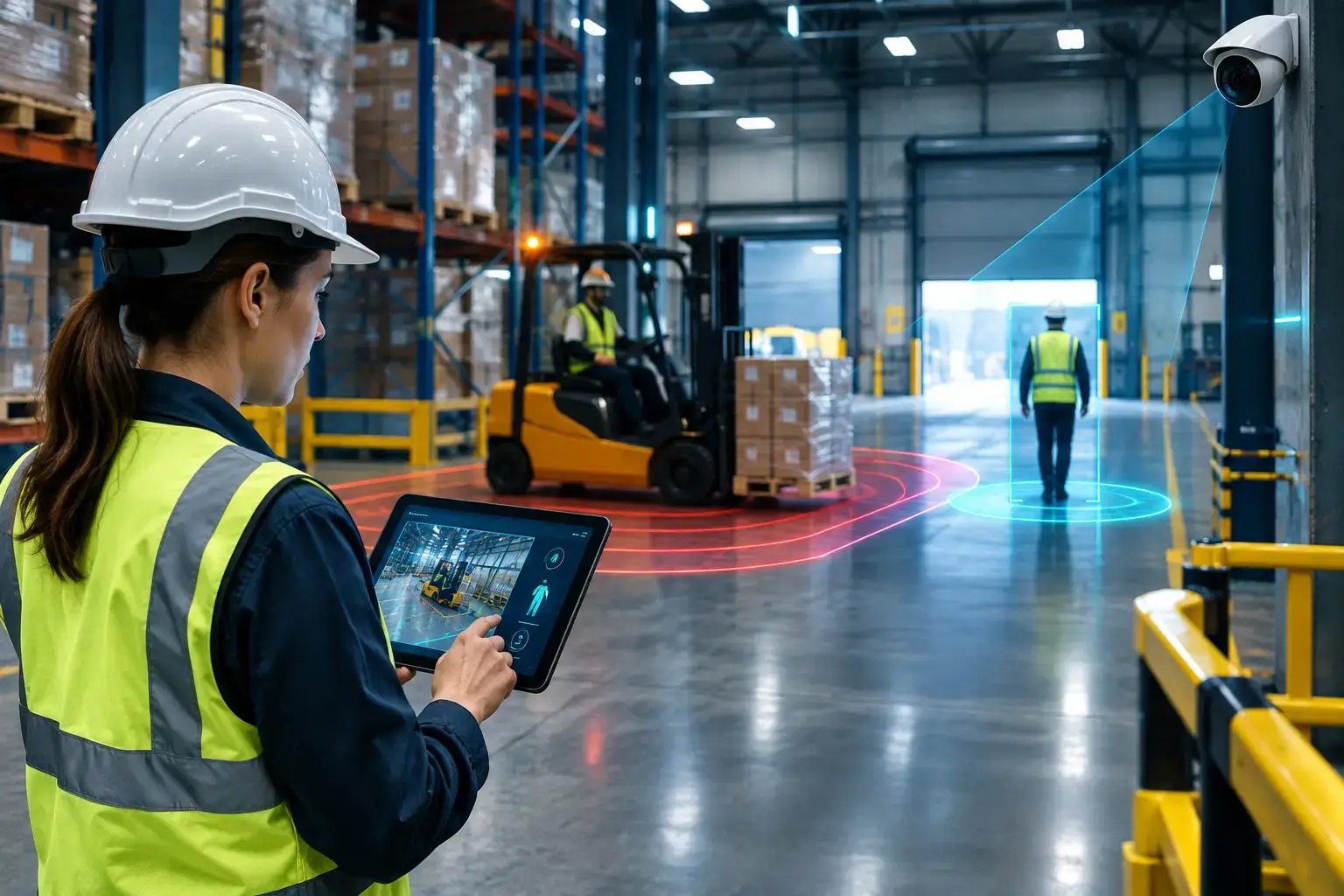
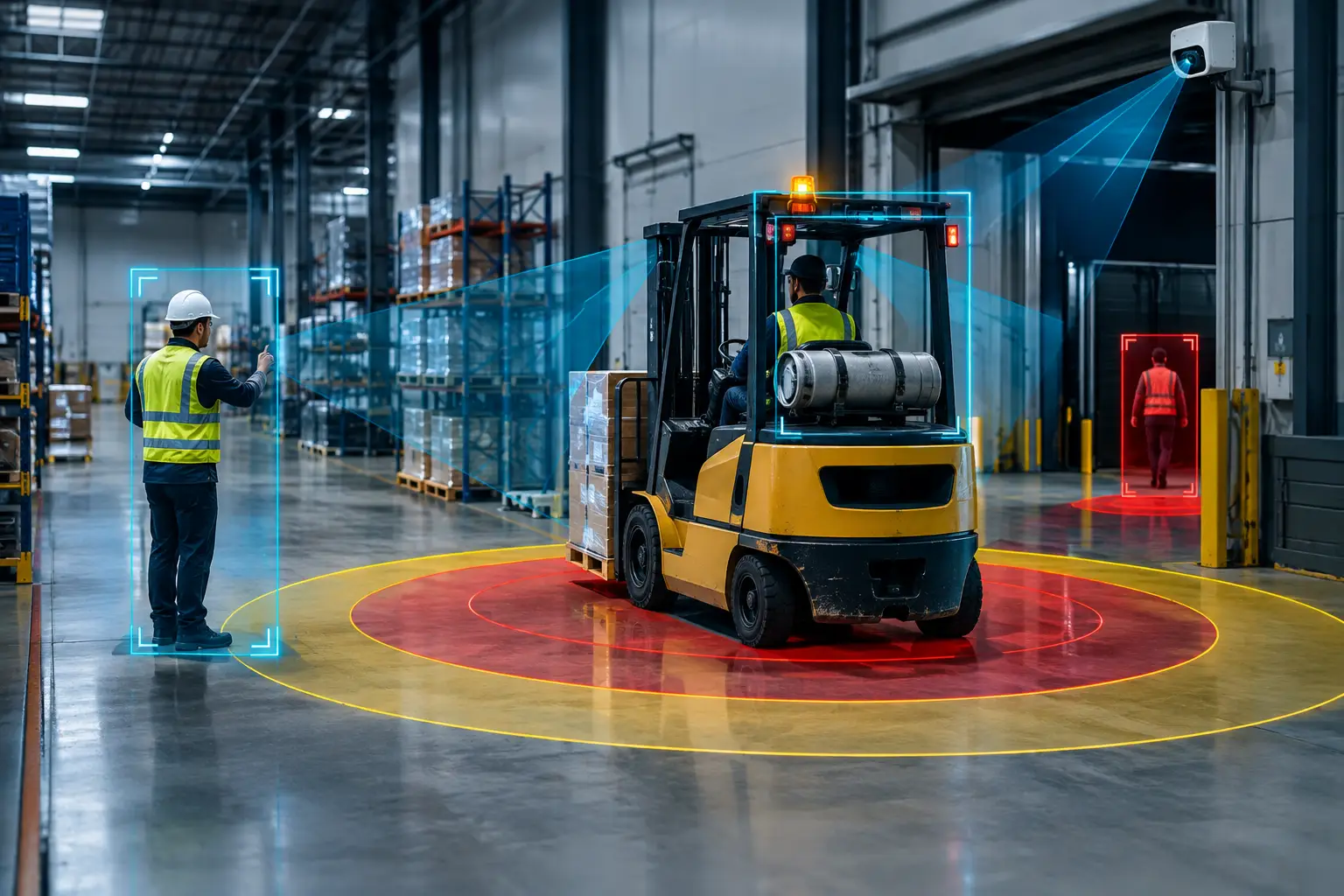
For higher-risk operations, intelligent warning systems and safety monitoring can provide additional visibility around loading activity. But technology should support a clear operating process, not compensate for one that is poorly defined. Workers need training on normal operation, warning signals, exceptions, and reporting procedures when equipment is damaged or does not engage correctly.
Inspection, Maintenance, and Daily Use
A restraint system is only effective when it is functional and consistently used. Before each shift or according to site procedures, teams should check for visible damage, debris, bent components, worn engagement parts, damaged signals, and issues with the dock face or mounting area. Any condition that affects engagement should be addressed before loading continues.
Planned maintenance is equally important. Moving mechanical parts, sensors, electrical components, and external signaling equipment are exposed to impact, weather, and continuous use. Regular servicing helps identify wear before it causes a failure or forces a dock out of operation.
Training should focus on the sequence rather than simply telling employees to use the device. Drivers need to understand external stop and release signals. Dock teams need to verify engagement before beginning transfer. Forklift operators need to recognize when loading must stop. Supervisors need an escalation process for incompatible trailers and damaged restraint points.
A vehicle restraint system is not just a piece of dock equipment. It is a practical commitment to preventing one of the most avoidable hazards in material handling. When the trailer is secured, signals are understood, and the team follows a consistent process, the loading dock becomes a more controlled place to work – and every worker has a better chance of returning home safely after the shift.