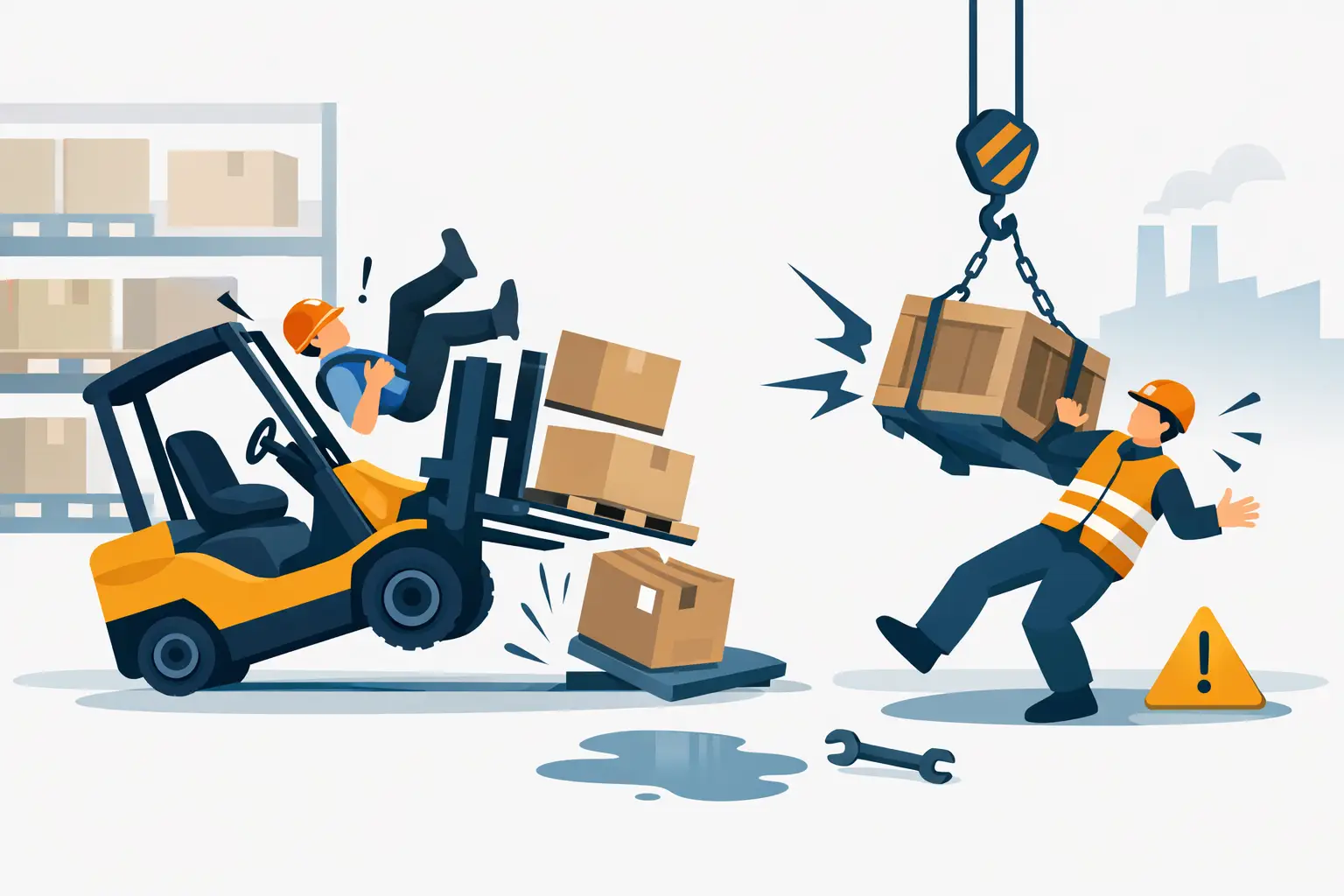
A forklift tips in a warehouse aisle, a pedestrian is struck at a blind corner, or a dock edge gives way during loading. These are not random events. When safety leaders ask what causes forklift accidents, the answer is usually a chain of preventable conditions, unsafe behaviors, and weak controls that were allowed to line up.
Forklift incidents rarely come from a single mistake. More often, they happen when operator decisions, site layout, equipment condition, and traffic management do not work together. For warehouse managers, EHS leaders, and operations teams, that matters because preventing accidents is not only about compliance. It is about protecting people, avoiding downtime, and keeping facilities productive under real operating pressure.
What causes forklift accidents most often?
The most common causes are well known across industrial facilities: excessive speed, poor visibility, inadequate training, unstable loads, distracted operation, weak pedestrian separation, and poorly controlled loading bay activity. The hard part is not identifying these risks. The hard part is controlling them consistently in busy environments where throughput targets and safety requirements compete for attention.
A forklift is powerful, compact, and highly maneuverable. Those same strengths also create risk. It can turn quickly, carry heavy loads that block sightlines, and operate in areas where people, pallets, trucks, and racking are all competing for space. Small lapses become serious incidents fast.
Operator behavior under pressure
One of the clearest contributors to forklift accidents is operator behavior shaped by production pressure. Speeding, harsh cornering, carrying loads too high, and skipping pre-use checks often happen when teams are trying to recover time or clear backlogs.
This does not mean operators alone are the problem. In many facilities, the system around them makes unsafe choices more likely. If travel routes are congested, schedules are tight, and supervisors focus only on output, even trained operators may take shortcuts. Safety performance depends on the environment management creates as much as the actions of the individual driver.
Inadequate or inconsistent training
Training gaps remain a major cause of incidents, especially in mixed-use facilities with changing staff, temporary workers, or multiple shift teams. Initial certification is not enough if site rules are unclear or if operators move into new layouts, different truck types, or higher-risk loading conditions.
Effective training is specific to the actual workplace. Operators need more than general driving principles. They need to understand turning radius in narrow aisles, pedestrian interaction points, dock approach rules, battery charging hazards, and what to do when visibility is compromised. Refresher training also matters after near misses, equipment changes, or layout modifications.
Visibility and blind spots are major accident drivers
Forklifts operate with built-in visibility limits. Masts, loads, racking, corners, trailers, and stacked inventory all reduce what the operator can see. In many struck-by incidents, neither the pedestrian nor the driver had enough time to react because the line of sight was already lost.
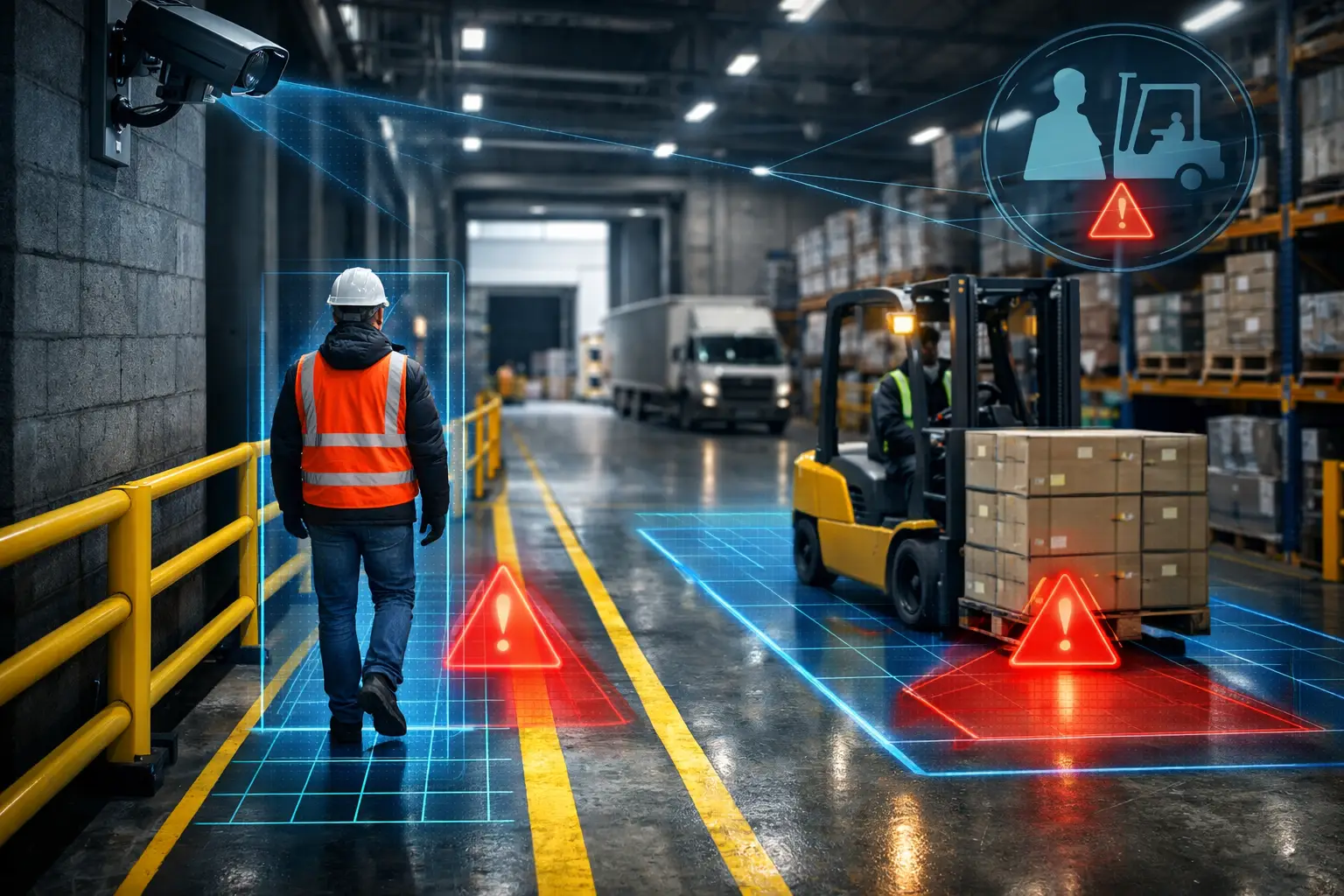
This is why visibility risk should be treated as a site design issue, not just a driver issue. Mirrors and warning signs help, but they are not enough on their own in high-traffic areas. Intersections, doorways, and rack ends need active control measures, especially where pedestrian routes cross vehicle paths.
Mixed traffic without real separation
Many facilities mark pedestrian walkways on the floor and assume the problem is solved. In reality, painted lines do very little when forklift traffic is frequent, noise levels are high, and operators are carrying loads that block forward vision.
Physical separation is far more reliable than procedural separation. Barriers, controlled crossings, speed management, and audible or visual warning systems reduce dependence on perfect human attention. That matters because warehouses are dynamic environments. People change direction, loads shift, and distractions happen.
Reversing and cornering risk
A large number of forklift incidents occur while reversing or turning. Rear-end swing is often underestimated, particularly in tight aisles or staging areas. Operators may clear the front of the truck but strike a pedestrian, rack upright, guardrail, or stored product with the rear.
Cornering creates another common failure point. If speed is too high or the load is elevated, the forklift becomes less stable. Add uneven flooring or a sudden steering input, and the risk of tip-over rises sharply.
Load handling mistakes create serious instability
Loads are central to what causes forklift accidents because the truck’s stability depends on how the load is picked, positioned, and transported. A forklift can appear stable right up until the load center shifts outside the safe range.
Common problems include overloading, carrying uneven pallets, lifting damaged loads, and traveling with the forks too high. Operators may also use the wrong attachment for the task or fail to secure awkward materials properly. These errors increase the chance of dropped loads, tip-overs, and collisions with racking or infrastructure.
The trade-off is that fast-moving operations often want flexible handling. But flexibility without load discipline creates avoidable exposure. Clear load standards, pallet quality control, and operator coaching are more effective than relying on judgment alone in the moment.
Site conditions often set the stage for accidents
Forklift incidents do not only come from driving behavior. The condition of the workplace itself often sets the stage.
Uneven floors, potholes, dock plates in poor condition, wet surfaces, poor lighting, and cluttered travel lanes all increase risk. A small bump can destabilize a raised load. A dark doorway can hide a pedestrian. A blocked aisle can force an operator into an unsafe maneuver.
Loading dock hazards
The loading bay is one of the highest-risk zones in any material handling operation. Forklifts move between building and trailer, often under time pressure and with limited clearance. If trailer restraints are inadequate, dock levelers are damaged, or wheel chocks are used inconsistently, the consequences can be severe.
Drive-off and creep incidents remain a serious concern. A trailer that shifts unexpectedly during loading can leave a gap or height difference that the forklift cannot recover from. That is not simply a driver problem. It is a control problem involving procedures, equipment condition, and communication between dock and transport teams.
Poor maintenance and missed inspections
Mechanical issues contribute to accidents more often than many organizations admit. Worn tires, weak brakes, steering faults, hydraulic leaks, damaged forks, and non-functioning lights or alarms all reduce the operator’s margin for error.
Daily inspections are meant to catch these issues before the truck enters service. But if pre-shift checks are rushed, undocumented, or treated as routine paperwork, defects stay in operation longer than they should. A reliable maintenance system is part of accident prevention, not a separate maintenance concern.
The hidden cause: weak safety systems
If the same near misses keep happening at the same aisle junction, dock door, or pedestrian crossing, the underlying problem is usually systemic. The facility is relying too heavily on human caution instead of designing risk out of the process.
This is where many organizations make the wrong assumption. They respond to an incident with another reminder, another toolbox talk, or another warning sign. Those steps have value, but only up to a point. High-risk areas need engineered controls that perform consistently, even when operators are tired, visibility is poor, or traffic spikes unexpectedly.
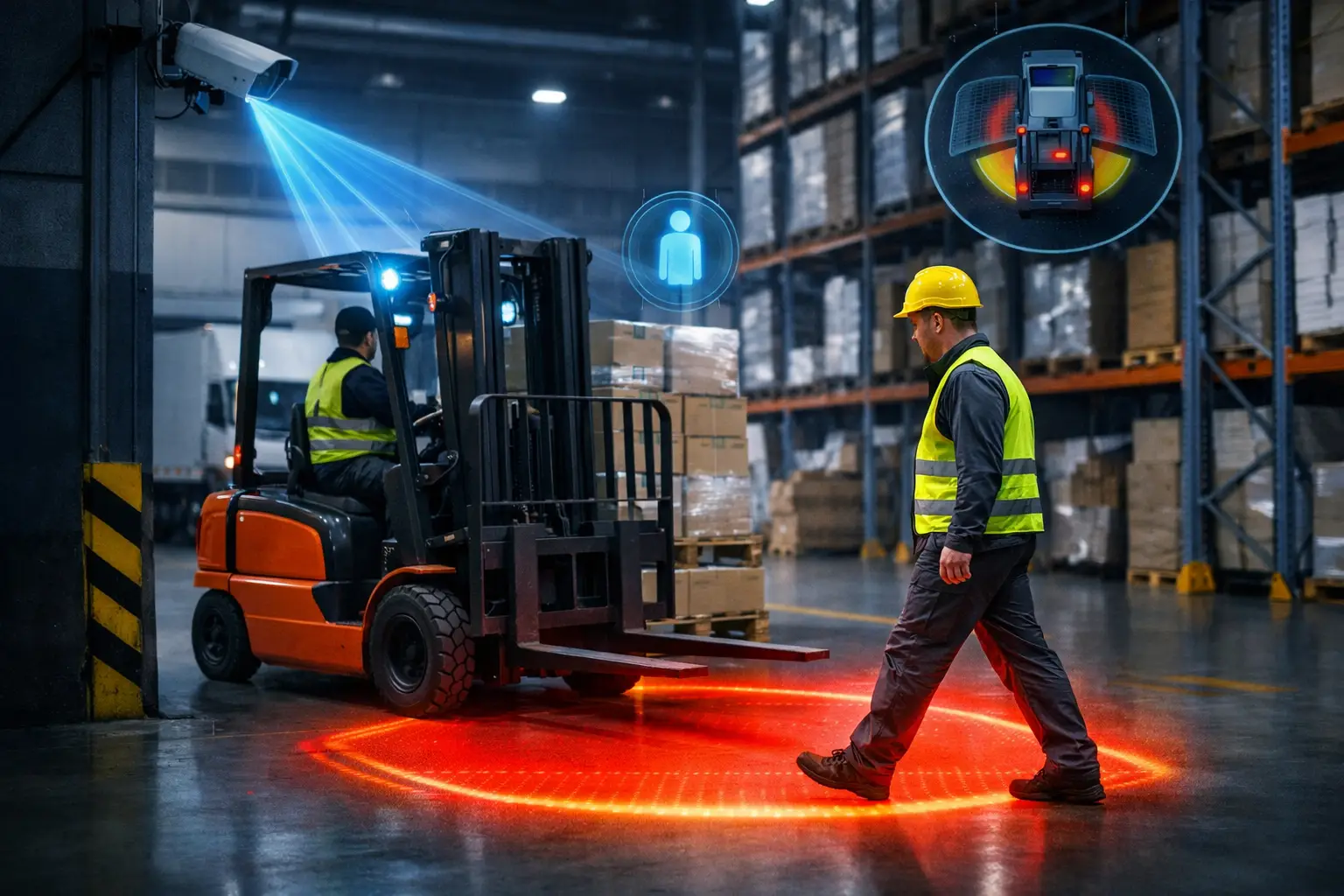
In practice, that can mean better traffic segregation, impact-resistant barriers, dock protection systems, sensor-based warnings, or AI-assisted detection in known conflict zones. The right control depends on the site, the traffic pattern, and the level of exposure. What works in a narrow-aisle warehouse may not be enough for a busy loading bay or a manufacturing plant with shared routes.
How to reduce the causes of forklift accidents
The most effective approach is to stop treating forklift safety as a training issue only. It is an operational design issue.
Start with where incidents are most likely, not where rules are easiest to write. Review near misses, congestion points, reversing zones, dock transitions, and pedestrian crossings. Look for repeated patterns. If operators regularly slow down at one intersection, there is probably a visibility or layout problem there. If rack damage keeps appearing in one aisle, clearance, speed, or turning space may be inadequate.
Then build layered protection. Training should remain strong, but it should be backed by physical barriers, traffic controls, warning systems, maintenance discipline, and clear operating standards. Technology can strengthen these controls when applied to specific hazards rather than installed as a generic fix.
For many facilities, the real improvement comes when safety is measured the same way output is measured. That means tracking near misses, impact events, recurring damage, and control failures before they become injuries. It also means giving site teams practical support to correct design weaknesses, not just reminding them to be careful.
At SysGuard, this is the principle behind modern forklift safety: accidents happen when risk is left unmanaged at the point of movement. The goal is not to ask people to be perfect. It is to build an environment where the safer action is also the easier action.
Every worker deserves to return home safely every day. If your forklifts operate in tight spaces, near pedestrians, or around loading bays, the question is not only what causes forklift accidents. The better question is which risks in your facility are already visible, and how soon you are prepared to control them.