A near miss at a warehouse cross-aisle rarely looks dramatic in the moment. A pedestrian steps back. A forklift brakes hard. Work resumes. But those seconds reveal the real issue – many facilities still rely on operator awareness alone in environments where visibility, speed, noise, and traffic density keep working against people. The best forklift safety systems are designed to reduce that dependence on human reaction and create more controlled, predictable movement on the floor.
For warehouse managers, EHS leaders, and operations teams, the question is not whether safety technology helps. It is which systems address the actual risks in your site, and how they work together without slowing throughput. That distinction matters, because a forklift safety upgrade should do more than add alarms. It should reduce collision exposure, protect assets, support safer driver behavior, and fit the way your operation runs every day.
What the best forklift safety systems actually do
The most effective systems solve specific risk points. They are not simply accessories mounted on trucks. They are controls that improve visibility, warn people earlier, reduce blind-spot exposure, separate vehicles from pedestrians, and help supervisors identify unsafe patterns before they turn into incidents.
In practice, that usually means combining several layers. A warning light may help at intersections, but it will not detect a pedestrian stepping from behind racking. A proximity alert may warn of a person nearby, but it will not physically guide traffic flow through a congested pick area. Vision AI can improve risk detection and monitoring, but it still works best when paired with floor-level controls, signage, barriers, and disciplined site design.
The best forklift safety systems are rarely a single product. They are a coordinated approach built around the site’s traffic profile, pedestrian exposure, layout constraints, and operating tempo.
The core forklift safety systems worth evaluating
Proximity warning systems
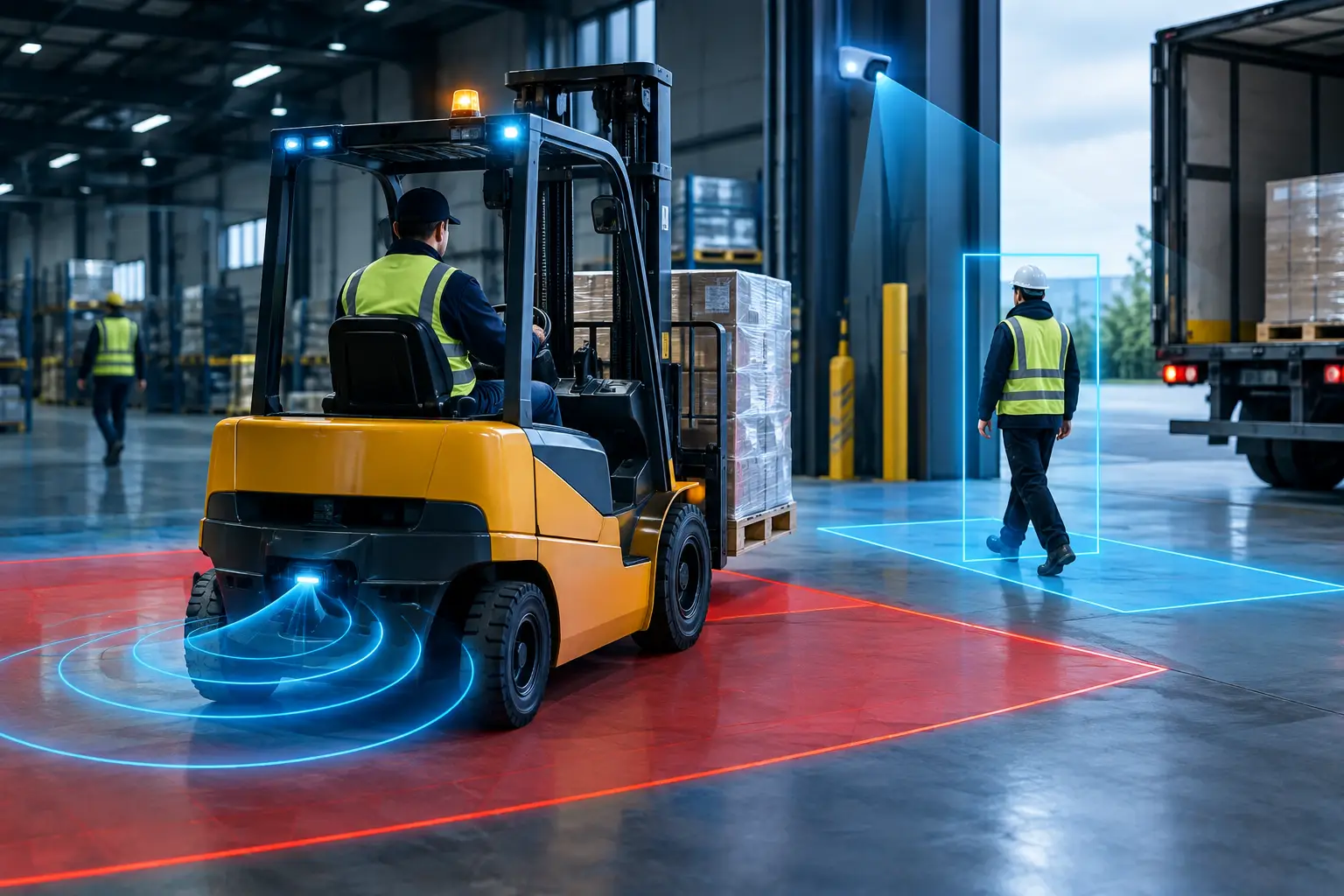
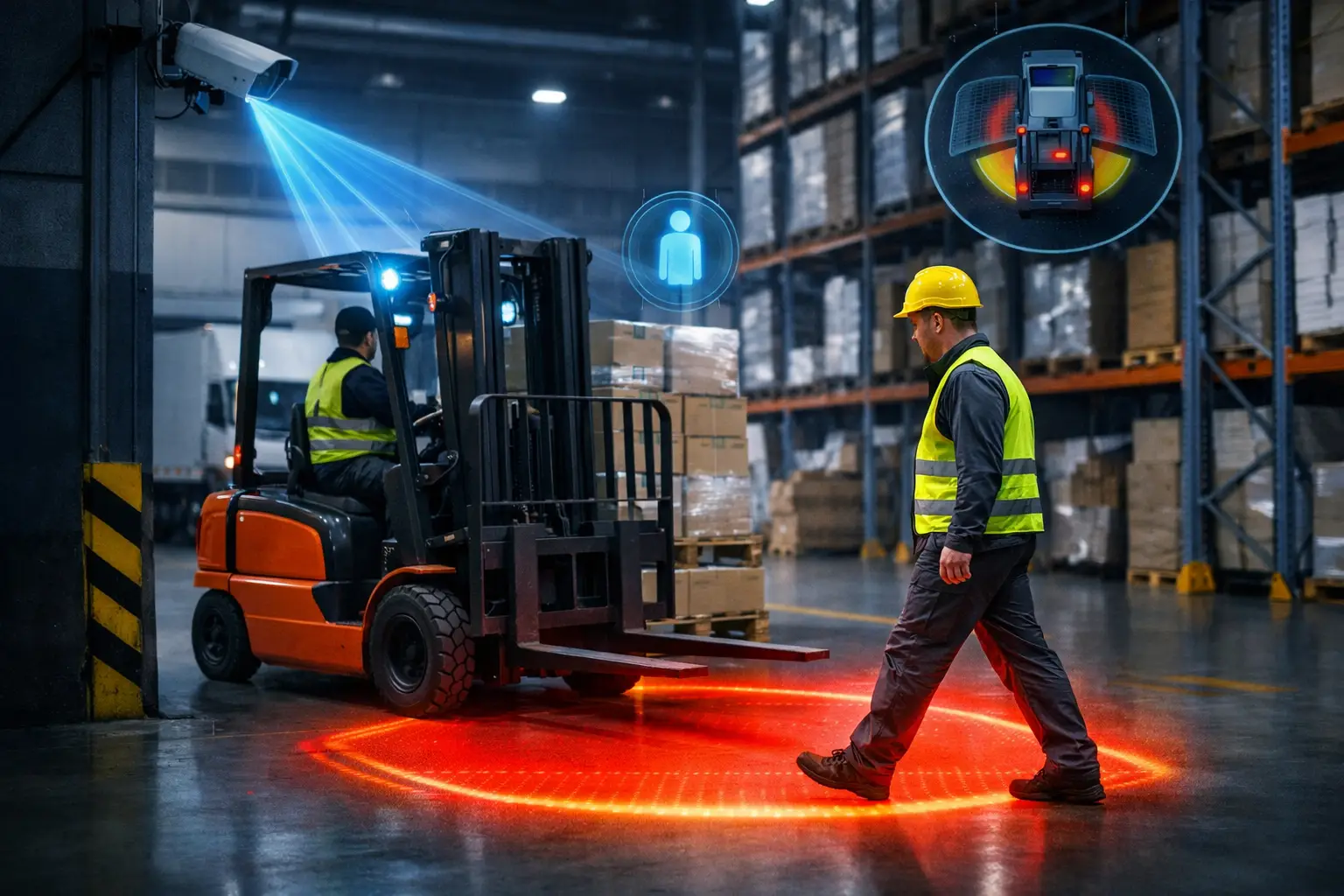
These systems are often the first place companies start, for good reason. When forklifts and pedestrians operate in the same zones, proximity detection can provide early alerts before a person enters a dangerous distance. Depending on the setup, alerts may be directed to the operator, the pedestrian, or both.
Their value is clearest in busy facilities with frequent crossing movements, staging areas, or mixed traffic around loading lanes. The main trade-off is that performance depends heavily on configuration. If detection ranges are too broad, alarms become background noise. If they are too narrow, the warning comes too late to be useful. Good implementation requires careful tuning to the operating environment.
Audible and visual alert systems
Blue spot lights, red danger zone lights, strobe alerts, and directional warnings are common for a reason. They are simple, visible, and relatively easy to deploy across fleets. In areas with obstructed sightlines or high ambient noise, visual projection can give pedestrians a clearer signal that a vehicle is approaching before the forklift itself is visible.
Still, these are support controls, not complete solutions. They improve awareness, but they do not interpret context. If your site has repeated pedestrian-forklift interactions at blind corners, alert systems help, but they should not be treated as the only safeguard.
Safety floor projection at crossings and hazard zones
Projected signs and dynamic floor warnings can reinforce traffic rules where fixed paint or static signs are routinely ignored. This is especially useful at intersections, bay approaches, and entry points where workers move between pedestrian and vehicle zones.
The advantage is consistency. Floor projection remains visible in conditions where markings fade, wear down, or blend into the background. It also gives facilities a way to communicate risks more clearly without major layout changes. The limitation is that projection improves communication, not separation. If the exposure is high, physical controls may still be necessary.
Vision AI safety monitoring
This is one of the most meaningful developments in warehouse risk reduction. Vision AI systems can monitor forklift movement, pedestrian behavior, unsafe interactions, and rule violations in ways traditional alarms cannot. Instead of only issuing warnings in the moment, these systems can also help identify recurring risk patterns such as speeding in specific aisles, unsafe turning behavior, blocked sightlines, or repeated encroachment into pedestrian zones.
For operations leaders, that creates a stronger foundation for improvement. You are no longer relying only on incident reports or supervisor observation. You have usable safety data tied to actual behavior on the floor. The key consideration is purpose. Vision AI is most valuable when it supports prevention and operational improvement, not when it is deployed without a clear plan for response, training, and corrective action.
Physical barriers and traffic segregation controls
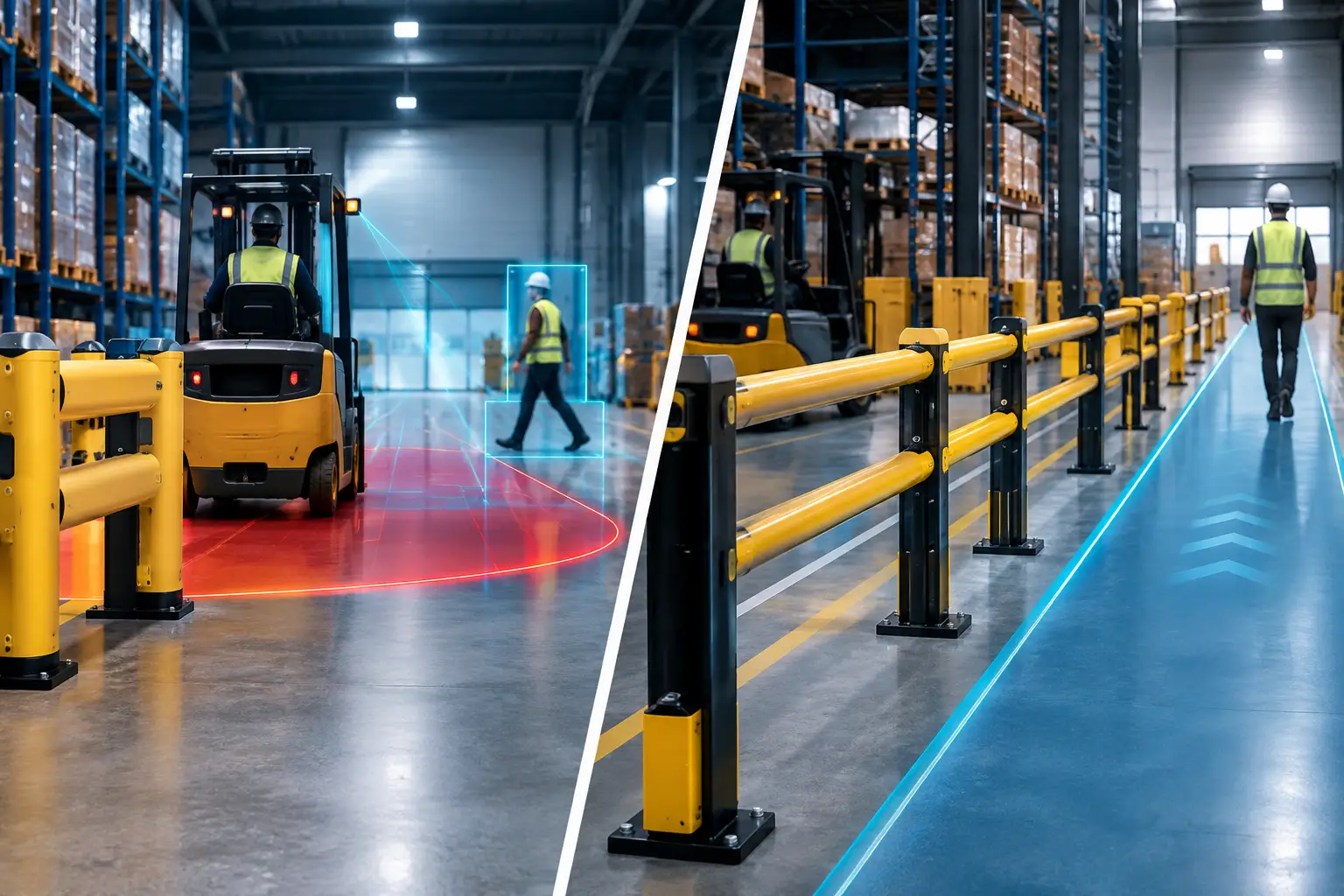
When pedestrian exposure is persistent, the best answer is often separation. Barriers, guardrails, gate systems, and defined walkways reduce reliance on warning alone by creating physical boundaries between people and vehicle paths.
This is not always easy in older facilities or space-constrained operations. Segregation can affect travel paths, picking flow, and staging layouts. But where there is repeated interaction between forklifts and workers on foot, physical separation remains one of the strongest controls available. Technology should reinforce that strategy, not replace it.
How to choose the best forklift safety systems for your facility
The right starting point is your risk profile, not the latest feature set. A narrow-aisle warehouse with high rack density has different exposure than a manufacturing plant with open floor movement and frequent line-side deliveries. A distribution center with heavy loading bay activity faces different hazards than a low-volume storage site.
Begin with the incidents and near misses you already know about. Look at blind intersections, trailer loading areas, battery charging routes, staging lanes, and pedestrian crossing points. Consider where operators lose visibility, where people shortcut across vehicle paths, and where congestion builds during peak periods. These are the places where safety systems earn their value.
Then evaluate systems based on fit. If your primary issue is unseen pedestrian exposure, proximity detection and zone-based alerts may deserve priority. If the problem is repeated risky behavior, Vision AI monitoring may provide more long-term value. If crossings and mixed-use areas create daily uncertainty, floor projection and traffic segregation may have the biggest impact.
Cost should be part of the decision, but not in isolation. A lower-cost warning device that workers tune out can become expensive very quickly if it fails to change behavior. A more capable system that reduces incidents, equipment damage, and downtime may deliver stronger returns even with higher upfront investment.
Why integration matters more than individual features
A common mistake is adding isolated devices across the site without a wider traffic safety strategy. One forklift gets a light. Another area gets a buzzer. A crossing receives signage. Nothing is technically wrong, but the result is fragmented control. Workers experience inconsistent warnings, supervisors struggle to manage the system, and risk remains unevenly addressed.
The better approach is to think in layers. At a blind corner, that might mean floor projection, vehicle warning lights, speed control expectations, and barrier-assisted pedestrian routing. In a loading bay area, it could include forklift-pedestrian detection, bay status alerts, and physical controls around movement zones. In high-traffic facilities, integrating alerts, monitoring, and site design creates a more reliable safety environment than any stand-alone product can provide.
This is where engineering support becomes important. The best forklift safety systems do not just arrive in boxes. They need site assessment, placement decisions, calibration, installation, user training, and ongoing review. Without that, even good technology can underperform.
What measurable results should you expect?
A well-chosen forklift safety system should produce changes you can observe, not just promises on paper. Near-miss frequency should decline in known hotspots. Operators should approach intersections more cautiously. Pedestrian compliance with walkways should improve. Equipment damage around racks, doors, and staging areas should become less common. Supervisors should have better visibility into unsafe behaviors and risk trends.
Results may not come from one dramatic shift. More often, they come from many small improvements that reduce uncertainty across the workday. Fewer abrupt stops. Fewer blocked crossings. Better separation. Earlier warnings. Better operator habits. That is how a safer site also becomes a more efficient one.
For organizations managing growth, labor turnover, or more demanding throughput targets, that matters. Safety systems should support productivity by making movement more controlled and less disruptive, not by adding friction without purpose.
A practical standard for decision-makers
If you are evaluating options, ask a simple question: does this system reduce risk at the point where accidents are most likely to happen in our facility? If the answer is vague, keep looking. The best forklift safety systems are not the ones with the longest feature sheet. They are the ones that solve real operational hazards in a way your teams will actually use and maintain.
Every worker deserves to return home safely every day. That outcome depends on more than awareness and policy. It depends on putting the right controls in the right places, then treating safety technology as part of how the operation works, not as an add-on after an incident. That is where better decisions begin.