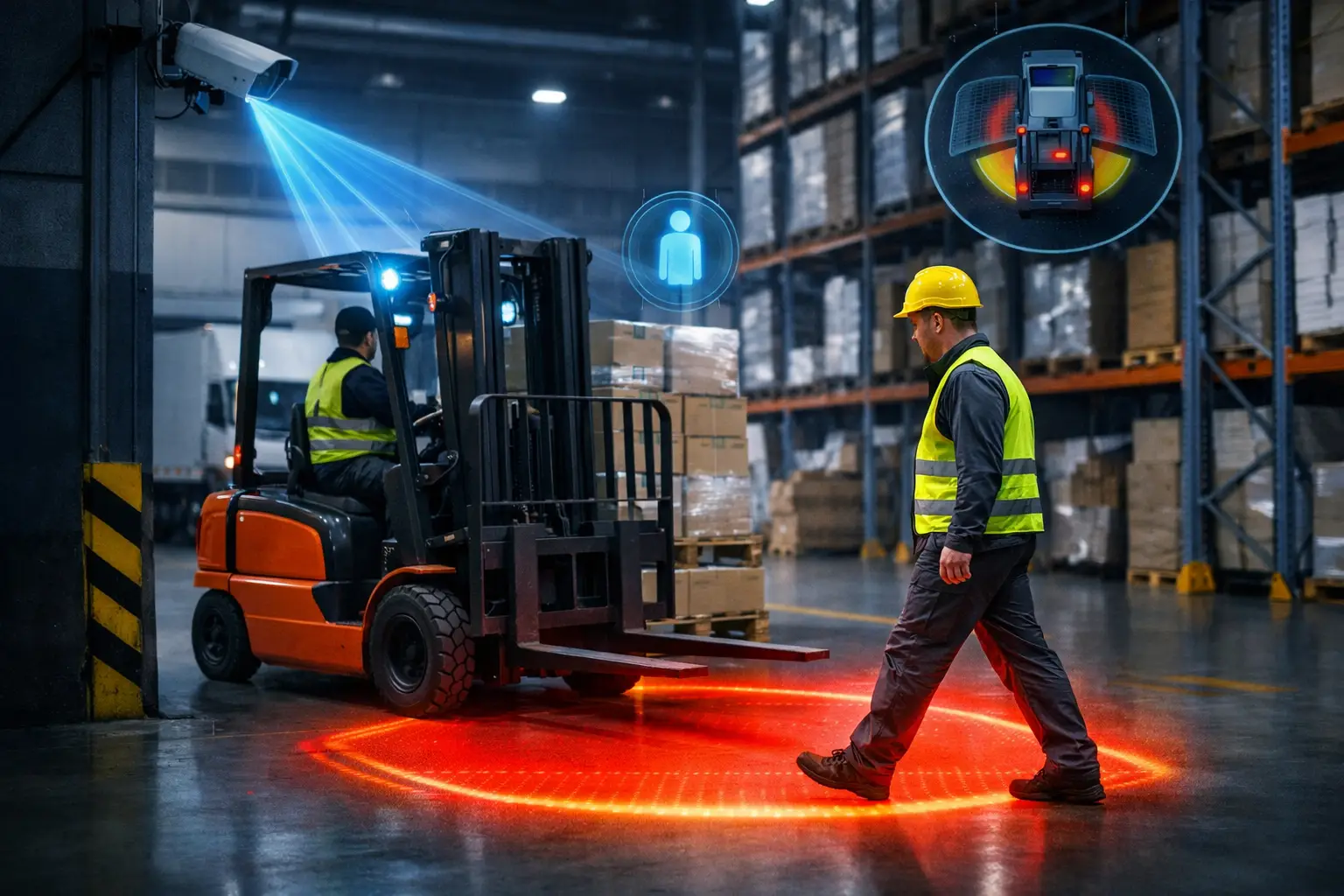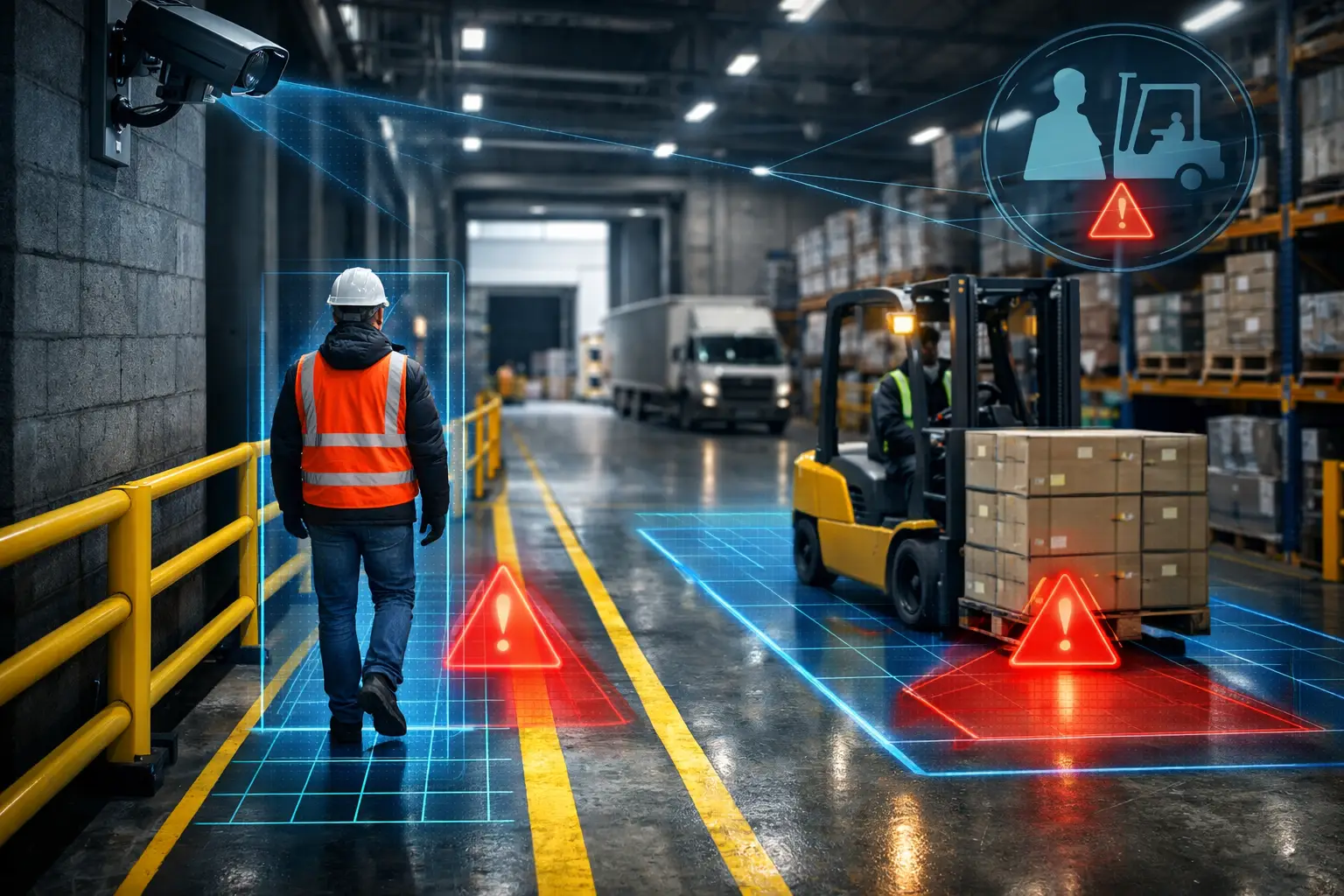
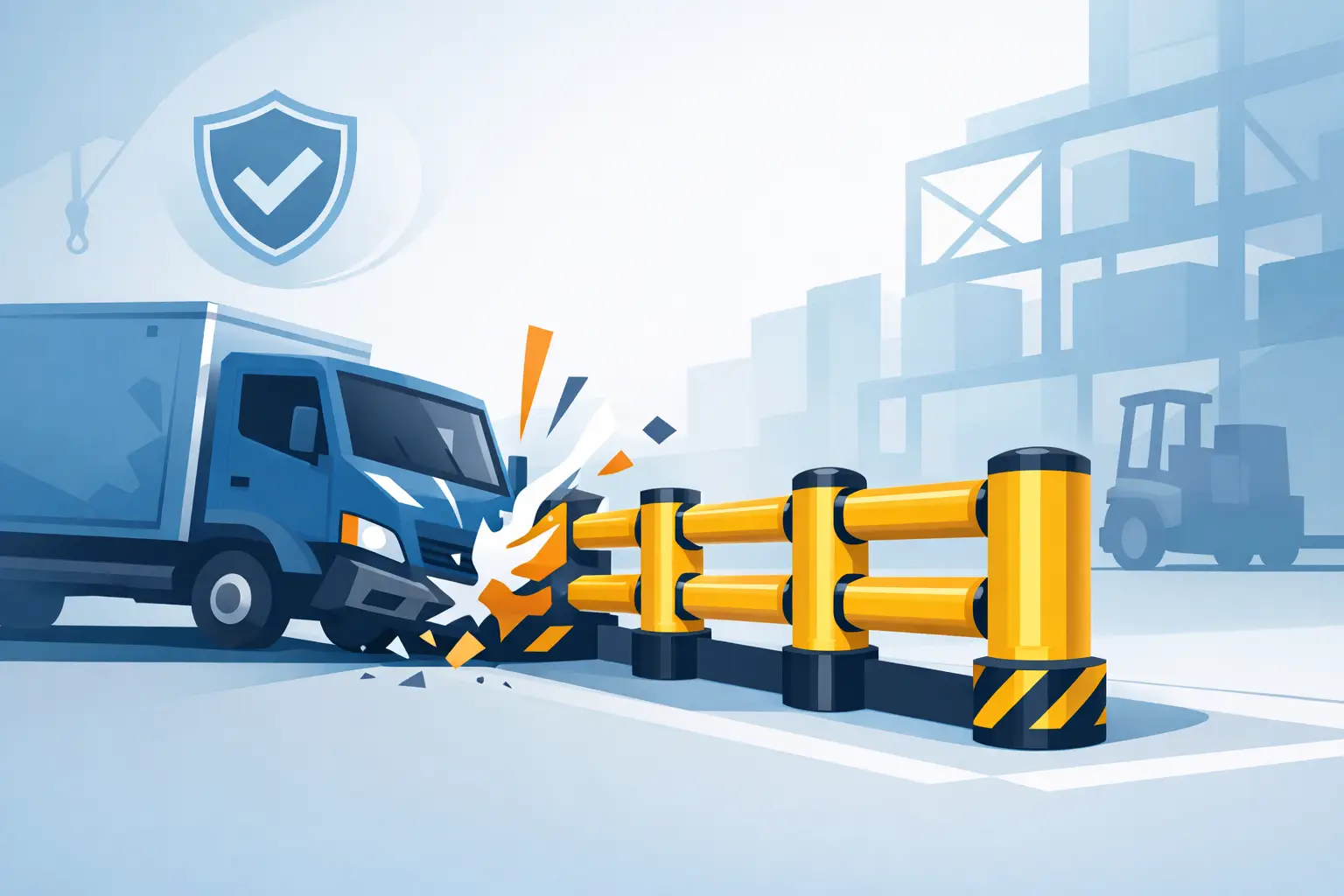
A forklift does not need to be moving fast to cause serious damage. In most warehouses and plants, low-speed impacts are enough to crack concrete, distort rack legs, damage doors, and put people at risk. That is why an impact resistant safety barrier is not just a line item in a facility upgrade plan. It is a control measure that can prevent injury, reduce repair costs, and keep operations moving when traffic gets tight.
For warehouse managers, EHS leaders, and operations teams, the real question is not whether barriers are needed. It is whether the barrier in place can actually absorb the kinds of impacts your site experiences every day. Painted rails and light-duty guard systems may look adequate during a walkthrough. They tend to tell a different story after the first forklift strike.
What an impact resistant safety barrier is designed to do
An impact resistant safety barrier is built to separate people, vehicles, and infrastructure in active industrial environments. Its purpose is straightforward – control the consequences of human error. When a forklift misjudges a turn, when a pallet load shifts, or when a vehicle enters a pedestrian zone, the barrier becomes the last physical layer of protection.
That protection has to do more than mark a boundary. A true industrial barrier system is designed to absorb and deflect impact energy while reducing damage to the floor, the barrier itself, and the vehicle involved. In practical terms, that means preserving structural assets and lowering the chance that a minor incident becomes a recordable injury or a shutdown event.
This is where many facilities get caught out. Not every barrier marketed for industrial use is engineered for repeated impact. Some are suitable for visual segregation only. Others may withstand a single hit but transfer too much force into anchor points or surrounding concrete. The difference matters because a barrier that fails at the base can create expensive secondary damage even if the rail remains standing.
Where impact resistant safety barriers deliver the most value
The highest-value applications are usually the areas with mixed traffic, constrained movement, or expensive infrastructure nearby. Pedestrian walkways are one obvious example, especially near forklift routes, staging lanes, or production lines. In these zones, the barrier is protecting people first, and everything else second.
Loading bays are another critical area. Vehicles reverse under time pressure, dock activity is constant, and sight lines are often imperfect. A barrier can protect door frames, dock equipment, control panels, and personnel working close to moving equipment. In busy operations, a small collision at the bay can quickly ripple into delay, congestion, and avoidable repair work.
Rack ends, building columns, mezzanine supports, machinery perimeters, and utility assets also deserve attention. These are not cosmetic protection points. A damaged rack leg can compromise stored inventory and structural stability. A struck column can become a much larger facility issue. An exposed machine edge or electrical installation can create safety and continuity risks that far exceed the cost of installing the right barrier in the first place.
Not all barriers perform the same under impact
This is where specification becomes more important than appearance. Two barriers can look similar from a distance and behave very differently in service. Material, geometry, mounting design, and tested impact performance all shape how well a barrier protects the area around it.
Steel barriers still have a place in industrial sites, particularly in heavy-duty applications. But they are not automatically the better answer everywhere. High-rigidity systems can resist force, yet in some cases they transfer that force into the slab, anchors, or vehicle. That can lead to cracked floors, bent baseplates, and more difficult repairs after an incident.
Polymer and energy-absorbing barrier systems are often chosen where repeated low-to-medium impacts are common. These systems are designed to flex, dissipate energy, and recover shape after contact. In the right environment, that can mean less downtime, fewer replacement events, and lower lifecycle cost. The trade-off is that selection must be tied to actual traffic conditions. A barrier that performs well in a pedestrian segregation zone may not be suitable for high-mass vehicle impact near a loading area.
That is why tested performance data matters. Decision-makers should look beyond generic product claims and ask practical questions. What vehicle type is the barrier designed to stop or deflect? At what speed and angle? What happens to the anchors and slab during impact? Can individual sections be replaced without removing the full run? Those answers are more useful than a product brochure full of general statements.
How to choose the right impact resistant safety barrier
The best barrier choice starts with site risk, not catalog preference. A proper assessment looks at vehicle type, average speed, turning behavior, aisle width, pedestrian exposure, floor condition, and what sits behind the barrier. A rack end, a fire door, and a walkway crossing do not need the same solution.
The next step is to define the protection objective clearly. Are you trying to stop direct forklift contact with people? Prevent repeated strikes on infrastructure? Separate traffic streams? Reduce the severity of common low-speed incidents? Each goal may call for a different barrier height, profile, or energy rating.
Installation conditions also matter more than many teams expect. A strong barrier on a weak or damaged slab will not perform as intended. Anchor design, bolt pattern, spacing, and floor quality all affect real-world performance. This is one reason consultative support is valuable. Engineering input helps ensure the installed system performs like the specified system.
Procurement teams should also consider serviceability. In active facilities, barriers will eventually be hit. The question is how quickly the area can be restored. Systems with modular components and easier replacement can reduce maintenance time and help operations recover faster after an incident.
The business case goes beyond compliance
Most industrial leaders already understand the compliance side of physical safety controls. What often deserves more attention is the operational return. A well-placed barrier can reduce product loss, protect uptime, and prevent cascading disruption from minor impacts.
Think about the hidden cost of a single collision. There may be vehicle damage, rack inspection, cleanup, temporary cordoning, supervisor time, maintenance callouts, and delayed throughput in the affected zone. If inventory is involved, the cost can rise quickly. If a worker is injured, the consequences are much more serious. Seen through that lens, barrier protection is not a passive expense. It is active risk reduction.
It also supports consistency. Safer traffic flow tends to be more predictable traffic flow. When routes are clearly protected and vulnerable assets are physically shielded, operators can work with better confidence and less improvisation. That is good for safety culture and good for operational discipline.
For larger networks and high-volume sites, standardizing barrier strategy across facilities can bring another benefit – clearer safety expectations. The same visual language and protective logic applied across locations makes training easier and site conditions more recognizable for employees, contractors, and visiting drivers.
Common mistakes that weaken barrier performance
One of the most common mistakes is under-specifying the risk. Facilities often choose a barrier based on budget or availability without matching it to actual vehicle exposure. That usually leads to premature damage and a false sense of protection.
Another mistake is treating barriers as a standalone fix. Physical protection works best when combined with traffic management, signage, line marking, operator training, and where appropriate, warning systems such as visual alerts or sensor-based controls. Barriers are powerful, but they are one layer in a larger safety system.
Poor placement is another issue. Gaps at ends, insufficient stand-off distance, or incomplete protection around corners can leave critical exposure points open. Impacts rarely happen in the neat center of a straight run. They often happen at transitions, blind spots, and turning points.
A final issue is delaying replacement after a strike. Even if damage looks minor, a compromised section may not provide the same level of protection during the next event. Inspection and maintenance should be part of the barrier plan, not an afterthought.
Why a consultative approach makes the difference
Barrier systems are simple to describe and easy to underestimate. The product itself matters, but the outcome depends on where it is used, what it is expected to stop, and how it is installed. That is why many industrial organizations prefer a partner that can assess the site, recommend fit-for-purpose protection, and support implementation with engineering discipline.
For companies managing busy warehouses, manufacturing plants, and logistics hubs, this is where experience pays off. A provider such as SysGuard can align barrier selection with broader forklift safety, loading bay risk, and facility protection goals rather than treating barriers as an isolated purchase.
Every worker deserves to return home safely every day. An impact resistant safety barrier helps make that outcome more likely, especially in the places where one small driving error can carry outsized consequences. The right system does not just absorb impact. It protects people, preserves infrastructure, and gives your operation more room to perform safely under pressure.