A near miss in a warehouse rarely looks dramatic on camera. A pedestrian steps into a forklift lane half a second too early. A vehicle rounds a blind corner a little too fast. A worker enters a restricted area during active movement. These are small moments, but they are exactly where serious incidents begin. That is why many operations leaders now ask how to use vision AI safety in a way that actually prevents harm instead of just recording it.
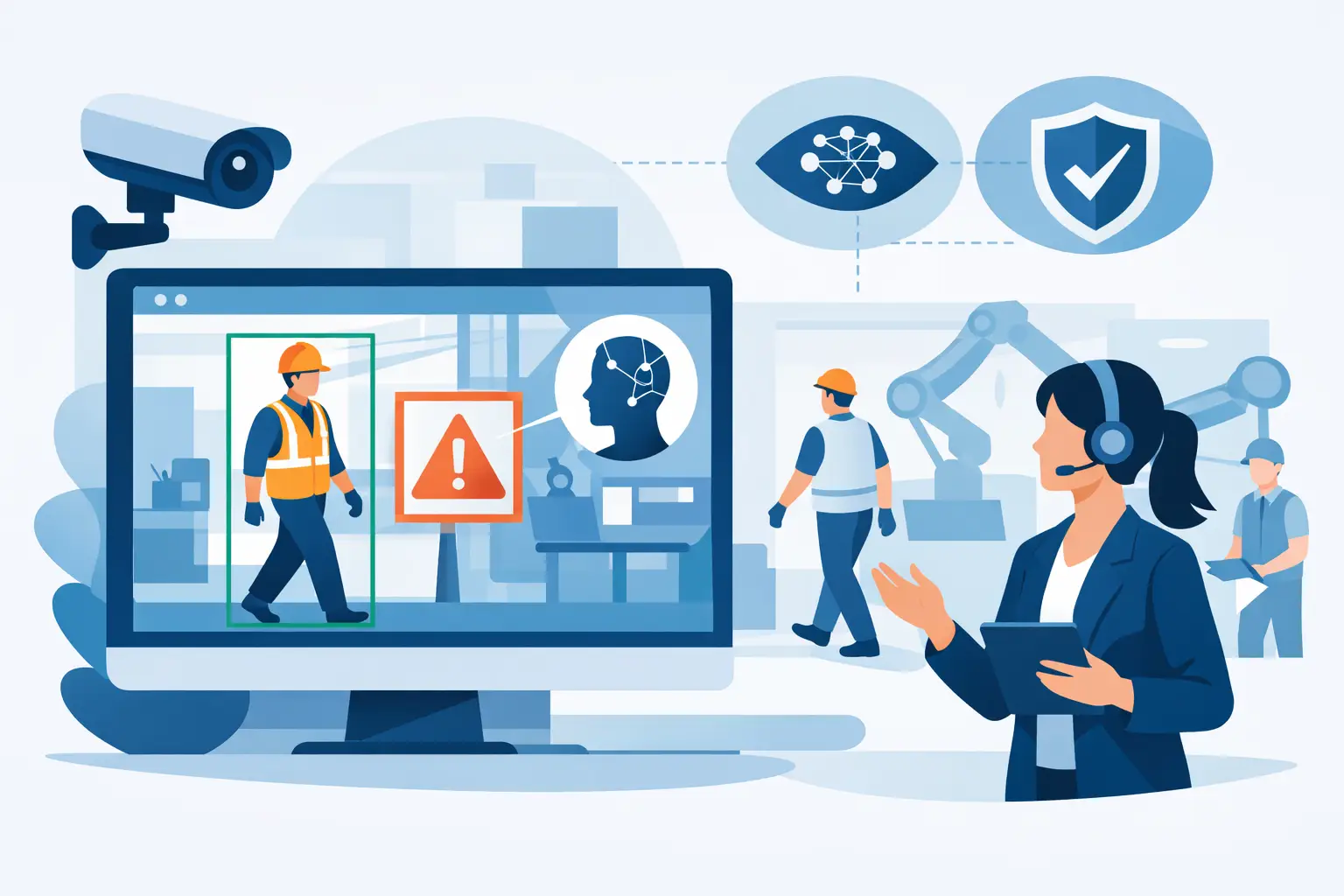
In industrial environments, cameras alone do not stop accidents. What changes outcomes is the ability to detect unsafe interactions as they happen and trigger a response quickly enough to matter. Vision AI safety systems do that by interpreting live video feeds, identifying people, vehicles, zones, and movement patterns, and then generating alerts or actions based on predefined risk rules.
For warehouse managers, EHS leaders, and plant operators, the practical question is not whether the technology is impressive. It is where it fits, what it can realistically do, and how to deploy it without creating blind trust in automation. Used well, vision AI safety becomes part of a layered risk reduction strategy. Used poorly, it becomes another dashboard that no one acts on.
What vision AI safety is really for
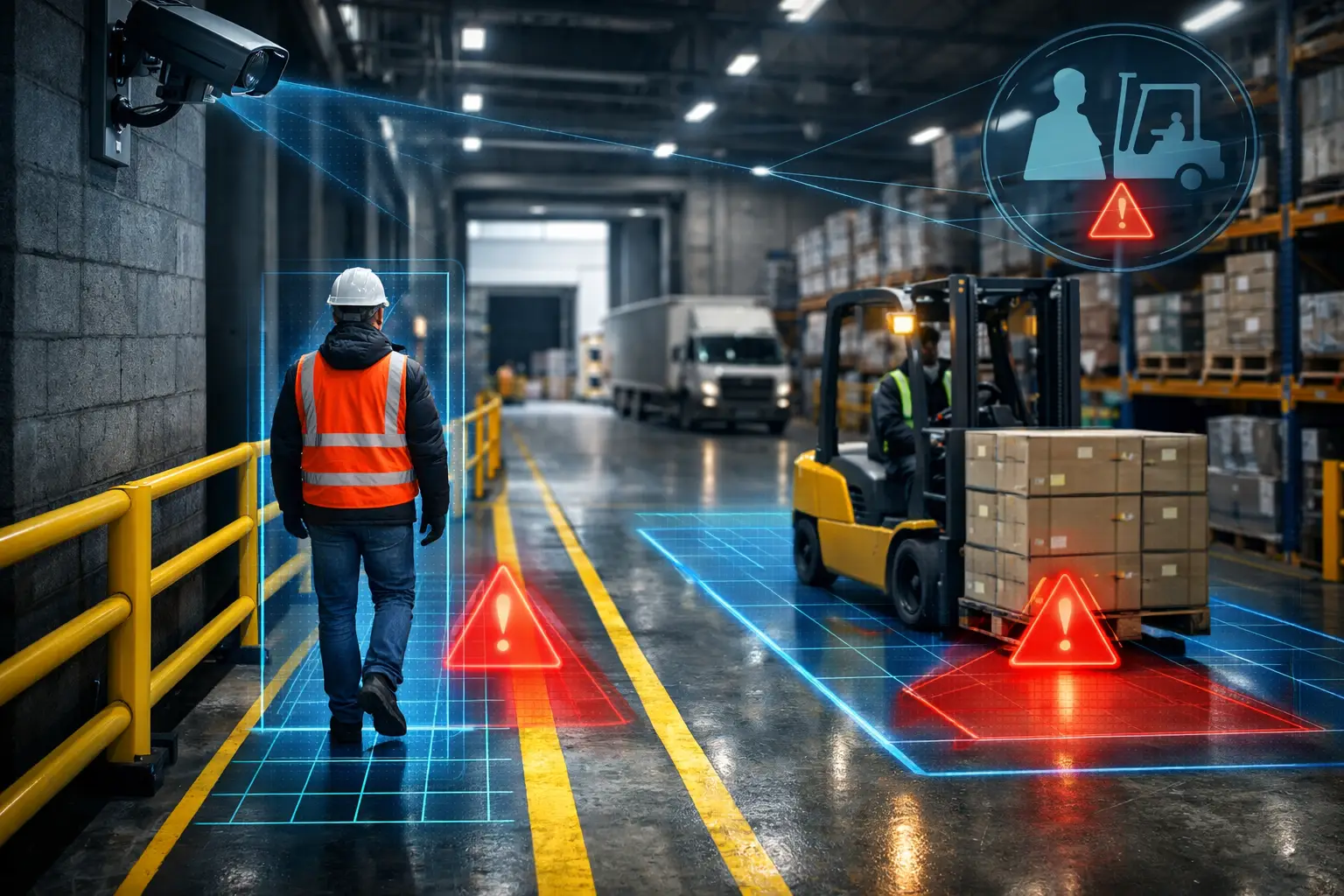
Vision AI safety is best understood as an active risk detection tool. It uses camera input and trained analytics to recognize conditions that suggest danger, such as a pedestrian entering a vehicle path, congestion at an intersection, unsafe reversing, or access into a restricted zone.
That matters because many industrial incidents are not caused by a single catastrophic failure. They happen when routine movement, limited visibility, and human variability overlap. Traditional controls such as barriers, signage, mirrors, and training remain essential, but they cannot see and interpret dynamic behavior in real time. Vision AI can.
Still, it is not a replacement for physical safeguards or safe operating procedures. It works best where risks are mobile, repeatable, and difficult to manage through static controls alone. In other words, it is especially valuable in facilities with forklift traffic, loading activity, mixed pedestrian zones, and fast-changing workflows.
How to use vision AI safety where risk is highest
The strongest deployments start with a risk map, not a camera map. Before deciding on devices or software rules, identify where unsafe interactions are most likely to happen and what type of event you want to prevent.
In most industrial facilities, the highest-value use cases fall into a few categories. Blind intersections are a common one, especially where racking, stacked goods, or structural features restrict line of sight. Loading bays are another, where people, forklifts, trucks, and dock equipment often converge in tight space. Pedestrian walkways crossing vehicle routes also deserve close attention, as do restricted areas where entry during machine or vehicle activity creates elevated risk.
This is where a practical answer to how to use vision AI safety begins. Start with specific, repeated exposure points that already create concern for supervisors or show up in near-miss reports. If your team has to say, “That corner is always a problem,” that is probably a strong candidate.
Start with one clear safety outcome
Many projects lose focus because they try to solve every safety issue at once. A better approach is to define one operational outcome per deployment area.
That outcome might be reducing forklift-pedestrian conflict at a crossing. It might be detecting unauthorized entry into a loading zone during active vehicle movement. It might be issuing alerts when a reversing forklift approaches a person in a blind area.
The more precise the outcome, the easier it becomes to configure the system correctly. Vision AI performs best when it is trained around a defined event logic rather than broad and vague goals such as “improve safety everywhere.” Industrial safety needs measurable intervention points.
Match the system to the environment
Not every camera position or analytics rule works in every facility. Lighting conditions, dust, layout changes, traffic density, and mounting height all affect performance. A clean production area with fixed routes behaves very differently from a busy warehouse with shifting pallets and temporary obstructions.
That is why site assessment matters. Camera placement should support the actual risk scenario, not simply provide the widest field of view. In some cases, a tighter angle on a crossing point is more effective than broad coverage of an entire aisle. In others, the system needs to distinguish between normal movement and hazardous encroachment, which requires careful rule setting.
This is also where industrial engineering support adds value. A vision AI safety system should be adapted to the workflow, not forced onto it. If the facility changes often, the system must be easy to recalibrate. If the site runs around the clock, alerts must remain reliable across different shifts and conditions.
Connect alerts to real action
Detection alone is not prevention. If the system spots a hazard but no one responds, risk remains. The best vision AI safety deployments trigger immediate and practical actions inside the work area.
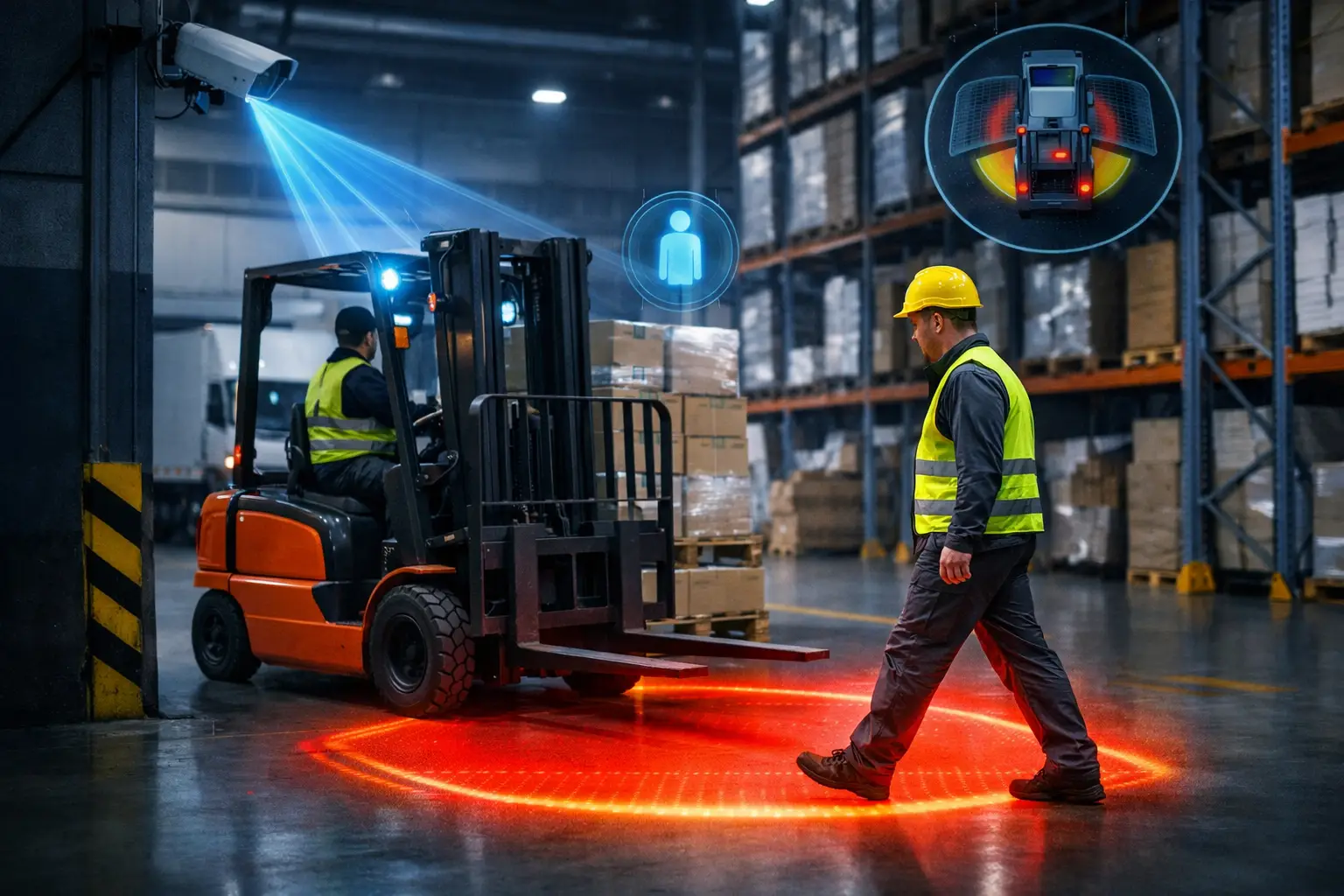
That could mean audible and visual alerts at a forklift intersection when a pedestrian and vehicle approach simultaneously. It could mean notifying operators when a person enters a danger zone. In some environments, it may support escalation to supervisors or event logging for review and corrective action.
The key is speed and clarity. Workers should understand what the alert means and what action is expected. If alarms are too frequent or too vague, people will tune them out. If alerts are targeted, timely, and tied to a specific risk event, they can actively change behavior.
Use vision AI safety as part of a layered system
No responsible safety program should treat vision AI as a stand-alone answer. It is one layer in a broader prevention strategy that includes physical barriers, traffic management, site rules, operator training, and maintenance discipline.
For example, if a warehouse has frequent pedestrian exposure near forklifts, vision AI may help detect conflict points and trigger warnings. But if pedestrian routes are poorly marked, barriers are missing, and vehicle speeds are unchecked, the technology is carrying too much of the burden.
A layered approach is stronger because each control covers the limits of another. Physical separation reduces exposure. Procedures define expected behavior. Training reinforces awareness. Vision AI adds live detection where static controls cannot fully adapt. That is how technology supports safer operations without creating false confidence.
Measure what changes after deployment
If you want long-term value, track whether the system changes risk, not just whether it generates data. The most useful indicators are near-miss frequency, unsafe entry events, congestion patterns, repeated hotspot activity, and response rates to alerts.
This gives operations and EHS leaders something more meaningful than installation completion. It shows whether the intervention is reducing exposure over time. In some facilities, the biggest gain is not a dramatic drop in incidents right away. It is the visibility to identify repeated unsafe patterns that were previously anecdotal.
That data can also guide broader improvements. If one zone consistently triggers warnings, the answer may be layout redesign, route adjustment, or stronger segregation rather than more alerts.
Common mistakes when using vision AI safety
The first mistake is treating it as surveillance instead of prevention. If the project is framed only around monitoring workers, adoption will suffer and trust will erode. The purpose should be clear from day one: detect risk early and protect people.
The second mistake is overcomplicating the rollout. Starting across an entire site without clear priorities usually leads to alert fatigue, configuration issues, and weak follow-through. A focused pilot in a known high-risk area is often more effective.
The third mistake is ignoring maintenance and calibration. Camera obstruction, layout changes, damaged equipment, or environmental shifts can reduce performance over time. Vision AI safety is not a one-time install and forget solution. It needs periodic review, just like any critical safety system.
A final mistake is expecting perfect judgment from the technology. It can recognize patterns and trigger warnings quickly, but it still depends on the quality of setup, site conditions, and operating context. Human oversight remains essential.
How to use vision AI safety with workforce buy-in
People are more likely to support safety technology when they understand what problem it is solving and how it protects them. Be direct. Explain where the risks are, what the system detects, and what workers should do when alerts activate.
It also helps to involve site teams early. Supervisors, operators, and safety personnel often know exactly where dangerous interactions happen. Their input improves system design and makes adoption more practical.
This is especially important in active logistics and industrial settings, where workflows are fast and risk conditions change. A safety system should support operations while reducing exposure, not create confusion on the floor. When implemented with that mindset, vision AI becomes a credible part of operational safety, not just a technology upgrade.
For organizations serious about reducing incidents, the real value is simple. Vision AI helps you see risk before it becomes harm. When that insight is tied to engineering judgment, practical controls, and a clear duty of care, every worker has a better chance of going home safe at the end of the shift.