A near miss at a warehouse intersection rarely looks dramatic on paper. One operator brakes hard, a pedestrian steps back, and work resumes in seconds. But for the site manager, that moment tells a bigger story. Traffic routes may be unclear. Visibility may be poor. Operators may be working under pressure. And if nothing changes, the next incident may not end as well.
That is why a practical forklift safety improvement example matters. Safety leaders do not need abstract advice. They need a clear picture of what changed, why it worked, and how those changes reduced risk without slowing the operation to a standstill.
A forklift safety improvement example from a busy warehouse
Consider a mid-sized distribution facility with high daily pallet movement, mixed pedestrian traffic, and several choke points near packing and staging zones. The site had not recorded a major forklift injury, but warning signs were building. There were repeated reports of near misses at aisle crossings, minor rack contact, and occasional product damage during peak shifts.
The original response was familiar. Management reminded operators to drive carefully, repeated site rules during toolbox talks, and increased supervisor observation. Those actions were necessary, but they were not enough. The pattern continued because the real issue was not just driver behavior. The site itself was allowing risk to repeat.
A proper assessment found four operational weaknesses. First, several intersections had limited line of sight due to rack placement and stacked goods. Second, pedestrian walkways crossed active forklift lanes in ways that depended too heavily on individual judgment. Third, warning methods were inconsistent, with some zones using floor markings only and others relying on horn use. Fourth, shift pressure during loading windows encouraged faster travel in precisely the areas where caution was most needed.
The improvement plan focused on layered controls rather than a single fix. This is where many facilities either make progress or stall. A sign on the wall is easy to install, but it does not control movement. A policy update is easy to issue, but it does not change visibility at a blind corner.
What changed in this forklift safety improvement example
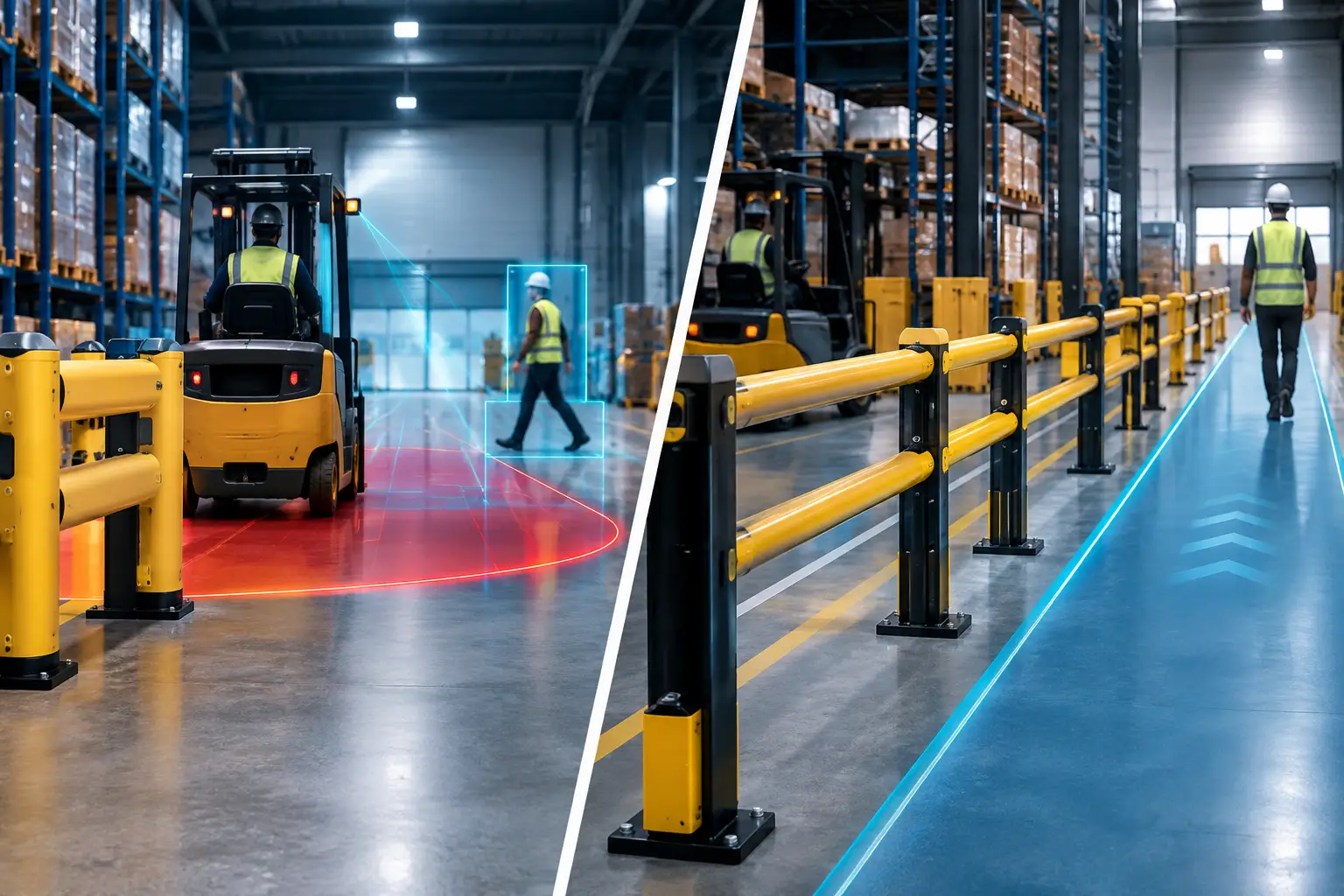
The first step was redesigning traffic interaction points. Pedestrian walkways were rerouted where possible to reduce direct crossing with forklift paths. In places where crossings were unavoidable, the site created clearly defined pedestrian gates and crossing zones instead of open access points. This reduced ambiguity. People no longer had to guess where it was safe to walk.
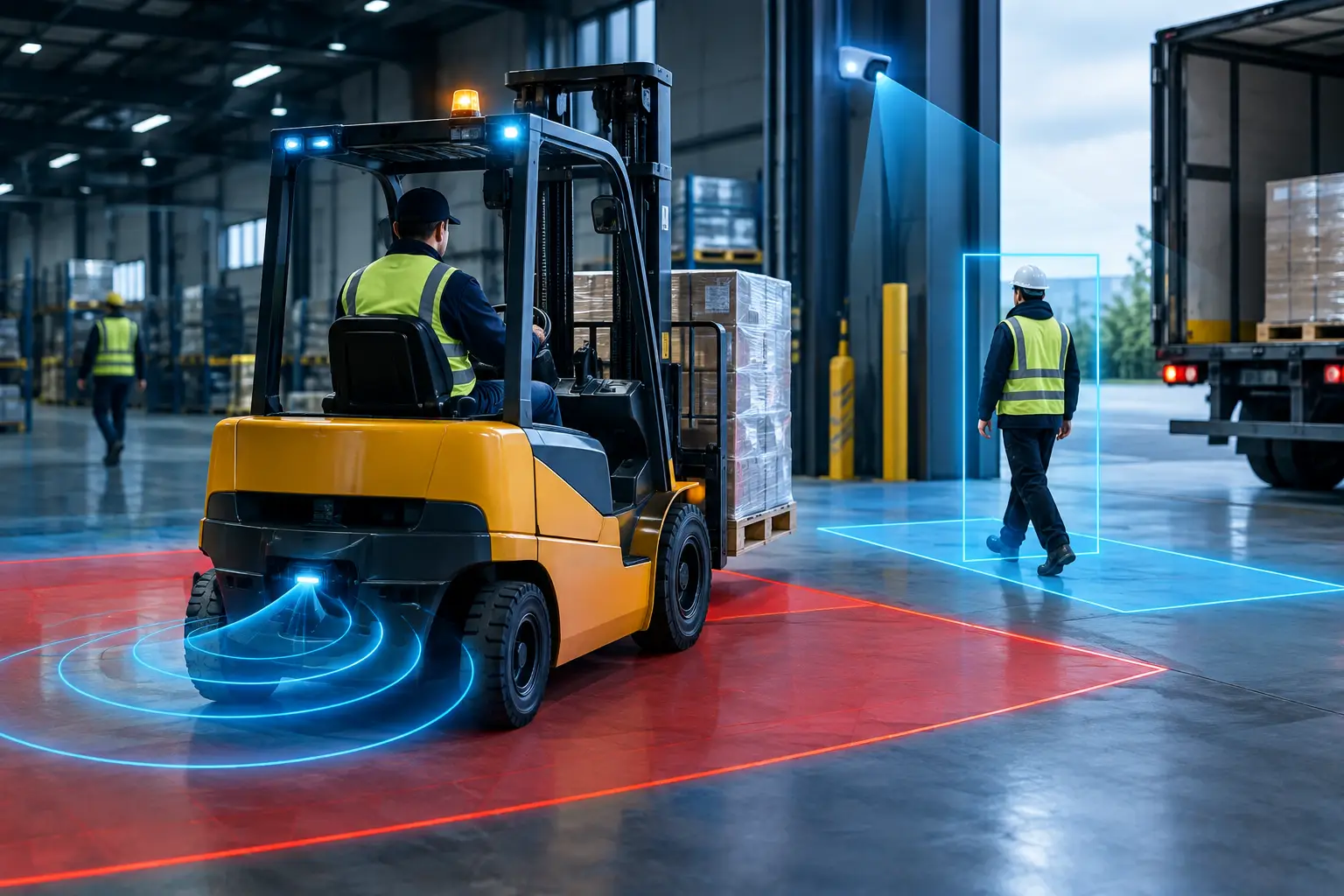
The second step was improving awareness at blind spots and high-risk approaches. Audible and visual alert systems were added at selected intersections so both operators and pedestrians had a clearer warning when movement approached. In a fast-moving warehouse, that extra second of awareness can be the difference between routine separation and emergency braking.
The third step addressed physical protection. Barrier systems were installed to separate walkways from vehicle routes in areas with persistent close interaction. Rack protection was also added where repeated impact had been recorded. This mattered for more than infrastructure maintenance. Rack strikes are often treated as property damage events, but they are also indicators of unstable traffic control and collision exposure.
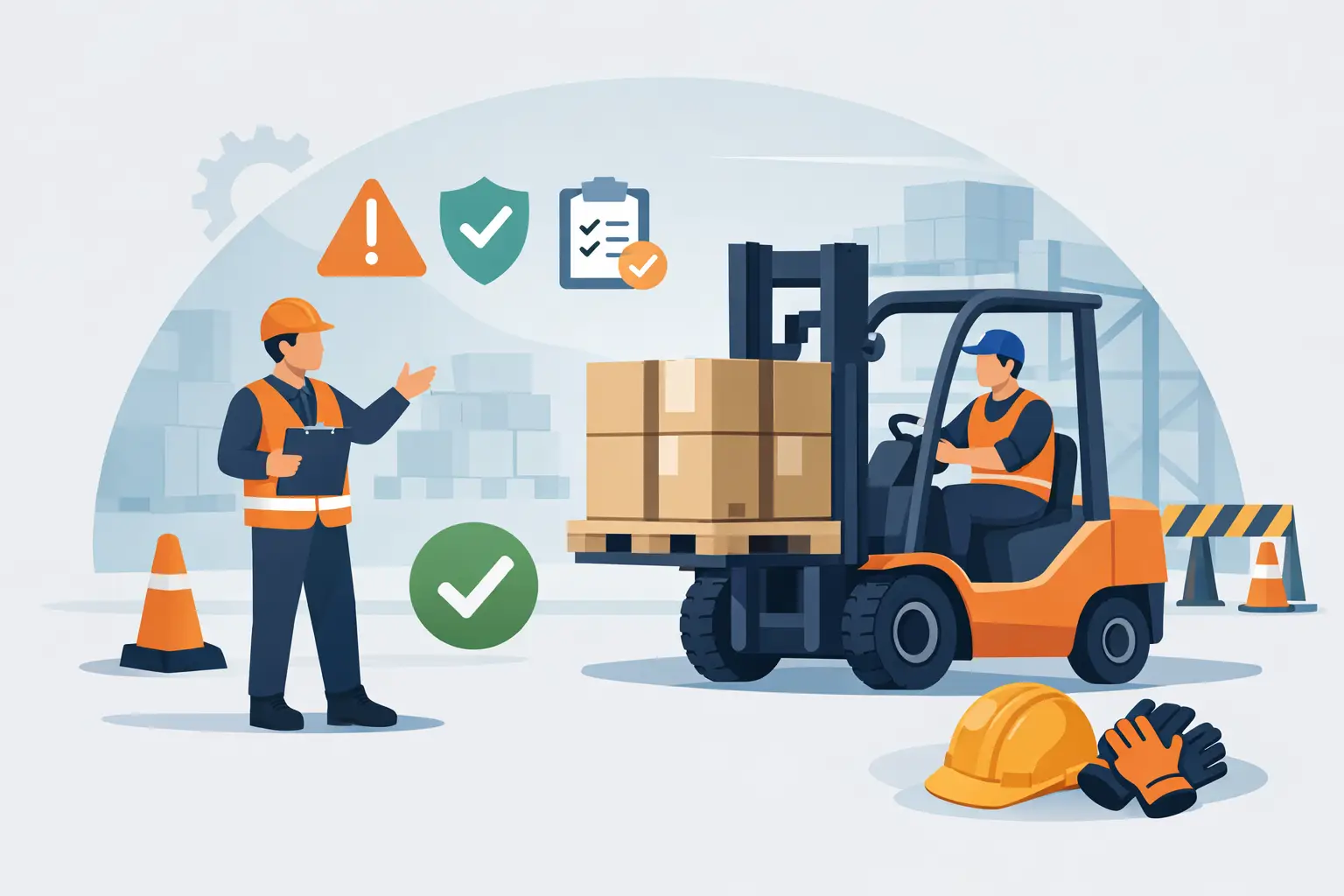
The fourth step focused on operator behavior, but in a more disciplined way than general reminders. Instead of broad retraining alone, the facility tied coaching to specific incident patterns. Operators working in problem zones received targeted instruction on speed control, horn use, approach discipline, and yielding behavior at crossings. Supervisors then observed those same zones for compliance and consistency.
Finally, the site started using incident and near-miss data more seriously. Rather than reviewing events one by one, the safety team mapped where they occurred, when they occurred, and what type of interaction was involved. This turned scattered reports into an operational risk picture.
Why the changes worked
The strongest safety improvements usually come from controlling conditions, not just correcting people. That was the case here. Once the facility reduced conflict points, improved sightlines, and created more reliable warnings, operators had a safer environment in which to make good decisions.
This is an important distinction for warehouse and plant leaders. If a site depends entirely on perfect human behavior in a high-traffic environment, the margin for error is too small. People get tired. Workload fluctuates. Temporary obstructions appear. Shift priorities change. Engineering controls provide consistency when operating conditions are less than ideal.
There was also a cultural effect. When workers saw physical changes on the floor, they understood that management was treating forklift risk as a system issue, not just an individual fault issue. That tends to improve reporting. Employees are more likely to speak up about blind corners, unsafe crossings, or damaged barriers when they believe action will follow.
The results in this example were measurable within months. Near-miss reports at key intersections dropped. Product damage in affected lanes decreased. Operators reported better confidence in busy zones because traffic patterns were easier to read. Supervisors also spent less time addressing repeat unsafe behavior in the same trouble spots.
Did the facility eliminate all forklift risk? No. No active material handling environment can promise that. But the site moved from reactive reminders to controlled risk reduction. That is a meaningful operational shift.
What this example shows about forklift safety strategy
A useful forklift safety improvement example should show more than a before-and-after story. It should reveal the principle behind the result. In this case, the principle is simple: forklift safety improves fastest when sites combine layout control, warning systems, physical separation, and accountable operating behavior.
Many organizations overcorrect in one direction. Some focus too heavily on training and underinvest in environmental controls. Others install equipment but fail to reinforce the operating discipline that makes those tools effective. The better approach is layered protection.
It also depends on the site. A manufacturing plant with fixed routes and fewer pedestrians may need different controls than an e-commerce warehouse with constant staging changes. A cold storage facility may face visibility issues that differ from a dry goods site. The right answer is not a standard package. It is a solution matched to actual movement risk.
That is why risk assessment matters. Leaders should look closely at crossing frequency, line of sight, travel speed, congestion periods, pedestrian behavior, loading pressure, and repeated damage locations. These are not minor details. They are the conditions that shape daily exposure.
How to apply this forklift safety improvement example in your facility
Start where incidents repeat, not where improvements are easiest to install. If one aisle crossing generates frequent near misses, that area deserves more attention than a lower-risk zone with better visibility and less traffic. Safety resources should follow exposure.
Next, separate what is a human factor problem from what is a layout problem. If trained operators continue to have close calls at the same blind intersection, the environment is likely contributing to failure. In that case, retraining alone will underperform.
Then review whether your controls are active enough for the risk. Painted floor lines can help, but they do not stop intrusion. Horn use can warn, but it depends on consistent action and audibility in a noisy space. Barriers, sensor-based alerts, and defined crossing controls often provide stronger protection where traffic density is high.
It is also worth checking whether your near-miss process gives you usable data. Many sites collect reports but do not analyze patterns. A cluster of minor events can point directly to a serious risk before an injury occurs. That makes near-miss reporting one of the most practical prevention tools available, if it leads to changes on the floor.
For facilities looking to strengthen this process, a consultative safety partner can help connect assessment findings to engineered controls. Companies such as SysGuard approach forklift risk as part of a broader operational safety system, helping sites protect people, infrastructure, and continuity at the same time.
The real value of a better forklift safety model
The most effective forklift safety improvements do more than reduce injury potential. They also protect racks, inventory, doors, loading areas, and workflow reliability. Fewer collisions mean fewer repairs, fewer interruptions, and less unplanned investigation time. That makes safety a performance issue as much as a compliance issue.
This matters for decision-makers trying to justify investment. A barrier system, alert device, or traffic redesign may look like a safety cost at first glance. But when compared with downtime, damaged goods, rack remediation, vehicle repair, and injury exposure, the calculation changes quickly.
Every facility has a version of the same choice. Wait for a serious event to expose the weakness, or act when the warning signs are still manageable. The better time is always earlier. A near miss is not just a close call. It is a clear invitation to improve the system before someone pays the price.