A near miss at a warehouse crossing rarely looks dramatic. A forklift slows late, a picker steps out from a blind aisle, and everyone keeps moving. But those moments are where serious injuries, damaged racking, and costly downtime begin. That is why warehouse safety solutions Singapore operators invest in cannot be limited to signs, painted walkways, or refresher briefings alone. High-traffic facilities need safety controls that work in real operating conditions, with moving vehicles, shifting workloads, and constant pressure to keep goods flowing.
Why warehouse risk is different in active operations
Warehouses and logistics facilities combine people, vehicles, pallets, docks, and storage systems in a space that changes by the hour. A route that was clear at 9 a.m. can become congested by noon. A loading bay that is routine on one shift may become hazardous when trailer movement, poor visibility, or rushed unloading enters the picture.
This is where many safety programs fall short. They address hazards in theory but not in motion. For example, pedestrian walkways are necessary, but they do not prevent a collision if a driver cannot see around a rack end. Forklift training matters, but training alone does not stop trailer creep at the dock or reduce impact damage at exposed structural points. In practice, risk reduction depends on layered controls that support operators and protect workers even when attention slips or conditions change.
What effective warehouse safety solutions in Singapore should address
The most effective safety strategy starts by identifying where risk concentrates. In most facilities, that means vehicle-pedestrian interaction, loading bay activity, and repeated impact zones around racking, doors, and equipment.
Forklift and pedestrian conflict points
Forklift traffic remains one of the most serious sources of warehouse injury and damage. The problem is not only speed. It is also limited visibility, mixed traffic flow, reversing movement, and routine behavior in familiar spaces. Cross aisles, blind corners, staging areas, and dispatch lanes all create opportunities for conflict.
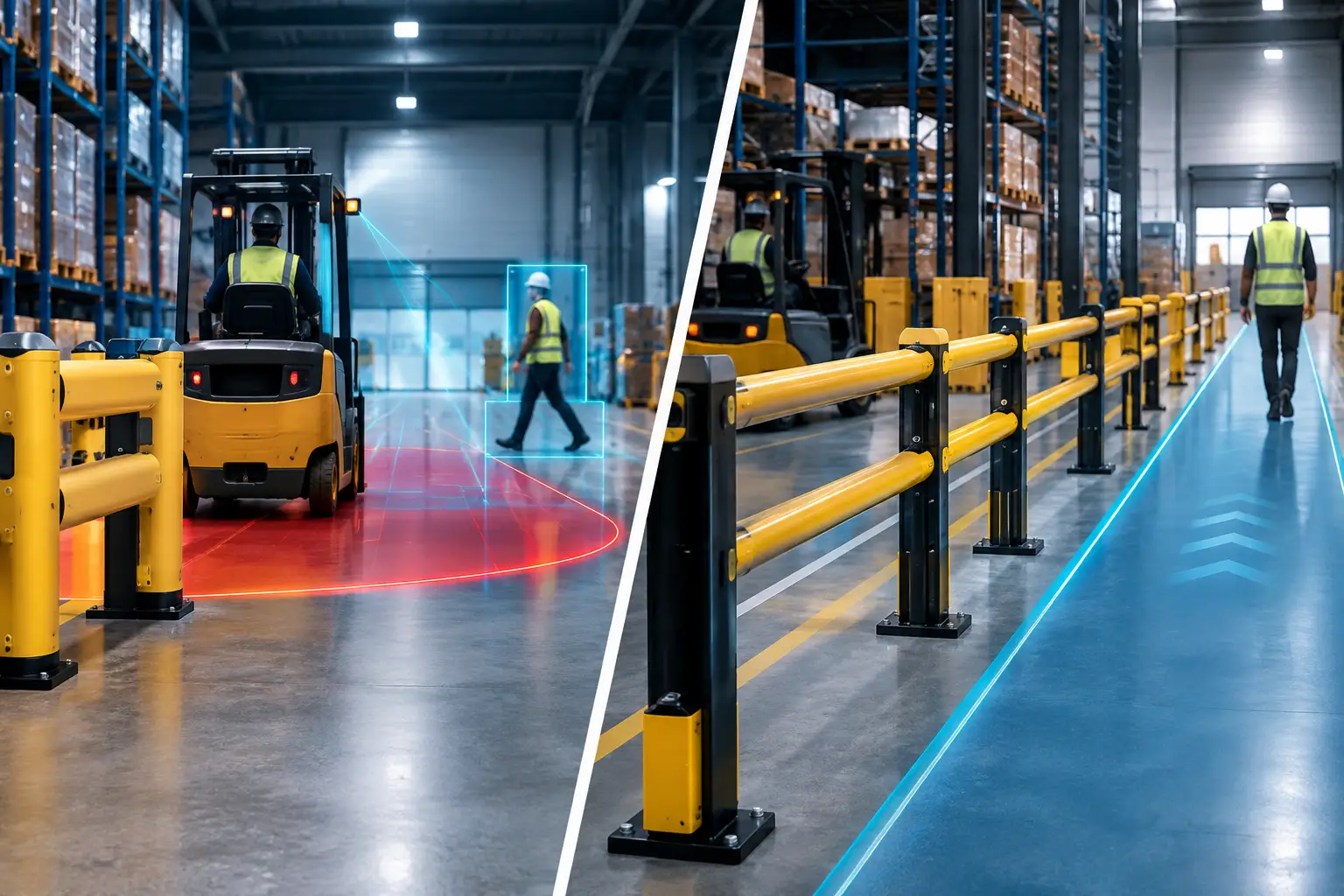
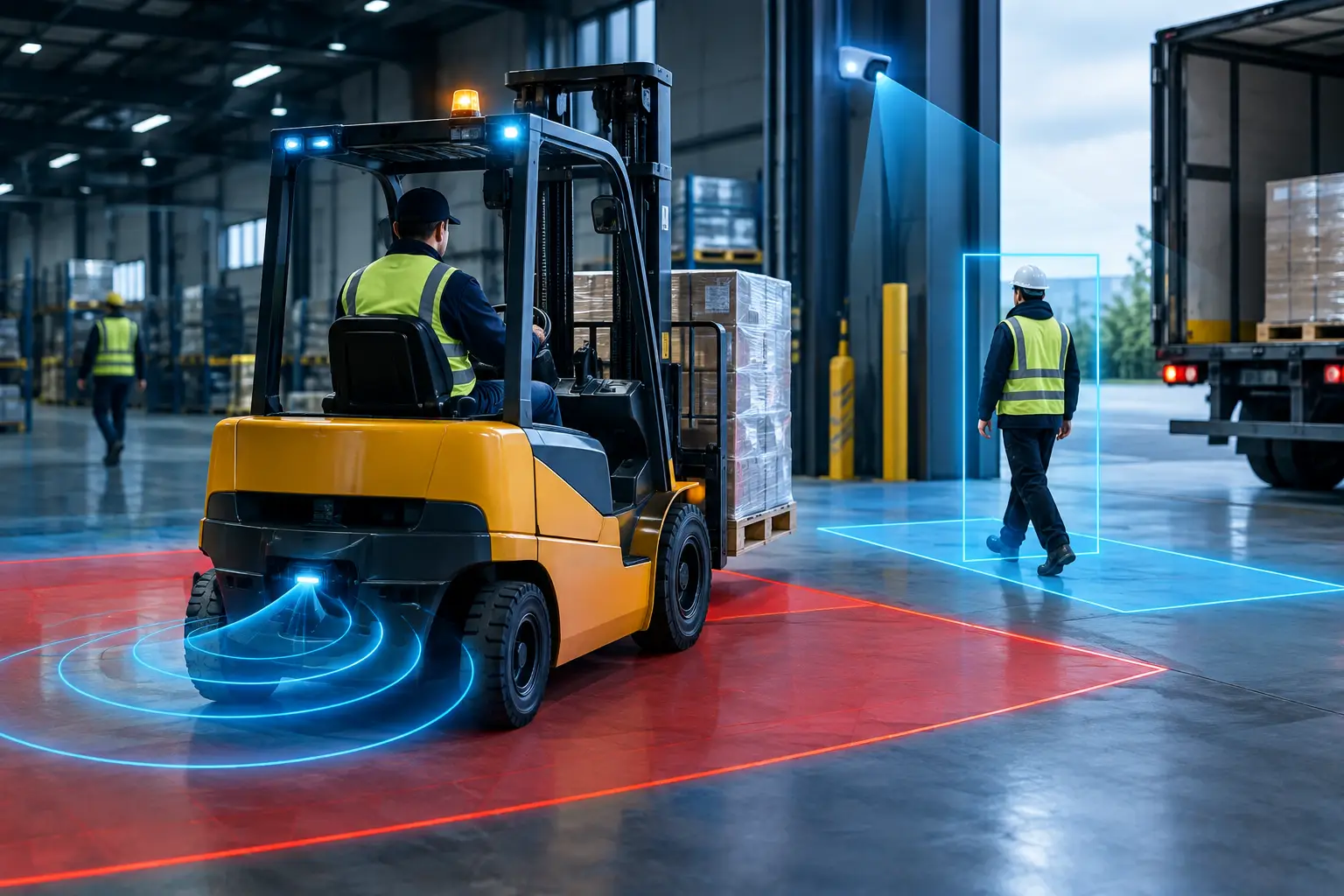
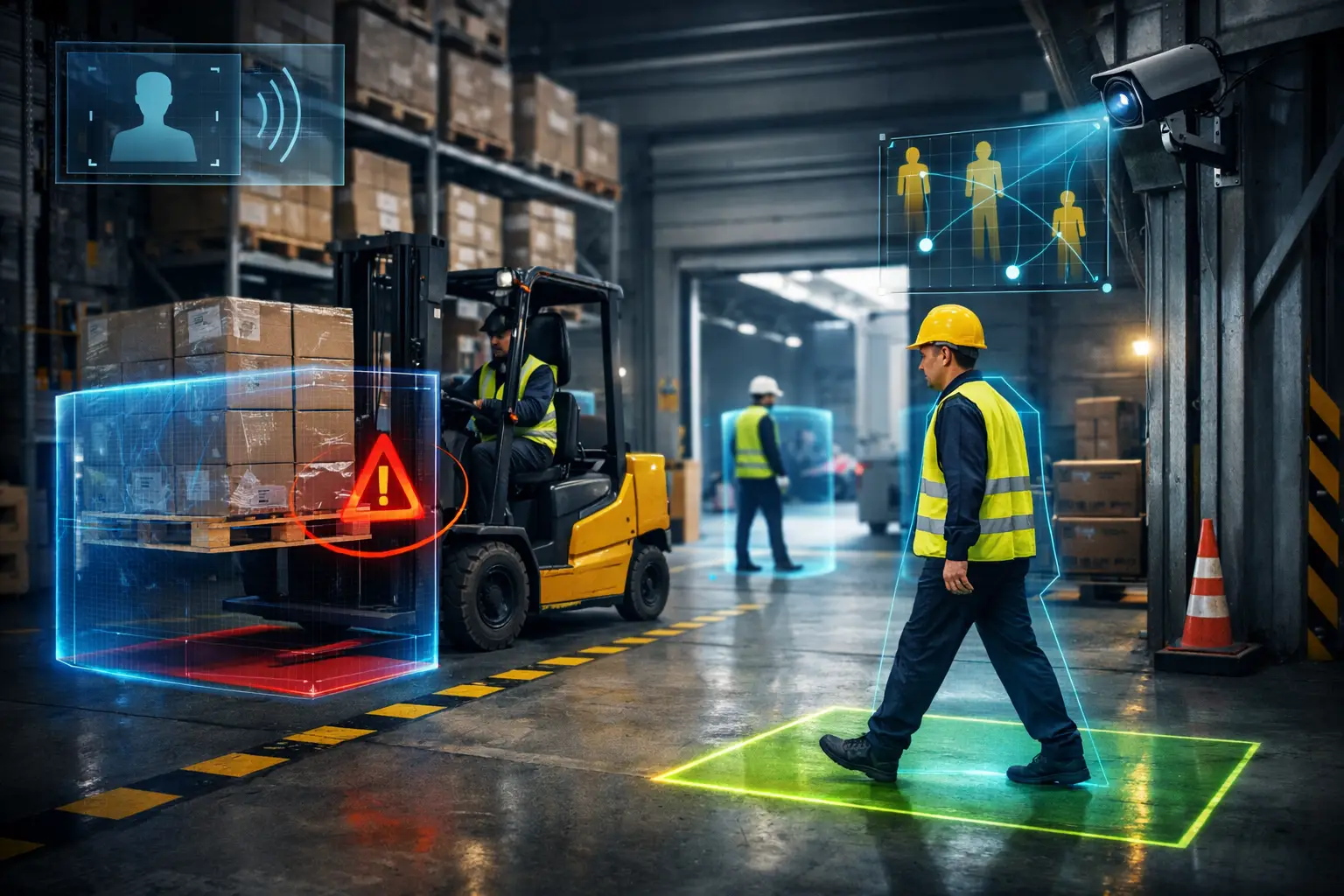
Safety technology can reduce that risk in ways floor markings cannot. Proximity warning systems, audible and visual alerts, and safety floor projection help make vehicle movement more visible. In higher-risk environments, forklift-pedestrian collision prevention systems can detect approaching people or vehicles and trigger warnings before contact occurs. The value here is practical – drivers get earlier awareness, pedestrians receive clearer hazard signals, and managers gain a more reliable control than relying on human attention alone.
Loading bay hazards that affect both people and throughput
Loading bays are often treated as operational bottlenecks first and safety zones second. That is backwards. A poorly controlled dock can create trailer separation, vehicle movement during loading, unsafe entry conditions, and preventable equipment damage.
Vehicle restraint systems and dock safety controls are designed to stabilize one of the most unpredictable parts of warehouse activity. They help reduce the risk of premature truck departure and trailer movement while loading is underway. This protects dock staff, lift truck operators, and goods in transit. It also supports smoother turnaround because teams can work with clearer status indication and fewer interruptions.
Rack, column, and facility impact damage
A low-speed forklift strike may seem minor, but repeated impacts weaken rack uprights, damage barriers, and create hidden structural risk. The cost is not limited to repair. There is also product loss, disrupted inventory access, and unplanned downtime during inspection or replacement.
This is why warehouse safety barriers and rack protection should be viewed as part of operational resilience, not just physical guarding. Good protection systems absorb or deflect impact in vulnerable areas such as aisle ends, doors, workstations, and support columns. The right design depends on traffic type, vehicle weight, turning radius, and the consequences of failure in that specific zone.
The role of Vision AI in warehouse safety solutions Singapore facilities are adopting
Many facilities already know where incidents tend to happen. The harder part is proving patterns, monitoring exposure, and intervening before an event becomes an injury. That is where Vision AI safety monitoring is changing the conversation.
Vision AI can identify unsafe interactions such as pedestrians entering vehicle zones, congestion at crossings, or repeated noncompliant movement patterns in high-risk areas. Used properly, it gives managers better visibility into actual operating behavior rather than assumptions based on periodic observation. That makes corrective action more targeted.
There is a trade-off to manage here. Data without action adds noise. Facilities should avoid treating Vision AI as a passive reporting layer. Its value comes when findings are tied to engineering changes, revised traffic flow, warning system placement, or operator coaching. In other words, visibility matters only if it leads to prevention.
Why a layered approach works better than one-off fixes
A common mistake is to buy a single device to solve a broad safety problem. A warning light at one crossing may help, but it will not control dock movement. A barrier may protect a column, but it will not address blind intersections. Effective warehouse safety solutions Singapore operators rely on usually work as a system of controls rather than isolated products.
That system often includes physical separation where possible, intelligent warnings where movement overlaps, impact protection where contact is likely, and monitoring where exposure is hard to see consistently. Training still matters, but it performs better when supported by infrastructure and technology. Workers respond more reliably when safe behavior is reinforced by the environment around them.
This is also where engineering input matters. The right solution depends on site layout, fleet mix, operating speeds, shift patterns, and the difference between occasional risk and constant exposure. Two warehouses can share the same incident type and still need different controls.
How to evaluate safety improvements without slowing operations
Safety decisions in industrial environments are rarely made on safety criteria alone. Managers also need to protect productivity, avoid unnecessary disruption, and justify investment. That does not mean choosing the cheapest option. It means choosing controls that fit the operation.
Start with exposure, not product preference. Where do forklifts and pedestrians mix? Where are impacts recurring? Which loading bays have the highest movement or turnaround pressure? The goal is to identify where one improvement can reduce multiple losses at once – injury risk, equipment damage, repair cost, and downtime.
Then assess implementation realities. Some sites need retrofit-friendly systems because downtime is limited. Others may need scalable solutions rolled out in phases across several facilities. In high-volume environments, maintenance requirements and long-term durability matter as much as initial performance. A system that is frequently bypassed, damaged, or ignored will not deliver the result promised on paper.
It also helps to measure success beyond incident counts alone. Near-miss trends, impact frequency, dock interruption, and traffic compliance all provide earlier evidence that controls are working. Waiting for an injury-free period as the only indicator is too passive for modern operations.
What decision-makers should expect from a safety solutions partner
Industrial buyers are not just purchasing equipment. They are trying to reduce risk in a live operating environment. That requires more than a catalog of devices. It requires hazard understanding, engineering judgment, installation planning, and support after commissioning.
A capable partner should be able to assess traffic flow, identify priority risks, recommend suitable combinations of barriers, warning systems, dock controls, and monitoring tools, and explain why those choices fit the site. They should also help teams think through practical issues such as positioning, user behavior, service access, and future expansion.
That is especially important when organizations are upgrading legacy sites. Older facilities often have tighter layouts, more mixed traffic, and structural constraints that make standard solutions less effective. In those cases, a consultative approach usually delivers better outcomes than a simple product swap. Providers such as SysGuard bring value when they connect safety technology with implementation discipline, training, and maintenance support instead of treating the project as a one-time installation.
Building a safer warehouse is an operational decision
The strongest safety programs are not built around reacting to incidents. They are built around controlling exposure before something goes wrong. In warehouses, that means paying close attention to vehicle movement, pedestrian interaction, loading bay conditions, and impact-prone infrastructure.
When safety controls are chosen well, the benefits show up across the operation. Workers move with greater confidence, damage rates fall, bottlenecks become easier to manage, and managers spend less time dealing with preventable disruptions. Every worker deserves to return home safely every day. The practical path to that outcome is not more warning posters. It is a warehouse environment designed to prevent accidents while keeping operations moving.