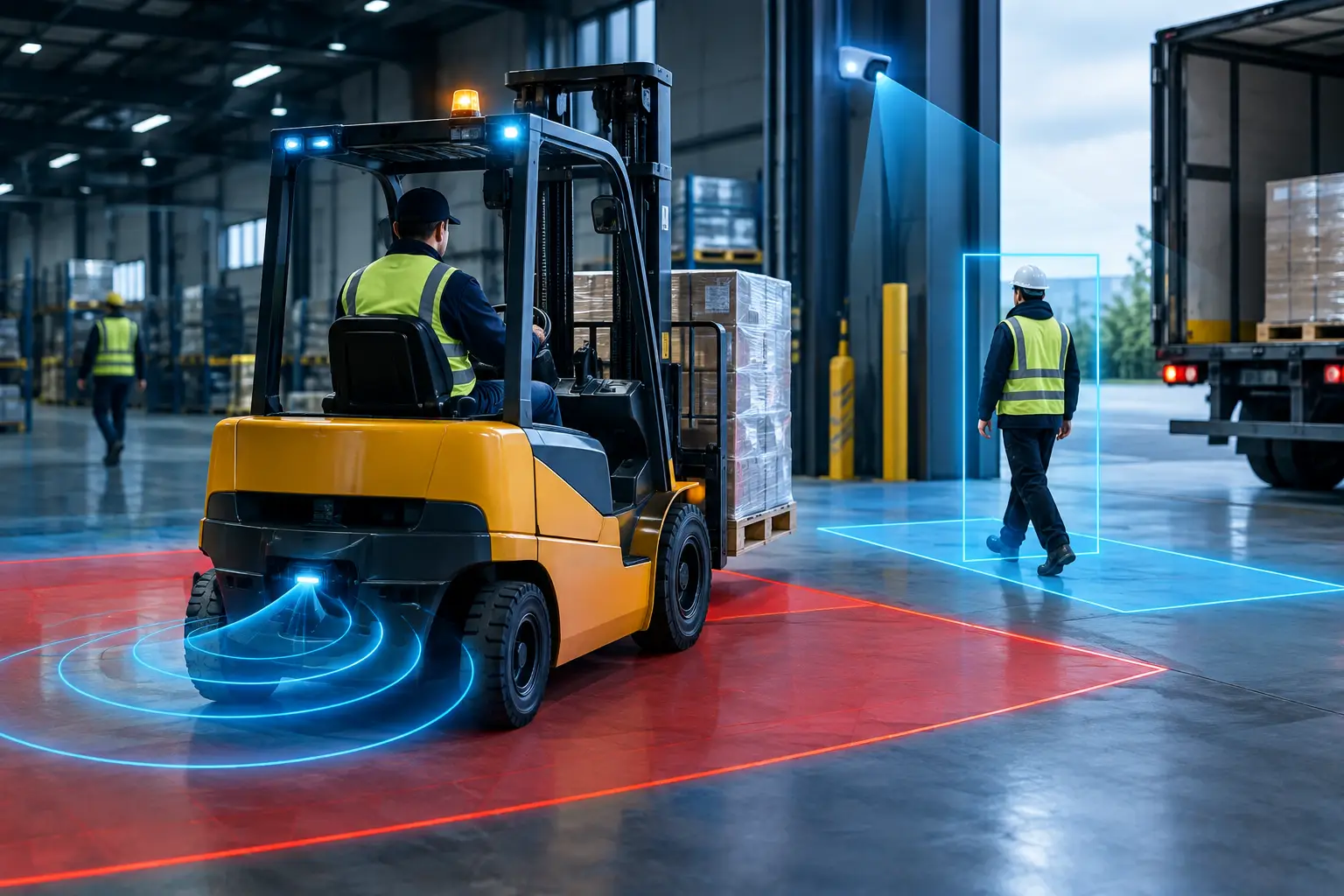
A forklift turning out of a rack aisle, a pedestrian crossing a travel path, and a truck preparing to leave a loading bay can create a high-risk situation in seconds. Industrial safety installation services turn identified hazards like these into practical, site-specific controls that protect people without disrupting the operation that keeps the facility moving.
For warehouse, plant, and logistics leaders, the challenge is rarely a lack of safety intent. The challenge is implementing controls that work under real operating conditions: peak shifts, changing layouts, mixed vehicle traffic, limited space, and teams under pressure to meet throughput targets. Effective installation is where a safety plan becomes a safer workplace.
Why Installation Quality Determines Safety Performance
Safety technology is only as effective as its placement, configuration, and integration with daily work. A warning light mounted where operators cannot see it, a barrier installed outside the true impact zone, or a sensor calibrated for an ideal rather than actual aisle condition may provide a false sense of control.
This is why installation should begin with how people, forklifts, pallet jacks, trucks, and materials actually move through the site. Engineering teams need to understand blind corners, reversing zones, dock approaches, pedestrian routes, rack end exposure, and areas where congestion changes by shift or season.
The goal is not to fill a facility with devices. It is to introduce controls that address specific risks while preserving visibility, access, and productive traffic flow. In some locations, physical separation is the right answer. In others, intelligent alerts, floor projection, or vehicle-pedestrian detection can provide a stronger control without requiring a major layout change.
What Industrial Safety Installation Services Should Include
A capable provider does more than deliver equipment and send an installation crew. The service should connect risk assessment, system design, commissioning, and ongoing support into one accountable process.
Site assessment and risk prioritization
Every facility has different risk patterns. A distribution center with intensive forklift activity has different exposure points from a manufacturing plant with automated production lines and material transfer areas. A loading bay may have risks related to early vehicle departure, trailer movement, dock access, or poor communication between drivers and dock teams.
A site assessment identifies where the potential consequences are highest and which controls will make a measurable difference. This includes reviewing traffic flow, sightlines, work processes, equipment types, operator behavior, and existing safety measures. The result should be a prioritized plan, not a generic product list.
Solution design for the operating environment
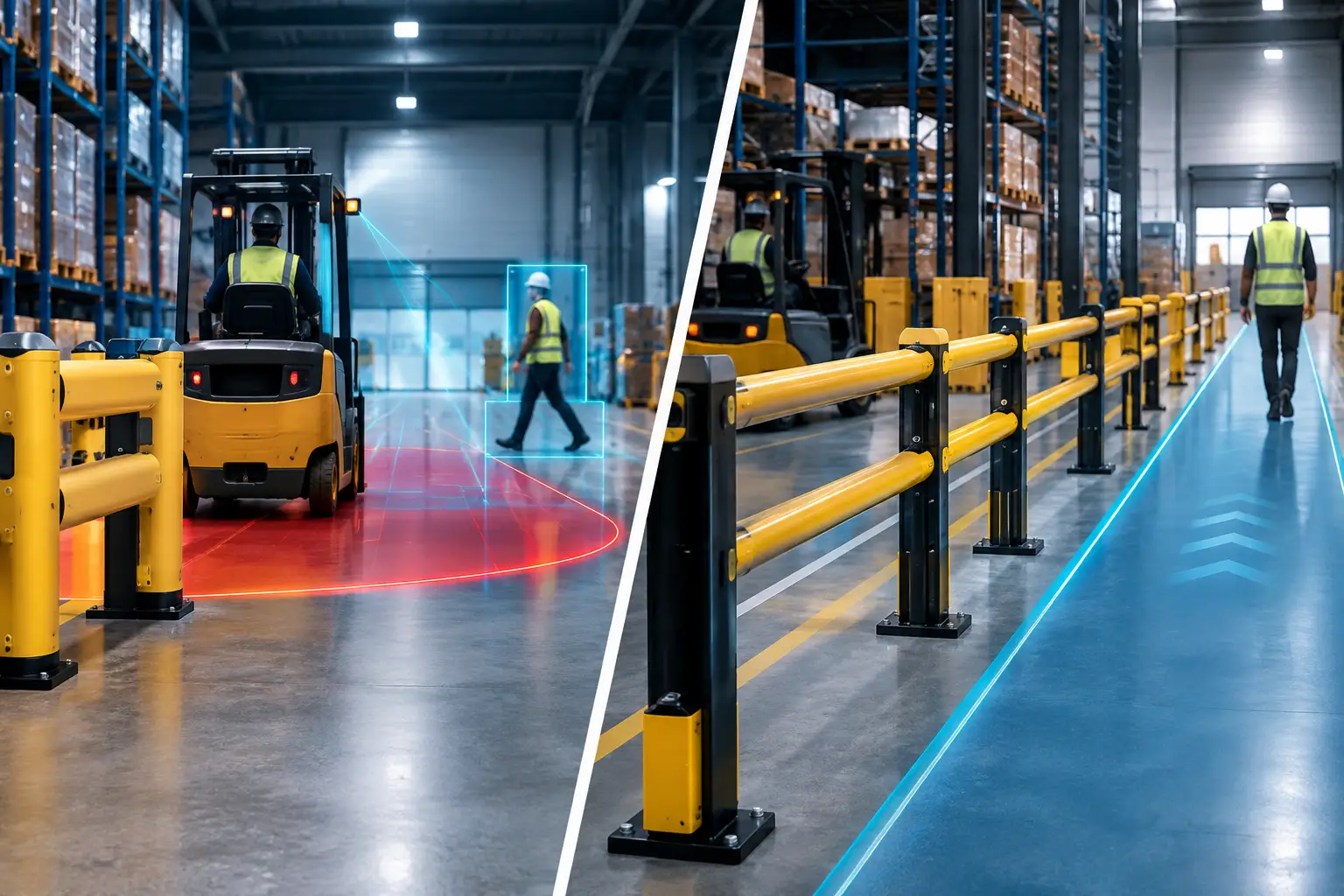
The right system depends on the hazard, the site conditions, and the behavior it needs to influence. Forklift-pedestrian collision prevention may combine proximity detection with audible and visual warnings at crossings. A high-traffic intersection may benefit from projected warning symbols that remain visible even where floor markings become worn or obstructed.
For rack and facility protection, the design must account for the likely direction and force of impact, available clearance, and access requirements. At loading bays, vehicle restraint systems, dock communication lights, and warning devices need to operate as a coordinated process rather than isolated components.
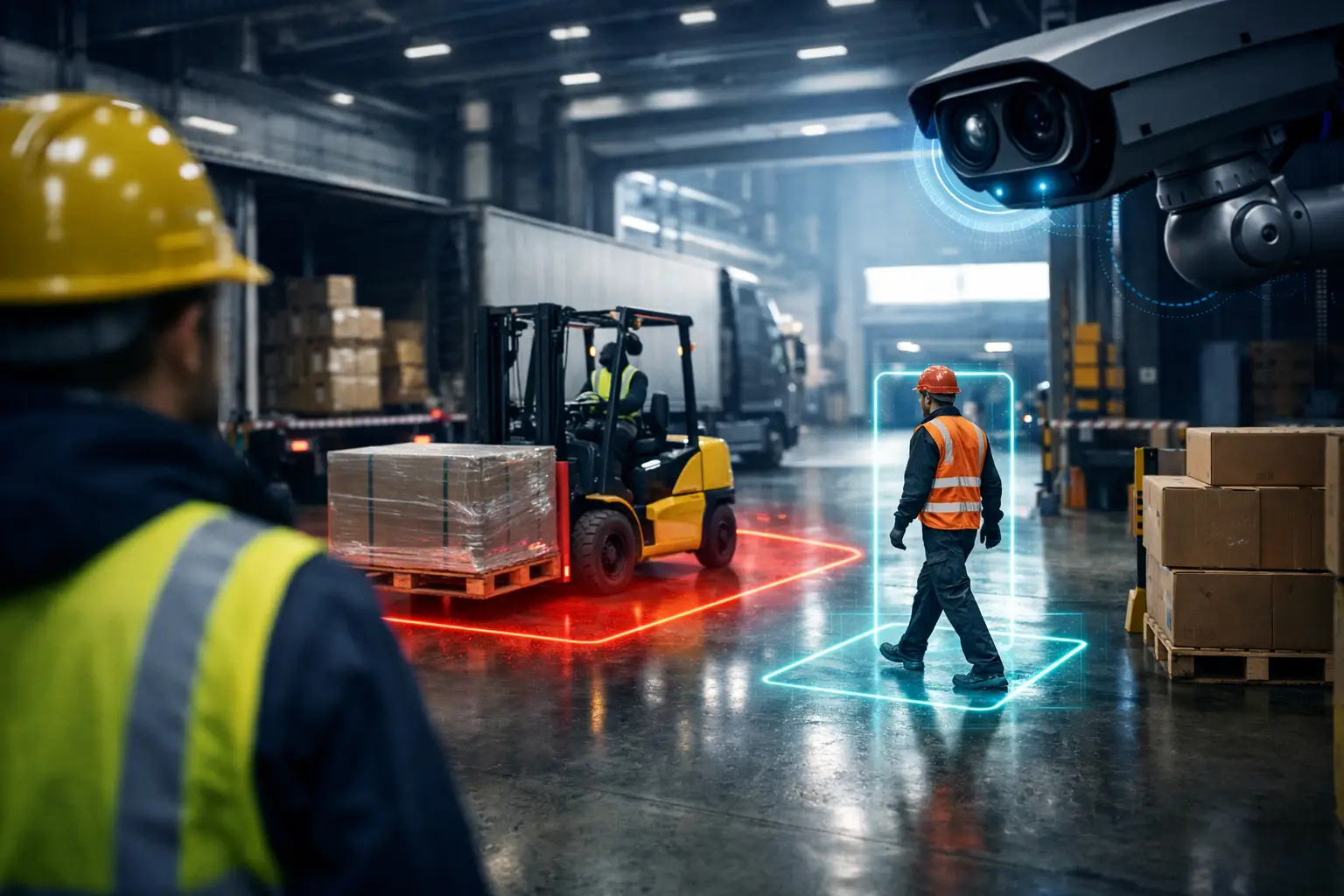
There are trade-offs. Physical barriers offer reliable separation but can reduce maneuvering space if poorly planned. Vision AI monitoring can identify unsafe interactions and provide useful operational insights, but its value depends on camera positioning, defined detection zones, and a clear response process. The best design balances risk reduction with the practical realities of the site.
Professional installation and integration
Industrial environments demand installation methods that are durable, accurate, and planned around operations. Equipment must be secured to suitable surfaces, electrical connections protected, sensor ranges calibrated, and warning devices positioned for clear visibility and audibility within the expected work environment.
Installation timing matters as well. Many facilities cannot stop operations for a full day. A staged installation plan can isolate work areas, coordinate with shift schedules, and reduce disruption while maintaining safe access routes. For larger projects, commissioning by zone allows teams to verify performance before moving to the next area.
Where several technologies are used together, integration is essential. For example, a forklift detection system may need to trigger warning lights or projected signs at a crossing. A loading bay restraint system may need clear status indications for both the driver and dock personnel. These details determine whether a system supports fast, consistent decision-making at the point of risk.
Testing, commissioning, and user handover
A completed installation is not necessarily a commissioned system. Before handover, the provider should test devices in the conditions they were intended to manage. That means checking detection at realistic approach speeds, visibility from operator positions, alert timing, barrier clearance, and system response during normal workflows.
Training is equally important. Workers do not need lengthy technical instruction, but they do need to understand what an alert means, what action is expected, and how the new control affects their work area. Supervisors should know how to inspect the equipment, recognize faults, and escalate issues before a control becomes ineffective.
High-Value Applications in Warehouses and Plants
The highest-value installations typically target recurring exposure points where people and mobile equipment interact. These are the areas where a single incident can cause serious injury, equipment damage, downtime, and disruption across multiple teams.
Forklift travel routes require particular attention. Blind corners, pedestrian doors opening into vehicle paths, cross-aisles, battery charging areas, and staging zones can all create conflict points. Solutions may include safety barriers, pedestrian gates, projected warnings, proximity alert systems, and intelligent monitoring that identifies near misses or unsafe route use.
Loading bays also deserve a focused approach. The transition between a moving vehicle and a fixed facility creates hazards that cannot be managed by procedures alone. Vehicle restraints, bay signaling, dock warning systems, and clear separation of pedestrian access can help reduce the risk of trailer movement, premature departure, and vehicle-dock interaction.
Rack protection is often viewed as an asset-protection measure, but it is also a safety control. Repeated forklift impacts can compromise uprights, obstruct aisles, create unstable storage conditions, and lead to costly operational interruptions. Well-positioned rack-end barriers and column protection reduce damage in the areas most exposed to contact.
Avoiding Common Installation Mistakes
The most common mistake is choosing equipment before examining the workflow. A solution that looks effective on a drawing can fail when placed in a noisy, congested, or constantly changing work area. The installation should be driven by observed risk, not a catalog specification.
Another mistake is treating alerts as a substitute for separation. Audible and visual warnings are valuable where people need to make informed, immediate decisions. But where forklifts and pedestrians can be physically separated, barriers, protected walkways, and controlled crossing points may provide a more dependable layer of protection.
Facilities also need to avoid a one-time project mindset. Impact barriers can be damaged, sensors can be misaligned, and operating patterns can change after a layout revision or throughput increase. Routine inspection and maintenance keep installed controls relevant and effective.
Measuring Whether the Installation Is Working
Safety outcomes should be reviewed after installation, not assumed. Useful indicators include reported near misses, forklift-related damage, unauthorized pedestrian movement, barrier impacts, loading bay incidents, and the frequency of warning activations.
Numbers alone do not tell the full story. Supervisors and operators can identify whether a warning is visible at the right moment, whether a protected route is being used as intended, or whether congestion has shifted to another part of the facility. This feedback helps refine the system before small issues become normalized risks.
SysGuard approaches industrial safety as an engineering and operational challenge, combining practical site assessment with technologies that help facilities prevent accidents, protect assets, and maintain productive flow. Every worker deserves to return home safely every day, and the right installation makes that responsibility visible in the way a facility operates.
Start with the locations where a person and a vehicle can meet unexpectedly. When those points are assessed carefully and controlled well, safety improvements become part of the operation rather than an obstacle to it.