A forklift clips an upright, the beam still looks level, and the shift continues. That is how rack damage gets underestimated. In most warehouses, the real problem is not a single impact. It is the combination of repeated low-speed strikes, weak reporting, and layouts that leave no room for error. If you are evaluating how to prevent rack damage, the answer is not one barrier or one inspection form. It is a control strategy that reduces impact, detects damage early, and corrects the operating conditions that caused it.
Rack damage is an asset protection issue, but it is also an operational risk. Once uprights, columns, beams, base plates, or anchors are compromised, load stability becomes less predictable. That affects inventory security, forklift movement, downtime, and the confidence of the team working around the rack line. The most effective prevention programs treat racks as part of a larger traffic and safety system, not as static storage equipment.
How to prevent rack damage starts with traffic reality
Most rack impacts happen in predictable locations. End-of-aisle frames, turning zones, pick faces near cross aisles, staging areas under time pressure, and lanes with mixed pedestrian and forklift movement are usually the first places to review. Damage is often blamed on driver behavior alone, but layout and process design usually play a major role.
If aisle widths are tight for the truck type in use, operators are forced into sharper approaches and corrections. If pallets overhang or are stored inconsistently, clearance shrinks even more. If floor markings are faded or staging areas spill into travel paths, the rack becomes the nearest hard object in a congested environment.
That is why prevention starts with observing how vehicles actually move through the site. Look at turning arcs, visibility limits, reversing frequency, pallet presentation quality, and congestion at peak hours. A warehouse may appear compliant on paper and still create daily conditions where rack strikes are likely.
Common causes of rack damage
Forklift contact is the obvious cause, but it is rarely the only one. Poor pallet quality can shift loads during put-away and retrieval. Inconsistent loading practices can place unusual stress on beams. Floor defects can affect truck stability and alignment. In some facilities, racks are repeatedly hit because the operating model changed but the storage layout did not.
There is also the issue of normalized damage. Teams get used to minor dents, scraped paint, and bent protectors. Over time, these signs stop triggering action. That creates a culture where near misses are absorbed into daily operations instead of treated as warnings.
A practical prevention plan addresses both direct causes and management habits. If reporting is weak, inspections are irregular, and repairs are delayed, small defects become recurring exposure points.
Build protection into the layout, not around the problem
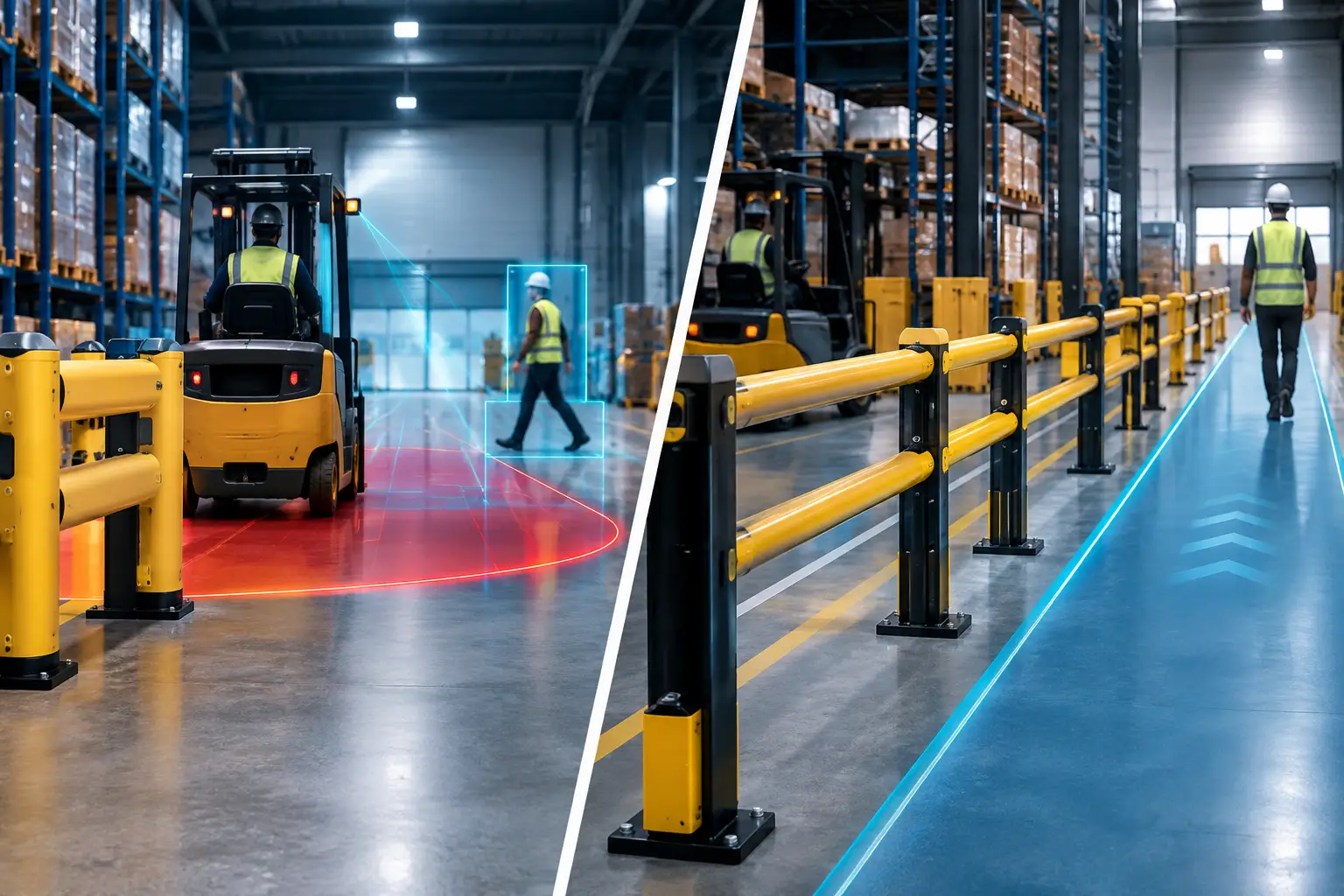
Physical protection matters, but it works best when paired with better traffic design. Rack end protectors, upright guards, and column protection can absorb or deflect low-level impacts in vulnerable areas. Safety barriers can separate vehicle paths from rack lines where space allows. The value is not just impact resistance. It is also giving operators a clearer visual boundary.
Still, protection products are not a substitute for fixing a flawed aisle design. If trucks are constantly turning too close to the frame or handling oversized loads in undersized lanes, guards will take repeated punishment and eventually the rack will too. Prevention means asking whether the route, aisle width, rack position, and staging flow are fit for the operation.
In high-traffic zones, small design changes can have a large effect. Better staging discipline, designated turning pockets, improved floor markings, and clearer lane separation often reduce contact more effectively than adding more signs.
Inspection is where prevention becomes measurable
Any serious approach to how to prevent rack damage needs a disciplined inspection process. Without it, management relies on visible failures and operator memory. Neither is enough.
Daily visual checks by supervisors or equipment users can catch fresh impact signs, leaning frames, dislodged safety pins, or damaged protectors. More formal periodic inspections should be documented and carried out by personnel who understand rack components, damage severity, and escalation steps.
The key is consistency. Many facilities have inspection checklists, but the follow-up process is unclear. If damage is found, who tags the bay, who assesses usability, who authorizes repair, and how quickly is action taken? Prevention improves when the response path is as structured as the inspection itself.
It also helps to track recurring damage by location, shift, truck type, and task. That turns inspections into operational data. If one aisle shows repeated upright strikes, the site likely has a design, process, or visibility issue that training alone will not solve.
Train for real operating conditions
Operator training is essential, but generic forklift instruction will not fully address rack damage risk. Teams need site-specific guidance tied to the actual constraints of the facility. That includes travel routes, speed expectations, staging rules, visibility hazards, pedestrian interaction points, and what to do after minor contact.
One of the most overlooked training gaps is incident reporting after low-impact collisions. Operators may assume that if the rack still looks usable, there is nothing to report. In practice, small deformations can matter, especially when impacts are repeated. Training should make it clear that reporting a strike is part of safe operation, not an admission of failure.
Supervisors also need to reinforce handling quality, not just output. If performance pressure rewards speed without accounting for safe put-away and retrieval, rack contact becomes more likely. Prevention improves when the site measures both productivity and control.
Standardize pallet and load handling
Racks are often damaged indirectly by poor load quality. Broken pallets, uneven loads, overhang, and unstable wrapping make placement less accurate and retrieval more abrupt. Operators compensating for poor pallet condition have less margin for precision.
A practical control is to set clear acceptance criteria for pallets entering storage. If damaged pallets are allowed into high-bay or narrow-aisle locations, the risk moves from receiving to the rack system. Consistent pallet quality, proper load dimensions, and disciplined put-away rules reduce the need for corrective maneuvers near uprights and beams.
This is also where cross-functional alignment matters. Warehouse operations, maintenance, and procurement may all influence pallet standards and storage practices. Rack protection works best when those groups are solving the same problem, not managing separate symptoms.
Use technology where visibility and behavior are the issue
In busy facilities, manual supervision has limits. Congested intersections, blind corners, and high-frequency forklift zones can produce repeated risky behavior before management sees a pattern. This is where safety technology becomes useful.
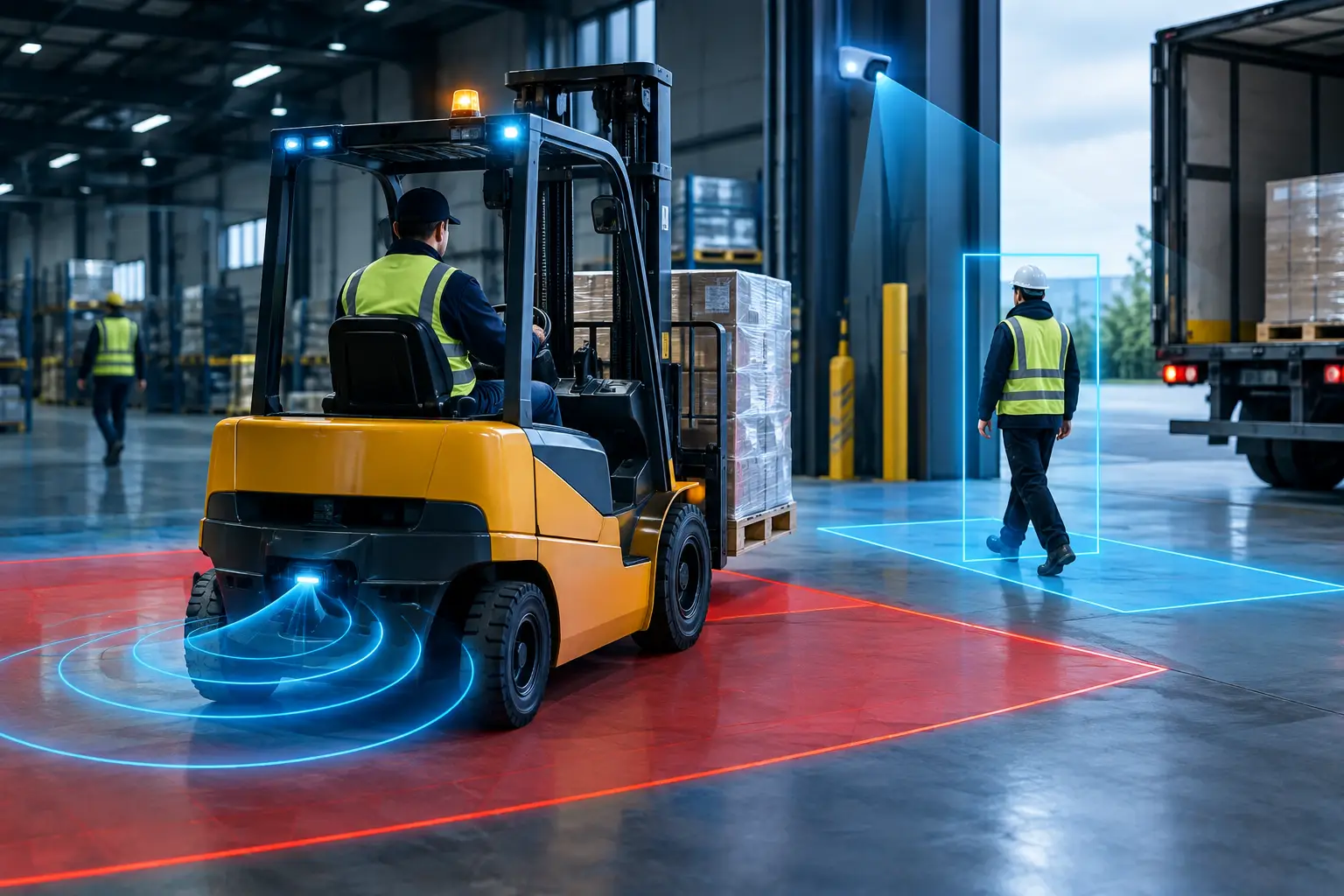
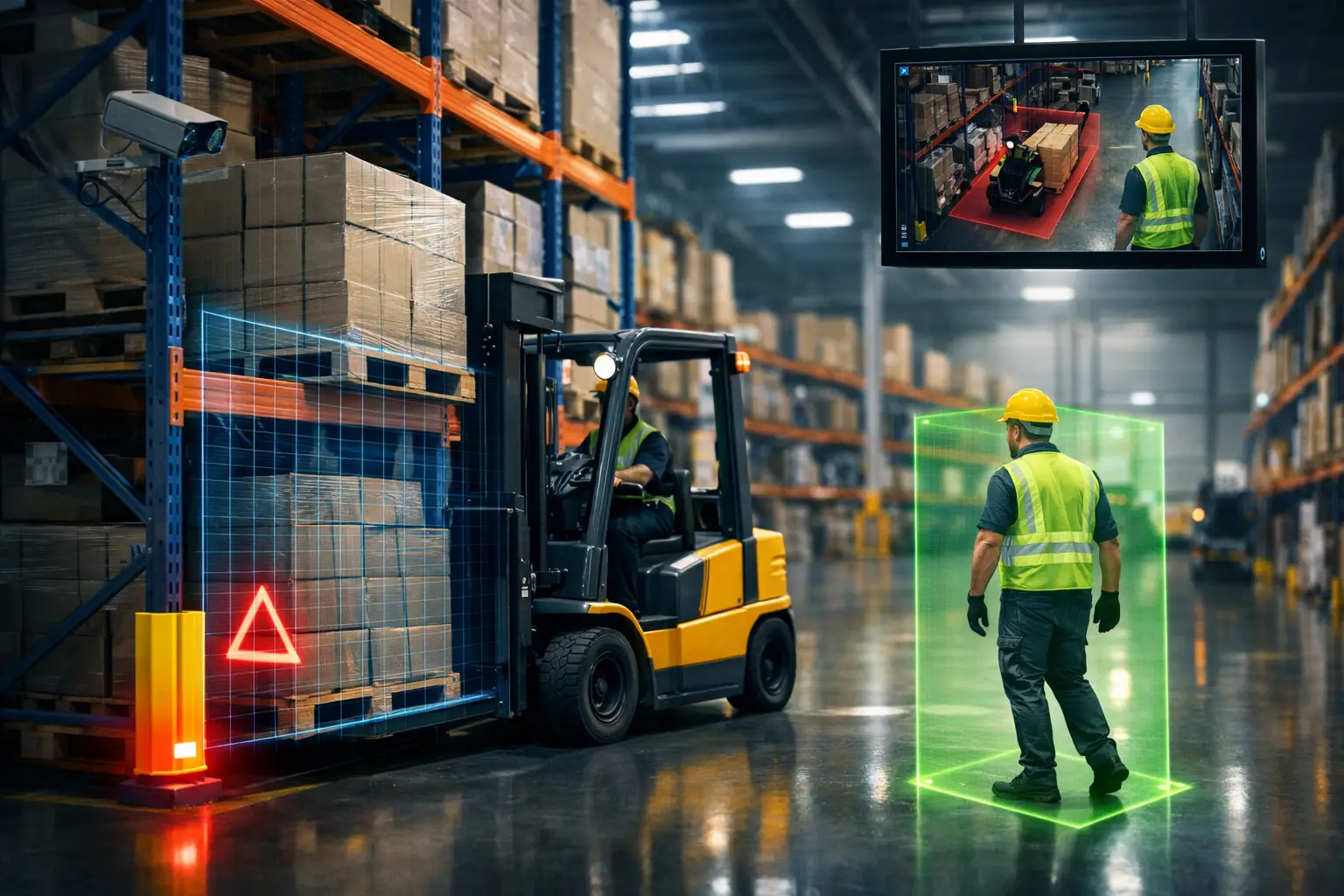
Audible and visual warning systems can alert operators to conflict zones or approaching traffic. Safety floor projection can reinforce exclusion zones and travel paths in areas where static markings are not enough. Proximity warning systems can help reduce close interactions between vehicles, structures, and people in constrained spaces.
For sites with recurring incidents or limited line of sight, Vision AI safety monitoring can add another layer of insight. It can help identify where unsafe approaches, speeding, or repeated near misses are happening around rack lines. The goal is not technology for its own sake. The goal is faster risk detection and better intervention before damage becomes structural or costly.
How to prevent rack damage without slowing the operation
Some managers hesitate to tighten controls because they fear reduced throughput. That concern is understandable, especially in distribution environments where every delay affects service levels. But rack damage already slows the operation. It creates unplanned inspections, repair work, blocked storage locations, product risk, and disruption to vehicle flow.
The better question is which controls reduce risk without adding friction. In many cases, the answer is a combination of engineered protection, cleaner traffic flow, better visibility, and targeted training rather than blanket restrictions. A well-designed safety measure should support efficiency by reducing uncertainty and rework.
There is always a trade-off to manage. Extremely rigid vehicle controls may not suit every warehouse layout. Extensive barriers can constrain flexibility if they are placed without understanding material flow. The right solution depends on truck type, aisle geometry, load profile, traffic density, and the maturity of site discipline. That is why assessment matters more than assumptions.
Make ownership clear at the site level
Rack damage prevention usually fails when responsibility is too diffuse. Operations blames equipment handling, maintenance waits for approved repair requests, and safety teams identify issues without owning corrective action. The result is delay.
A stronger model assigns clear ownership for inspection, reporting, temporary controls, repair coordination, and trend review. It also gives site leaders a simple way to escalate repeat issues that point to deeper layout or process problems. When responsibilities are clear, prevention becomes part of operations management instead of a periodic safety campaign.
For organizations managing multiple facilities, it helps to standardize the basics while allowing for local conditions. A regional operation in Singapore, Malaysia, or Indonesia may use different truck fleets, rack types, and throughput models, but the prevention principles remain the same: reduce impact exposure, strengthen detection, and act before minor damage becomes a major risk.
Rack damage rarely starts as a major event. It starts as something small that people learn to work around. The safer path is to treat every impact, every bent protector, and every repeated near miss as useful information. That is where better decisions begin, and where safer, more reliable warehouse operations are built.