A forklift clipping a rack leg is easy to dismiss as a minor incident – until the same traffic pattern causes a pedestrian near-miss, damaged stock, and unplanned downtime a week later. That is where industrial safety barrier systems earn their place. In active warehouses, factories, and logistics sites, barriers are not just physical dividers. They are part of a wider risk-control strategy that separates people from moving equipment, protects assets, and keeps operations flowing.
The most effective safety barriers are rarely chosen by catalog alone. They work because they are matched to actual site conditions – vehicle type, travel speed, turning radius, pedestrian routes, rack exposure, loading activity, and maintenance access. When those factors are ignored, even a well-built barrier can create blind spots, restrict workflows, or leave critical areas exposed.
What industrial safety barrier systems are meant to solve
In industrial environments, the hazard is usually not a single dramatic event. It is repeated exposure to predictable risk. Forklifts reverse into walkways. Pallet jacks drift near door openings. Trucks move through loading areas with limited visibility. Operators cut corners to save seconds, and over time those seconds add up to unsafe patterns.
Industrial safety barrier systems help control those patterns by creating clear physical boundaries. They define where vehicles can travel, where pedestrians can walk, and which assets need impact protection. That sounds straightforward, but the real value is operational. A properly designed barrier system reduces accident potential while also limiting rack damage, shutter damage, door frame impacts, and disruption to traffic flow.
This matters because many facilities already have painted lines and warning signs. Those controls are useful, but they depend on constant attention and perfect behavior. Physical barriers add a higher level of protection when attention drops, lighting changes, or traffic volume increases.
Not all barriers protect against the same risk
One common mistake is treating all barriers as interchangeable. They are not. A barrier intended to guide foot traffic is different from one designed to absorb repeated forklift impact. A rack-end protector solves a narrower problem than a full pedestrian segregation system. The right choice depends on what needs protection and how the impact is likely to happen.
Pedestrian barriers
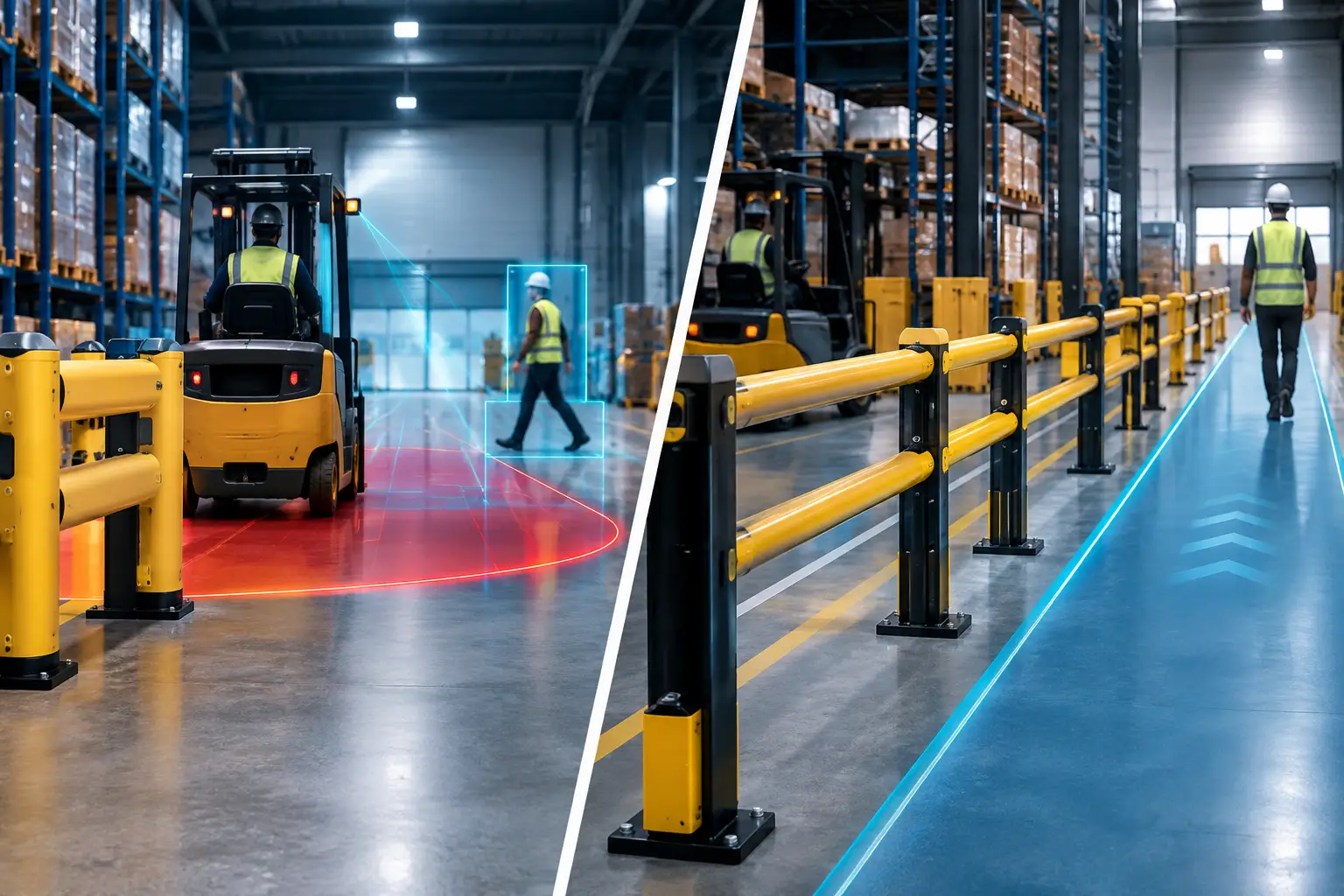
These are used to separate people from forklift lanes, transfer zones, and high-traffic work areas. Their job is to make accidental crossover less likely and to create a visible, physical boundary that supports safer movement. In facilities where operators and pickers share space, pedestrian barriers are often one of the most effective controls because they reduce reliance on eye contact and hand signals.
Vehicle impact barriers
These barriers are built for areas where forklifts, reach trucks, or other material handling equipment may strike infrastructure. They are commonly installed around building columns, production equipment, door frames, utility areas, and key traffic intersections. The best systems absorb and deflect impact energy rather than simply transferring it into the floor or anchor points.
Rack and asset protection
Not every impact threatens a person directly, but asset damage can quickly become a safety issue. A damaged rack upright, exposed machine base, or repeatedly hit loading bay structure can compromise both equipment and site safety. Targeted barrier protection in these areas often prevents a small collision from turning into a larger operational failure.
How to evaluate industrial safety barrier systems properly
Choosing barriers should begin with exposure, not product preference. Start by asking where vehicle and pedestrian paths intersect, where impacts have already occurred, and which areas would cause the most serious consequence if struck. Near-miss records, maintenance logs, operator feedback, and traffic observations usually reveal more than a general site walk.
Barrier height, strength, visibility, and layout all matter. A low-profile rail may be enough to discourage pedestrian drift in one area, but it will not protect against a loaded forklift turning too tightly at speed. In another zone, a heavy-duty barrier may offer good impact resistance but make maintenance access awkward, causing teams to prop gates open or bypass controls. The right solution is often a combination of barrier types rather than a single standard across the site.
Material selection also deserves closer attention than many buyers give it. Traditional steel barriers can be effective in certain applications, especially where fixed heavy-duty protection is required. Polymer-based systems can offer energy absorption, visibility, and lower repair demands in environments with frequent low- to medium-energy impacts. Neither is automatically better in every setting. The operating environment, impact profile, and lifecycle cost should guide the decision.
Installation details affect performance
A barrier is only as reliable as its installation and placement. Anchor quality, floor condition, spacing, and distance from the hazard all influence whether it performs as intended. Poor placement can actually reduce safety by narrowing aisles too much, forcing awkward turning behavior, or creating visual obstructions at corners and crossings.
That is why barrier planning should involve operations, safety, and engineering teams together. The people who manage traffic daily often understand where shortcuts happen. Engineering teams can assess floor integrity, clearances, and fixation requirements. Safety leaders can connect barrier placement to broader risk reduction goals.
Where barriers deliver the most value
The strongest returns usually come from high-frequency risk zones. Forklift-pedestrian interfaces are an obvious priority, especially near picking aisles, staging zones, battery charging areas, and production access points. Loading bays also deserve attention because they combine vehicle movement, edge hazards, equipment handling, and time pressure in one location.
Another high-value area is around structural and operational bottlenecks. Doorways, conveyor entries, machine corners, rack ends, and building columns are often struck because they sit exactly where turning, reversing, or lane merging occurs. A relatively simple protective layout in these zones can reduce recurring repair costs and prevent interruption to throughput.
Facilities with changing layouts need to think carefully about flexibility. A fixed barrier plan may work well in a stable production line but become a constraint in a fast-changing distribution environment. In these cases, modular systems can be useful because they allow controlled reconfiguration without losing protection standards across the site.
Barriers work best as part of a wider safety system
Physical separation is powerful, but barriers should not carry the full burden of workplace safety. They are most effective when combined with traffic management, warning systems, visual controls, and operator awareness. A barrier can prevent intrusion into a lane, but it cannot tell an operator that a pedestrian is approaching from behind a blind corner.
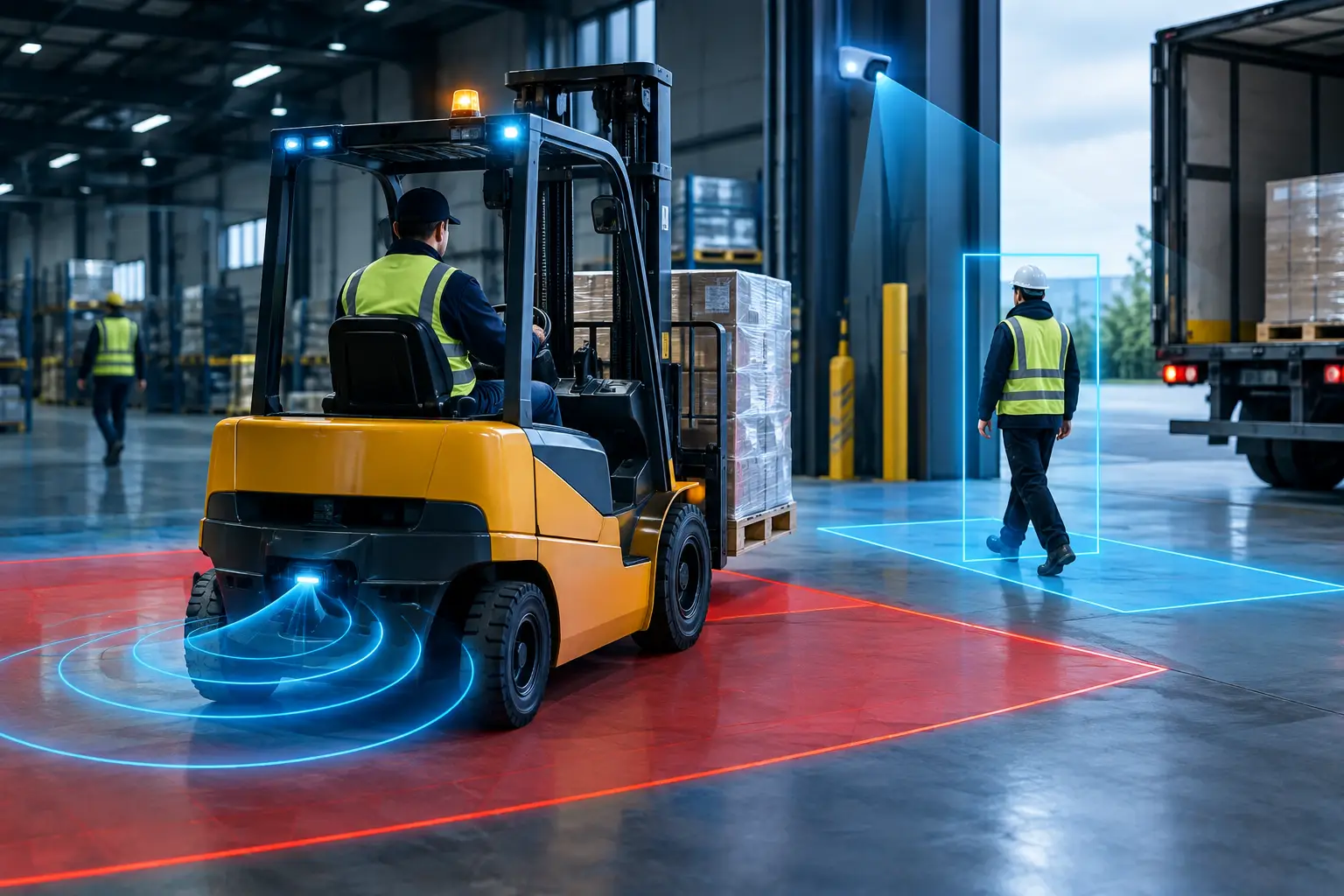
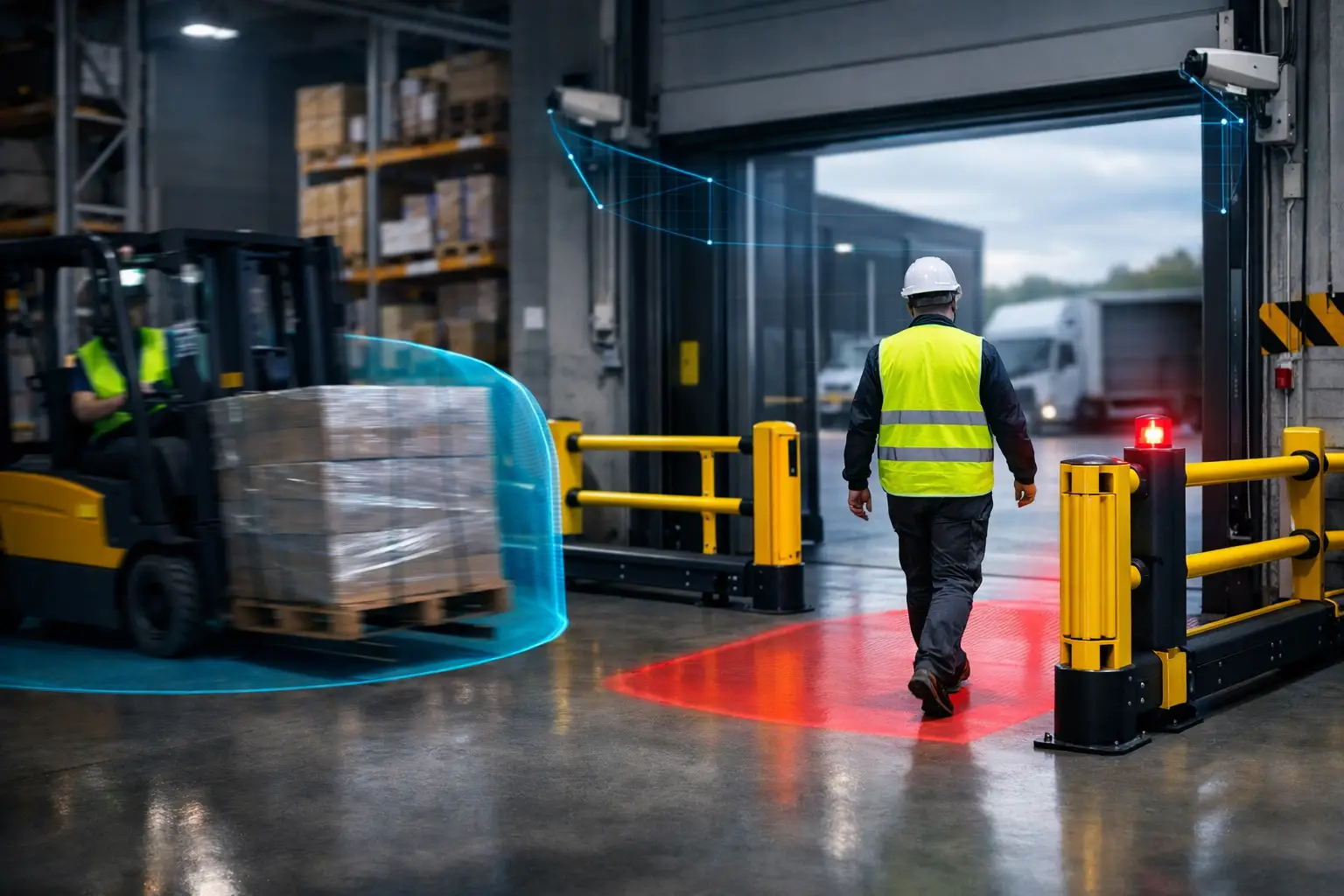
This is where integrated safety planning makes a difference. In many facilities, barriers should work alongside floor projection, audible and visual alerts, proximity warning systems, or Vision AI monitoring to address both physical exposure and human behavior. The point is not to add technology for its own sake. It is to build layers of control that match the site’s actual risk profile.
For example, a crossing point may need a pedestrian barrier to channel movement, a projected warning zone to improve visibility, and an alert system that activates when vehicles approach. That combination often performs better than relying on any one measure alone.
What buyers should look for from a solution partner
The barrier itself is only part of the decision. Buyers should pay attention to whether the provider understands traffic flow, impact dynamics, installation constraints, and long-term maintainability. A supplier that only sells standard products may miss site-specific hazards. A partner with engineering and implementation capability is more likely to identify where a barrier should start, stop, absorb impact, or integrate with other controls.
Practical support after installation matters too. Operations change. New racking is added. Travel routes shift. Expansion phases introduce different vehicle types. Barrier systems should be reviewed as those changes happen so protection remains aligned with the site, rather than becoming a leftover from an earlier layout.
For organizations managing risk across warehouses, factories, and loading operations, this is where an experienced safety partner adds value. SysGuard approaches barrier planning as part of a broader workplace risk reduction strategy – one that connects physical protection with traffic control, warning technologies, and operational realities on the ground.
Industrial safety barrier systems are most effective when they are treated as working infrastructure, not as a one-time purchase. When they are placed with purpose, matched to real hazards, and supported by the right safety controls, they do more than stop impacts. They help create a workplace where movement is clearer, risks are lower, and every shift runs with fewer preventable surprises.