A loading bay can look controlled right up to the moment something goes wrong. A trailer creeps away from the dock. A forklift crosses a wet threshold too fast. A driver reverses off-line and damages the door frame, dock shelter, or building edge. This is why loading bay protection solutions matter – not as isolated products, but as part of a system that manages impact, movement, visibility, and human behavior in one of the busiest points in any facility.
For warehouse managers, EHS teams, and operations leaders, the loading bay is where transport activity and internal material handling meet. That handoff creates risk. Vehicles arrive under time pressure, dock staff work around moving equipment, and forklifts transition between floor surfaces with very little margin for error. If the bay is only protected by painted lines and operator experience, the site is depending too much on luck.
What loading bay protection solutions are meant to prevent
Most incidents at the dock are not dramatic headline events. They are frequent, expensive failures of control. Repeated impact damage to dock doors, bay edges, racking near the loading area, and wall corners can slowly increase maintenance costs and disrupt throughput. A single trailer separation event or forklift fall from the dock can stop operations immediately and put workers at serious risk.
Effective loading bay protection solutions are designed to address several hazards at once. They reduce vehicle creep and premature departure, protect structures from reversing impact, improve pedestrian separation, make hazards more visible, and create clearer operating conditions for drivers and forklift operators. The best results come when these controls are layered rather than installed one at a time in reaction to damage.
That distinction matters. A site that installs dock bumpers but ignores trailer restraint still has a dangerous gap risk. A site that adds a restraint but has poor traffic signaling and weak pedestrian control may still face near misses. Protection at the loading bay works best when it is treated as an engineered safety zone, not just a maintenance issue.
Core loading bay protection solutions for high-risk docks
The most appropriate controls depend on traffic volume, trailer types, dock layout, and how consistently procedures are followed on site. Even so, most facilities benefit from a combination of physical protection, motion control, and visual warning systems.
Vehicle restraint systems
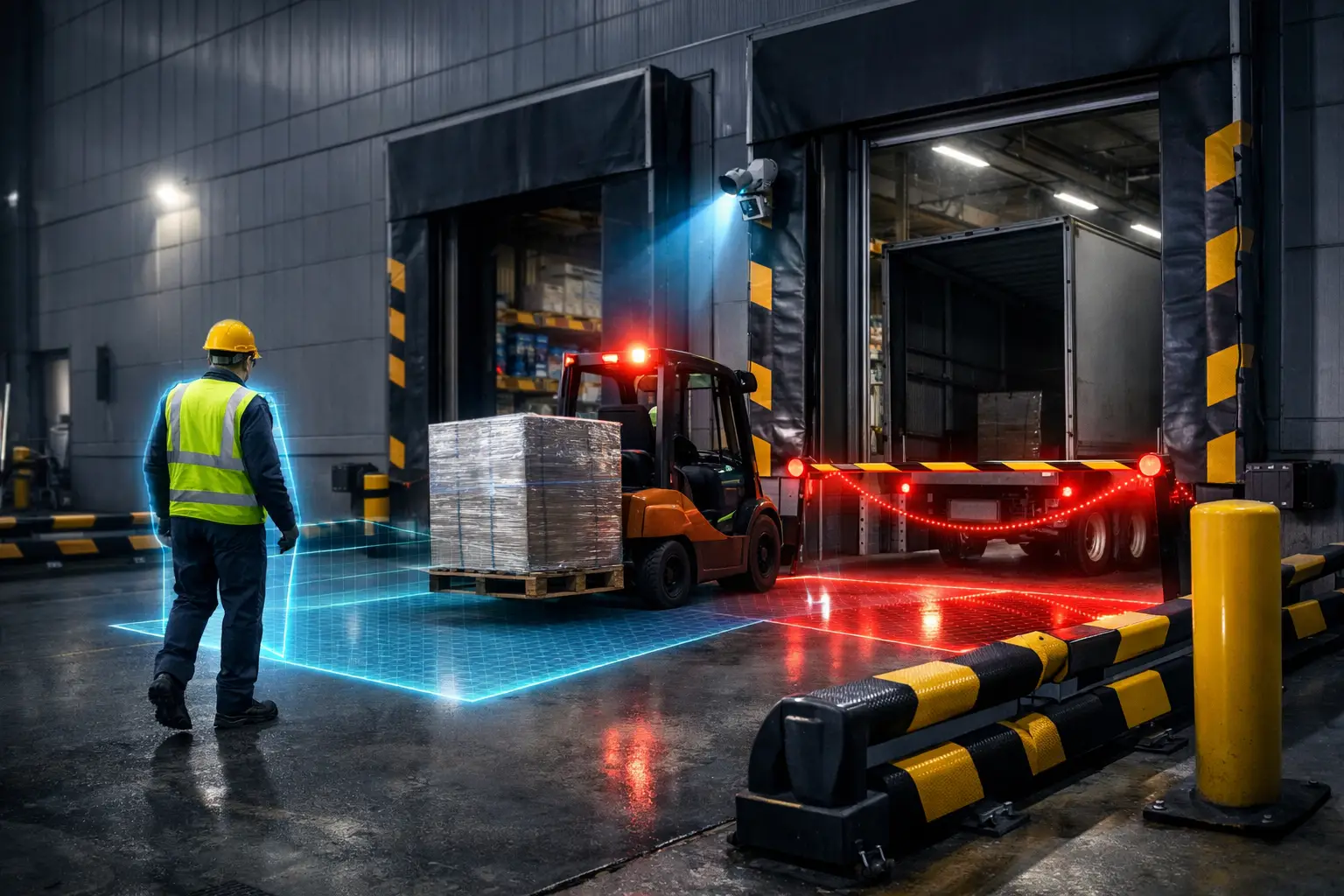
One of the most important controls at the loading bay is preventing unplanned trailer movement. Vehicle restraint systems secure the trailer during loading and unloading so forklift operators can enter and exit with greater stability. This helps reduce trailer creep, accidental pull-away, and the formation of dangerous gaps between the trailer and dock.
The value is operational as much as protective. When the trailer position is controlled, forklift travel is more predictable, loading becomes smoother, and supervisors gain confidence that the bay is safe to use. For busy logistics environments, this is not optional protection. It is a basic requirement for stable dock operations.
Dock bumpers and structural impact protection
Dock bumpers absorb repeated contact from reversing vehicles and help protect the building structure from damage. They are often seen as simple components, but the specification matters. A bumper that is too small, poorly positioned, or unsuited to the vehicle mix may wear out quickly or fail to protect the actual impact point.
Additional structural protection may be needed around door frames, bay corners, steel columns, and nearby walls. In facilities with mixed vehicle heights or inconsistent reversing accuracy, this becomes even more important. The goal is not just to reduce repair costs, but to keep the bay functional and available.
Safety barriers and traffic segregation
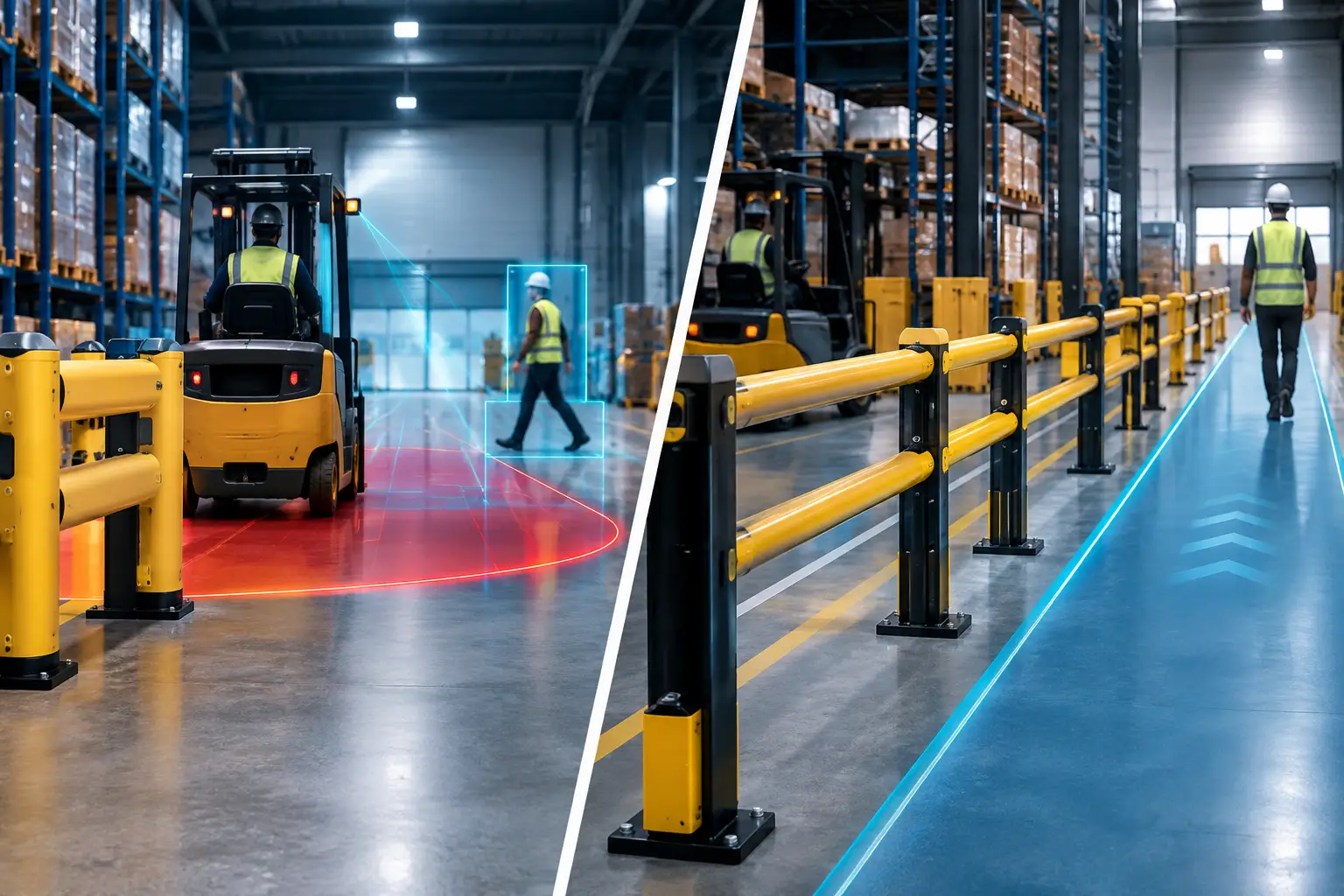
Pedestrian exposure near loading bays is often underestimated. Drivers, forklift operators, checkers, and supervisors may all move through the same area, especially during peak receiving or dispatch periods. Physical barriers help define safe walkways, restrict access to danger zones, and prevent people from drifting into active vehicle paths.
This is where fixed barriers, gates, and impact-resistant guard systems can make a measurable difference. Markings on the floor are useful, but they do not stop movement. In high-risk areas, physical separation is usually more reliable than administrative rules alone.
Audible, visual, and projected warnings
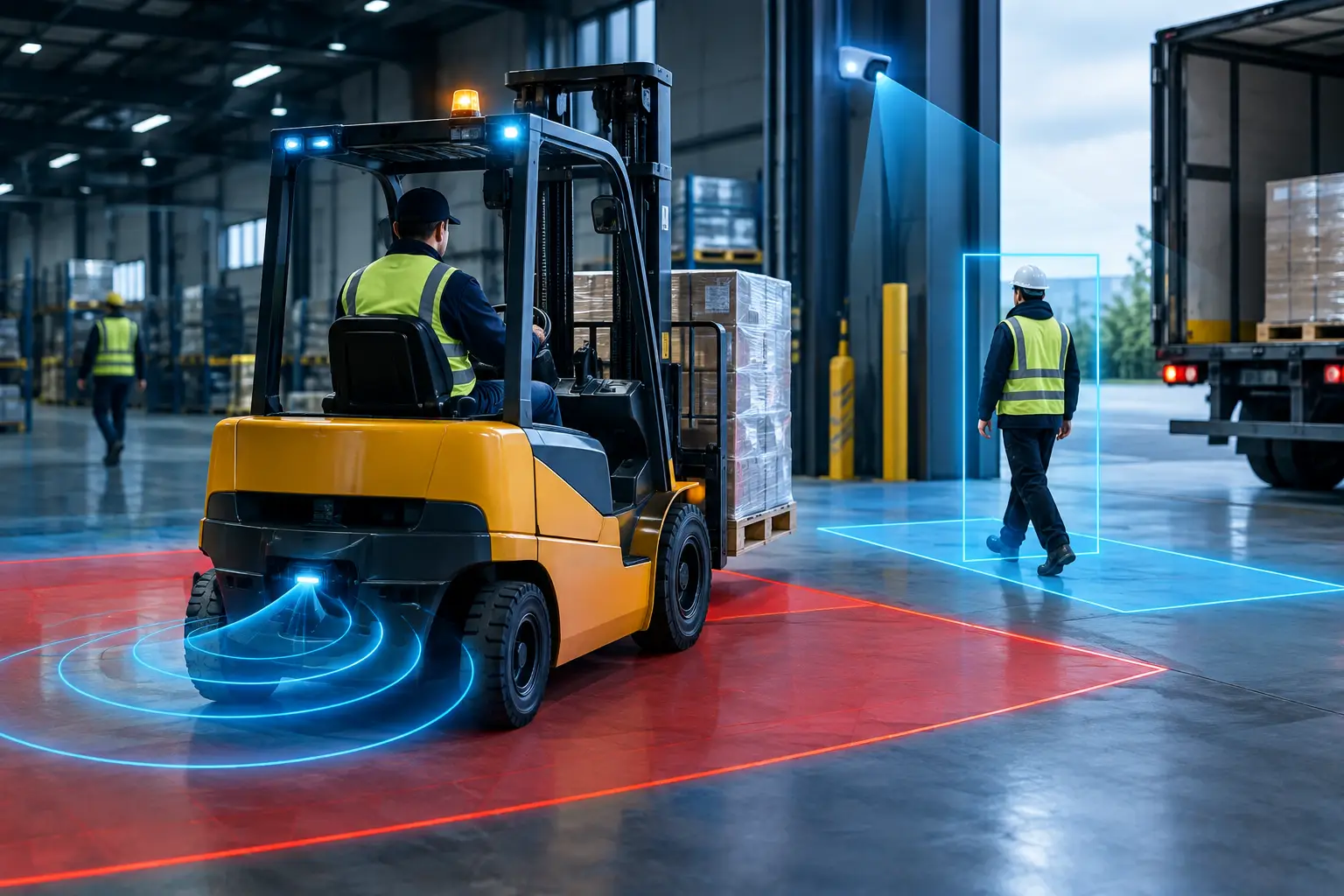
Loading bays are noisy, busy, and often visually cluttered. Warning systems help compensate for those conditions. Traffic lights, dock status indicators, reversing alerts, and projected warning zones can signal when a bay is safe to approach, when a vehicle is restrained, or when forklift movement is active.
The trade-off is that warning devices must be integrated into real operating sequences. If a light flashes too often, workers stop paying attention. If a signal does not clearly match the bay condition, confusion increases. Good design means alerts are simple, timely, and directly tied to actual risk states.
Why single-point fixes usually fall short
Facilities often respond to dock damage with the most visible fix. If the wall is damaged, they add a protector. If a trailer moves, they review the procedure. If a near miss occurs, they repaint lines. These actions can help, but they rarely solve the underlying problem because loading bay risk is usually created by several factors at once.
A common example is a bay with impact damage, trailer movement, and poor operator visibility. Installing heavier bumpers may reduce structural damage, but it does nothing to control the trailer or improve communication between driver and dock staff. In that case, the better solution is a combination of restraint, signaling, and physical protection.
This is why site assessment matters. The right answer depends on vehicle approach angles, yard conditions, dock height variation, trailer compatibility, forklift traffic, and whether pedestrians regularly cross the area. A standard product list is not the same as a risk-based protection plan.
How to evaluate the right loading bay protection solutions
Start with incident patterns, not product categories. Look at where damage occurs, when near misses happen, and which tasks create the most uncertainty. If operators are hesitating before entering trailers, there may be a stability issue. If repairs are concentrated around door openings and bay edges, reversing control or impact absorption may be insufficient. If pedestrians are routinely stepping around parked equipment, traffic segregation needs attention.
The next step is to review how the dock actually works under pressure. Many bays function differently during peak shift change, urgent dispatch windows, or bad weather. Safety controls that appear adequate during a walkthrough may fail during real operating conditions. That is why practical observation is more useful than assumptions.
It also helps to separate high-frequency damage from high-consequence risk. Frequent bumper replacement is frustrating, but uncontrolled trailer movement is more serious. A bent barrier can be repaired. A forklift incident at the dock can stop operations and harm people. Investment decisions should reflect that difference.
Smart technology and monitored dock safety
Traditional dock protection still matters, but more facilities are now looking at monitored safety conditions rather than static infrastructure alone. Intelligent warning systems and sensor-based controls can improve dock discipline by providing real-time status visibility. Vision AI and connected monitoring can also help identify unsafe movement patterns, repeated rule violations, or conflict points that are hard to see through manual observation alone.
This does not mean every site needs advanced technology everywhere. It depends on complexity, traffic volume, and the cost of disruption. For a lower-volume facility, strong physical controls and disciplined procedures may be enough. For a large distribution environment with multiple active bays and tight turnaround times, monitored systems can provide much better control and accountability.
Used properly, technology supports safer behavior rather than replacing it. It gives operations teams better visibility, helps standardize responses, and makes it easier to improve the dock over time.
Implementation works best when safety and operations align
The most successful loading bay upgrades are not treated as standalone safety projects. They are built around operational reality. If a control slows throughput too much, teams may bypass it. If a system is difficult to maintain, reliability drops. If the dock team is not trained on why the control exists, workarounds appear quickly.
That is why loading bay protection solutions should be selected with input from safety, engineering, maintenance, and operations together. The result is usually better specification, smoother adoption, and fewer unintended problems after installation. In practice, the strongest safety improvements are often the ones that also reduce downtime, cut repair costs, and make daily dock activity easier to manage.
A safer loading bay is not created by one product or one rule. It is created when movement is controlled, impacts are absorbed, hazards are visible, and people can work without guessing what will happen next. If your dock still relies on habit more than engineered control, that is the place to act first.