A busy distribution center can change character in seconds. A forklift reverses from an aisle, a picker steps around a pallet, a truck arrives at a loading bay, and a blocked sightline turns routine movement into exposure. Distribution center safety systems are designed for these moments: the recurring, high-consequence interactions between people, vehicles, equipment, and infrastructure.
The objective is not to add alarms everywhere or slow productive work. It is to identify where risk concentrates, apply the right controls, and make safe behavior easier to sustain during peak volumes, shift changes, and changing layouts. Every worker deserves to return home safely every day. A well-designed safety system also protects racks, doors, vehicles, inventory, and operational continuity.
Why distribution centers need layered safety controls
Distribution centers combine high traffic density with repetitive movement and time pressure. Forklifts may share travel paths with pedestrians. Operators can have restricted visibility because of loads, rack ends, intersections, or dock staging. At loading bays, a vehicle moving too early or a gap between trailer and dock can create immediate danger.
These risks cannot reliably be controlled by signs, floor paint, and reminders alone. Administrative controls matter, particularly traffic rules, operator training, inspections, and supervision. But they depend on people noticing, remembering, and acting correctly every time. Physical and technology-based controls provide another layer when attention is divided or conditions change.
The most effective approach is layered. Separate hazards where possible, protect people when separation breaks down, and provide timely warnings when a hazardous interaction is developing. The exact mix depends on the facility. A high-throughput e-commerce operation, a cold-storage warehouse, and a pallet distribution hub may all have forklifts, but their traffic patterns and failure points are different.
Start with the movement, not the equipment
A safety project should begin with how work actually moves through the facility. Walk the operation during normal and peak activity. Observe not only marked travel routes, but also shortcuts, temporary staging areas, queues, blind corners, and places where employees regularly cross vehicle paths.
Review incident records, near-miss reports, equipment damage, and operator feedback. Damage to rack uprights, dock doors, barriers, or pallets can reveal repeated contact events that have not yet injured anyone. These are valuable warning signals, not routine maintenance issues to accept.
A practical risk assessment should examine three questions at each location: who or what is moving, what could go wrong, and what control would reduce the likelihood or consequence? At a rack aisle intersection, the answer may be limited visibility between forklifts and pedestrians. At a dock, it may be trailer movement before loading is complete. At a packing area, it may be pedestrians crossing an active equipment route because the shortest route is also the most convenient one.
This process prevents a common mistake: selecting technology because it is available rather than because it addresses a documented exposure. A warning system at every corner may create alarm fatigue. A barrier installed without considering access needs may simply be bypassed. Safety controls must fit the work.
Control forklift and pedestrian interaction
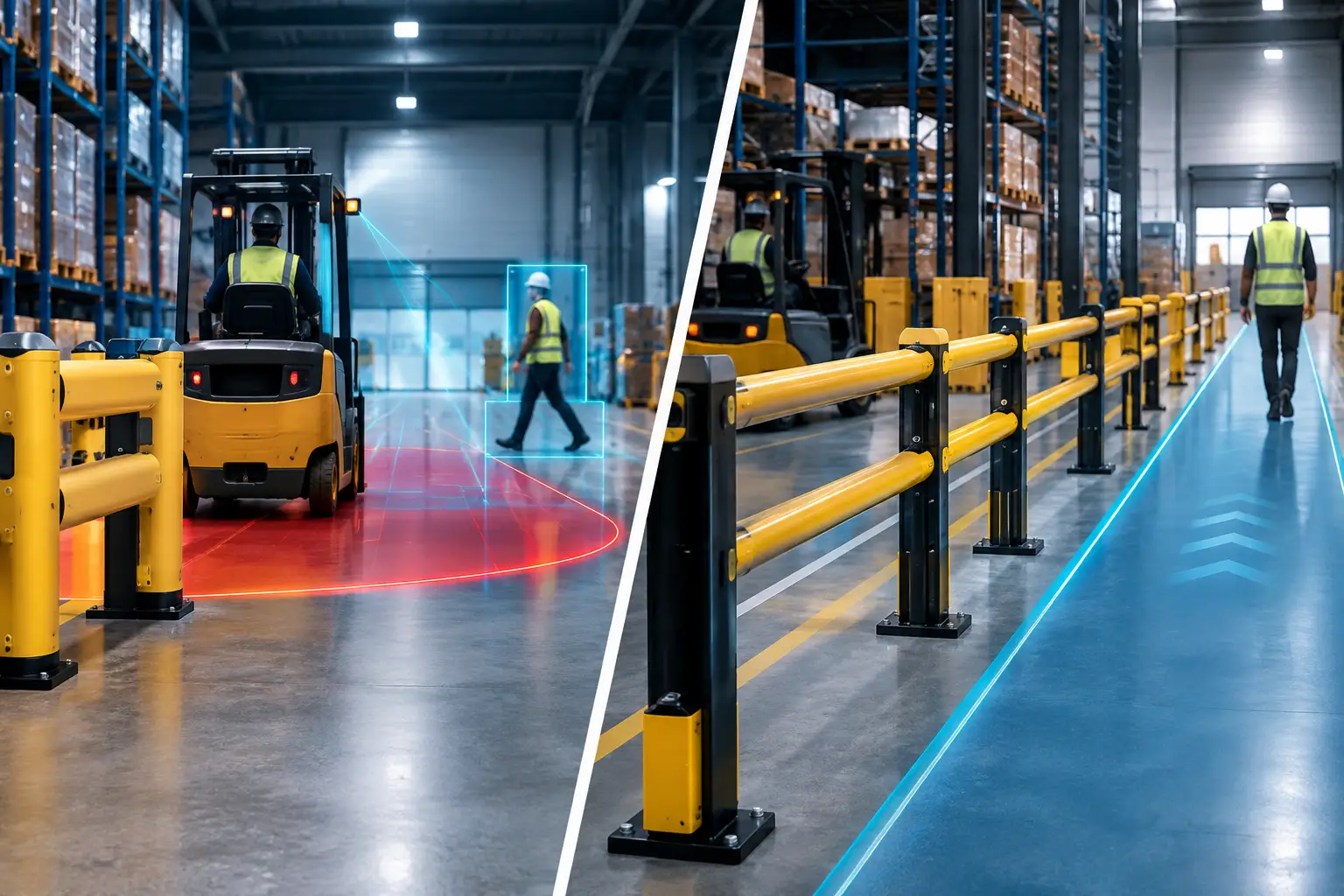
Forklift-pedestrian interaction is often the highest priority because the consequences can be severe. The strongest control is physical separation. Dedicated walkways, guardrails, safety barriers, controlled crossing points, and protected workstations reduce the number of opportunities for people and vehicles to occupy the same space.
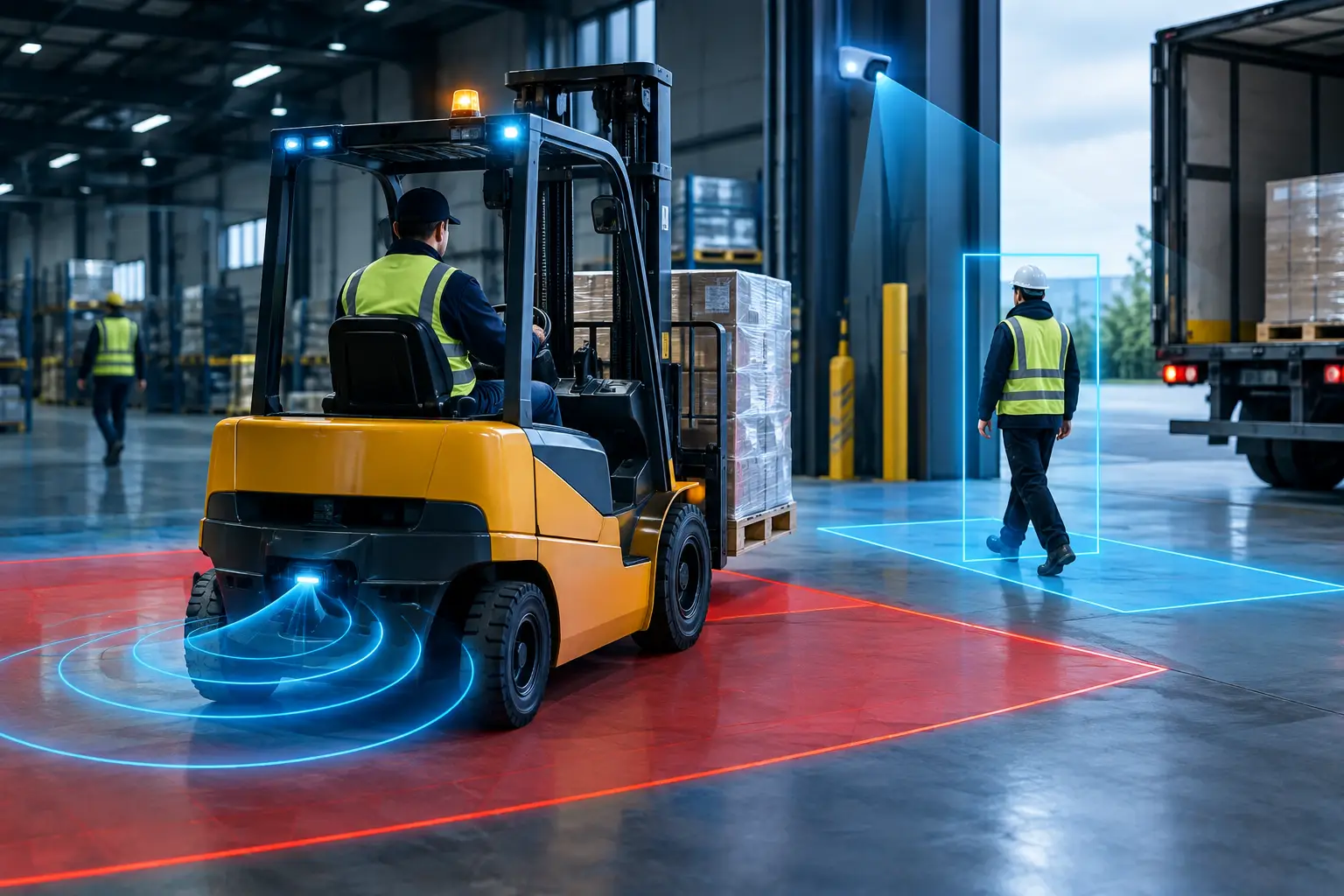
Separation is not always possible. Employees may need to enter pick faces, replenish locations, inspect loads, or work near equipment during specific tasks. In these areas, proximity warning systems can add active protection. Vehicle-mounted and pedestrian detection technologies can alert an operator and nearby worker when distance becomes unsafe. The best configuration depends on the environment, including aisle width, truck speeds, the type of traffic, and whether workers carry wearable devices.
Visual alerts are particularly useful at blind intersections and doorways. Projected floor warnings, illuminated crossing zones, and vehicle-activated signs can signal an approaching forklift before it enters a conflict area. Audible alerts may be appropriate in noisy zones, but they should be targeted and distinguishable. If every movement produces the same sound, people stop responding to it.
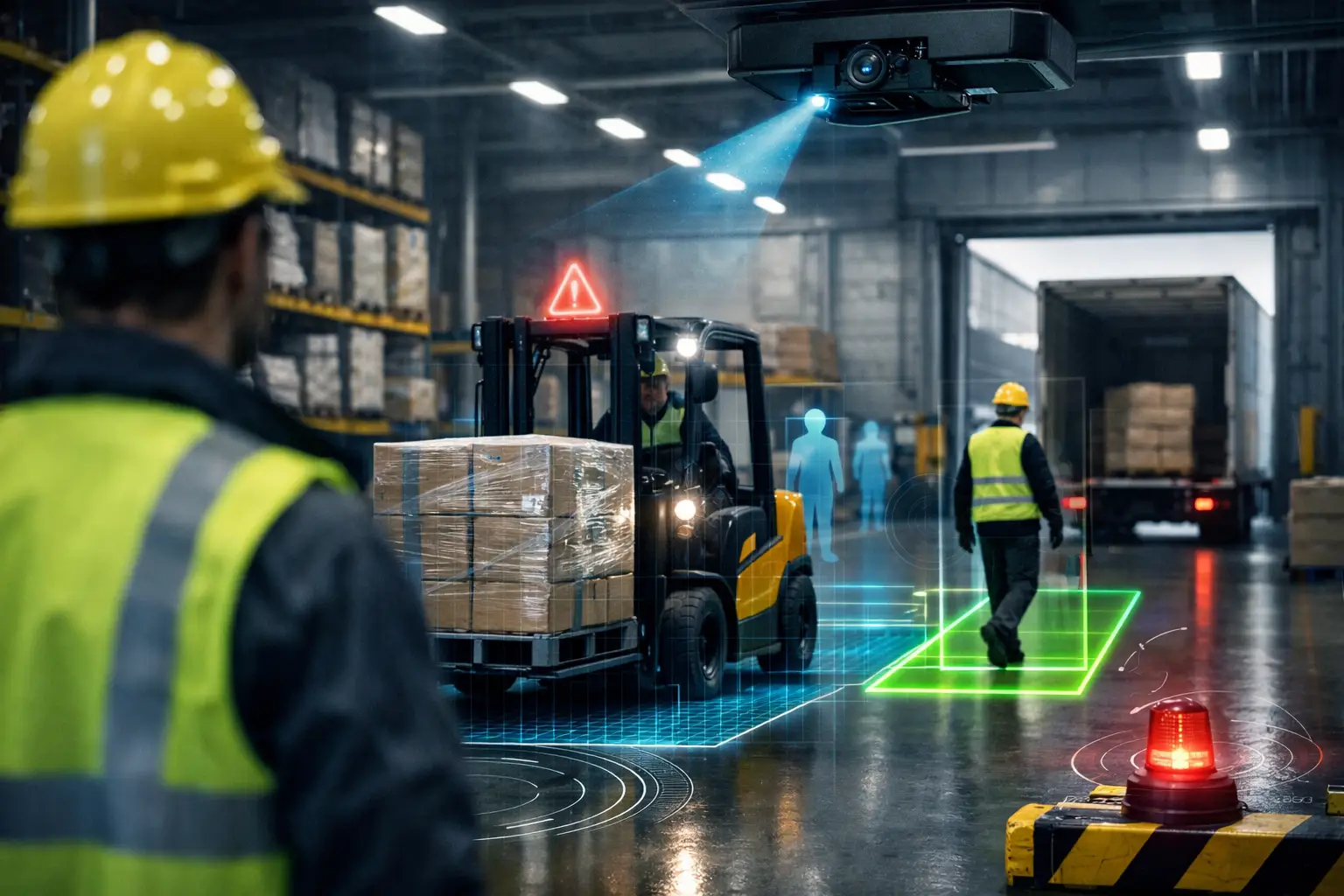
Vision AI safety monitoring can provide an additional level of awareness in complex or high-risk areas. It can identify unsafe pedestrian presence, traffic-rule deviations, blocked routes, or recurring near misses, allowing managers to act on observable patterns rather than assumptions. It should support supervision and improvement, not replace site rules, training, or physical safeguards.
Make loading bay safety a system, not a checklist
Loading bays bring together trucks, forklifts, dock personnel, changing vehicle conditions, and tight dispatch schedules. A failure at the dock can affect people inside the building and drivers outside it. The controls therefore need to manage the whole loading sequence.
Vehicle restraint systems help prevent unexpected trailer movement while loading or unloading is underway. When combined with clear dock communication, visual status indicators, and defined release procedures, they reduce reliance on verbal confirmation or assumptions between the driver and dock team.
The dock approach also needs attention. Pedestrian routes should avoid truck maneuvering areas where possible. Barriers can protect doors, dock equipment, and adjacent work areas from impact. Warning systems can alert personnel to vehicle movement, open dock positions, or unsafe access conditions. The objective is clear: no one should have to guess whether a trailer is secured, a bay is active, or a vehicle is about to move.
Protect the infrastructure that keeps work moving
Rack and facility damage is more than a repair cost. A struck upright may compromise storage integrity. Damage at a doorway can disrupt traffic flow. Repeated impacts around charging, staging, or packing areas often point to poor turning space or inadequate route design.
Rack protection, end-of-aisle barriers, column guards, and bollards help absorb or deflect low-level impacts before they reach critical assets. These measures are most valuable at known strike zones, not randomly distributed across the facility. Their placement should account for turning radii, pallet overhang, equipment type, and visibility.
Physical protection has trade-offs. A poorly located barrier can reduce maneuvering space and create a new pinch point. Select systems with the required impact performance, then validate their placement with operators and engineers before full installation. The goal is protection without making normal work harder than necessary.
Connect technology to operating discipline
Safety technologies are effective when they are commissioned, maintained, and used within a clear operating plan. That starts with defined rules for speed, crossings, pedestrian access, dock release, and response to alarms. Staff need to understand what each alert means and what action is expected. An alarm without an agreed response is only noise.
Calibration and maintenance matter as well. Sensors can be affected by dust, reflective surfaces, changing lighting, vehicle configuration, or site modifications. Barriers and rack protectors require inspection after impacts. Floor markings and projected warnings need periodic review as routes, storage profiles, and processes change.
Data from intelligent warning and Vision AI systems can strengthen this discipline. Rather than focusing only on incidents, managers can track leading indicators such as frequent proximity alerts, repeated speeding in a zone, near-miss locations, or recurring access violations. A cluster of events at one intersection may indicate a layout issue, an unclear rule, or an operational bottleneck that needs correction.
How to prioritize investment in safety systems
Not every site needs every technology at once. Prioritize locations where exposure, consequence, and frequency are highest. A high-speed crossing used throughout every shift deserves earlier attention than a low-use area with manageable risk. Likewise, repeated rack strikes may justify targeted protection before a broader facility upgrade.
Consider the operational cost of the risk as well as injury potential. Equipment damage, blocked aisles, dock downtime, product loss, investigations, and delayed shipments all affect performance. This helps safety leaders build a practical business case without reducing safety to a financial calculation. Protecting people remains the first purpose. Better uptime and asset reliability are important results of doing that work well.
Implementation should be phased where necessary. Pilot a solution at a known risk point, gather feedback from operators and supervisors, confirm that it works under real conditions, and refine the design before wider deployment. An engineering-led partner can help align risk assessment, equipment selection, installation, training, and ongoing service so controls work together rather than as isolated purchases.
Build a safer distribution center through visible action
The best distribution center safety systems make hazards harder to create and easier to recognize. They establish separation where possible, provide protection where separation cannot be maintained, and give people useful warnings before a near miss becomes an accident.
Start with the places your operation already tells you are under pressure: the blind corner, the busy crossing, the damaged rack end, the congested staging lane, or the loading bay with unclear vehicle status. Addressing one high-risk interaction well can protect far more than a single area. It can set a higher standard for how the entire facility plans, moves, and works safely.