A near miss at a warehouse cross-aisle rarely comes down to one mistake. More often, it is a chain – a blind corner, a rushed forklift movement, unclear pedestrian routes, poor visibility, and no warning system in place. That is why understanding how to conduct warehouse risk assessment matters. A useful assessment does not just fill a compliance file. It shows where people, vehicles, racks, loading bays, and daily pressures can combine to create preventable incidents.
For warehouse managers, EHS leaders, and operations teams, the goal is simple: find the real points of failure before they cause injury, downtime, or asset damage. The best risk assessments are practical, site-specific, and tied to action.
How to conduct warehouse risk assessment the right way
A warehouse risk assessment should reflect how the facility actually runs during a normal shift, a peak shift, and a disrupted shift. If the process only looks good on paper, it will miss the hazards that matter most.
Start by defining the scope. Some sites assess the entire warehouse at once, while others break it into zones such as inbound receiving, storage aisles, picking areas, forklift charging stations, loading bays, staging lanes, and outbound dispatch. A zone-based approach is often more useful because hazards are different at each point. The loading bay has trailer movement risks. Storage aisles may have rack impact exposure. Pedestrian walkways near picking areas may face constant interaction with material handling equipment.
Then identify who should be involved. Risk assessments are stronger when they include the people who see operational problems every day. That usually means warehouse supervisors, forklift operators, maintenance personnel, EHS staff, and facility or engineering managers. If only one department leads the process, blind spots are more likely.
Walk the site and observe work as it happens
A desk review can help, but it will not replace direct observation. Walk the warehouse during active operations and watch how work is really performed. Look at traffic flow, turning behavior, congestion points, rack conditions, line markings, visibility, speed control, and loading bay activity. Pay attention to how operators behave under pressure, not just how procedures say they should behave.
This is also where many assessments become too general. “Forklift hazard” is not specific enough. A useful finding sounds more like this: forklifts exiting aisle 7 have limited sightlines due to rack end placement and product overhang, while pedestrians use the adjacent crosswalk to access picking stations. That level of detail makes control measures easier to define and justify.
It helps to assess different times of day. Conditions can change between day and night shifts, during receiving peaks, or when temporary labor is added. A route that looks safe at 10 a.m. may become a collision risk during loading cut-off periods when traffic density rises.
Identify warehouse hazards by activity, not by category alone
Most warehouses already know the standard hazard categories: vehicle movement, manual handling, slips, trips, falls, falling objects, loading bay exposure, and equipment interaction. The issue is not awareness. The issue is connecting hazards to the exact tasks and locations where exposure occurs.
Think in terms of activities. What happens when pallets are unloaded from trailers, staged in lanes, moved to racking, picked, replenished, and shipped back out? Each activity creates its own risk profile. For example, a loading bay assessment should consider trailer creep, vehicle departure before loading is complete, dock edge exposure, and worker movement between trailer and dock. A storage area assessment should consider rack impact, unstable pallet placement, and forklift maneuvering in narrow aisles.
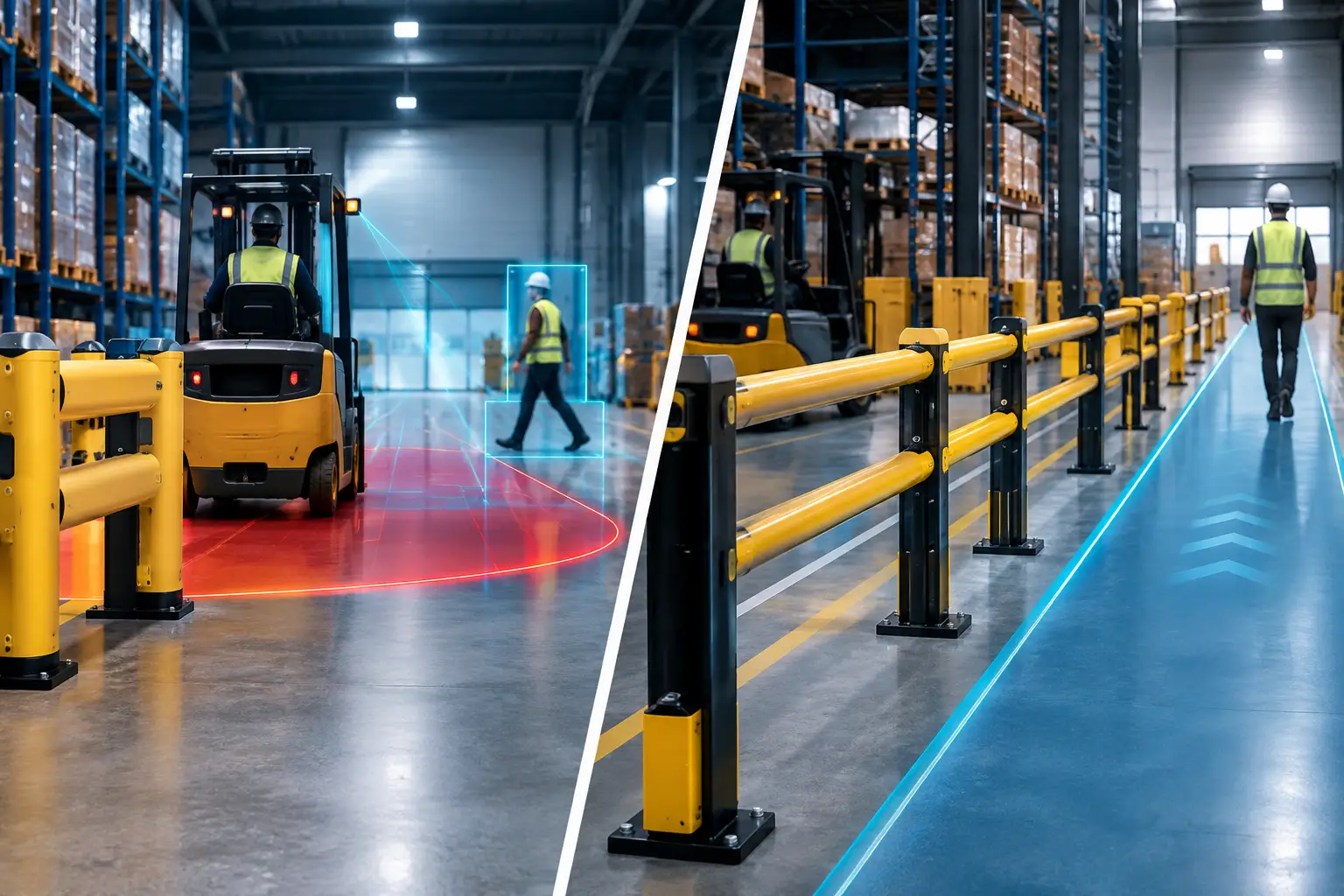
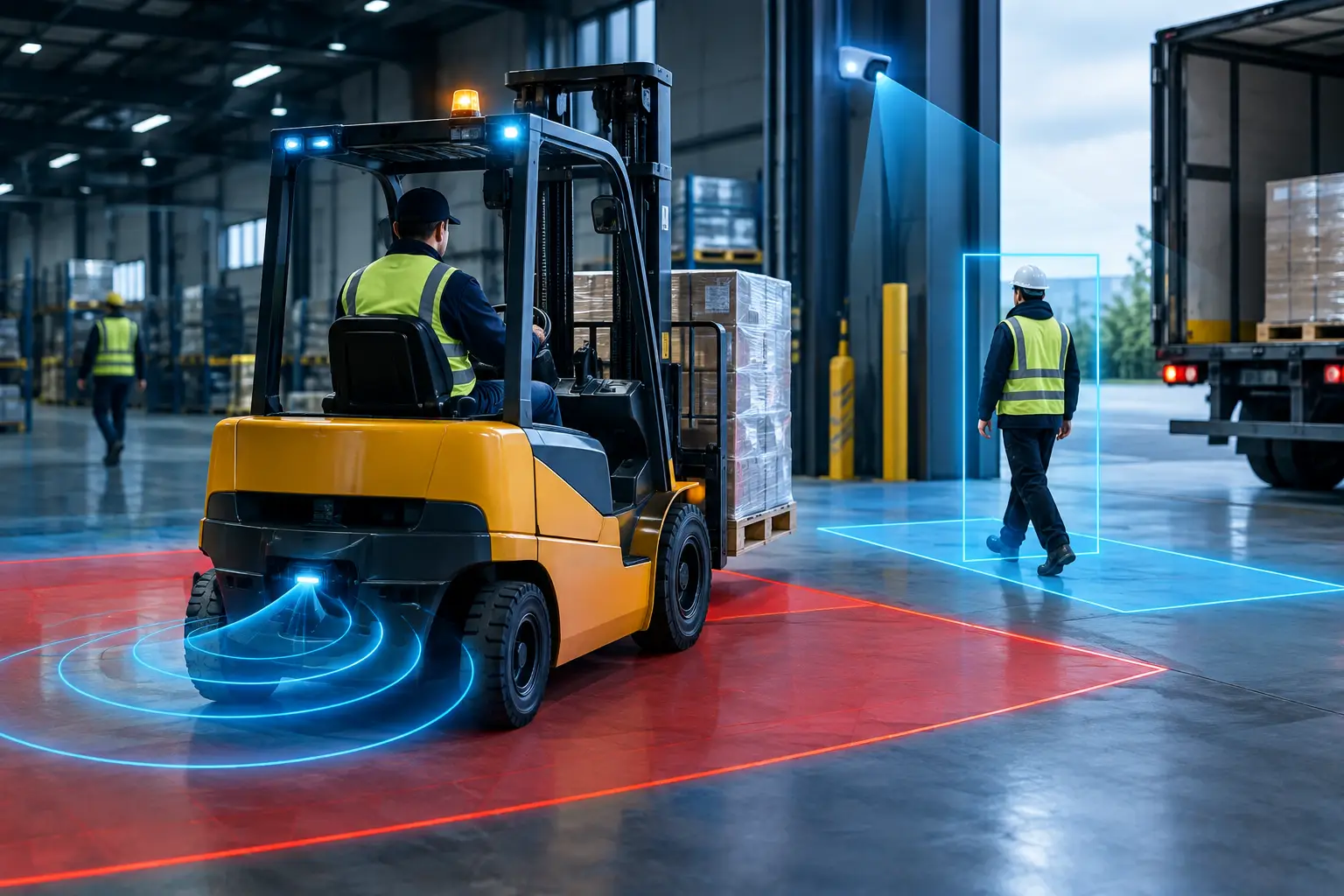
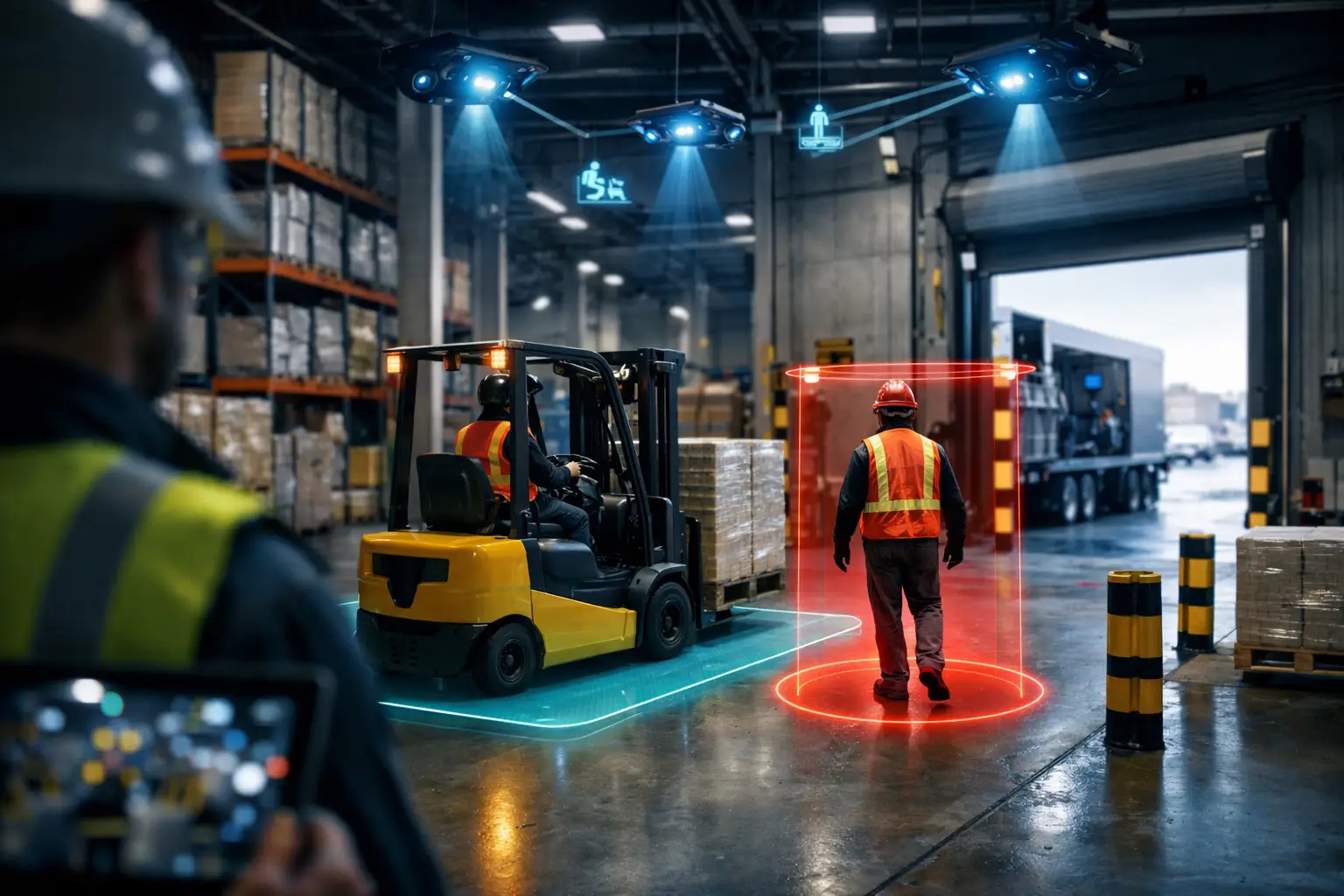
Forklift-pedestrian interaction deserves special attention because it remains one of the most serious warehouse risk areas. If people and vehicles share space, the assessment should examine route separation, crossing controls, warning methods, visibility at intersections, speed management, and the effectiveness of barriers. Painted lines may help communicate intent, but in higher-risk areas they are often not enough on their own.
Evaluate risk based on likelihood and consequence
Once hazards are identified, the next step is to evaluate risk in a structured way. Most organizations use a risk matrix that considers likelihood and severity. That is useful, but it should not become mechanical.
A hazard with low frequency can still demand urgent action if the potential outcome is severe. A forklift striking a rack leg may not happen every week, but if it causes structural instability, inventory loss, and operator injury, the risk rating should reflect that. On the other hand, a frequently observed unsafe shortcut with low injury potential may still deserve action because repeated exposure often leads to escalation.
Context matters. Ask practical questions. How often are workers exposed? How many people are exposed at once? Is the hazard visible or hidden? Can an operator recover if something goes wrong, or is there little room for correction? Are current controls reliable during peak operations?
This is where near-miss reports, damage records, maintenance logs, and traffic incident history become valuable. They help confirm whether a risk is theoretical or already affecting operations.
Choose controls that match the actual risk
If you want to know how to conduct warehouse risk assessment well, this is the point that separates effective programs from weak ones. Identifying hazards is only half the job. The real value comes from choosing controls that reduce risk in a measurable way.
Administrative rules have their place, but they should not carry the whole burden. Telling operators to slow down is less reliable than redesigning a route, improving sightlines, installing warning systems, or physically separating pedestrians and vehicles. In busy facilities, engineered controls usually provide more consistent protection because they do not depend entirely on memory or behavior.
For example, high-risk forklift intersections may require motion-triggered visual alerts, audible warnings, floor projection systems, or convex visibility support depending on the environment. Pedestrian crossings near active traffic may require barriers, gated access points, or route redesign. Rack-end impact zones may justify protective barriers or rack guards if repeated contact is occurring. Loading bays may need vehicle restraint measures and clearer dock status indication where trailer movement risk exists.
There is always a trade-off. Stronger controls can affect traffic speed, throughput, or installation cost. But the better question is whether current operations are already paying for uncontrolled risk through damage, delays, investigations, and avoidable exposure.
Document findings in a way operations can use
A risk assessment should be easy to act on. If the final document is too technical, too generic, or too long to guide site teams, it will not improve safety performance.
Write findings by area and activity. Describe the hazard, who is exposed, the current controls, the risk rating, the recommended improvements, and who owns the action. Include enough operational detail that a supervisor or engineering manager can understand the issue without having to reinterpret it.
Photos, traffic sketches, and simple zone maps can help clarify risk points, especially where vehicle paths and pedestrian routes overlap. In larger sites, this becomes even more useful when planning phased improvements.
Prioritization also matters. Not every issue can be fixed immediately. Separate urgent risks from medium-term improvements and longer-range upgrades. That keeps the process credible and practical.
Review whether controls work in real conditions
A warehouse risk assessment is not complete when the paperwork is signed. It is complete when the controls are in place and shown to work under operating conditions.
That means follow-up observation. If barriers were installed, are pedestrians actually using the intended routes? If warning systems were added at intersections, do they activate consistently and prompt safer behavior? If loading bay controls were introduced, has unauthorized trailer movement or unsafe dock entry decreased? A control that looks good in a project plan may perform differently on the floor.
Technology can help close this gap. Vision AI monitoring, proximity warnings, and intelligent alert systems can provide better visibility into repeated unsafe interactions, traffic patterns, and high-exposure zones. Used properly, these tools support continuous risk reduction rather than one-time inspection activity. SysGuard often sees the best results when technology is applied to a clearly defined risk, not treated as a blanket fix.
Common mistakes that weaken the assessment
Many warehouse assessments fail for predictable reasons. They are copied from generic templates, completed without observing live operations, or written at such a high level that no one can translate them into controls. Another common problem is treating all hazards equally. A faded floor line and a recurring blind-corner forklift conflict do not belong in the same priority band.
It is also a mistake to assess the warehouse only when conditions are orderly. Real risk shows up during congestion, shift changes, trailer queues, replenishment pressure, and temporary process deviations. If the assessment does not account for these moments, it will underestimate exposure.
The strongest assessments accept that warehouses are dynamic environments. Routes change. Throughput increases. Product profiles shift. Equipment mixes evolve. Risk assessment has to keep pace with those changes or it quickly becomes outdated.
A useful warehouse risk assessment should help teams make better decisions on layout, traffic management, separation, warning methods, loading bay controls, and asset protection. If it does that, it becomes more than a requirement. It becomes a working tool for preventing injuries, protecting infrastructure, and keeping operations moving. Every worker deserves to return home safely every day, and that starts with seeing risk clearly before the next incident forces the issue.