A loading dock can look controlled right up to the moment it is not. A trailer shifts away from the dock, a forklift crosses a dock plate before it is secure, or a pedestrian enters a reversing vehicle path. These events happen quickly, but their consequences can include serious injury, damaged product, equipment downtime, and interrupted shipments. Dock door safety equipment gives operations teams practical controls for preventing these high-consequence failures.
The right solution is rarely a single device. Effective loading bay safety comes from understanding how people, forklifts, trailers, dock doors, and warehouse processes interact at each opening. The objective is straightforward: keep the trailer secured, make unsafe conditions visible, control vehicle movement, and prevent people from entering the line of danger.
Why Dock Doors Create High-Risk Work Zones
A dock door is a transfer point between two separate environments. Inside, forklifts operate on a warehouse floor with defined travel routes. Outside, trucks arrive and depart on schedules that may be affected by congestion, weather, driver communication, and changing priorities. The dock opening connects those environments, often with little margin for error.
Trailer creep is one of the most serious hazards. Repeated forklift travel can gradually move a trailer away from the dock, creating a gap between the dock leveler and trailer bed. A forklift can then lose support at the opening, placing its operator, nearby personnel, and cargo at risk. Premature departure presents a similar danger when a driver pulls away while loading or unloading is still underway.
Other common risks include unstable dock plates, poor visibility around parked trailers, falls from an open dock edge, and conflicts between pedestrians and material-handling equipment. A door that is open but not ready for loading can also create confusion. Without clear visual status indicators and disciplined procedures, workers may assume a bay is safe before all conditions have been verified.
These are not isolated equipment problems. They are process-control problems. Equipment must support the way a facility actually works across busy shifts, mixed fleet types, changing weather, and time pressure.
Essential Dock Door Safety Equipment
Vehicle restraint systems
Vehicle restraint systems are a primary control against trailer movement and premature departure. Depending on trailer design and site conditions, a restraint may engage the rear impact guard or secure the vehicle using another engineered method. The purpose is to hold the trailer in position while loading activity is underway.
An effective restraint system should include clear communication for both the dock team and the driver. Exterior indicators can show a driver when it is safe to depart, while interior lights tell forklift operators whether the trailer is secured and loading can begin. This simple separation of signals matters. A green light inside should mean the loading team has a verified safe condition, not merely that a door is open.
Not every site needs the same restraint approach. Facilities handling a broad mix of trailer types, including vehicles with damaged or non-standard rear guards, may need additional procedures or complementary controls. A site assessment should examine the vehicles actually serving the dock, not just the equipment specifications.
Dock levelers, plates, and gap protection
A safe transfer surface is fundamental. Dock levelers and dock plates bridge the height and gap between the warehouse floor and the trailer bed, allowing forklifts to move cargo efficiently. However, these components must be selected for the actual axle loads, forklift traffic, trailer heights, and load patterns at the facility.
The safety issue is not only capacity. A leveler must be properly positioned, supported, and maintained. Worn lips, damaged hinges, hydraulic issues, and debris can compromise operation. Where gaps remain at the sides or between the dock and trailer, gap protection and appropriate barriers help reduce the risk of wheels, feet, or pallet loads entering an exposed area.
Teams should also plan for an empty or absent trailer. An open dock door without a trailer is an unprotected edge unless it is controlled by a dock barrier, safety gate, or other engineered fall-prevention measure. This is particularly relevant during staging, trailer changes, and periods when a bay is left open for ventilation or operational convenience.
Dock barriers and safety gates
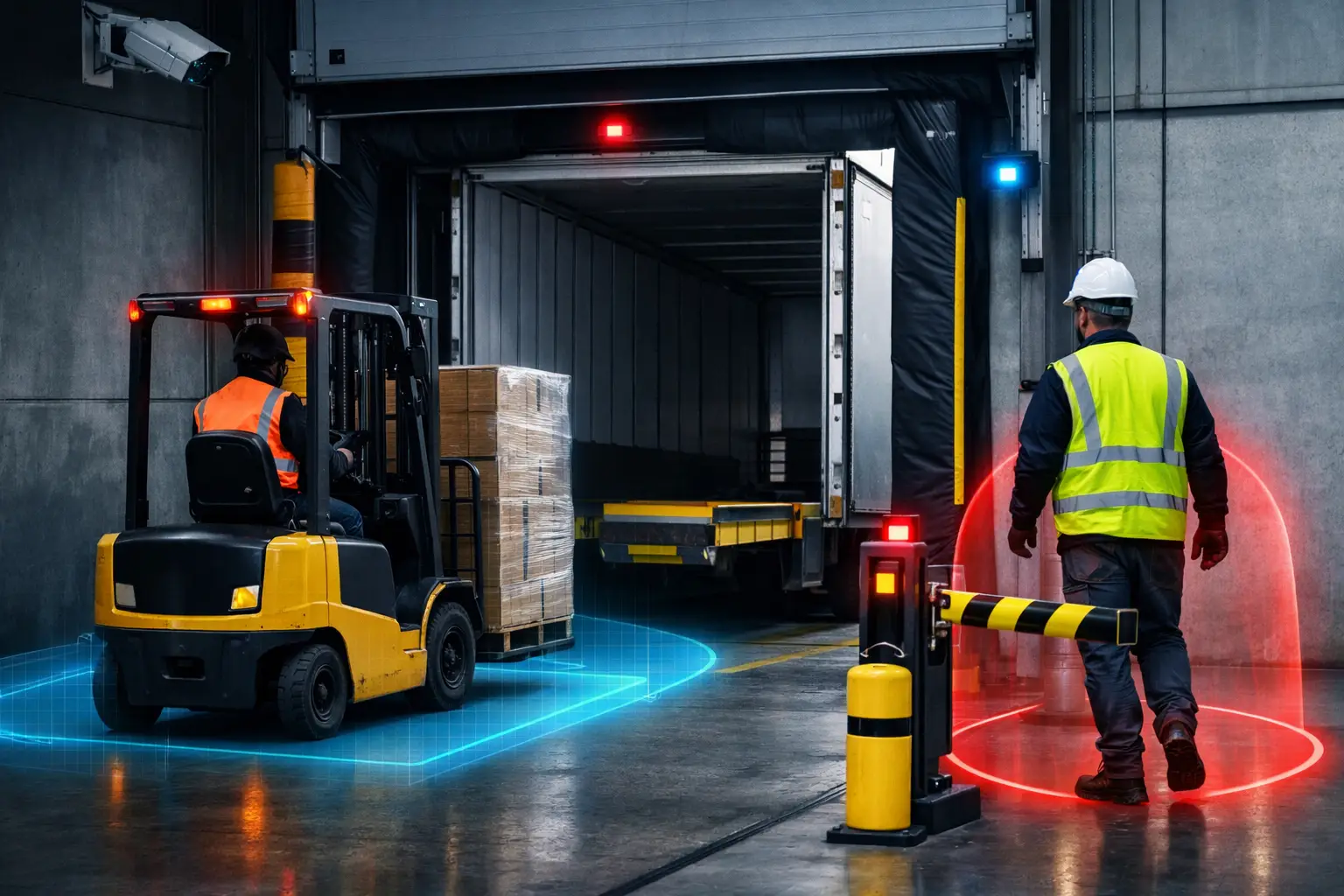
Dock barriers provide a physical line of defense at open loading doors. They are especially useful when no trailer is present, when a bay is temporarily inactive, or when workers need to perform tasks near the dock edge. Unlike painted lines or signs, a physical barrier does not rely solely on a person noticing and remembering a warning.
The best barrier arrangement depends on the work pattern. A high-traffic dock may need a solution that operators can deploy quickly without creating delays. A facility with frequent pedestrian access near loading lanes may prioritize highly visible gates and controlled access points. The key is to make the safe action the easy action, rather than adding a control that is likely to be bypassed under pressure.
Visual and audible warning systems
Warning systems make changing dock conditions easier to understand. Traffic lights, status indicators, alarms, and projected safety zones can communicate whether a vehicle is restrained, whether loading is active, or whether a door presents an exposed-edge hazard.
These systems are most effective when their meaning is consistent across the facility. If one dock uses green to mean “vehicle secured” and another uses it to mean “door open,” workers have to interpret the signal instead of acting on it. Standardized colors, audible alerts, and visible signage reduce uncertainty during shift changes and when temporary staff or visiting drivers are present.
Audible alerts should be used with care. In a noisy loading environment, an alarm must be distinct enough to be noticed, but constant alarms can become background noise. Connecting alerts to specific high-risk events, such as an attempted departure while a restraint is engaged, gives them greater value.
Forklift and pedestrian protection
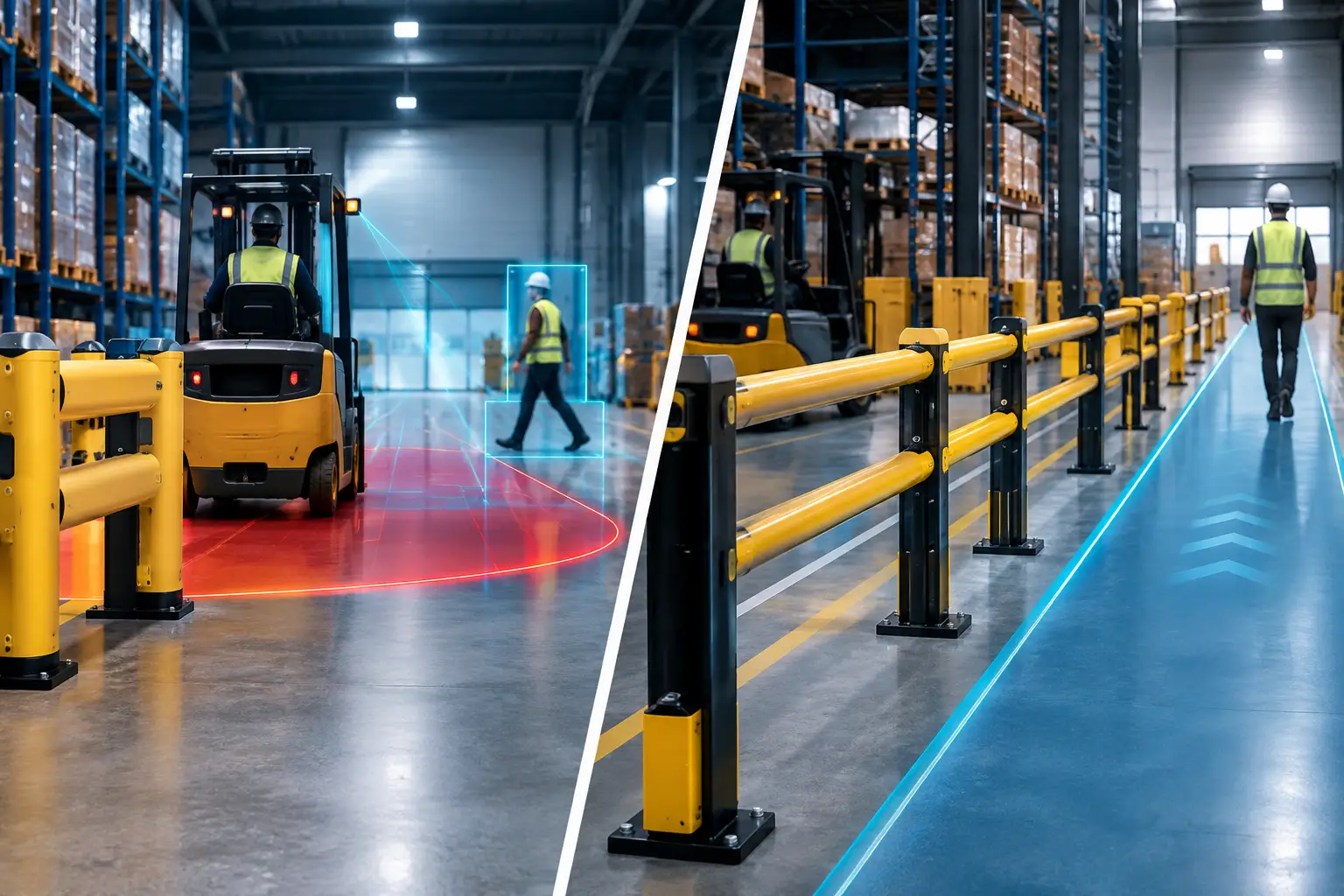
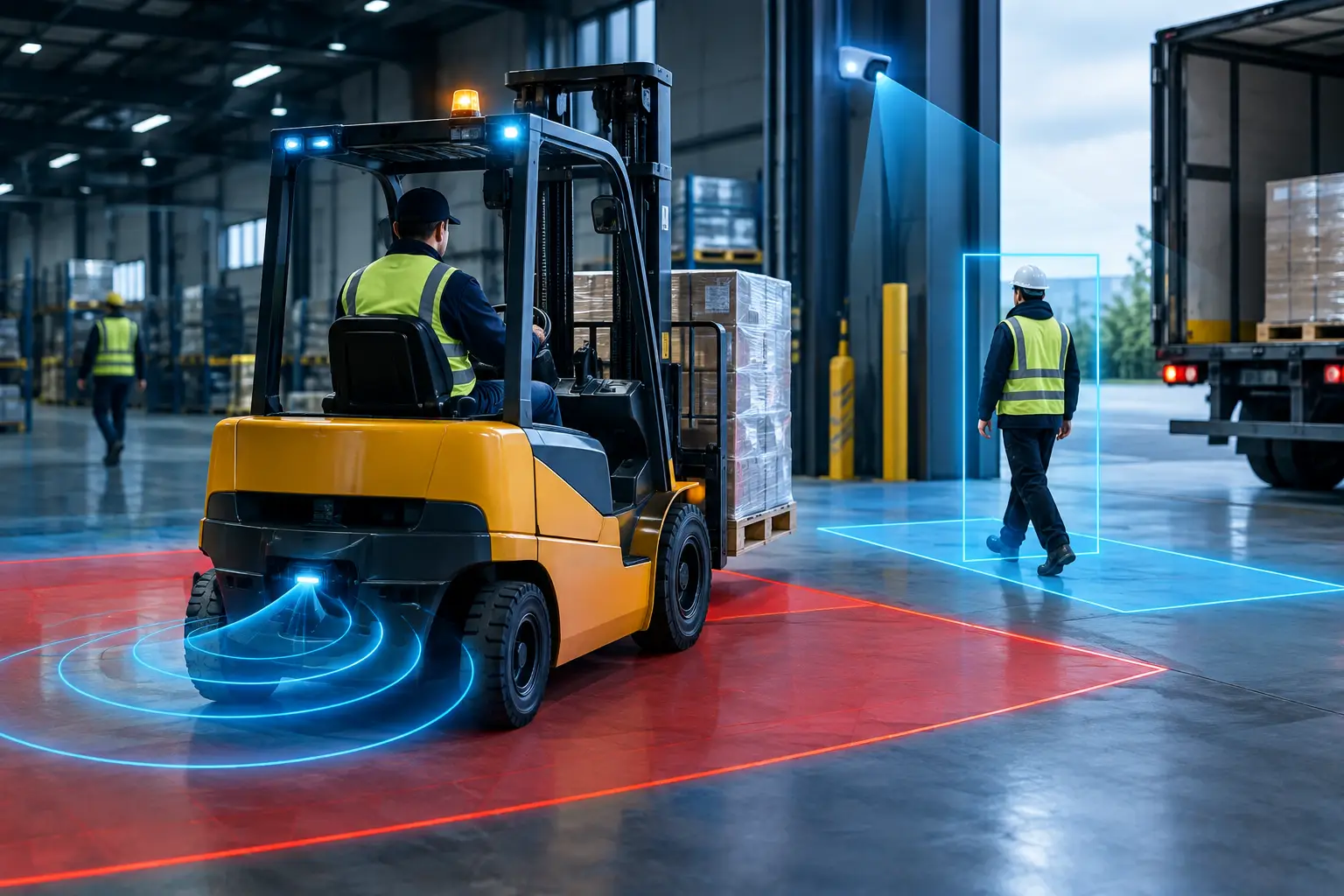
The dock interior remains a forklift-pedestrian interaction zone even when the trailer is secure. Workers may be checking paperwork, adjusting loads, opening trailer doors, or moving between staging areas. Physical separation, marked routes, warning projections, proximity alerts, and carefully positioned barriers can reduce the chance that a person enters a forklift travel path.
At higher-risk doors, Vision AI safety monitoring can add another layer of awareness. It can help identify unsafe behaviors or restricted-zone entry patterns that conventional equipment may not capture. This technology should support supervision and continuous improvement, not replace basic controls such as traffic separation, operator training, and clear operating procedures.
Select Equipment From the Hazard Backward
Buying dock equipment by category alone can leave critical gaps. Start with the incident scenarios your site must prevent. Is the main concern trailer creep? Unscheduled departure? Falls at an empty opening? Frequent forklift-pedestrian interaction? Poor driver communication? Each problem calls for a different combination of controls.
A practical assessment should consider dock layout, trailer fleet variation, daily throughput, forklift types, load weights, pedestrian routes, lighting conditions, and the condition of existing levelers and doors. It should also examine exceptions. For example, what happens when a restraint cannot engage a particular vehicle, when a trailer arrives late, or when maintenance takes a dock out of service? Safe operations are defined by how a facility manages these non-routine moments.
Equipment integration is equally important. A vehicle restraint, dock door, leveler, and signal system should operate as a coordinated sequence. Interlocks can prevent a door from being opened before the trailer is secured, or maintain a clear warning state until loading is complete. The appropriate level of automation depends on the site, but the intent remains the same: reduce reliance on memory and verbal handoffs for critical safety steps.
Installation and Maintenance Determine Real-World Performance
Even well-designed dock door safety equipment can underperform if it is installed without accounting for site conditions. Concrete quality, dock geometry, trailer approach alignment, drainage, and electrical routing affect both reliability and usability. Engineering review before installation helps prevent a solution from becoming difficult to operate or maintain.
Maintenance deserves equal attention. Restraints, levelers, gates, signals, and barriers all experience repeated impacts, vibration, weather exposure, and heavy use. Routine inspection can identify worn components, damaged mounting points, misaligned sensors, and fading indicators before they create an unsafe condition. Documented checks also provide operations leaders with a clearer view of recurring issues and equipment performance.
Worker training should focus on decisions, not only device operation. Forklift operators need to know what each signal means and when they must stop. Dock personnel need a defined response when a restraint cannot engage or an indicator shows a fault. Drivers need clear instructions on where to wait and when departure is authorized. When every role understands the sequence, the dock becomes more predictable under pressure.
Build Safety Into Every Load Transfer
A safer dock is not created by adding more signs to an existing process. It is created by designing layers of protection that account for moving vehicles, changing trailer conditions, human error, and the pace of real operations. The strongest programs combine physical restraints, edge protection, clear communication, intelligent monitoring where appropriate, and disciplined maintenance.
Every load transfer is a chance to prevent an accident before it starts. Review the conditions at your busiest, most demanding dock doors first, then build controls that protect workers without slowing the operation they depend on.