A pedestrian steps from behind a rack end just as a forklift reverses with a pallet obstructing the operator’s view. In that moment, the question is not whether forklift sensors vs cameras is the better technology. The real question is whether the site has selected controls that can detect the hazard early enough to prevent a collision.
Sensors and cameras address different parts of forklift risk. One can identify that something has entered a defined danger zone. The other can provide visual context, distinguish people from equipment, and trigger intelligent warnings. Used appropriately, both strengthen forklift-pedestrian separation, protect assets, and reduce the operational disruption that follows an incident.
Forklift Sensors vs Cameras: The Core Difference
Forklift sensors detect presence, distance, movement, or proximity. Depending on the technology, they may create warning zones around a vehicle, identify an approaching pedestrian wearing a tag, or alert an operator when an object is close to the rear or sides of the forklift. Their primary strength is fast, focused detection within a defined area.
Forklift camera systems capture visual information. A basic reversing camera helps an operator see blind areas behind the truck. More advanced Vision AI systems analyze video feeds to recognize pedestrians, forklifts, or unsafe interactions in real time. They can issue alerts when a person enters a hazardous zone, when a forklift approaches a crossing, or when site traffic behavior creates elevated risk.
The distinction matters because not every warning needs the same level of intelligence. A loading bay approach may need dependable distance detection to prevent contact with a barrier or dock structure. A busy pedestrian crossing may need a camera-based system that recognizes people and accounts for the direction of travel. The correct choice follows the hazard, not the product category.
Where Forklift Sensors Perform Best
Sensors are often a practical starting point where the risk is predictable and the warning zone can be clearly defined. They are particularly useful for reversing, narrow aisles, rack ends, blind corners, and areas where forklifts regularly operate close to fixed infrastructure.
Proximity warnings around the vehicle
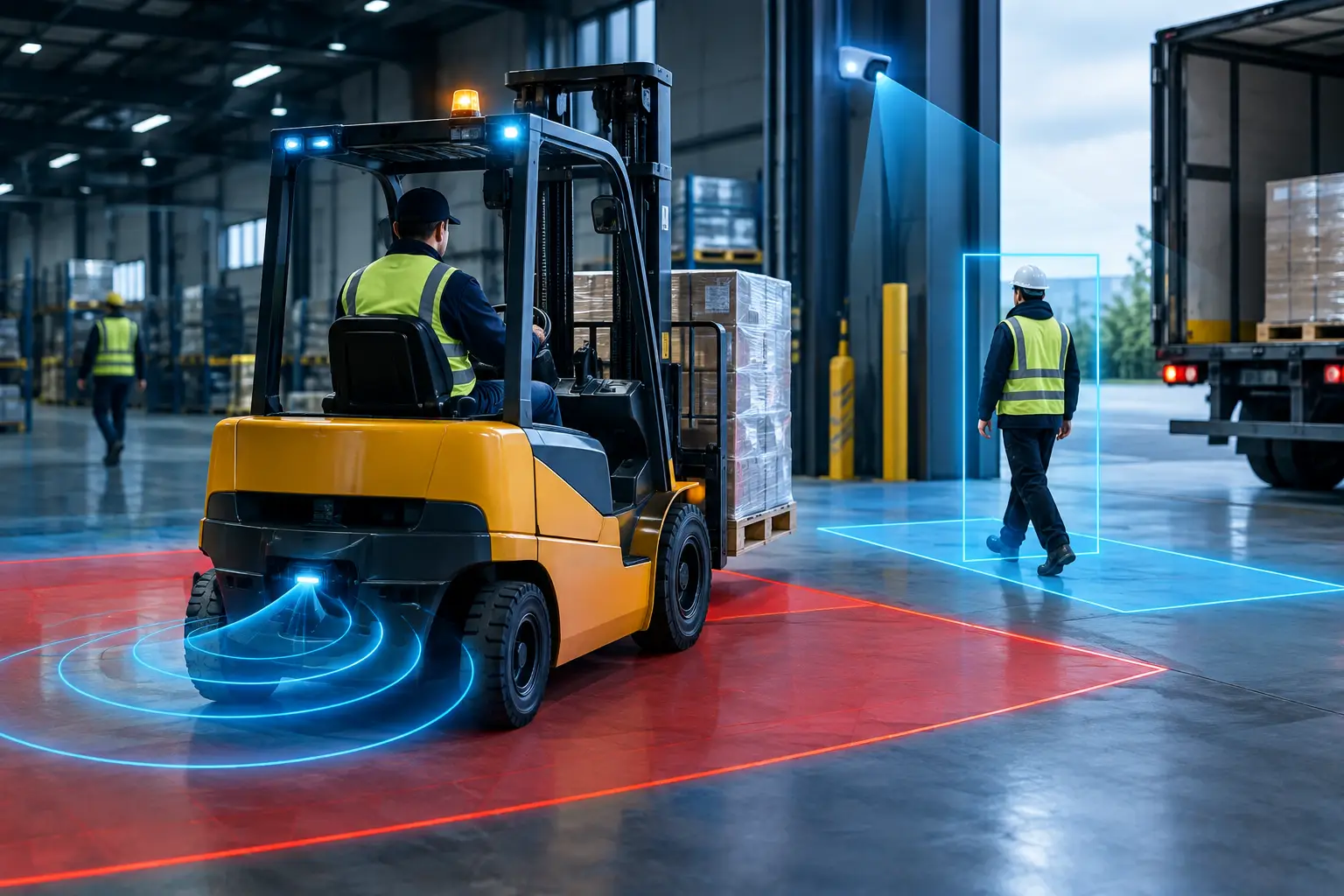
Ultrasonic, radar, laser, and other proximity technologies can monitor a specified range around a forklift. When a person, pallet, rack, or vehicle enters that range, the system can activate an audible or visual warning for the operator, nearby workers, or both.
This approach is effective when the immediate priority is awareness. For example, a rear-mounted sensor can support an operator reversing from a staging lane where visibility is restricted by a load. A side-warning system may help reduce contact risk in constrained warehouse aisles.
However, proximity sensors do not always identify what has entered the zone. A rack upright, hanging wrap, pallet edge, and person may all produce a detection event. If a site sets zones too broadly or operates in a highly cluttered environment, frequent warnings can lead to alert fatigue. Operators may begin to treat alarms as background noise, reducing the value of the control.
Controlled access and tag-based systems
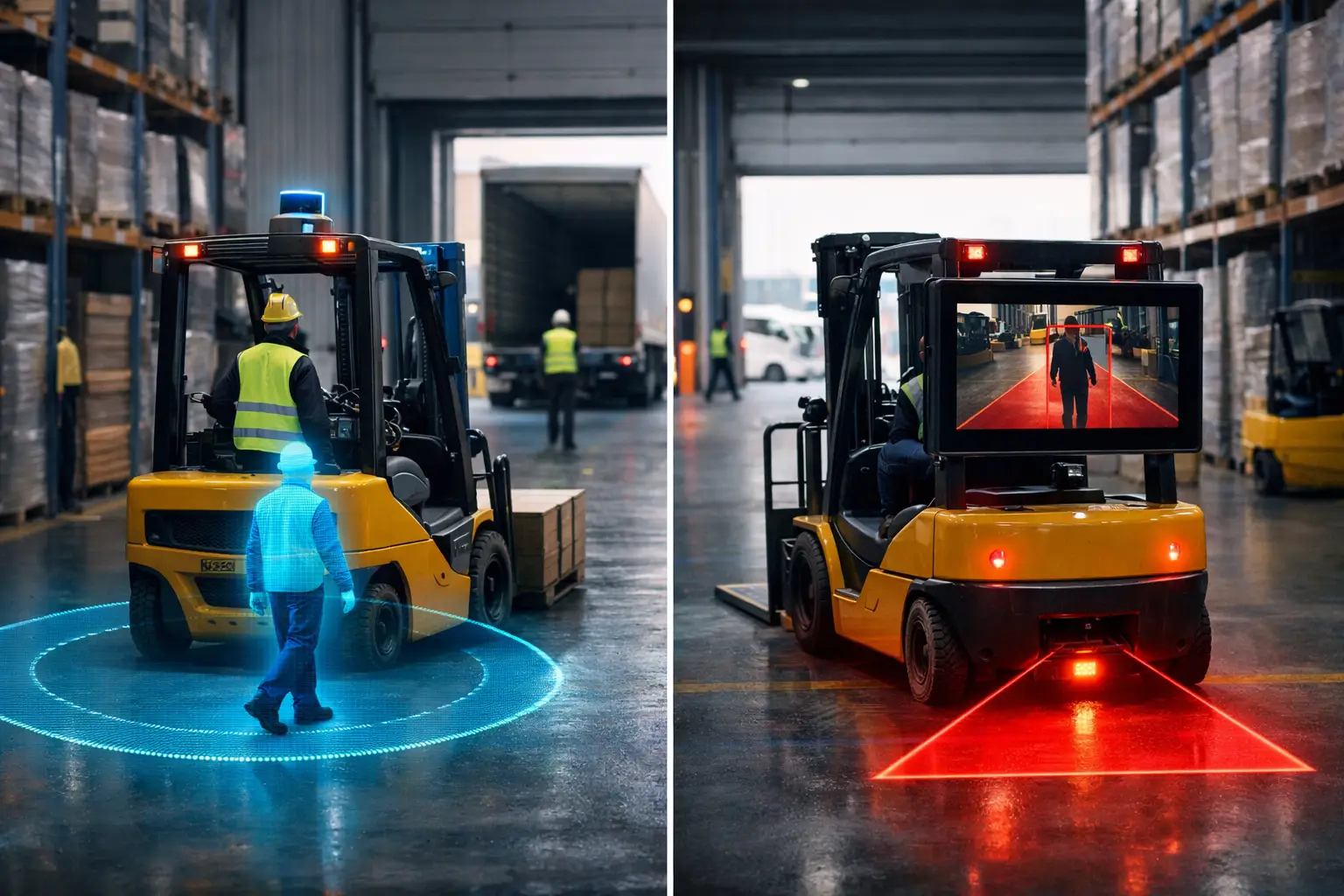
Some forklift-pedestrian safety systems use wearable tags or vehicle-mounted identifiers. These systems can detect when a tagged pedestrian and a forklift come within a defined distance, then issue an alarm or initiate a vehicle response where appropriate.
Tag-based solutions can be highly reliable in managed environments because the system is detecting a known identifier rather than interpreting a scene. They are well suited to restricted work zones, manufacturing cells, or facilities where workers can consistently wear and maintain assigned tags.
The trade-off is procedural discipline. Visitors, contractors, and temporary workers must be included in the process. A person without a tag may not be detected, so site controls such as marked walkways, access management, training, and physical separation remain essential.
Where Forklift Cameras Add Greater Value
Cameras become more valuable when the environment is dynamic, visibility is poor, or the site needs to understand the difference between a pedestrian and other objects. They offer the context that simple proximity detection cannot always provide.
Eliminating blind spots
A reversing camera gives the operator a direct view of an area that mirrors alone may not fully cover. This is especially helpful when carrying high loads, reversing from trailers, maneuvering near dock doors, or working in congested dispatch areas.
A camera does not replace safe travel practices. The operator must still travel at an appropriate speed, follow traffic rules, and stop when the route is unclear. But visual confirmation can reduce uncertainty and help operators make better decisions in the seconds that matter.
Vision AI for pedestrian detection
Vision AI safety monitoring goes beyond displaying video. The system analyzes the image to identify people, vehicles, and hazardous interactions. It can provide targeted alerts when a pedestrian enters a forklift’s travel path or a designated exclusion area.
This is particularly useful at intersections, crosswalks, loading bays, and mixed-traffic zones. Unlike a basic sensor, an AI-enabled camera can help distinguish a person from a static rack, a pallet, or a parked vehicle. That can reduce unnecessary alarms while focusing attention on meaningful risk events.
Camera systems also support better safety management. Event records can reveal recurring near misses, routes where pedestrians regularly enter forklift lanes, or locations where line-of-sight is consistently poor. These findings allow managers to improve traffic flow, adjust barriers, relocate staging areas, or strengthen warning controls based on actual site conditions.
Camera limitations to plan for
Cameras require careful installation and maintenance. Poor positioning, glare, dust, condensation, low lighting, and blocked lenses can affect image quality. A system should be selected and configured for the operating environment, not simply mounted where it is easiest to install.
Privacy and workforce communication also require consideration. The purpose should be clear: preventing workplace collisions and improving operational safety, not creating unnecessary monitoring. Clear policies, worker engagement, and defined access to event data help build trust in the program.
The Best Answer Is Often a Layered System
For many facilities, the strongest approach is not sensors or cameras. It is sensors and cameras, supported by physical and operational controls.
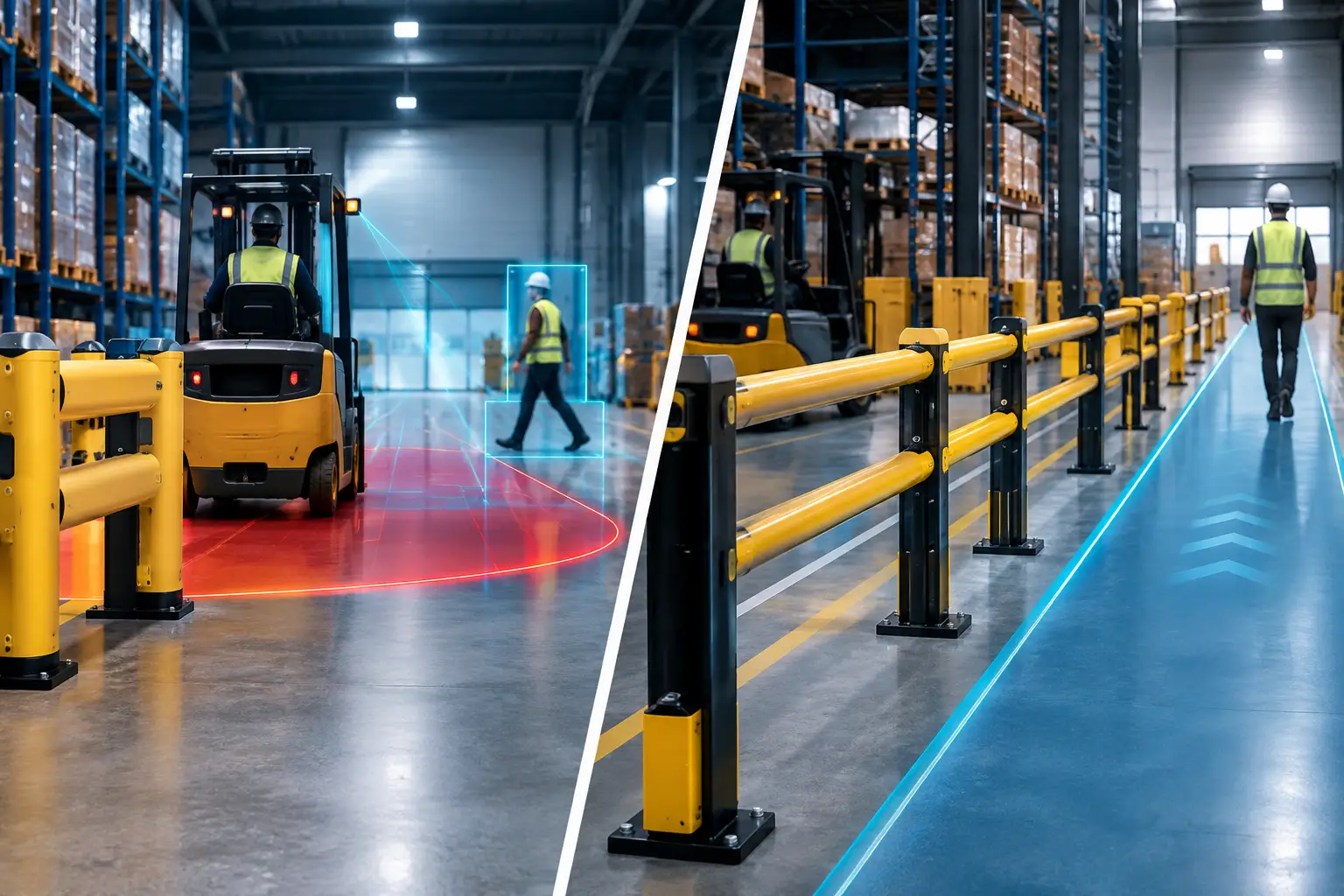
Consider a warehouse intersection where pedestrians cross between picking zones and forklift routes. A projected floor warning can alert pedestrians before they reach the crossing. Physical barriers can guide people toward the designated path. A Vision AI camera can detect unsafe entry into the vehicle lane. Forklift-mounted proximity warnings can provide an additional alert when a person is close to the truck. Together, these measures provide multiple opportunities to prevent a collision.
Layering is valuable because every control has limitations. Sensors can detect proximity but may lack context. Cameras provide context but depend on clear visibility and correct configuration. Barriers are highly reliable but cannot eliminate every interaction at loading points, crossings, or access doors. A well-designed system addresses the hazard from more than one direction.
How to Choose the Right Technology
Start with a site risk assessment focused on how people and forklifts actually move. Observe travel routes during peak receiving, picking, replenishment, and dispatch periods. Review near-miss reports, equipment damage, pedestrian complaints, and areas where operators regularly reverse or lose sight of the travel path.
Then assess the nature of the hazard. Fixed-object risks and short-range reversing hazards may be well served by proximity sensors and reversing aids. Unpredictable pedestrian movement, shared aisles, and congested crossings may justify camera-based detection or Vision AI monitoring. Controlled areas with a stable workforce may benefit from tag-based proximity systems.
Integration should also be part of the decision. An alert that cannot be heard over machinery, seen in bright conditions, or understood quickly will not deliver the intended protection. Warning colors, alarm tones, vehicle speed controls, floor projections, barriers, and traffic markings should work together rather than compete for attention.
Finally, plan for ongoing performance. Forklift safety technology needs inspection, cleaning, testing, and periodic review. A warning zone that worked before a layout change may no longer match the risk. New racking, altered staging practices, seasonal labor, or higher throughput can all change how a system should be configured.
Make Technology Part of a Safer Traffic Plan
The purpose of sensors and cameras is not to transfer safety responsibility to a device. Their role is to strengthen the decisions made by operators, pedestrians, supervisors, and facility leaders when conditions become difficult.
Every worker deserves to return home safely every day. Select technology based on the risks present at your site, verify that it performs under real operating conditions, and use what it reveals to keep improving the way people and forklifts share the workplace.