A bent rack upright is rarely just a maintenance issue. It can interrupt storage capacity, trigger an engineering inspection, damage inventory, and expose workers to a serious collapse hazard. The best rack protection products address the points where forklifts, pallet jacks, and moving loads are most likely to make contact with racking – before a low-speed impact becomes costly downtime.
For warehouse and facility leaders, the right answer is not simply adding more barriers. Rack protection must match the traffic pattern, rack design, vehicle type, impact exposure, and available aisle width. Effective protection preserves the rack’s structural integrity while allowing daily operations to move efficiently.
Why rack protection deserves a risk-based approach
Pallet racking is designed to carry vertical loads. It is not designed to repeatedly absorb horizontal forklift impacts. Even a minor strike at the base of an upright can cause deformation that reduces the rack’s load-carrying capability or creates progressive damage that is missed during routine operations.
The highest-risk areas are usually predictable: rack ends facing travel aisles, uprights beside cross-aisles, lower frames in busy picking zones, and locations near loading or staging activity. A practical assessment should review where impacts have occurred, where drivers must turn tightly, and where pedestrians may enter forklift operating zones.
Protection should never be used to hide existing rack damage. Damaged components should be assessed and addressed first. Once the rack condition is known, physical protection can reduce the likelihood of repeat incidents and support a stronger warehouse safety program.
Best rack protection products by risk area
Rack upright protectors for localized impacts
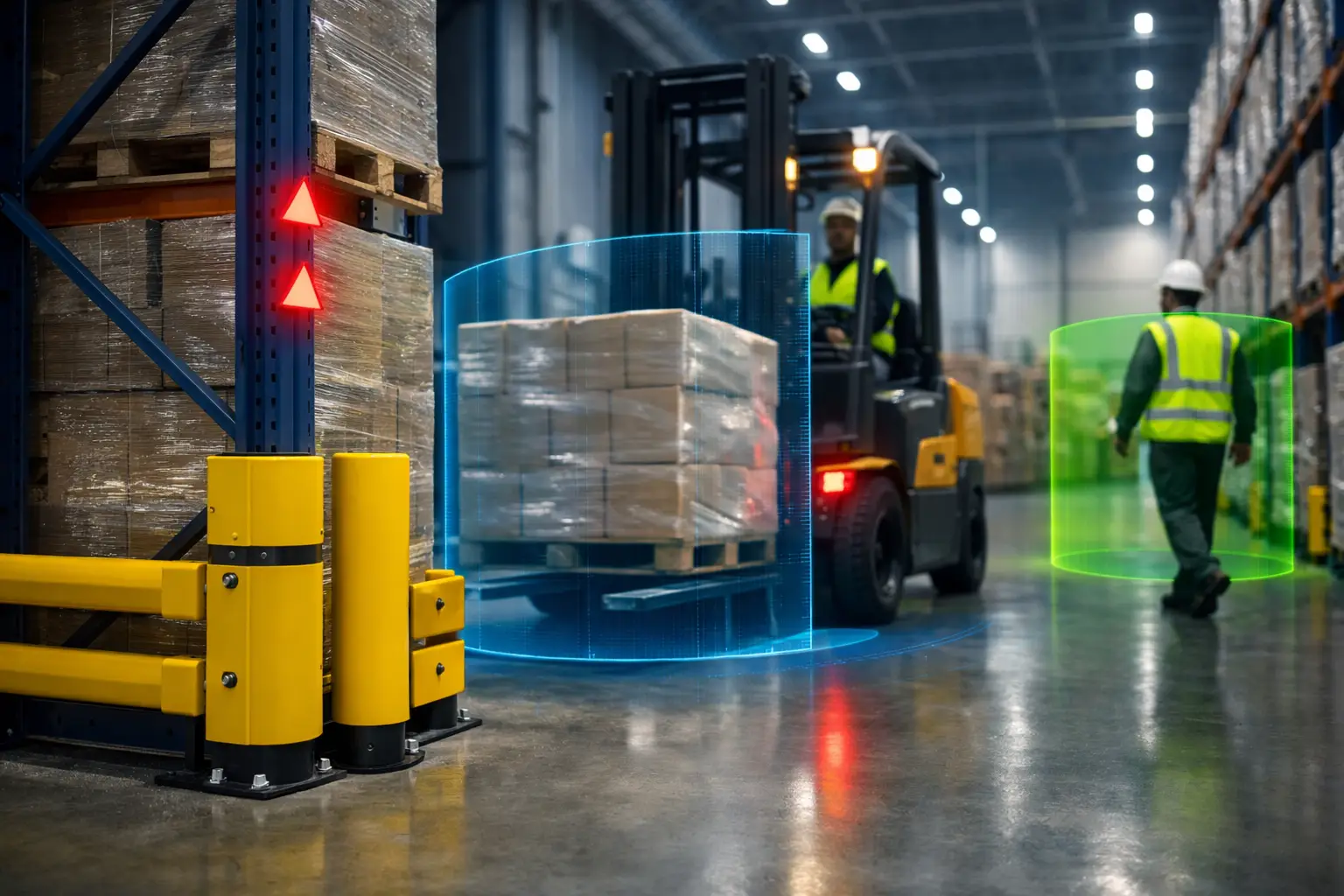
Rack upright protectors are often the first line of defense for exposed rack legs. They are installed at the base of an upright to shield it from light to moderate contact by forklifts, pallet jacks, and handling equipment.
These products are most appropriate where isolated uprights are vulnerable but aisle space is limited. Steel upright guards provide a durable physical buffer, while polymer guards can suit lower-energy impact areas and may be easier to install around existing racking. The choice depends on expected impact force. A lightweight guard is not a substitute for a structural barrier in a high-traffic forklift lane.
When selecting upright protection, confirm that the guard fits the upright profile, does not obstruct anchors or inspection access, and does not create a snag point for pallets or equipment. The protector must also be positioned to intercept likely contact before the fork carriage or vehicle body reaches the rack leg.
Rack end barriers for the most exposed bays
Rack ends are frequently struck because they sit at the entrance to storage aisles and near turning movements. A rack end barrier protects multiple uprights at once by creating a visible, stand-off defense in front of the end frame.
For busy warehouses, this is often one of the highest-value interventions. A properly specified barrier can absorb or redirect low-speed vehicle contact away from the racking while giving operators a clear visual boundary. It also helps protect inventory stored in end bays, where pallet overhang and operator misalignment can increase risk.
The trade-off is space. A rack end barrier reduces usable clearance at the aisle entrance, so its placement must be coordinated with forklift turning radius, pallet dimensions, and traffic flow. A barrier that makes an aisle difficult to enter may encourage unsafe driving behavior rather than prevent it.
Heavy-duty safety barriers for repeated forklift exposure
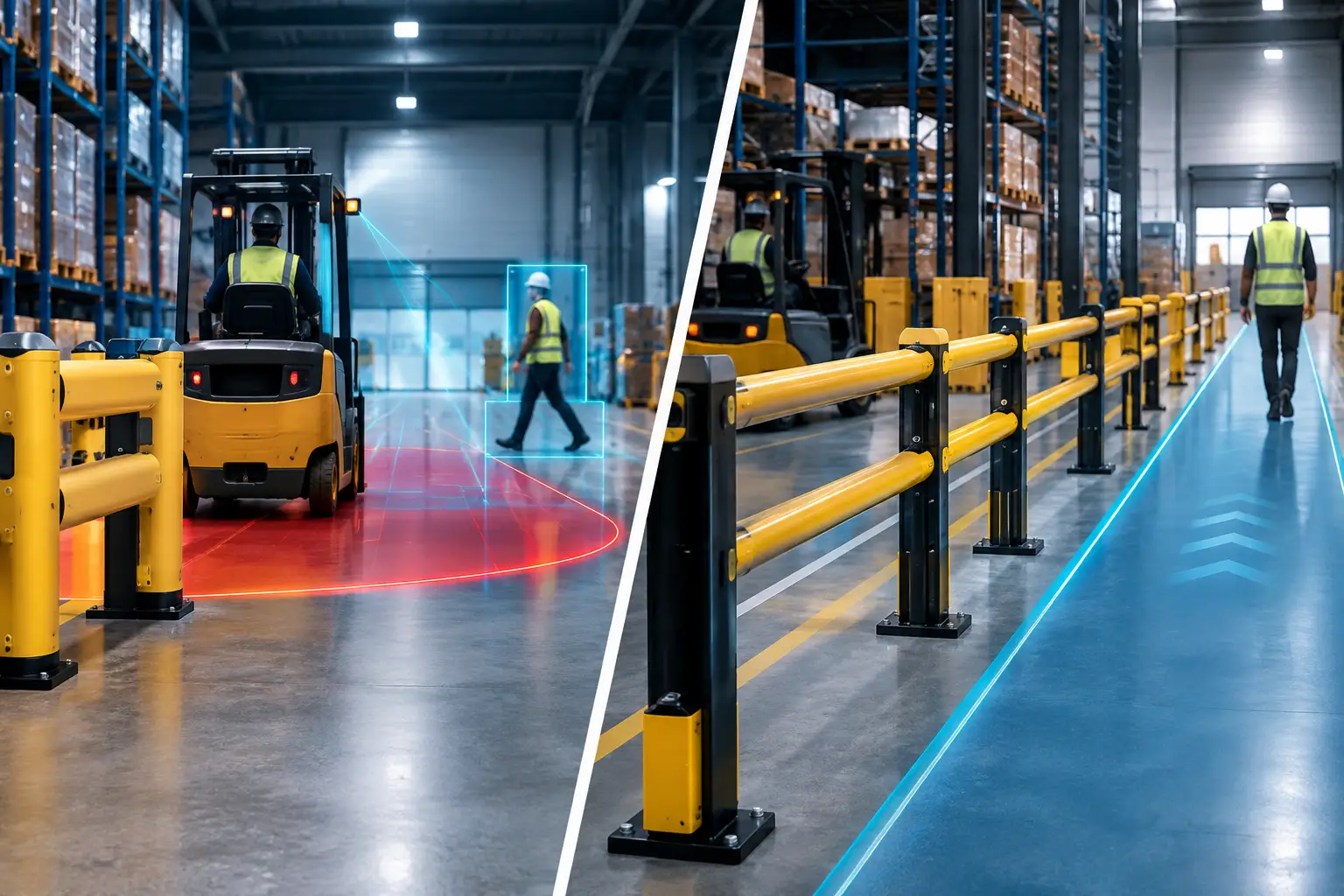
Where forklifts travel close to racking throughout the day, heavy-duty steel safety barriers may be more appropriate than individual upright guards. These systems are designed to create separation between vehicles and fixed assets across longer lengths of racking.
They are particularly useful along main travel routes, cross-aisles, staging areas, and zones where counterbalance forklifts or reach trucks operate near storage structures. Depending on the design, barriers may be floor-mounted, modular, or configured around corners and rack ends.
Barrier performance should be considered alongside the operating environment. Vehicle weight, travel speed, approach angle, floor condition, and frequency of exposure all influence the required level of protection. Engineering input is valuable when a barrier is expected to manage frequent or higher-energy impacts, rather than occasional accidental contact.
Column guards for building support columns near racking
Warehouse columns are another critical fixed asset that can be exposed near pallet racking. A forklift impact on a structural column can damage both the column and adjacent storage areas, particularly where narrow aisles leave little room for maneuvering.
Column guards provide a dedicated protective layer around these supports. In areas with regular vehicle movement, a stand-off steel barrier may offer greater protection than a wraparound guard alone. The objective is to keep the vehicle away from the column, not merely place a thin covering over it.
When columns and rack ends are close together, protect the zone as a system. Isolated products may leave gaps that allow an angled impact to reach either structure.
End-of-aisle and corner protection for turning zones
Forklift damage often occurs during turns, especially when operators are managing a load, avoiding congestion, or entering a narrow aisle. Corners at the end of racking and intersections deserve specific attention because impacts here may be angled rather than direct.
High-visibility corner barriers, bollards, and modular guardrail sections can define the protected envelope around these locations. Their color and profile should make the boundary easy to recognize without creating unnecessary visual clutter. Physical protection works best when it reinforces a clear traffic layout, including marked lanes, speed expectations, and designated pedestrian routes.
How to choose the right protection level
There is no single product that is best for every rack. The right choice begins with a site-specific risk review, not a catalog comparison. Examine incident records, near-miss reports, rack inspection findings, forklift routes, and the type of equipment operating in each area.
A useful decision process considers five practical questions:
- Which uprights, rack ends, columns, and corners have been hit or nearly hit before?
- What vehicles operate nearby, and what is their likely impact energy?
- Is the exposure occasional, daily, or continuous across multiple shifts?
- How much aisle width and turning clearance can be retained after installation?
- Can the solution be inspected, maintained, and replaced without disrupting operations?
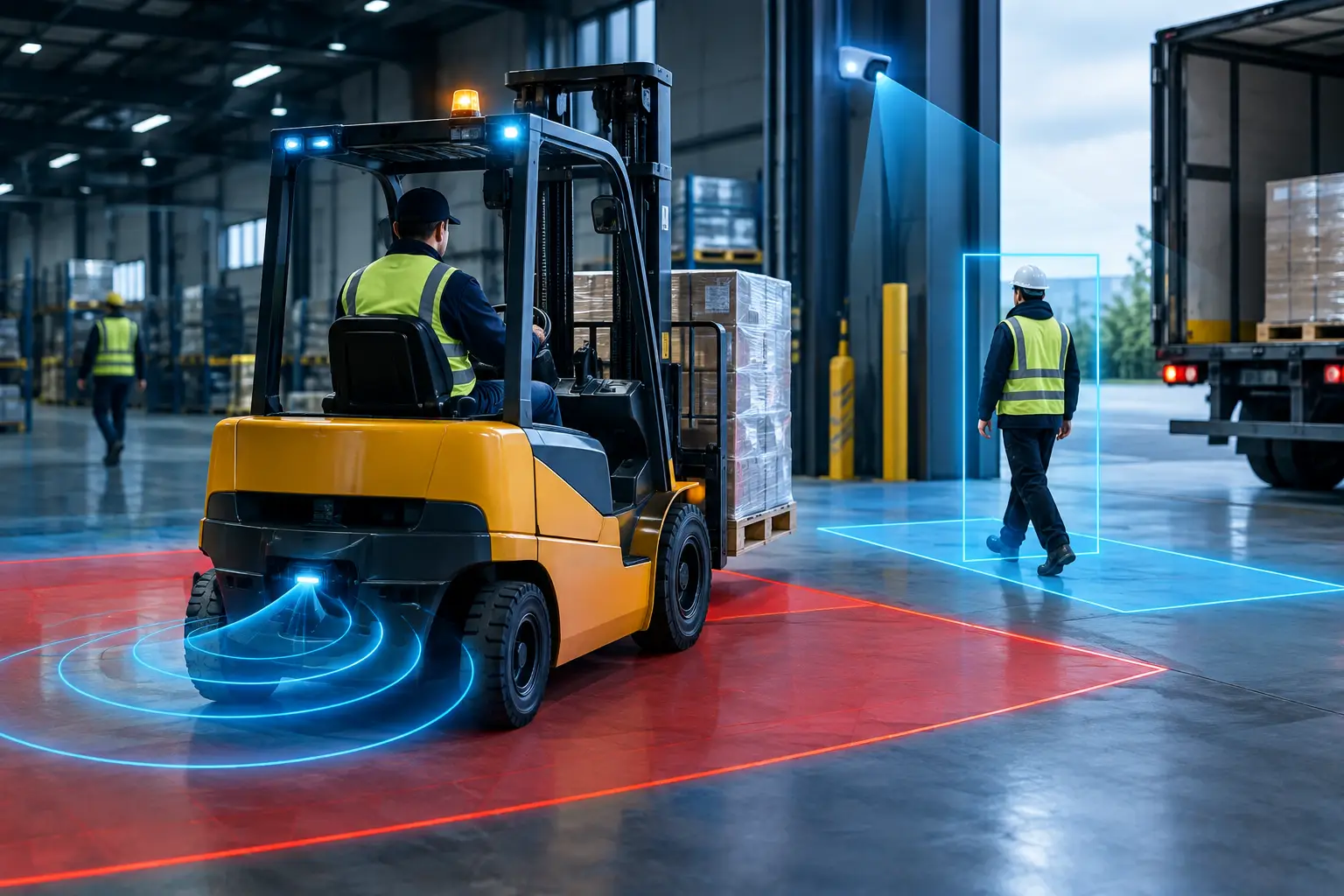
High-traffic routes usually justify stand-off barriers or rack end protection. Lower-risk, localized exposure may only require upright guards. Areas with repeated incidents may also need operational changes, such as revised travel routes, improved aisle markings, driver training, or warning technology. Physical barriers are essential, but they are one part of a broader collision-prevention strategy.
Installation details that affect real-world performance
Even high-quality rack protection can underperform if it is poorly installed. Floor-mounted systems require suitable concrete conditions and correctly specified anchors. The barrier must be aligned so that it receives impact before the rack does, while maintaining enough clearance to avoid transferring force into the racking during deflection.
Do not attach improvised guards directly to rack uprights unless the rack manufacturer and engineering guidance support that arrangement. Altering racking components or using incompatible fixings can create new structural concerns. Protection should be installed as an independent system wherever practical.
Visibility also matters. Bright colors, reflective markings, and clearly defined barrier lines help operators identify protected assets early. Yet visibility alone is not protection. In a busy warehouse, drivers need enough time and physical space to react safely.
Inspect protection after every significant impact
A barrier that has done its job may still require inspection. After a forklift strike, check for bent posts, damaged anchors, cracked welds, loose fittings, displaced guards, and reduced clearance between the barrier and rack. Inspect the racking itself as well, since force can travel beyond the visible point of contact.
Make impact checks part of routine rack inspection and incident reporting procedures. This creates a clearer picture of recurring hazards and helps management decide whether an isolated product replacement is enough or whether the traffic design needs to change.
SysGuard approaches rack protection as part of an integrated warehouse safety plan: protecting assets at impact points while improving how forklifts, pedestrians, and materials move through the facility. The goal is practical risk reduction, not simply adding hardware.
The best protection is the system that fits the actual hazard. Start with the rack locations your operators worry about, the impacts your maintenance team keeps repairing, and the travel paths that leave no margin for error. Those are the places where a well-engineered barrier can protect more than steel and inventory – it can prevent the next accident.