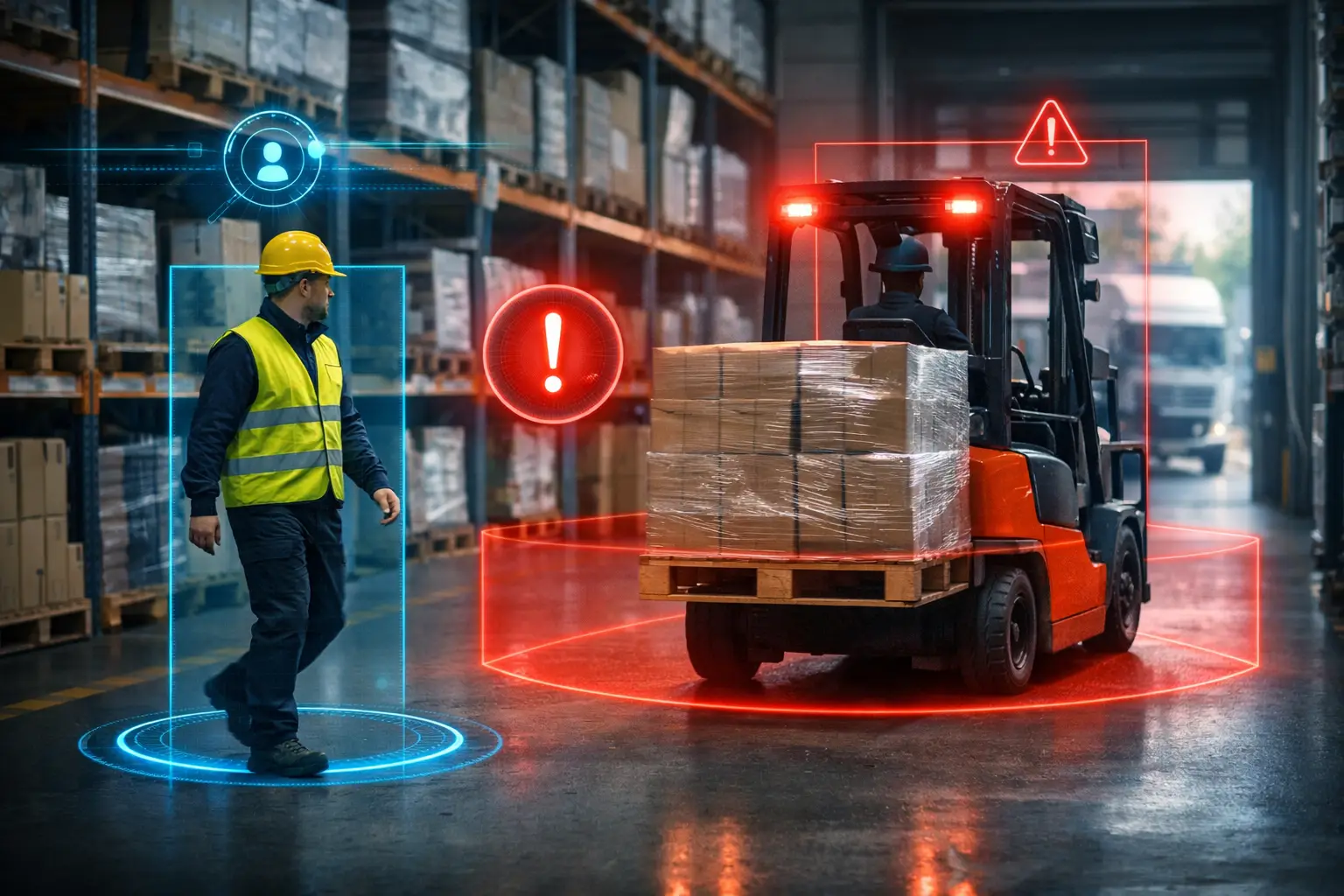
A forklift reverses out of an aisle as a picker steps around a pallet stack. Both stop in time. No one is injured, no product is damaged, and the shift continues. That event can disappear by the next break, or it can become the evidence that prevents a serious collision. A disciplined warehouse near miss reporting process determines which outcome is more likely.
Near misses are not minor issues simply because the consequence was avoided. They are early warnings that traffic controls, work practices, layouts, equipment condition, or communication have failed under real operating conditions. For warehouse and operations leaders, the goal is not to collect more reports. It is to turn credible observations into corrective actions that reduce the chance of injury, asset damage, downtime, and disruption.
What Counts as a Near Miss in a Warehouse?
A near miss is an unplanned event that did not result in injury, damage, or loss but had the potential to do so. The definition should be clear enough that workers do not spend time debating whether an event is “serious enough” to report.
In a warehouse, this can include a forklift passing too close to a pedestrian, a load shifting without falling, a vehicle restraint not engaging as expected, a rack upright being struck without visible collapse, or a dock door opened before a trailer was secured. It can also include recurring conditions: blind corners, poorly marked crossings, blocked walkways, damaged barriers, inadequate warning visibility, or congestion during peak picking periods.
The useful test is straightforward: if the same situation occurred with slightly different timing, speed, visibility, or load condition, could someone have been hurt or could equipment, racking, or inventory have been damaged? If yes, it deserves attention.
Why Near Miss Reports Often Fail to Prevent Accidents
Many sites have a reporting form, but not an effective reporting system. Workers may avoid reporting because the process feels time-consuming, they expect blame, or previous reports have produced no visible response. Supervisors may classify an event as operator error and close it before examining the conditions that made the error possible.
This approach misses the operational reality. A pedestrian entering a forklift lane may be a behavior issue, but it may also point to an unprotected crossing, poor sightlines, an inconvenient designated route, or traffic pressure caused by the layout. A rack strike may involve driving technique, but repeated strikes at the same aisle end suggest a design or protection issue that training alone will not solve.
An effective process separates accountability from learning. It asks what happened, what conditions allowed it, and what control will prevent recurrence. It does not treat every report as a disciplinary event. Workers need confidence that reporting a hazard is part of doing the job safely and professionally.
Build a Warehouse Near Miss Reporting Process That Works
The process should be simple at the point of reporting and rigorous after the report is received. The person who witnessed the event should not need to conduct an investigation or write a lengthy statement. Their responsibility is to report accurate facts promptly.
Make reporting immediate and accessible
Offer a reporting route that suits the work environment. This may be a short digital form accessed by mobile device, a workstation terminal, a QR code placed at relevant areas, or a supervisor-assisted process for workers without easy device access. Paper forms can still be useful in some operations, but they should not delay escalation or rely on later data entry.
Require only the information needed to start action: location, time, activity underway, people or equipment involved, what occurred, and any immediate hazard remaining. Photographs are valuable for damaged racking, blocked routes, missing signage, floor conditions, and loading bay concerns when they can be taken safely.
Reports should be submitted as soon as practical, ideally before details fade or shift conditions change. For high-potential events, such as a forklift-pedestrian close call or an unsecured trailer at a loading dock, the supervisor should be notified immediately so the area can be made safe.
Triage based on potential, not the outcome
A report with no injury can still represent a high-risk failure. Triage should consider credible worst-case consequences, likelihood of recurrence, exposure frequency, and whether a critical control failed.
For example, a lightly scraped rack protector may be low priority if it is isolated and repaired quickly. A rack strike at a busy aisle intersection, however, may be high priority if the impact could have affected structural integrity or if similar strikes have occurred. Likewise, a close call between a pedestrian and forklift in a low-traffic maintenance zone needs a different response than the same event at a shift-change crossing used hundreds of times each day.
Define who can classify reports and when escalation is required. A warehouse manager, EHS lead, maintenance representative, and operations supervisor may each need a role, depending on the event. Clear ownership prevents reports from sitting in an inbox without action.
Investigate the work system, not just the last action
A good review establishes the sequence of events and examines the controls in place. Speak with those involved without turning the conversation into a search for a single person to blame. Review physical conditions, traffic patterns, work instructions, equipment status, visibility, supervision, and workload pressures.
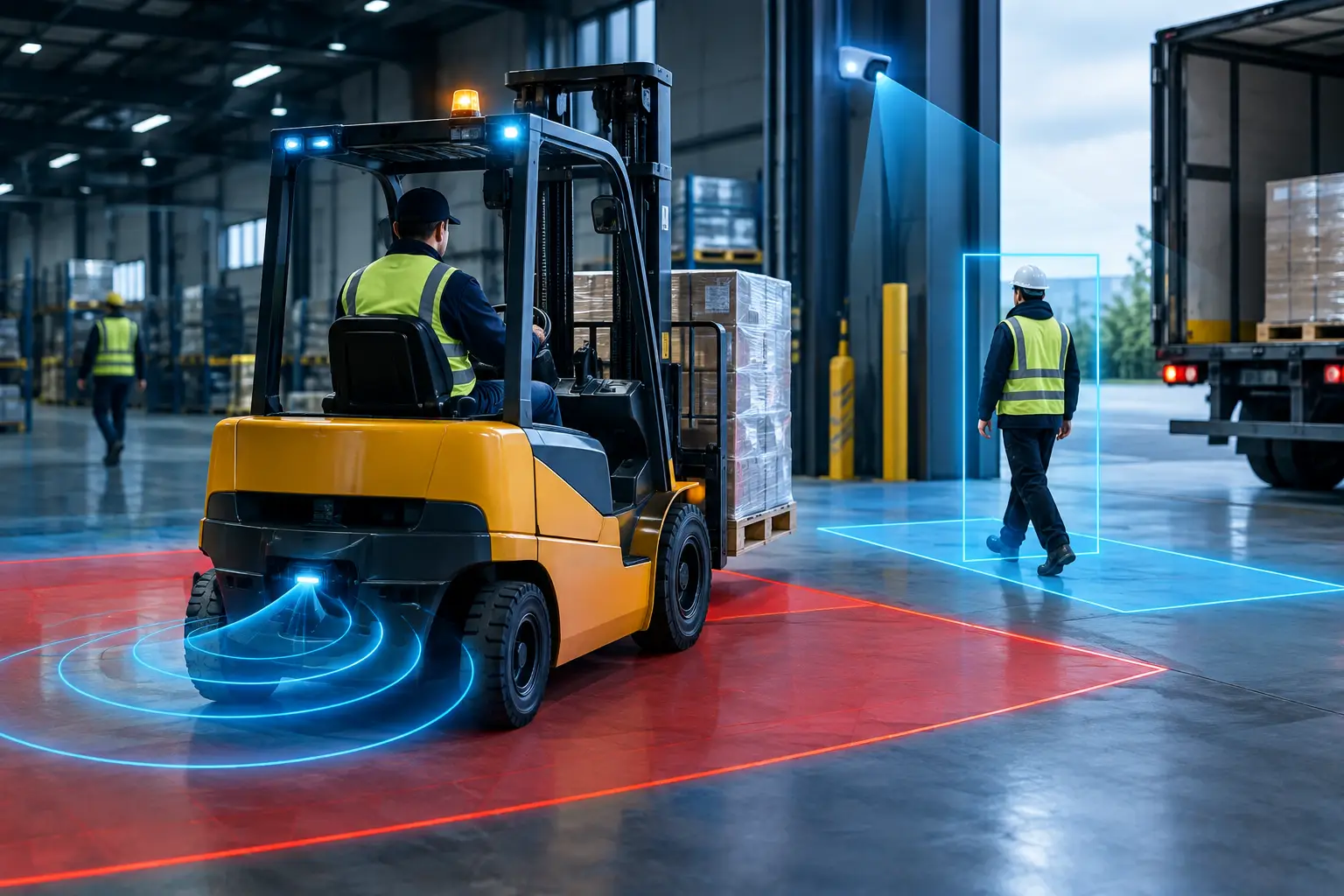
For forklift and pedestrian events, assess whether routes were separated, crossings were clearly designated, sightlines were adequate, and warning measures worked under actual operating noise and lighting conditions. For loading bay events, review the approach, trailer movement controls, dock communication, and the sequence used before loading or unloading begins.
It is also useful to look for repeat patterns. One report may be an isolated deviation. Five reports from the same aisle, dock, or time period indicate a system problem that needs a stronger control.
Choose controls that reduce reliance on memory
Corrective actions should match the risk. Reminding employees to “be careful” may have a place as a short-term response, but it is rarely a sufficient permanent control. The stronger approach is to change the environment, workflow, or warning system so safe behavior is easier to achieve consistently.
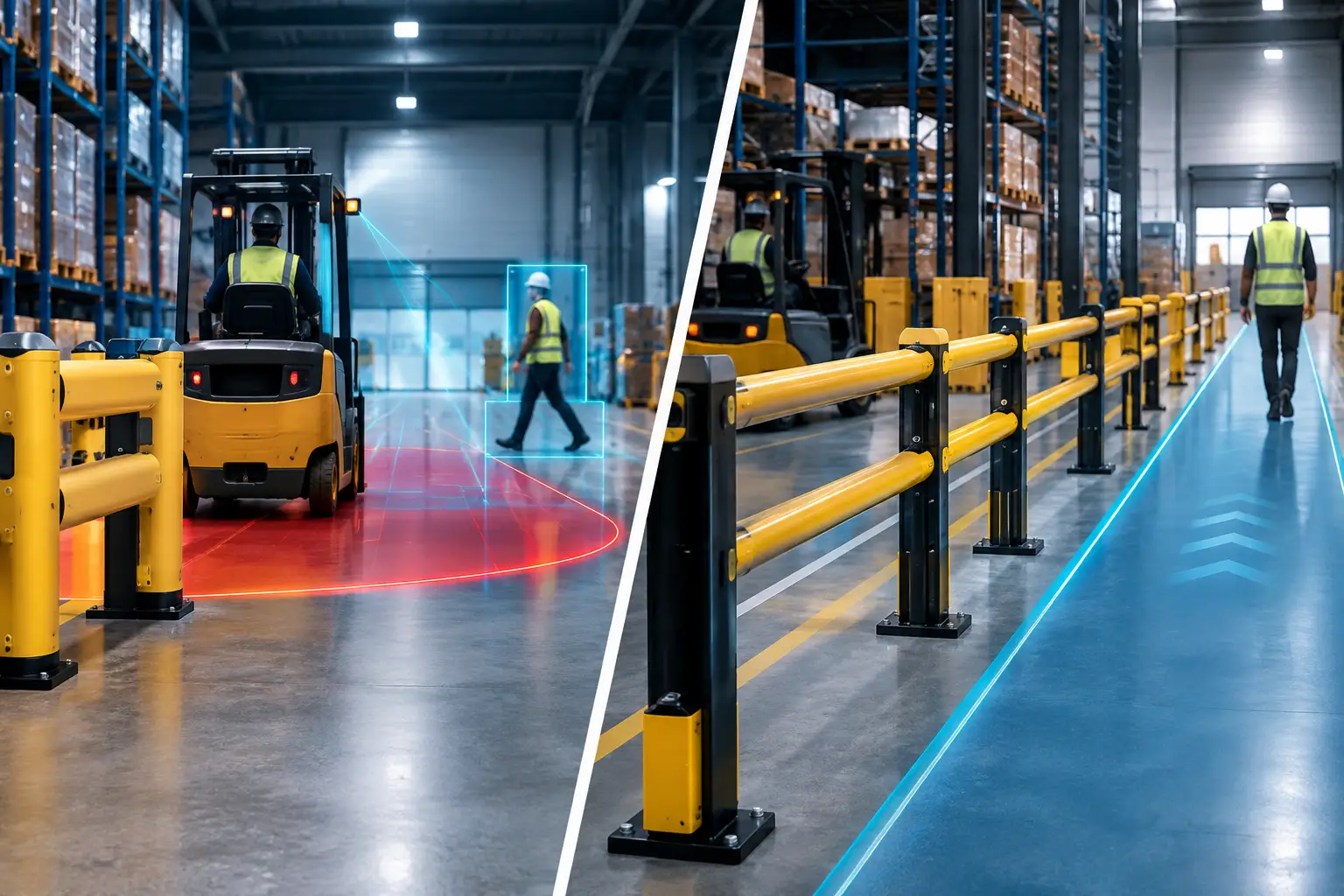
At a blind forklift intersection, practical controls could include revised traffic routing, physical pedestrian separation, floor projections, warning lights, audible alerts, or proximity warning technology. At a vulnerable rack end, improved impact protection and traffic layout changes may be more effective than repeated operator reminders. At a loading bay, a near miss may justify reviewing vehicle restraint practices, dock signaling, and the physical sequence that controls trailer access.
Technology can improve visibility and consistency, but it should be applied to a defined risk. Vision AI monitoring, for example, can help identify pedestrian encroachment, unsafe interactions, and recurring traffic conflicts. It is most valuable when its findings are reviewed, assigned, and connected to physical or procedural improvements rather than treated as data alone.
Assign actions, deadlines, and verification
Every accepted report should have a documented status: immediate action taken, investigation required, corrective action assigned, or closed with justification. Each action needs an owner and due date. “Maintenance to inspect” is not enough. Identify the responsible role, expected completion date, and evidence required to verify completion.
Verification matters because an installed sign, repaired barrier, or revised route does not automatically mean the risk is controlled. Observe the area after the change. Are pedestrians using the route? Can forklift operators see the warning? Has congestion shifted to another location? Has the reported condition recurred?
This follow-through is where near miss reporting earns credibility. When workers see that a report led to a repaired guardrail, a safer crossing, or a change in dock controls, future reporting improves.
Use Near Miss Data to Find Risk Before It Escalates
Monthly trend reviews should look beyond the total number of reports. A rising report count can indicate greater risk, but it can also mean workers are more willing to report. The more revealing measures are the location, event type, shift, equipment involved, recurring causes, time to close actions, and repeat-event rate after corrective measures are introduced.
Map reports to operational changes. If near misses increase after a new picking process, higher throughput target, layout revision, or seasonal staffing change, investigate whether the work system has introduced new exposures. The objective is to identify leading indicators before an injury, rack collapse, vehicle impact, or loading bay incident forces the issue.
Share relevant findings with teams in concise shift briefings. Explain the hazard, the action being taken, and what workers should do differently while controls are being improved. Avoid naming individuals unless there is a specific management reason to do so. The lesson should be transferable across the operation.
Create a Reporting Culture That Supports Action
Leadership behavior sets the standard. If managers ask about near misses after an event, thank workers for raising concerns, and close the loop on corrective actions, reporting becomes part of normal operational discipline. If reports disappear into a system with no feedback, employees quickly learn that silence is easier.
Near miss reporting is not paperwork after a lucky escape. It is one of the clearest opportunities a warehouse has to act before a worker, vehicle, rack, or loading operation pays the price. Every reported close call is a chance to remove one more condition that could stop someone from returning home safely.