A loaded trailer can shift at the dock in seconds. A driver may pull away early, air suspension can change the trailer height, or repeated forklift movement can cause trailer creep. When that happens, the gap between the trailer and loading dock becomes a serious fall and crush hazard. Dock restraint systems Malaysia operations use are designed to control this risk before people and forklifts enter the trailer.
For warehouse, manufacturing, and distribution operations, loading bays are high-traffic transfer points where people, forklifts, trucks, pallets, and schedules converge. Managing vehicle movement at this point is not simply a matter of placing wheel chocks behind tires. It requires a coordinated safety control that holds the trailer in position, communicates its status clearly, and supports disciplined loading procedures.
Why trailer movement is a loading bay risk
Forklifts place repeated dynamic forces on a trailer during loading and unloading. Each entry and exit transfers weight across the dock leveler and trailer floor. A trailer that is not properly restrained can slowly move away from the dock, particularly on smooth pavement, uneven grades, wet conditions, or high-volume loading cycles.
The consequences can be severe. A forklift may fall into the opening between the dock and trailer. A worker walking inside the trailer may be exposed to a sudden gap or unstable floor. The dock leveler can become misaligned, and the facility may face damaged equipment, disrupted shipments, and an incident investigation that stops operations when time is already under pressure.
Premature departure is another major concern. If a driver is not clearly informed that loading is still underway, the vehicle may leave while a forklift or worker remains inside. Procedures, signage, and verbal instructions all have a role, but they rely heavily on consistent human behavior. A physical restraint system adds an engineered layer of control.
How dock restraint systems work
Dock restraint systems secure a vehicle at the loading bay so it cannot move away from the dock until the loading process is complete. Many systems engage the trailer’s rear impact guard, commonly called the rear underride guard, with a powered hook or locking mechanism installed at the dock face.
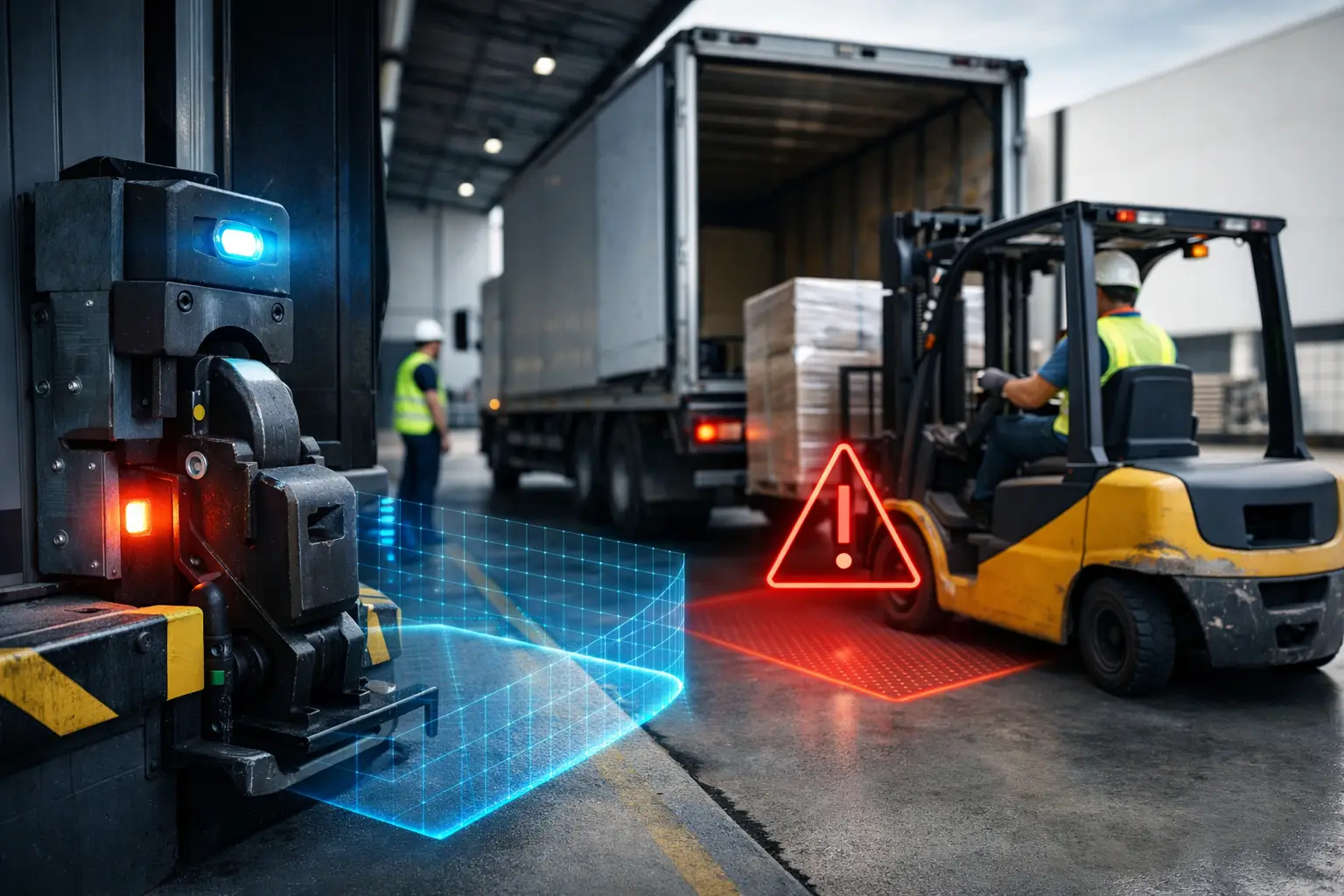
When the trailer reverses into position, the restraint engages the rear guard and holds the trailer against the dock. An external signal light can indicate to the driver that the vehicle is restrained and should not depart. Inside the facility, an indicator can show dock personnel whether it is safe to begin loading or unloading.
This interlock between physical restraint and visible communication is where the system delivers much of its value. The dock team does not need to guess whether the trailer is secure. The driver receives a clear instruction. Supervisors can establish a repeatable sequence: vehicle positioned, restraint engaged, internal signal confirms safe status, loading begins, loading ends, restraint releases, driver departs.
Not every trailer has the same rear guard geometry or condition, however. Older trailers, damaged guards, unusual vehicle configurations, and certain regional fleet types can affect compatibility. A site assessment should therefore examine the actual mix of vehicles using the dock rather than selecting a restraint based only on standard specifications.
Dock restraint systems Malaysia facilities should consider
For facilities in Malaysia, the right dock restraint approach depends on loading frequency, trailer types, dock configuration, pavement condition, and the level of forklift activity. The goal is not to install the most complex equipment available. It is to apply a control that meaningfully reduces the specific risk present at each bay.
Hydraulic or powered hook restraints
Powered hook restraints are a common choice for frequent loading operations. They engage the trailer’s rear impact guard and provide a positive mechanical hold. Because they are typically operated from the dock control station, they can be integrated with red-green communication lights and dock leveler controls.
This option is well suited to operations with regular trailer traffic and a consistent fleet profile. It does require adequate dock-face structure, correct installation, planned inspection, and attention to trailer compatibility. If the impact guard is bent, missing, or positioned outside the system’s engagement range, the restraint may not secure the vehicle as intended.
Wheel-based restraint systems
Wheel restraints secure the vehicle by blocking or capturing a wheel. They can be useful where rear impact guards are inconsistent or unsuitable for hook engagement. Depending on the design, a wheel restraint may be installed at ground level or operated through a guided mechanical system.
These systems can address certain compatibility challenges, but ground-level equipment needs careful consideration. Debris, drainage, standing water, and heavy vehicle wear can affect performance and maintenance needs. The system should suit the site environment rather than create an additional point of failure.
Wheel chocks and procedural controls
Wheel chocks remain common in many facilities because they are simple and low cost. They can be part of a loading bay safety procedure, especially for temporary or lower-volume applications. However, they are dependent on correct placement, adequate friction, good surface conditions, and employees following the process every time.
For high-throughput docks where forklifts repeatedly enter trailers, chocks alone may not provide the level of control needed. They also do not inherently provide status communication to drivers and dock teams. Where the risk assessment identifies trailer creep or premature departure as credible hazards, an engineered vehicle restraint and signaling system generally provides a stronger control.
Signals are as important as the restraint
A restraint can only prevent movement if people understand its status and follow the sequence. Clear communication between the driver and dock crew reduces the chance that someone will release a vehicle or start loading at the wrong time.
A practical system uses exterior red and green lights facing the driver, paired with interior indicators for dock personnel. When the restraint is not engaged, the external signal should instruct the driver to remain in place while the internal signal prevents the dock team from proceeding. Once the trailer is secure, the signals change to support loading activity.
Audible alarms can add another layer of awareness when an unsafe condition is detected, such as a restraint failure, an attempted departure, or an unrestrained trailer at an active dock. In busy facilities with high ambient noise, visual and audible alerts should be selected and positioned so they are noticeable without becoming background noise.
The operating procedure matters just as much. Drivers need a clearly designated waiting area and instructions on what each signal means. Dock personnel need training on when they may operate the leveler, enter the trailer, and release the vehicle. Supervisors should treat bypassing the restraint sequence as a safety issue, not a shortcut for catching up on a schedule.
Planning a practical installation
Before choosing a system, assess each loading bay as an operating environment. Review the trailer fleet, approach geometry, dock height, condition of the dock face, traffic volume, forklift types, and the history of near misses or equipment damage. A bay handling occasional deliveries may need a different solution than one serving continuous outbound dispatch.
Engineering review is especially valuable where docks have uneven surfaces, limited apron space, mixed vehicle fleets, or nonstandard rear guards. The restraint must be positioned to engage correctly, and the signaling equipment must be visible from the relevant driver and operator locations. Electrical controls, dock levelers, doors, and vehicle restraints should work as one coordinated system rather than as disconnected equipment.
Installation is only the beginning. Routine inspections should confirm that hooks, sensors, lights, control panels, mounting hardware, and communication devices remain in working condition. Any damaged trailer guard or repeated engagement failure should be reported and addressed before the bay returns to normal use. Preventive maintenance protects the reliability of the safety control and reduces unplanned downtime.
Building a safer loading bay operation
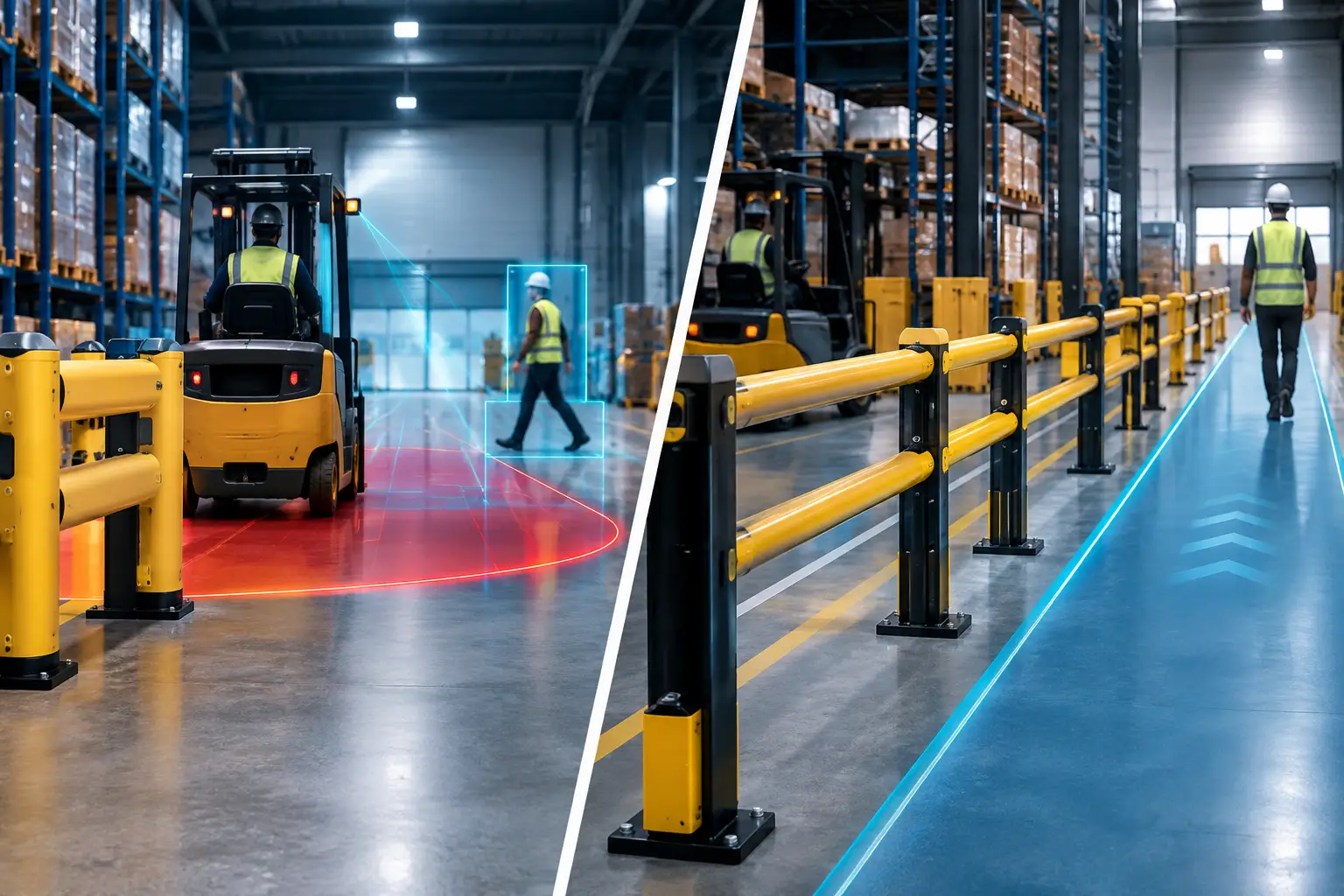
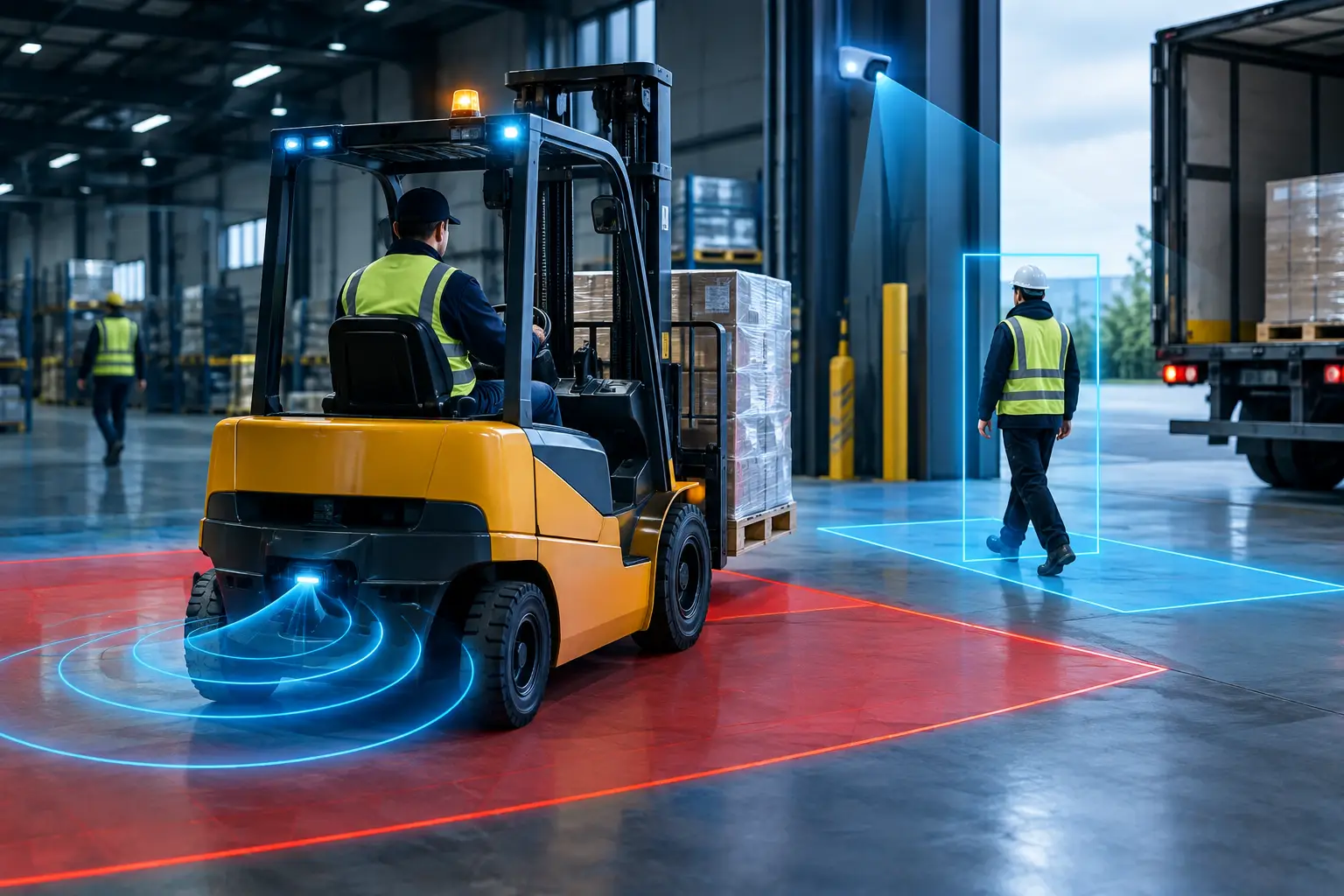
Dock restraints are most effective when they form part of a broader loading bay safety strategy. Marked pedestrian routes, managed forklift traffic, dock edge protection, clear staging areas, and operator training all reduce exposure around the dock. Where vehicle and pedestrian movements overlap, warning systems and visibility measures can further strengthen hazard prevention.
SysGuard approaches loading bay safety as an operational design challenge: identify how people, forklifts, and vehicles actually move through the area, then apply controls that are practical to use during every shift. The strongest safety system is one that workers can understand immediately and supervisors can maintain consistently.
Every worker deserves to return home safely every day. At the loading dock, that starts with removing uncertainty about whether the trailer will stay where it should.