A loading dock can look controlled right up to the moment it is not. A trailer pulls away too early, a forklift crosses a blind corner, or a worker steps into the gap between a vehicle and the dock. These are not isolated mistakes. When asking what causes loading dock accidents, the answer is usually a combination of moving equipment, weak process controls, changing conditions, and gaps in communication.
For warehouse and facility leaders, the loading dock deserves the same level of risk control as high-traffic forklift areas. It is where people, forklifts, trucks, trailers, goods, and time pressure converge. Preventing accidents means managing that interaction deliberately, not relying on individual awareness alone.
What Causes Loading Dock Accidents?
Loading dock accidents occur when people and vehicles operate without clear separation, reliable restraint, confirmed status information, or safe working conditions. The immediate event may be a fall, collision, crush injury, or damaged load. The underlying cause is often that a critical safety control was missing, bypassed, poorly maintained, or not understood.
A dock operation can change minute by minute. Trailer height differs, truck drivers arrive on different schedules, dock doors open and close, and forklift traffic rises during dispatch peaks. Risk assessments must reflect these real operating conditions rather than an idealized process.
Early trailer departure and trailer creep
One of the most serious loading bay hazards occurs when a trailer moves away from the dock while a forklift is loading or unloading. This may happen because the driver leaves before work is complete, the trailer parking brake is not adequately applied, or the vehicle gradually creeps forward under repeated forklift movement.
The result can be a dangerous gap between the dock and trailer. A forklift, operator, or load may fall through it, leading to severe injury, equipment damage, product loss, and extended downtime.
Vehicle restraint systems provide a stronger control than relying only on wheel chocks or verbal instructions. A properly selected restraint physically helps prevent unintended trailer movement and can be linked to dock status lights that show when loading is safe to begin. The right approach depends on trailer types, site layout, traffic volume, and operating procedures. However, the principle is consistent: forklift access should not begin until the vehicle is positively secured.
Poor communication between drivers and dock teams
Drivers, forklift operators, dispatch staff, and dock personnel often work for different employers or shifts. Without a clear handover process, each person may make assumptions about whether a trailer is ready, restrained, unloaded, or cleared for departure.
Verbal messages alone are unreliable in noisy loading environments. They can be missed, misunderstood, or passed on late. Visual and audible communication systems make the status of a dock position visible to the people who need it. For example, external signals can guide drivers, while internal indicators tell warehouse teams when the trailer is safely restrained and loading may proceed.
Communication controls are most effective when they are built into the workflow. A signal should trigger a defined action, not become another light that people learn to ignore.
Forklift and pedestrian conflict
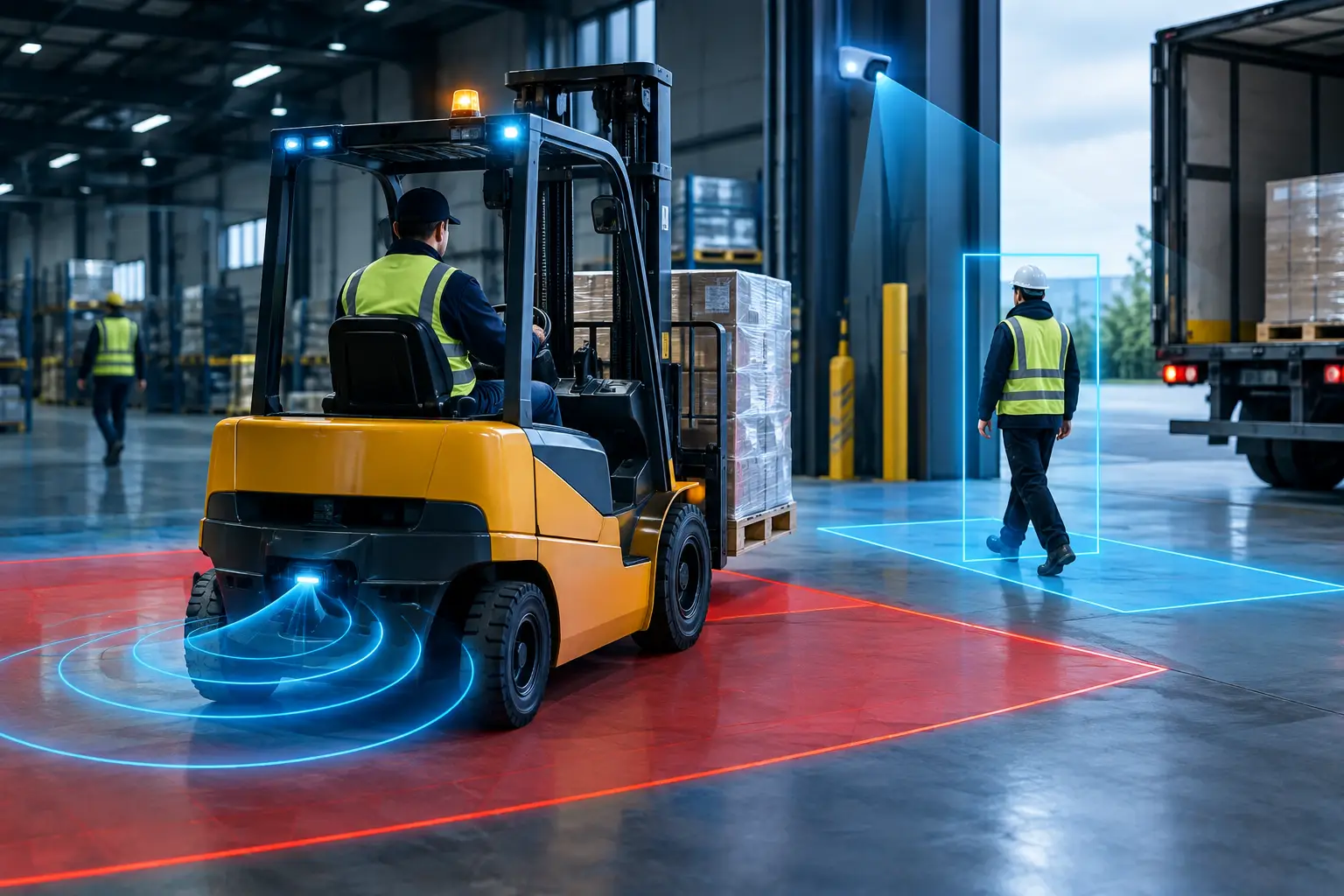
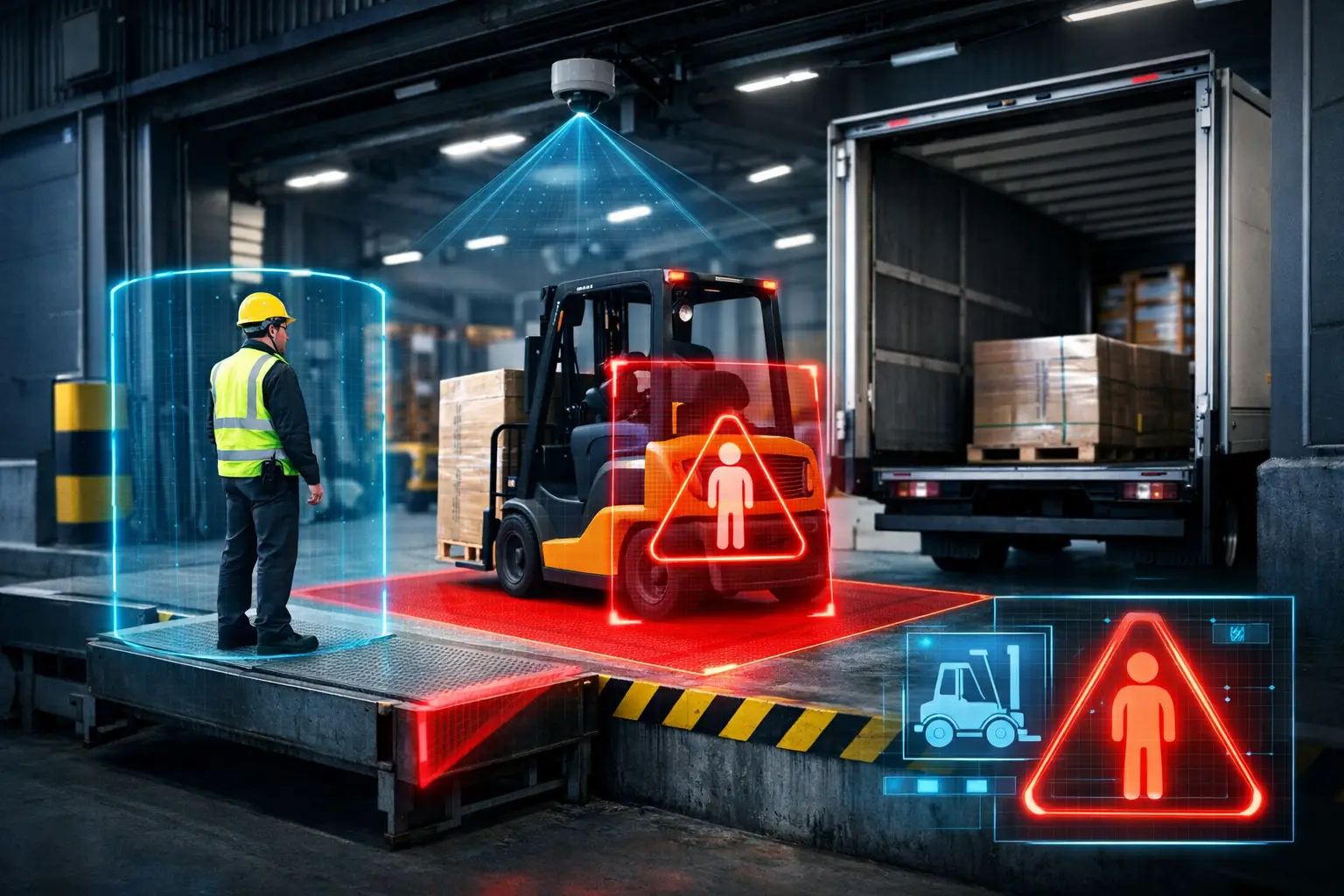
Loading docks are active vehicle zones, yet pedestrians still need access for inspections, paperwork, load checks, and coordination. Accidents occur when a person walks behind a reversing forklift, enters a trailer unexpectedly, or crosses a travel path near a dock door.
Visibility is commonly limited by stacked pallets, dock shelters, trailer walls, blind corners, and the operator’s load. Even an experienced forklift operator may not see a worker who steps into a restricted area at the wrong moment.
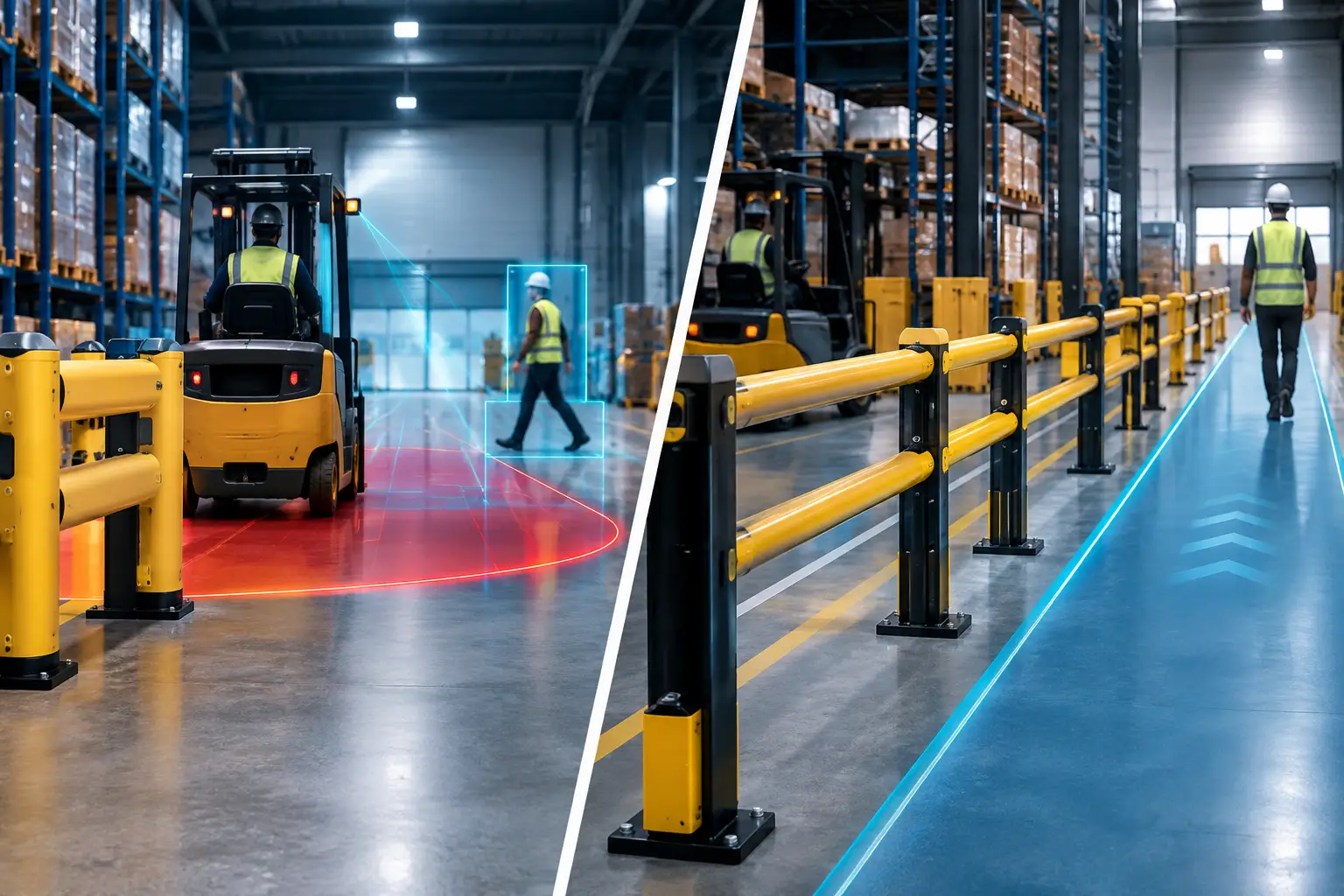
Traffic management is the first control. Clearly defined pedestrian routes, exclusion zones, crossing points, physical barriers, and directional markings reduce opportunities for conflict. Where separation cannot be maintained, proximity warning systems, projected safety lights, and audible-visual alerts add another layer of protection. Vision AI monitoring can also identify unsafe interactions, such as pedestrians entering forklift operating zones, giving safety teams useful data to improve behavior and layout.
Technology does not replace disciplined traffic rules. It helps reinforce them where people, vehicles, and changing operational demands make risk difficult to manage consistently.
Falls from dock edges, trailer beds, and unsecured loads
A dock edge is a fall hazard whenever a door is open and no trailer is correctly positioned. Workers may step backward while handling freight, lose balance while checking a load, or move around an open bay where edge protection is absent.
Falls also occur inside trailers. Uneven flooring, damaged decking, gaps in cargo, poor load stability, and inadequate lighting can make entry hazardous. An employee should not need to climb onto an unstable load or improvise access to inspect it.
Dock edge barriers, gates, and interlocked systems can protect open bays when no vehicle is present. Good lighting and housekeeping are equally practical controls. A clean, well-lit dock makes uneven surfaces, damaged dock plates, and obstructions easier to identify before they contribute to an incident.
Defective or mismatched dock equipment
Dock levelers, bridge plates, vehicle restraints, doors, and bumpers all carry heavy loads and repeated impact. When they are damaged, poorly maintained, or used outside their intended capacity, the risk rises quickly.
A bridge plate that shifts under a forklift, a leveler with an uneven transition, or worn trailer restraints can lead to sudden instability. Equipment selection also matters. A dock plate suitable for hand pallet trucks may not be appropriate for the axle loads and traffic pattern of powered forklifts.
Preventive inspections should focus on the equipment workers use every shift, not only assets that fail dramatically. Teams should check for damaged surfaces, missing components, unusual movement, hydraulic issues, worn restraints, poor alignment, and safety signals that no longer function as intended. Defects need a clear reporting and isolation process so damaged equipment is not returned to service simply because the dock is busy.
Rushing, congestion, and unsafe workarounds
Loading docks operate under real commercial pressure. Trucks must meet delivery windows, outbound orders need to leave, and a delayed bay can disrupt the whole schedule. But time pressure often exposes weaknesses that already exist in the process.
Workers may bypass a restraint check, drive too quickly over a leveler, leave pallets in travel lanes, or enter a trailer before its status is confirmed. Congestion also reduces maneuvering room and increases the chance of a forklift strike or a load impact.
The practical answer is not simply telling people to be more careful. Site leaders should examine why shortcuts occur. Is the dock layout too tight? Are signals unclear? Does a shift lack enough trained operators? Are trailer arrivals creating avoidable peaks? Correcting the operating condition is more effective than repeatedly addressing the same unsafe behavior after an incident or near miss.
Building Stronger Loading Dock Controls
Effective dock safety uses layered controls. No single product, rule, or training session can address every risk. The strongest programs combine safe equipment, controlled traffic flow, visible communication, competent operating procedures, and routine verification.
Start by mapping what actually happens at each dock position. Observe vehicle arrival, driver check-in, restraint, door opening, loading, final checks, release, and departure. Include exceptions such as late deliveries, damaged trailers, mixed vehicle fleets, and periods of high congestion. These are often where controls fail.
Then prioritize improvements according to severity and exposure. A site with frequent trailer movement may first need vehicle restraints and integrated traffic lights. A high-volume distribution center with shared pedestrian access may need stronger barriers, designated walkways, warning systems, and camera-based monitoring. Facilities handling irregular loads may benefit from clearer exclusion rules and better load-stability checks.
Training remains essential, but it should be specific to the dock’s actual controls. Workers need to know what each signal means, when equipment must be removed from service, where pedestrians may walk, and who has authority to release a vehicle. Supervisors should reinforce these standards through daily observation, not only after an accident.
Use Near Misses as Early Warning Signs
A trailer shifting slightly, a forklift stopping abruptly for a pedestrian, or a dock plate moving unexpectedly may not result in injury. It is still valuable safety information. Near misses reveal where the operating system is relying on luck.
Encourage teams to report these events without treating every report as a disciplinary issue. Look for recurring patterns by dock door, shift, carrier, equipment type, or time of day. This helps turn incident data into targeted improvements, whether that means repairing equipment, revising traffic routes, improving signage, or adding intelligent safety technology.
Every worker deserves to return home safely every day. A loading dock becomes safer when the process makes the safe action the easy action – and when the organization treats every warning sign as an opportunity to prevent the next accident.