A forklift turning out of a rack aisle, a pedestrian crossing toward a picking area, and a pallet blocking the sightline can create a serious incident in seconds. This machine pedestrian separation guide explains how warehouses and industrial facilities can reduce that exposure by designing traffic systems that keep people and moving equipment apart wherever possible.
Painted lines and safety signs have a role, but they are not separation. Effective separation is a planned combination of facility layout, physical controls, operating rules, and warning technology. The objective is straightforward: prevent a person and a machine from occupying the same danger zone at the same time.
Why Machine Pedestrian Separation Matters
Forklifts, reach trucks, pallet jacks, tuggers, and automated mobile equipment are essential to productive operations. They also have blind spots, turning arcs, load-obstructed views, braking distances, and unpredictable interactions with changing work conditions. Pedestrians may be focused on scanning inventory, locating stock, speaking with colleagues, or completing a task. They may not hear or recognize approaching equipment until it is too late.
The risk increases at intersections, dock doors, staging areas, aisle ends, battery charging zones, entrances to production lines, and shared workspaces. Congestion, temporary storage, poor housekeeping, and peak-shift pressure can quickly undermine traffic rules that appear adequate on paper.
A well-designed separation strategy protects people first, while also reducing product damage, rack strikes, vehicle damage, unplanned downtime, and disruption caused by incident investigations. It supports a more predictable flow of work because operators and pedestrians know where they belong and what to expect.
Start With Traffic Risk, Not Equipment Selection
The strongest control measures begin with a site-specific traffic risk assessment. Before selecting barriers, sensors, or warning lights, observe how people and machines actually move through the facility. The formal route plan may show one pattern, while daily operations reveal shortcuts, blocked walkways, crossing points, and informal staging practices.
Map vehicle travel routes, pedestrian routes, loading and unloading areas, workstations, emergency access paths, doors, and intersections. Include every shift, not only daytime operations. A warehouse can operate very differently during replenishment, dispatch cutoffs, inventory counts, maintenance work, or seasonal peaks.
Pay particular attention to locations where visibility is limited. A blind corner is not made safe simply because a convex mirror has been installed. Mirrors can support awareness, but they depend on people looking at the right moment and interpreting what they see. Where the consequence of a conflict is high, physical separation or active controls should take priority.
Identify the highest-risk interactions
Not every shared area requires the same intervention. A low-speed pedestrian crossing used a few times each day needs different controls than a busy dock approach where forklifts and workers interact continuously. Consider vehicle speed, vehicle type, frequency of movement, visibility, load characteristics, pedestrian volume, and the potential for people to enter the area unexpectedly.
Also assess what happens when normal conditions fail. What if a pallet is temporarily placed in a walkway? What if a dock door is open during a busy dispatch period? What if a worker needs to access a machine for inspection? Good design accounts for real operational variability rather than assuming perfect behavior.
Build Separation From the Ground Up
The most reliable hierarchy starts by eliminating shared travel wherever feasible. Separate routes remove the need for pedestrians and operators to negotiate space in real time. In an existing facility, full redesign may not be practical, but meaningful improvements can often be achieved by changing travel direction, relocating staging areas, or consolidating access points.
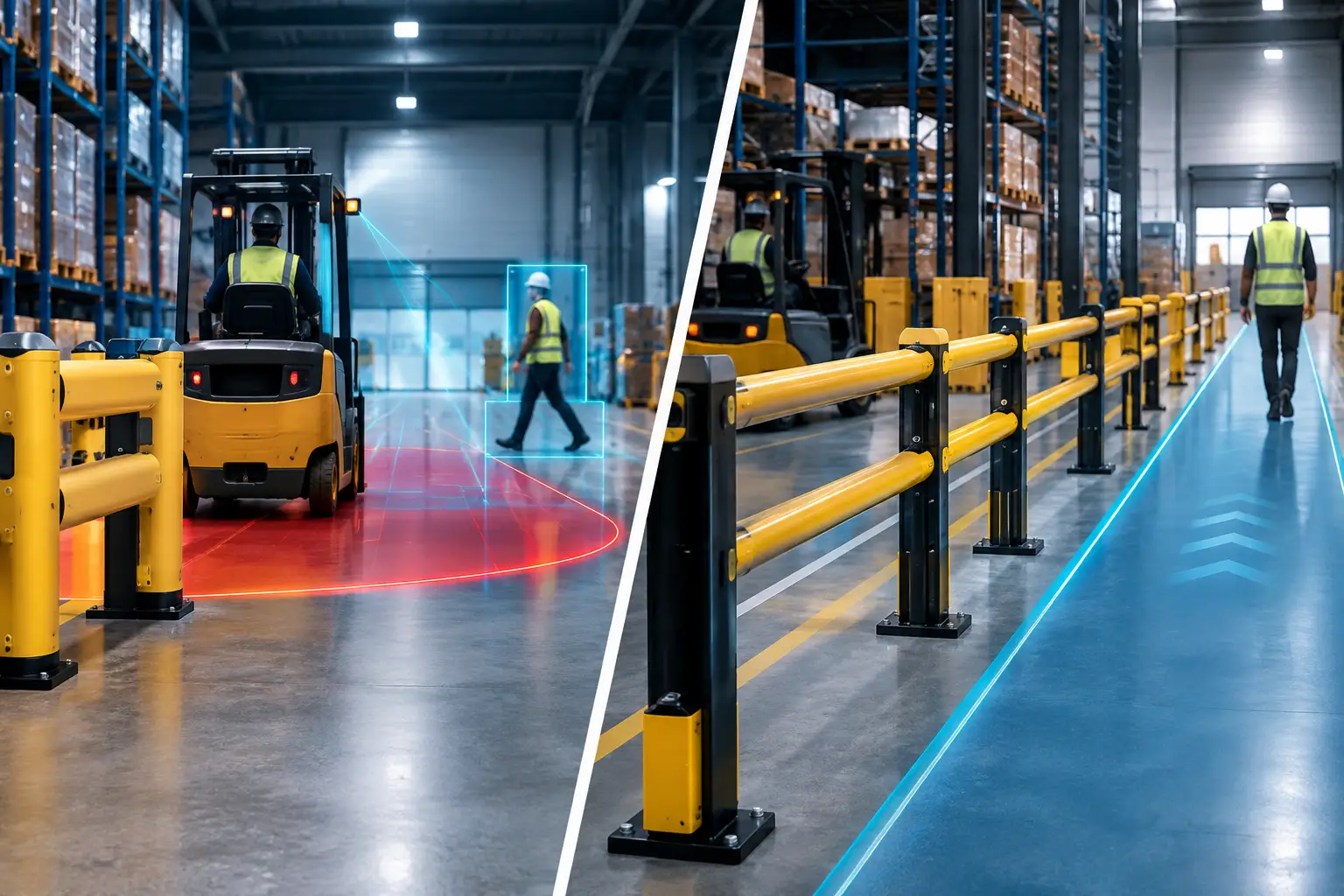
Physical barriers are central where people routinely work beside vehicle traffic. Steel guardrails, impact-rated barriers, bollards, and protected pedestrian walkways create a visible and durable boundary. Unlike floor markings, they continue to protect when someone is distracted, rushed, or unfamiliar with the site.
Barrier selection should reflect the likely impact energy, available space, floor condition, and access requirements. A barrier that is too light for the vehicles operating nearby can create false confidence. Conversely, an excessively intrusive barrier may force workers into unsafe detours or interfere with material flow. Engineering assessment matters because the best solution must protect people without creating a new bottleneck.
Design pedestrian routes people will use
A pedestrian walkway only works when it is direct, clearly defined, adequately wide, and kept free of storage. If the safest route adds unnecessary distance or leads workers through poorly lit areas, people will naturally take shortcuts. This is a design issue, not simply a training issue.
Use physical protection along exposed routes, especially beside forklift aisles, dock approaches, and conveyor interfaces. Mark crossings clearly and place them where people genuinely need to cross. Limit crossings to controlled locations rather than allowing movement anywhere along a vehicle route.
At crossing points, improve visibility and force both movements to slow. This may involve guardrails that channel pedestrians to a single point, gates that encourage a deliberate stop-and-check action, and clear sightlines free from stacked goods. Where traffic volume is high, active warning systems can add another layer of control.
Manage vehicle movement deliberately
One-way systems can reduce reversing and conflict points in busy areas. Where one-way travel is not possible, define passing locations and avoid creating tight spaces where equipment must maneuver near people. Establish practical speed limits that match sightlines, floor conditions, intersection design, and pedestrian activity.
Reversing deserves particular attention. Operators may have limited rear visibility, even with mirrors and cameras. Reconfigure routes to reduce reversing where possible, provide designated turning areas, and keep pedestrians out of reversing zones through barriers or access controls.
Loading bays require their own separation plan. Forklifts, delivery drivers, warehouse teams, and maintenance personnel can converge in a limited space under time pressure. Clearly control who may enter the loading area, segregate pedestrian access from vehicle paths, and coordinate vehicle restraint and dock procedures with the internal traffic plan.
Use Technology to Strengthen, Not Replace, Separation
Safety technology is most effective when it supports a sound layout and disciplined operating process. It should not be used to compensate for an avoidable shared route or an obstructed walkway.
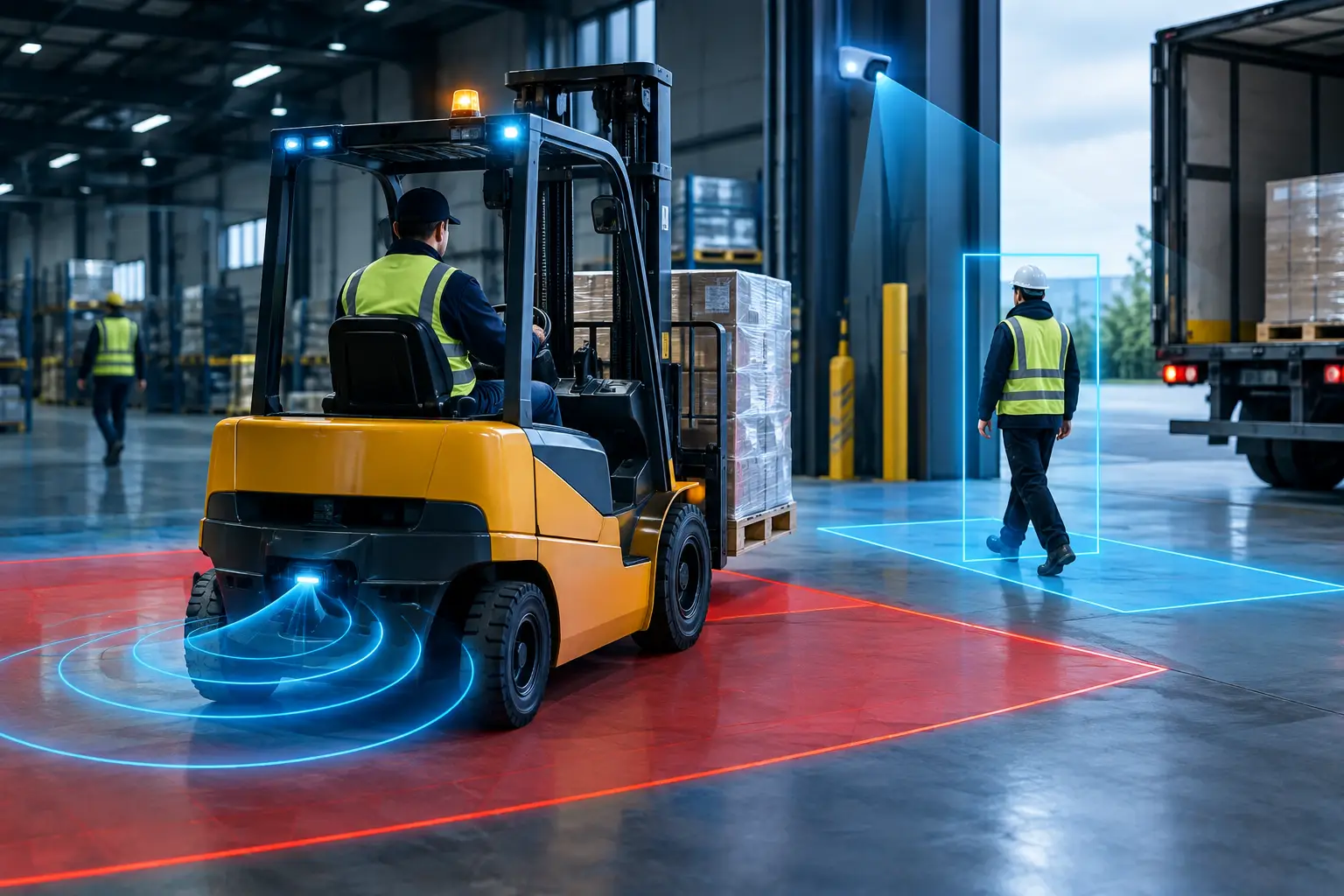
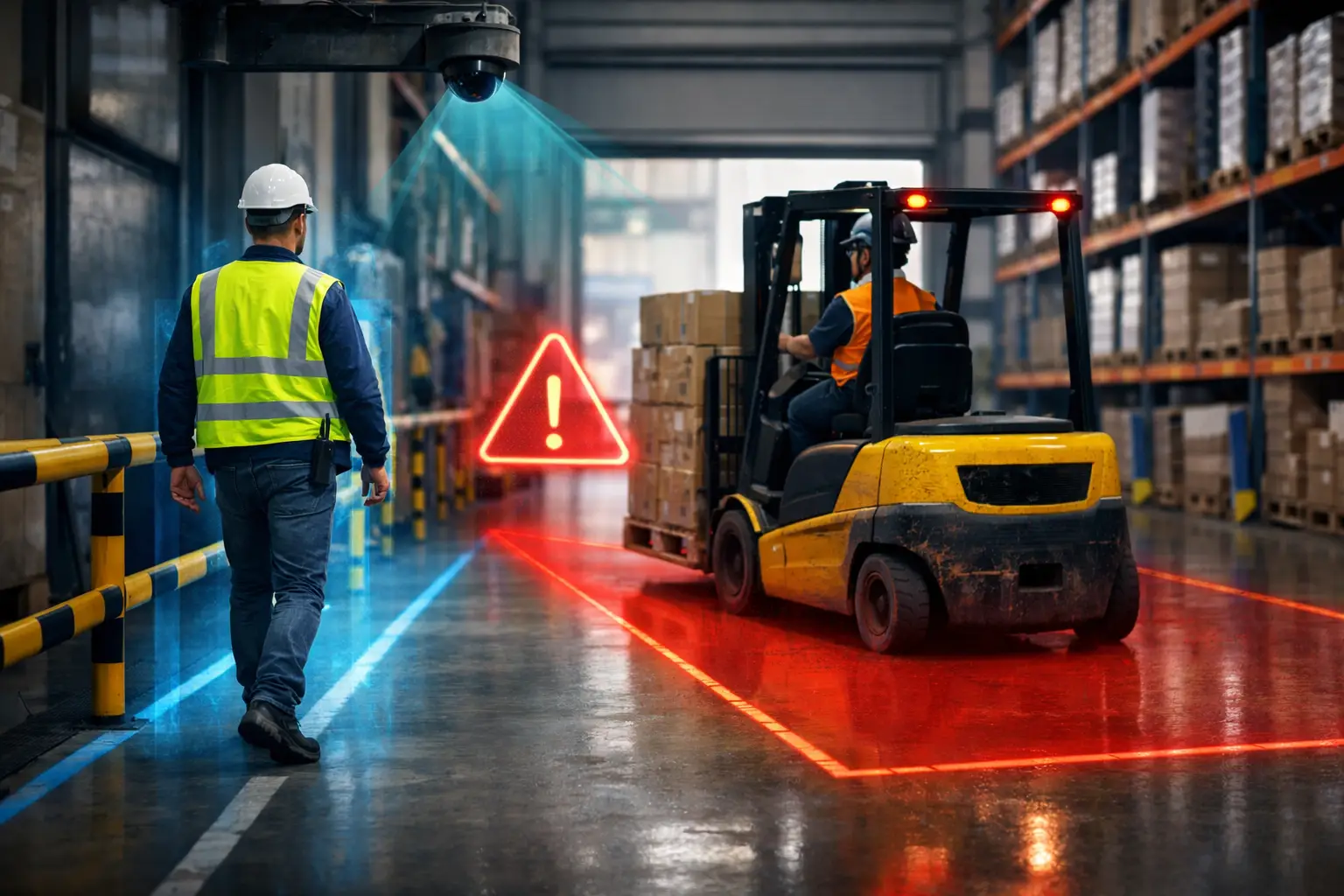
Projected floor warnings can alert pedestrians and operators at blind corners, aisle exits, and doorways by placing a visible symbol or line on the floor before a vehicle emerges. Audible and visual alerts can draw attention to approaching equipment in high-noise environments, though their effectiveness depends on placement, alarm management, and worker familiarity. Too many alarms can lead to desensitization.
Proximity warning systems add value when people and vehicles may occasionally enter the same controlled zone. Depending on the application, they can provide alerts to the operator, pedestrian, or both when a defined separation distance is breached. These systems require careful configuration. An alert range that is too broad may produce frequent nuisance warnings, while one that is too narrow may leave insufficient response time.
Vision AI safety monitoring can provide another layer of awareness in complex areas. It can identify pedestrian presence, detect unsafe encroachment into vehicle zones, and trigger warning devices or escalation workflows based on defined conditions. For operations leaders, its value is not only real-time intervention. Trend data can reveal recurring unsafe crossings, congested periods, or locations where the existing layout is failing.
Technology should be tested under actual operating conditions, including low light, reflective surfaces, varied loads, and peak traffic. The goal is dependable risk reduction, not an impressive demonstration during installation.
Make the System Work During Daily Operations
A separation plan can deteriorate quickly if it is not owned by operations. Supervisors need clear standards for keeping pedestrian lanes open, returning pallets to designated areas, reporting damaged barriers, and managing temporary changes such as maintenance work or overflow storage.
Training should focus on the site’s real traffic controls. Pedestrians need to understand why a barrier, gate, or designated crossing exists and what to do when their work requires access beyond it. Operators need to understand speed expectations, visibility limits, right-of-way rules, and the purpose of active warning devices. Generic forklift safety messages are not enough when the risk is specific to a particular aisle, dock, or production interface.
Inspect controls routinely. Faded markings, loose bollards, damaged guardrails, blocked walkways, failed warning lights, and altered rack layouts can all weaken separation. Review near misses as valuable design feedback. A near miss is often evidence that the system relied too heavily on a person noticing, reacting, or making the right choice under pressure.
SysGuard approaches machine and pedestrian safety as an operational engineering challenge: assess the movement, remove unnecessary conflicts, install controls suited to the risk, and verify that they continue to work in daily use. Every worker deserves to return home safely every day, and a well-planned traffic environment gives them far less to rely on luck for.