A bent upright, dislodged beam, or scraped rack leg is rarely just a maintenance issue. It is evidence that forklifts and storage structures are sharing space without enough control. To reduce pallet rack impacts, warehouse leaders need to address the conditions that make contact likely: blind corners, rushed movements, narrow aisles, unstable loads, poor visibility, and unclear traffic rules.
Rack damage can develop gradually. Minor strikes may not cause an immediate collapse, but repeated impacts can weaken components, reduce load capacity, damage anchors, and create uncertainty about whether the rack remains safe to use. The cost is not limited to replacement parts. It can include inventory loss, interrupted picking, investigations, equipment downtime, and serious risk to nearby workers.
Why pallet rack impacts keep happening
Forklift operators often work in environments designed around storage density and throughput. As order volumes rise, travel paths become congested, temporary staging spreads into aisles, and operators face pressure to complete more moves per shift. A rack impact is usually the result of several small failures in the operating environment, not simply an individual driving error.
The most common contact points are rack uprights at aisle entrances, end frames, lower beam levels, and rack locations close to turning areas. These zones are exposed when a forklift turns too tightly, reverses with an obstructed view, handles an overhanging load, or enters an aisle before it is properly aligned.
Conditions also change throughout the day. A clear aisle during a morning inspection may become restricted by returned pallets, wrapping materials, or temporary work activity later on. Controls must work under real operating conditions, not only when the facility is quiet and organized.
1. Start with impact data, not assumptions
A visible dent should be recorded, inspected, and used to understand the event. Note the rack location, damage type, time of day, equipment involved, load condition, and surrounding traffic conditions. This turns isolated reports into a practical risk map.
Look for repeat patterns. If the same end-of-aisle upright is struck several times, replacing the upright without changing the traffic condition only restores the exposure. The underlying cause may be insufficient turning clearance, a staging area that has grown too close to the aisle, or a blind intersection where operators cannot see cross-traffic.
Inspection should distinguish between superficial contact and damage that may affect structural integrity. A qualified rack inspection process helps determine whether a component can remain in service, needs repair, or requires immediate unloading and isolation. Operators should also know that damage reporting is a safety responsibility, not an admission of fault.
2. Design traffic routes around forklift movement
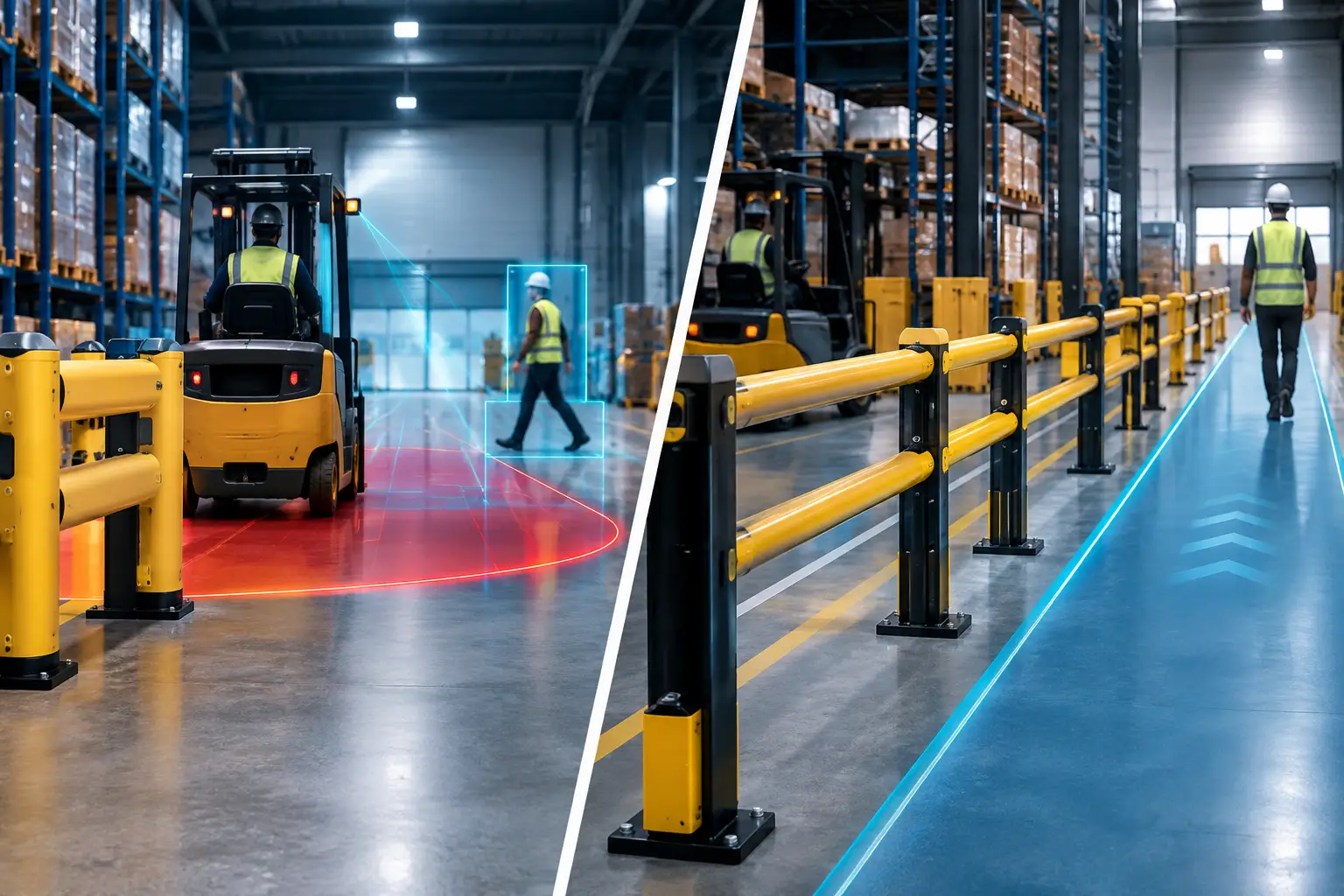
The most effective way to reduce pallet rack impacts is to give forklifts enough predictable space to travel, turn, and align with storage locations. Mark pedestrian walkways, forklift lanes, crossing points, exclusion zones, and staging areas so that each area has a defined purpose.
Aisle width should reflect the equipment actually used, including truck dimensions, turning radius, load size, and the space required for safe rack entry. There is always a trade-off between storage density and maneuvering room. A narrower aisle may create more pallet positions on paper, but it can also increase product damage, rack strikes, and delays caused by careful corrective movements.
Pay particular attention to aisle ends. These are high-exposure locations because operators turn, merge, reverse, and look for pedestrians or other trucks at the same time. Keep pallet staging, waste containers, and temporary materials outside turning envelopes. Where a route cannot be redesigned, physical protection and active warnings become more important.
Make line-of-sight problems visible
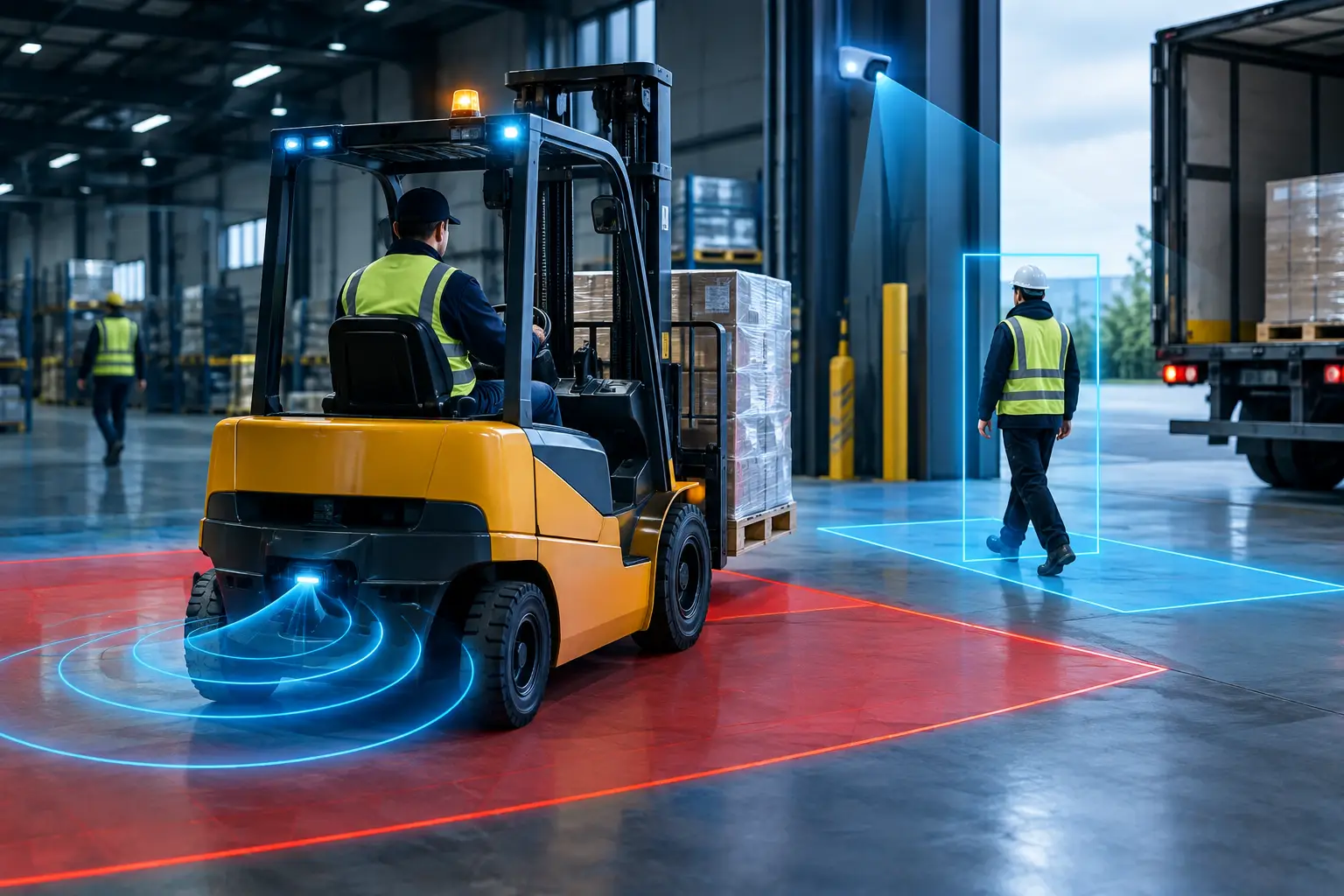
Blind corners and obstructed intersections deserve targeted controls. Convex mirrors can improve awareness in some locations, but they depend on operators noticing and correctly interpreting what they see. Audible and visual warning systems, projected safety zones, or proximity-based alerts can provide a more active prompt when vehicles approach a shared hazard area.
The right measure depends on traffic speed, crossing frequency, lighting, noise levels, and whether pedestrians enter the area. Technology should reinforce disciplined traffic management, not replace it.
3. Protect the rack where impact exposure is highest
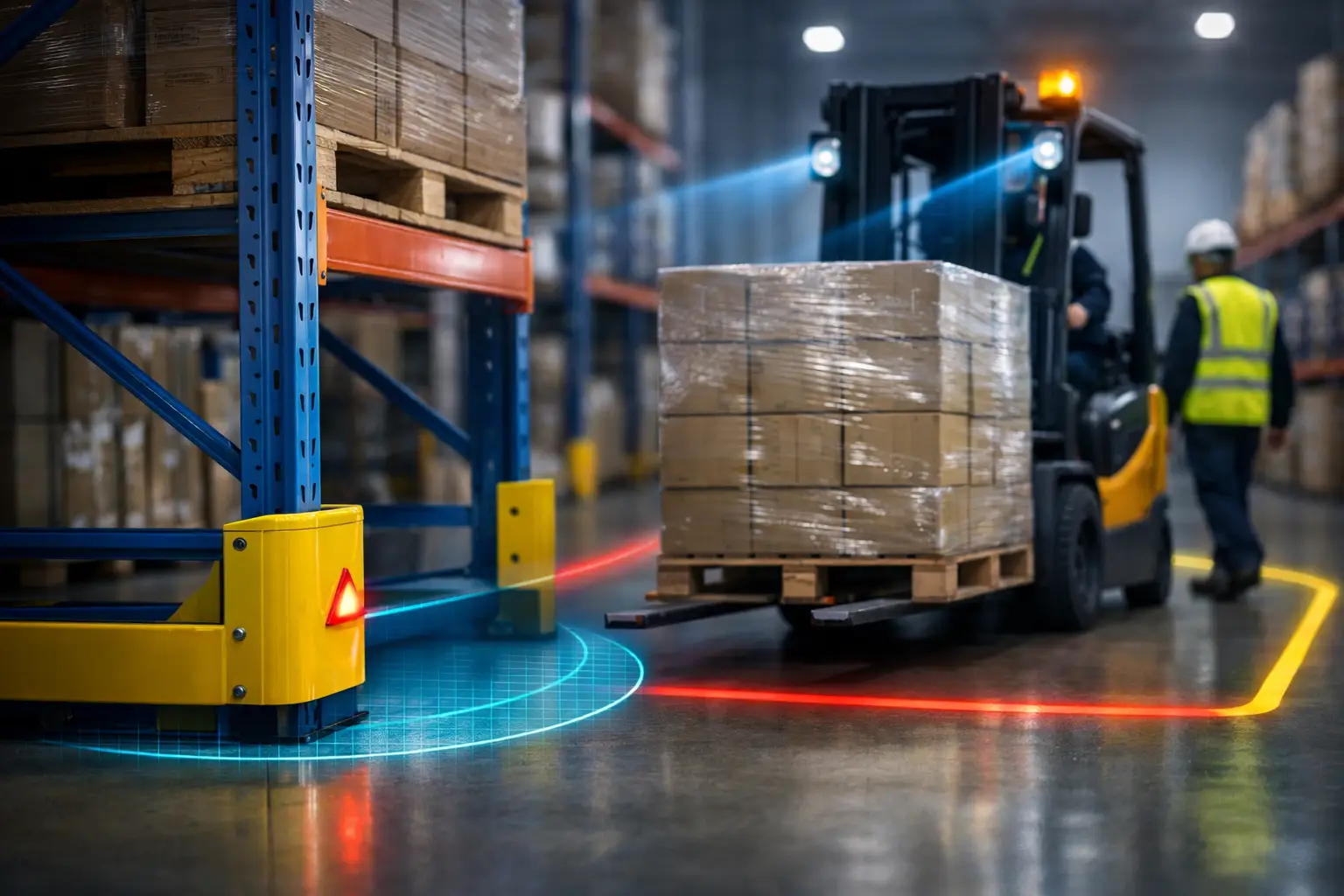
Rack protection is not a substitute for good driving practice, but it can prevent a minor contact from becoming structural damage. The most useful protection is installed where the risk is concentrated: end-of-aisle uprights, exposed corners, frame legs beside travel lanes, and areas near doors or loading activity.
Options include upright guards, end-of-aisle barriers, bollards, and rack-end protection systems. Selection should consider the expected vehicle type and impact direction. A light-duty guard may be suitable for occasional low-speed contact, while a busy distribution center using counterbalance forklifts may need a more substantial barrier designed to absorb or redirect impacts.
Protection must be correctly anchored, adequately spaced from the rack, and inspected after contact. A barrier that has shifted, loosened, or deformed may no longer provide the protection it was designed to deliver. It can also create a new obstruction if left unaddressed.
4. Improve visibility at the point of travel
Poor visibility is a frequent contributor to rack contact, particularly when operators handle tall loads, reverse through congested areas, or work in low-light zones. Improve illumination at rack aisles, intersections, dock approaches, and transition areas between indoor and outdoor operations.
Forklift-mounted lights, blue spot warnings, red zone lights, cameras, and audible alarms can support awareness, but each serves a different purpose. For example, a projected warning light can alert people to an approaching forklift, while a camera may help an operator see behind the vehicle. Neither will correct a poorly planned route or an operator traveling too fast for the available visibility.
For higher-risk locations, intelligent warning systems can trigger alerts based on vehicle movement or proximity. Vision AI monitoring can also identify recurring unsafe behaviors, such as forklifts traveling too close to rack ends or entering restricted pedestrian areas. Used constructively, this information helps managers target training and engineering changes before another impact occurs.
5. Train for the maneuvers that cause damage
General forklift training is essential, but rack-impact prevention needs to focus on site-specific movements. Operators should practice approaching an aisle squarely, managing load overhang, reversing safely, making controlled turns, and stopping when an aisle is blocked.
Supervisors should reinforce a simple expectation: do not force a maneuver when alignment, clearance, or visibility is compromised. Taking a few extra seconds to reposition is preferable to clipping an upright or striking a stored load. This is particularly relevant for new operators, temporary personnel, and teams working during peak-volume periods.
Training should include damage reporting, rack awareness, and the consequences of repeated minor impacts. It should also be paired with observation. If operators consistently struggle at one location, the facility should investigate the layout and process rather than treating the issue as a repeated individual failure.
6. Control loads before they become rack hazards
An unstable, overhanging, or poorly positioned pallet can turn a routine put-away task into a rack strike. Before travel, operators need a clear view where possible, stable load placement, and forks positioned appropriately for the pallet type and load weight.
Storage practices matter as well. Damaged pallets, inconsistent pallet sizes, loose wrapping, and loads stored beyond designated rack limits can obstruct entry and exit. They may force operators to make corrective movements close to uprights and beams. A consistent pallet quality standard reduces that exposure.
Warehouse managers should also review whether rack beam levels and storage locations match the loads being handled. If operators regularly need to angle, lift, or reposition awkward loads to complete a task, the process may need redesign.
7. Build rack impact prevention into daily management
The strongest controls are maintained, checked, and discussed. Include aisle condition, rack damage, barrier condition, and traffic obstructions in routine supervisor walk-throughs. Address poor housekeeping quickly, especially materials left at rack ends or in turning zones.
Review impact reports during safety meetings alongside operational data such as congestion, shift patterns, equipment availability, and picking peaks. This keeps the conversation focused on prevention and operational continuity rather than blame. It also makes it easier to justify targeted investments in traffic controls, rack protection, or warning technology.
A safer warehouse is not one where rack impacts are hidden or accepted as normal wear. It is one where every contact is treated as useful evidence, and where the layout, equipment, and work practices are steadily improved so workers and assets can move through the operation with confidence.