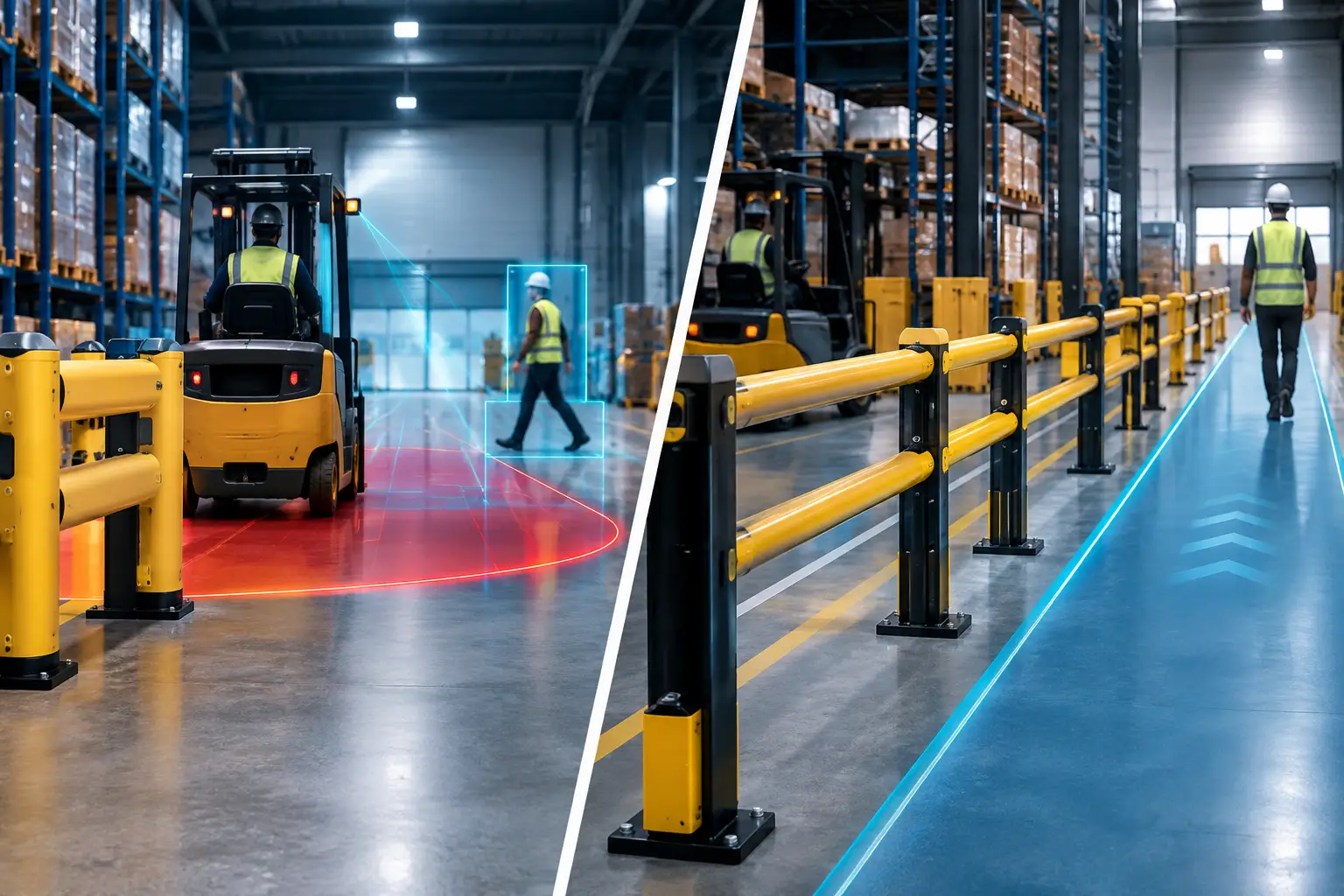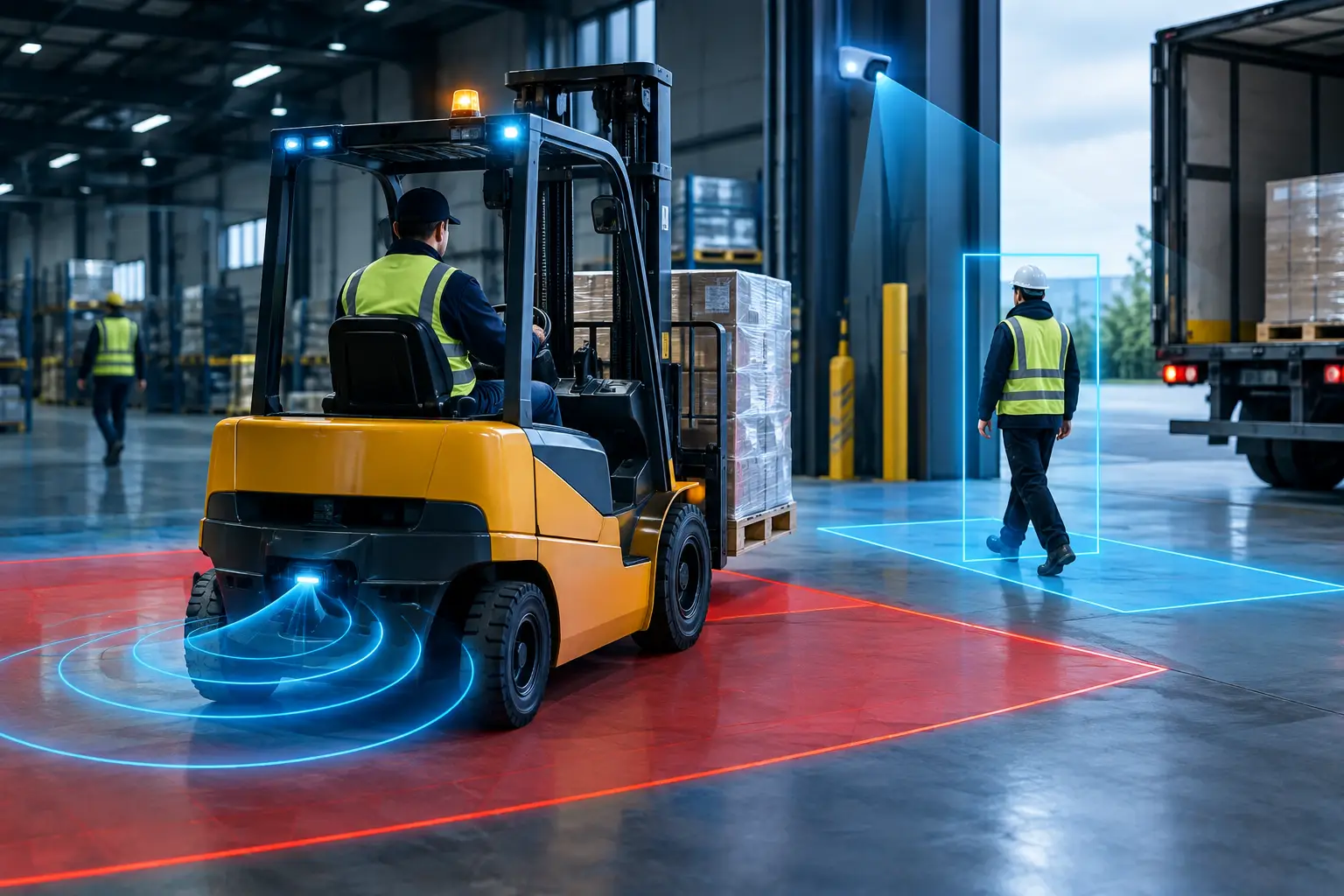
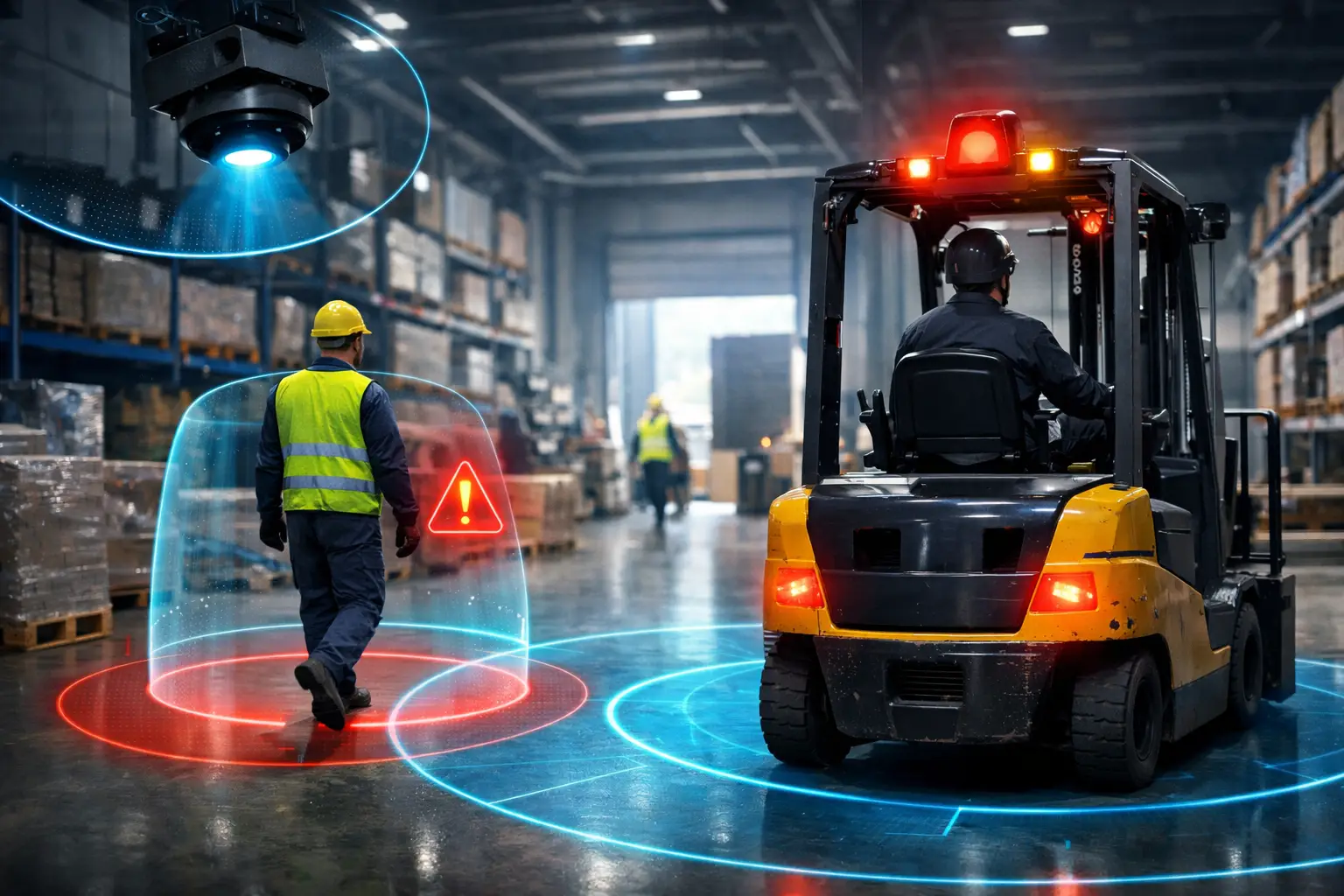
A forklift reversing out of an aisle may have limited visibility. A pedestrian stepping around a pallet stack may assume the travel lane is clear. In that short, shared blind spot, proximity alarms create a warning before a near miss becomes an injury, damaged stock, or an interrupted operation.
For warehouses, factories, distribution centers, and loading areas, the value is not simply that an alarm makes noise. The value is that it gives people and vehicle operators time to recognize a developing hazard and act. When selected and installed correctly, these systems reinforce safer traffic behavior in the places where conventional mirrors, floor markings, and operator awareness alone may not be enough.
Where proximity alarms make the greatest difference
Industrial traffic is rarely predictable. Pedestrians cross active routes to reach picking locations, workstations, offices, and staging areas. Forklifts turn through intersections, reverse from racks, and operate beside loading bays where noise, congestion, poor sightlines, and schedule pressure can all increase risk.
Proximity warning technology is particularly useful where people and mobile equipment regularly share space. Common high-risk locations include blind intersections, narrow aisles, doorways between work zones, busy picking areas, staging lanes, battery charging areas, and loading bay approaches. It can also support safer movement around reach trucks, counterbalance forklifts, pallet movers, and other industrial vehicles.
The right application depends on the hazard. A system intended to alert a pedestrian to an approaching forklift may require a different detection zone and alert method than one designed to warn a vehicle operator of an object or person behind the vehicle. Treating every location the same can create alerts that are either too late to be useful or so frequent that workers stop responding to them.
How proximity alarms work in industrial environments
Proximity alarms use one or more sensing methods to identify when a person, vehicle, or object enters a defined area around mobile equipment or a fixed hazard point. Once a threshold is reached, the system triggers an alert. That alert may be audible, visual, wearable, or delivered directly to a vehicle operator.
Some solutions use radio-frequency identification or ultra-wideband tags worn by pedestrians and fitted to vehicles. These systems can provide defined warning distances and are often suited to environments where separating forklift and pedestrian traffic is difficult. Other applications use ultrasonic sensors, radar, laser-based detection, or Vision AI technology to monitor a vehicle path or intersection.
Each approach has practical trade-offs. Tag-based systems can identify protected workers reliably within a configured zone, but they depend on tag issue, charging or battery management, and consistent use. Sensor-based solutions do not require people to wear tags, but their performance can be affected by vehicle position, environmental conditions, reflections, obstructions, and the complexity of the operating area. Vision AI can distinguish people and analyze behavior in ways conventional sensors cannot, yet it requires careful camera placement, clear views, and defined response procedures.
The goal is not to select the most advanced technology on paper. It is to select the control that detects the relevant risk early enough and communicates the warning in a way people can understand during normal work.
Warning is useful only when it prompts the right action
An alarm must be noticeable without adding unnecessary confusion to the workplace. In a noisy loading area, a beeper alone may be lost among vehicle horns, conveyors, dock activity, and machinery. A projected floor warning, flashing light, wearable vibration, or in-cab indicator may provide a more effective additional cue.
Just as important, workers need to know what the warning means. Does it indicate a pedestrian is within a caution zone? Does it require the operator to slow down, stop, or check a blind spot? Is the pedestrian expected to move to a designated safe area? These decisions should be clear before the system is activated, not improvised after an alert occurs.
Start with traffic risk, not product selection
A proximity alarm is a safety control, not a substitute for traffic management. The strongest programs first reduce unnecessary interaction between pedestrians and forklifts through route design, physical barriers, marked crossings, controlled access, and safe work procedures. Warning systems then address the residual risk that remains when people and vehicles must operate near one another.
A practical assessment should observe the facility during actual peak activity, not only during a quiet walkthrough. Look at forklift routes, reversing points, travel speeds, pedestrian desire lines, intersection visibility, stacking heights, shift patterns, and temporary conditions such as overflow staging. Near-miss reports are valuable, but direct observation often reveals hazards that have become normalized by the workforce.
Consider the consequence and frequency of each interaction. A crossing used occasionally by pedestrians may need a different solution than a high-volume aisle where order pickers and forklifts work side by side throughout every shift. Similarly, a clean, open manufacturing floor presents different detection challenges than a congested warehouse with metal racking, moving pallets, and frequent line-of-sight obstructions.
Configure zones around real stopping distances
Detection range should reflect how vehicles actually move. A forklift traveling faster, carrying a load, turning, or operating on a slope requires more warning distance than a vehicle creeping through a controlled crossing. Operators also need time to perceive the alert, decide on a response, and brake safely.
Many systems use multiple zones. An outer caution zone can notify the operator and pedestrian that they are approaching one another. A closer warning zone can create a more urgent alert. In higher-risk applications, an escalation may trigger a vehicle slowdown or other engineered response, subject to a proper assessment of equipment compatibility and operating conditions.
Overly large zones can become counterproductive. If alarms activate every time people pass at a safe distance, the workplace may experience alarm fatigue. Alerts become background noise, and the technology loses credibility. Conversely, zones set too tightly may warn only when the opportunity to avoid contact is already limited.
Testing with actual vehicles, loads, operators, and pedestrian movements is essential. A configuration that appears suitable in an empty aisle may behave very differently when racking blocks sightlines, vehicles queue, or workers are handling materials nearby.
Installation and training determine whether the system performs
Effective deployment is an operational project, not just an equipment installation. Vehicle-mounted components need secure placement, protected cabling, reliable power connections, and inspection access. Fixed sensors and visual alerts require positions that provide useful coverage without creating damage exposure or being obscured by stock and equipment.
Before rollout, establish who will use the system, who will maintain it, and how faults will be reported. Operators should understand the indicator states and the required response to each alert. Pedestrians should know where tags are required, how to check them, and why the technology does not give permission to enter an active vehicle path carelessly.
Supervisors should also review early alarm data and worker feedback. Repeated activations in one location may reveal a poor zone setting, but they may also identify a traffic design problem: an unofficial shortcut, an obstructed crossing, or a staging practice that forces people into a forklift lane. The alarm becomes a source of operational insight when it is reviewed rather than ignored.
Maintain performance as conditions change
Warehouse layouts change. Product profiles change. New shifts, peak-season activity, temporary storage, and replacement equipment can all alter the risks that a system was designed to address. Proximity alarms should be included in routine safety inspections and reviewed after layout changes, vehicle incidents, near misses, or significant workflow adjustments.
Maintenance is equally practical. Check sensor alignment, mounting security, alert visibility, tag condition, battery status, and vehicle interfaces. Damaged components or intermittent alarms can quickly reduce user confidence. Clear ownership for inspection and repair helps prevent a safety control from remaining in service after its performance has degraded.
For organizations managing several sites or varied vehicle fleets, standardizing the warning logic where practical can make training and supervision easier. However, standardization should not erase site-specific assessment. A high-throughput distribution center, a production plant, and a loading bay may each require different zone settings and alert combinations.
Every worker deserves to return home safely every day. The most effective proximity alarm strategy makes that responsibility visible at the exact moment people and vehicles come too close, while supporting the traffic controls, training, and engineering decisions that prevent the encounter in the first place.