A forklift clipping a rack upright, a pallet truck cutting too close to a pedestrian doorway, or a reversing vehicle striking a loading bay control panel can disrupt an entire operation in seconds. Industrial safety bollards create a physical line of defense at the points where mobile equipment, people, and high-value infrastructure come too close together.
They are simple devices, but selecting and placing them well requires more than installing posts wherever a risk is visible. The right bollard system must account for traffic speed, vehicle type, likely impact direction, available clearance, floor condition, and the asset or area being protected. When those details are missed, a bollard can become an obstruction without delivering meaningful protection.
What industrial safety bollards are designed to protect
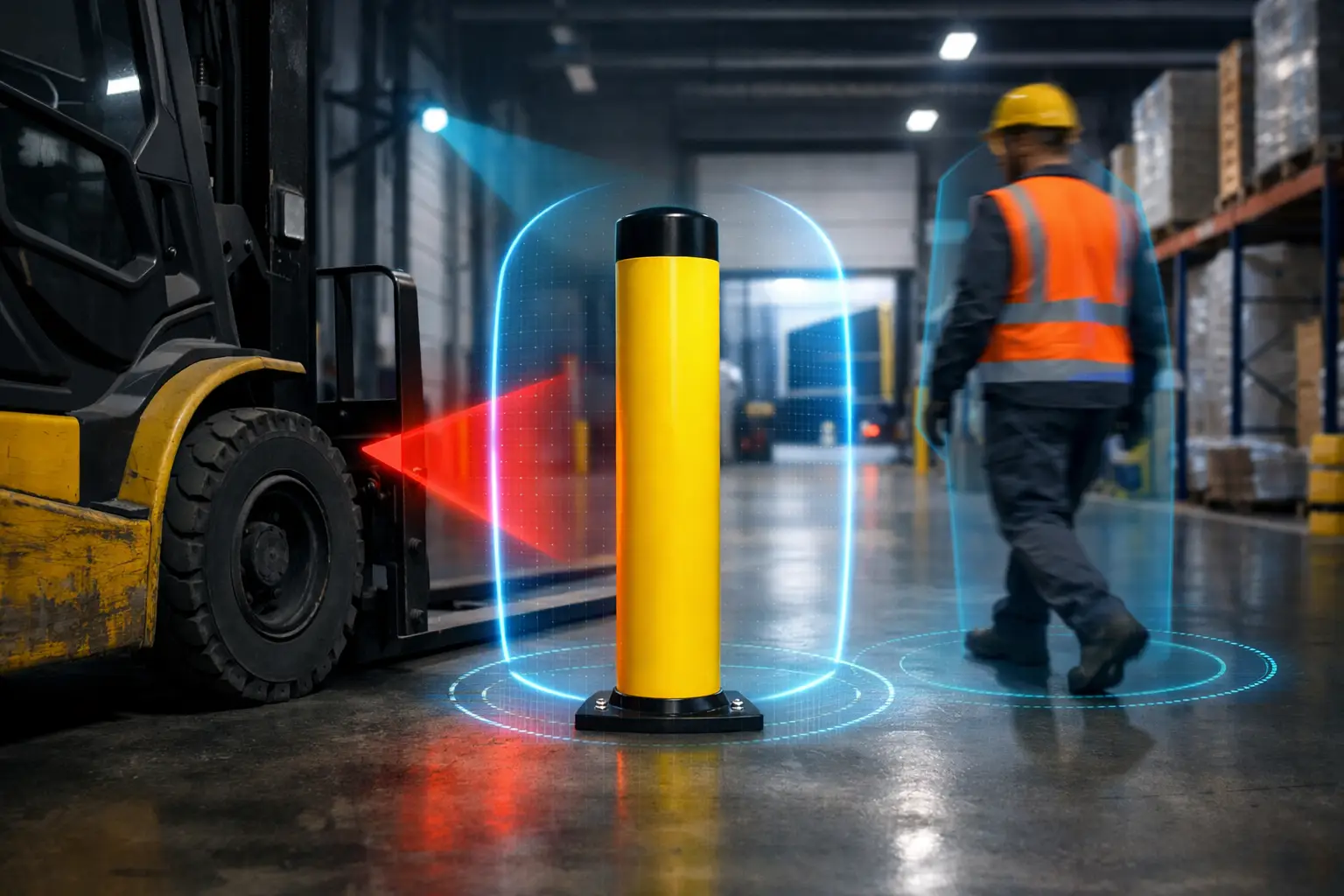
Industrial safety bollards are fixed or removable protective posts used to prevent vehicle contact with people, building infrastructure, equipment, and designated work areas. In warehouses, factories, distribution centers, and loading bays, they are most often used to manage the consequences of forklift, reach truck, pallet jack, and truck movements.
Their purpose is not to replace safe operating practices or traffic controls. A bollard cannot correct poor visibility, excessive speed, or an unsafe reversing maneuver after it begins. It provides a physical safeguard when administrative controls, markings, and human attention are not enough on their own.
Typical protection points include electrical panels, dock doors, charging areas, racking ends, machine controls, fire doors, column bases, pedestrian entrances, and office partitions that sit near vehicle routes. They can also define no-go zones around conveyor supports, automation equipment, and sensitive process assets.
The business impact is often wider than the visible damage. A minor collision can trigger an equipment inspection, disrupt a loading schedule, block an aisle, damage inventory, or create an unplanned repair task. If a pedestrian is involved, the consequences are far more serious. Every worker deserves to return home safely every day, and physical separation is one of the clearest ways to reduce exposure to vehicle hazards.
Start with the hazard, not the bollard
The most effective installations begin with a site-based risk review. Rather than asking, “Where should we put posts?” ask where vehicle paths and vulnerable areas intersect, and what happens if control is lost at that point.
Walk the operation during normal conditions and during peak activity. Observe where forklifts turn, reverse, queue, and handle loads. A route that appears clear on a drawing may become congested when pallets wait for put-away, drivers stage returns, or shift changes increase pedestrian movement.
Consider the approaching vehicle and the likely contact scenario. A low-speed pallet jack that could roll into a doorway presents a different risk from a counterbalance forklift turning with a raised or offset load. Similarly, a bollard protecting a wall-mounted control cabinet may only need to stop a glancing impact, while one installed at the end of a high-traffic aisle may need to withstand a more direct strike.
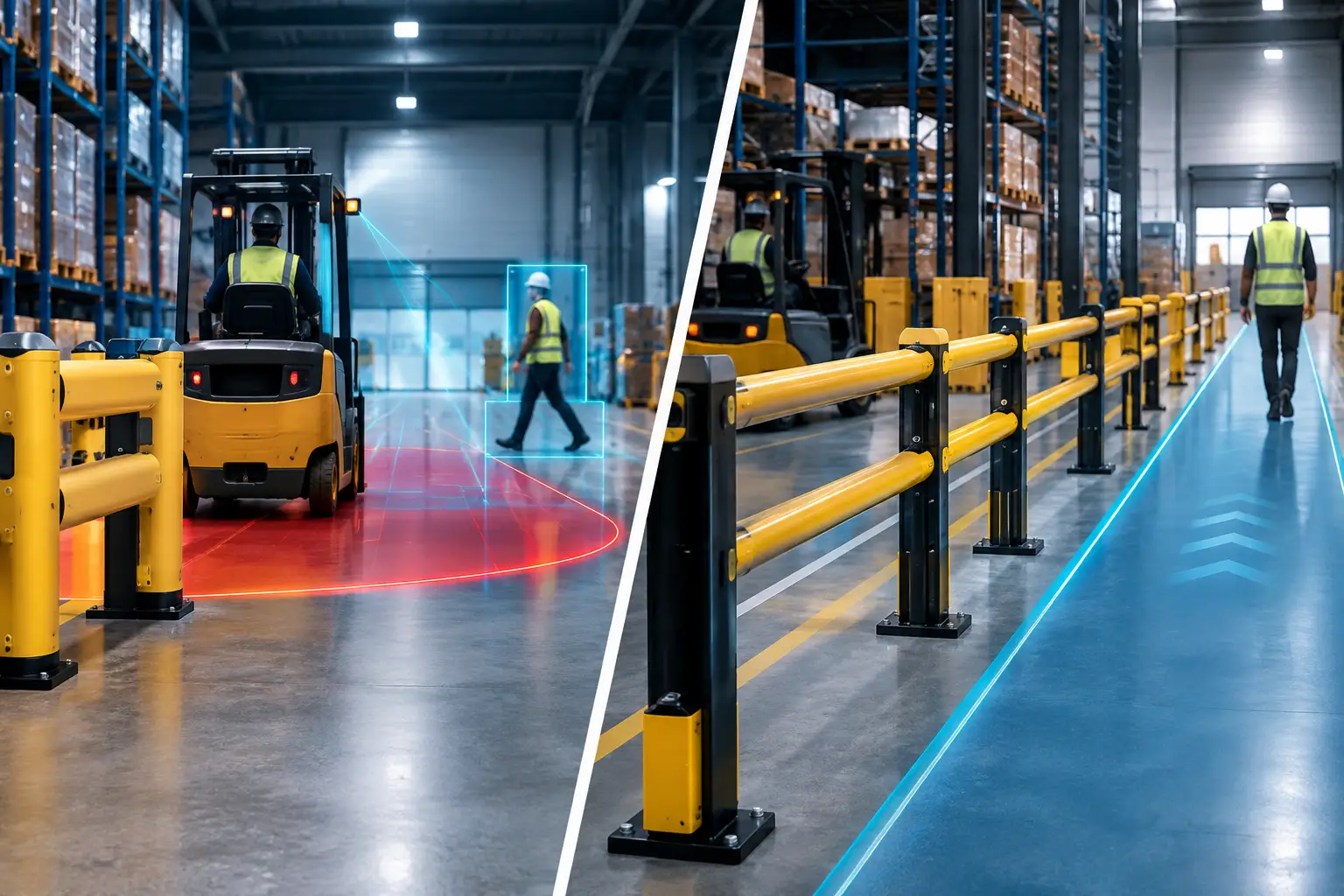
This assessment should also identify whether a bollard is the best control. A long racking run may be better protected by continuous safety barriers. A pedestrian crossing may need guardrails, floor projection, warning lights, and a redesigned traffic flow rather than isolated posts. The goal is to reduce the hazard at its source where practical, then add physical protection where separation is required.
Choosing the right bollard for the risk
Not all industrial safety bollards provide the same level of protection. Appearance alone is a poor basis for selection. A lightweight surface-mounted post may define a space effectively, but it may not be suitable for an area exposed to forklift impact.
Fixed bollards for permanent protection
Fixed bollards are commonly used around structural columns, dock equipment, utilities, and machine zones where the protected asset will not move. They are typically anchored into concrete or embedded into the slab, depending on the required impact resistance and site conditions.
Embedded designs can offer strong resistance because the post and foundation work together. However, installation is more disruptive and requires careful planning around underground services, slab reinforcement, drainage, and operational access. Surface-mounted options can reduce excavation, but the anchor design and concrete condition must be evaluated properly. A poorly matched anchor system may fail before the bollard itself does.
Removable and retractable options for changing access
Some areas need protection most of the time but must occasionally allow authorized vehicle entry. Removable or retractable bollards can suit maintenance bays, controlled access routes, and temporary equipment access points.
The trade-off is operational discipline. If a removable bollard is left out after access is complete, the protection is gone. These systems work best when ownership is clear, storage is practical, and the operating procedure is realistic for busy teams.
Energy-absorbing designs for repeat-impact locations
Where low-speed, repeated contact is likely, energy-absorbing or flexible bollard systems may reduce damage to both the barrier and vehicle. They can be useful at doorway approaches, tight corners, or areas where occasional bumper contact is difficult to eliminate.
They are not automatically the answer for every location. A flexible design may be appropriate for deflecting or warning against light contact, while a critical electrical cabinet or structural element may require a more rigid, impact-rated solution. The expected impact energy must drive the decision.
Placement details that determine performance
A correctly specified bollard can still underperform if it is positioned badly. It needs enough offset from the protected asset to absorb deflection and prevent the vehicle or load from reaching the asset after contact. Placing it too close to a panel, machine, or wall can allow the protected item to be struck even when the bollard remains intact.
Spacing matters as well. A vehicle can pass between widely spaced posts, especially when its forks, load, or rear counterweight extends beyond the main body. Protection should account for the full vehicle envelope, turning sweep, and load overhang, not just the apparent width of the truck.
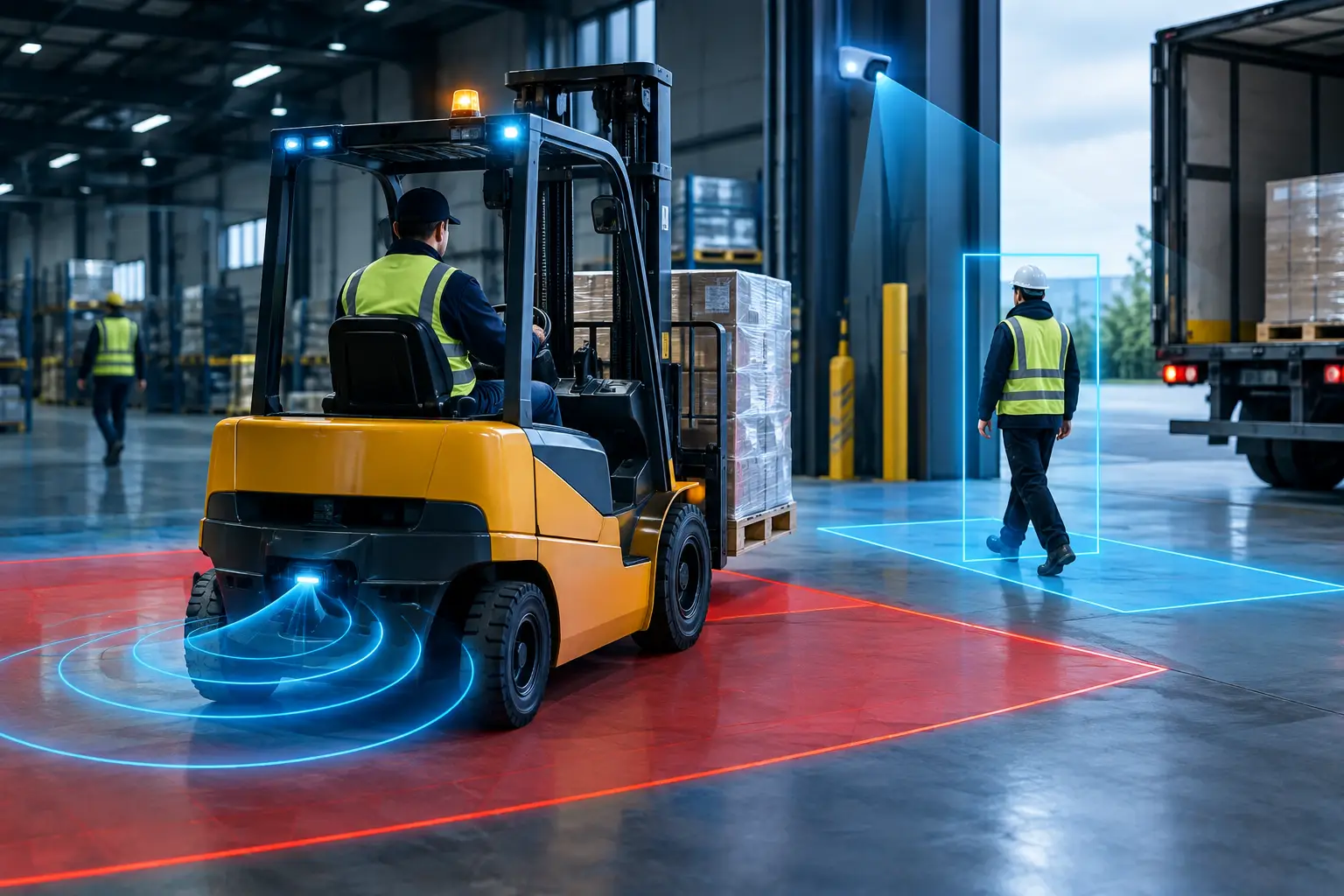
Bollards should also be visible without creating a new trip or traffic hazard. High-contrast finishes help operators identify protection zones, particularly in dim areas or where visual clutter is common. In high-risk intersections, visual protection can be strengthened with floor markings, projected warning zones, audible alerts, or active warning systems triggered by vehicle movement.
Do not place protective posts so they narrow an aisle below what the operation requires. If drivers must repeatedly make difficult turns around a bollard, they may be pushed closer to racking, pedestrians, or other equipment. The solution may be a revised route, a barrier set farther back, or a different form of protection.
Bollards work best as part of a layered safety system
Physical barriers are highly valuable because they do not rely entirely on perfect human behavior. Yet they are most effective when integrated with broader warehouse traffic management.
A high-risk pedestrian exit, for example, may need bollards to protect the doorway and guardrails to guide walking routes. It may also benefit from a visual warning system that alerts drivers to people entering the area, or a proximity solution that warns both the operator and pedestrian before they reach the conflict point. At blind corners, floor projection and audible alerts can improve awareness before a vehicle reaches the protected zone.
This layered approach is particularly relevant in operations where layouts change, throughput is high, or temporary labor and multiple vehicle types are common. Bollards manage impact exposure. Technology and route design can reduce the chance of that impact occurring in the first place.
For loading bays, protection should be considered alongside vehicle restraint, dock communication, pedestrian exclusion zones, and clear procedures for loading activity. A bollard may protect a dock control station, but it cannot prevent a trailer from moving unexpectedly or a forklift from entering an unsafe trailer. Each control needs to address a specific failure point.
Inspection and maintenance are part of the control
A bollard that has been struck should not simply be repainted and ignored. Inspect it for bending, cracking, loosened anchors, damaged concrete, corrosion, and movement at the base. Even if the post looks acceptable, an impact may have weakened the anchor connection or slab around it.
Repeated strikes are also valuable safety data. They may show that an aisle is too tight, a turn is poorly designed, visibility is limited, or a traffic route no longer matches the operation. Replacing damaged bollards without addressing the reason for the impacts allows the same risk to continue.
Maintenance teams should keep protection systems visible, secure, and free from unauthorized changes. This includes ensuring removable units are returned after access work, repainting when visibility declines, and reviewing nearby layout changes before moving posts or barriers.
Make protection fit the operation
Industrial safety bollards are most valuable when they are selected as engineered controls, not treated as warehouse furniture. The right design protects critical points without restricting productive movement, supports safer behavior without relying on it completely, and turns recurring collision exposure into a manageable risk.
Start with the routes people and vehicles actually use, not the routes they are supposed to use. That is where the most useful safety improvements usually begin.