A forklift turning into a cross-aisle has only seconds to detect a pedestrian, another truck, or a pallet protruding from a staging area. At that moment, warehouse intersection safety design is not a floor-marking exercise. It is a practical system for controlling speed, visibility, right-of-way, and human behavior where vehicle and pedestrian paths conflict.
Intersections deserve special attention because they concentrate risk. Operators may be carrying elevated or wide loads, reversing from blind areas, responding to picking demands, or moving between zones with different traffic patterns. A well-designed intersection reduces uncertainty before people and vehicles enter the same space.
Start With the Actual Traffic Pattern
The safest design begins with observation, not a catalog of products. Map how forklifts, pallet jacks, reach trucks, pedestrians, delivery vehicles, and maintenance teams use each route across a normal shift. Then review what changes during peak receiving, order dispatch, shift handovers, inventory counts, and equipment charging.
A route that appears low-risk on a quiet walkthrough may become congested when outbound pallets accumulate or temporary labor is deployed. The goal is to identify the moments when a person or vehicle must make a decision with limited sight distance.
Pay particular attention to intersections near dock doors, battery charging areas, pick faces, breakroom access, production entrances, and cross-aisles. These areas often combine high travel frequency with distractions and changing obstructions.
Questions That Reveal Design Gaps
A useful risk review asks direct operational questions. Can a forklift operator see into the cross-aisle before entering? Do pedestrians have a dedicated route, or do they cross wherever the shortest path leads? Are staging pallets, racks, stretch-wrap waste, or parked equipment reducing the available sightline? Is there a clear rule for who yields?
Incident reports and near-miss observations should be part of this review. Damage to rack uprights, recurring horn use, sudden braking, and informal workarounds are often early signs that the intersection is poorly controlled, even when no injury has occurred.
Separate People and Vehicles Wherever Possible
Physical separation is the strongest control because it does not depend entirely on attention or perfect behavior. If pedestrian travel can be rerouted away from a forklift intersection, that is usually preferable to asking workers to cross a busy aisle more carefully.
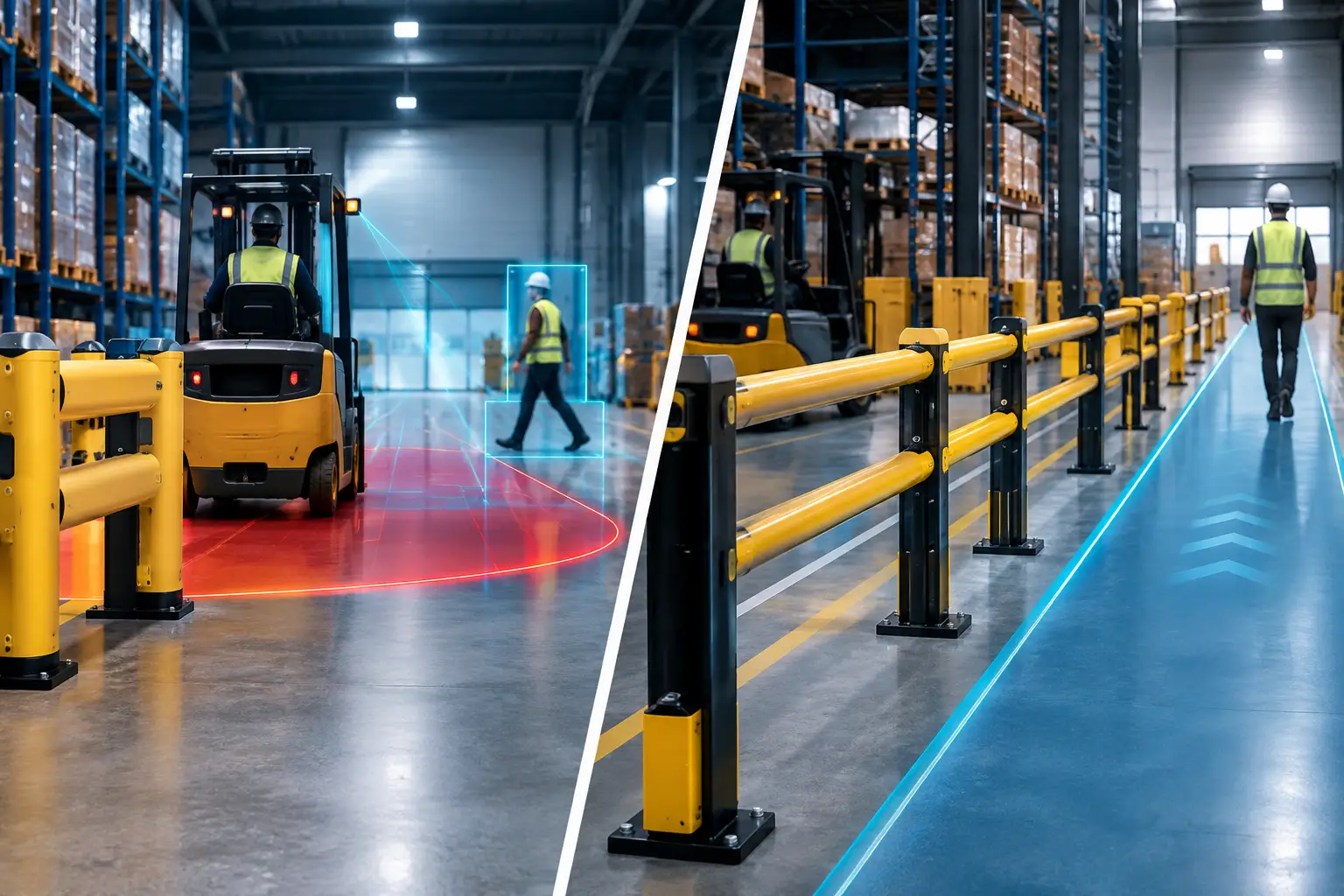
Guardrails, pedestrian barriers, and protected walkways can create a predictable route between work areas. At necessary crossing points, barriers should guide pedestrians toward the intended crossing location rather than leave openings that encourage shortcuts. The crossing must also be convenient enough to use. A protected route that adds a long detour will eventually be bypassed under production pressure.
Where full separation is not feasible, reduce exposure. Restrict pedestrian access during high-volume vehicle activity, relocate frequently visited workstations, or create designated waiting areas outside the forklift turning envelope. Design should reflect the task, not only the building layout.
Improve Sightlines Before Adding Warnings
Warning devices are valuable, but they cannot compensate for an intersection that is physically blind. Start by removing what blocks visibility: excess pallet staging, opaque partitions, improperly placed signs, damaged rack protection, and equipment parked at corners.
Corner geometry matters. A forklift carrying a tall load may have limited forward visibility, especially when turning. Wider turning paths, set-back storage, and clear corner zones give operators more time to identify hazards. Convex mirrors can help in selected locations, but they work best as a supplementary aid. They can be obscured, misread, or ignored when traffic is fast or lighting conditions are poor.
Lighting also deserves inspection. Shadows at rack ends, glare from dock openings, and contrast between indoor and outdoor areas can make people difficult to see. Use consistent illumination at crossings and keep sign faces, mirrors, and projected markings visible throughout the shift.
Use Clear, Layered Controls at Every Intersection
Effective warehouse intersection safety design uses several controls that reinforce one another. A single painted stop line may be sufficient for a low-speed aisle with excellent visibility and limited traffic. It is not enough for a high-volume crossing near shipping where forklifts, pedestrians, and pallet movers arrive from several directions.
A layered design may combine traffic markings, physical barriers, directional signs, speed management, and active warning technology. The right combination depends on traffic speed, load type, visibility, pedestrian frequency, and the consequences of a collision.
For higher-risk intersections, consider these four elements:
- Clearly marked vehicle lanes and pedestrian crossing zones that establish where each user should travel.
- Stop or yield controls positioned far enough from the intersection for operators to assess cross-traffic safely.
- Audible and visual alerts that activate when a vehicle approaches a blind corner or crossing.
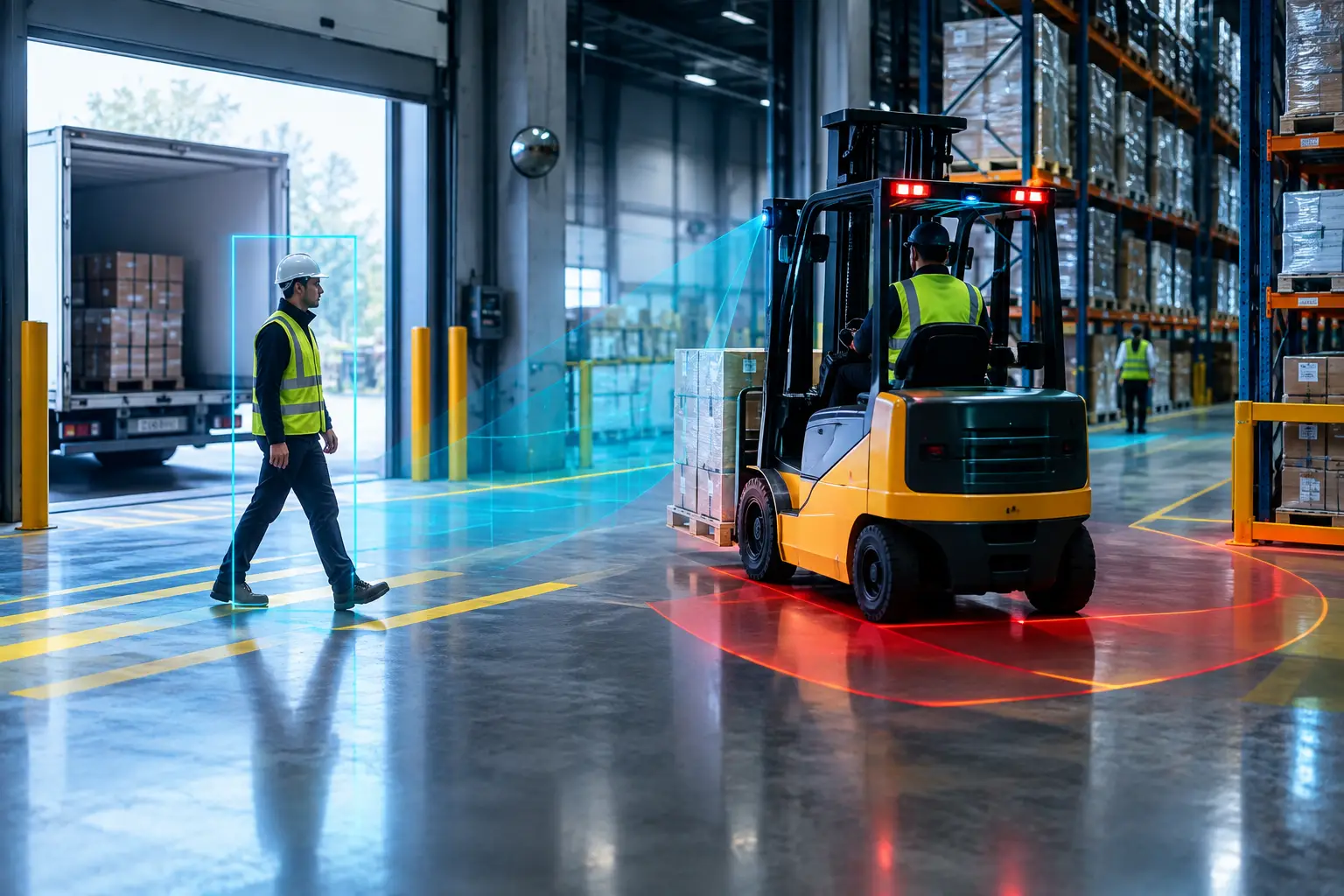
- Floor projection or illuminated warning zones that remain visible where painted markings may be worn, blocked, or overlooked.
The purpose is not to fill the floor with signs and lights. Too many visual signals can create clutter and reduce their impact. Each control should solve a defined hazard and support a simple decision: slow down, stop, yield, or stay within the protected route.
Match Technology to the Hazard
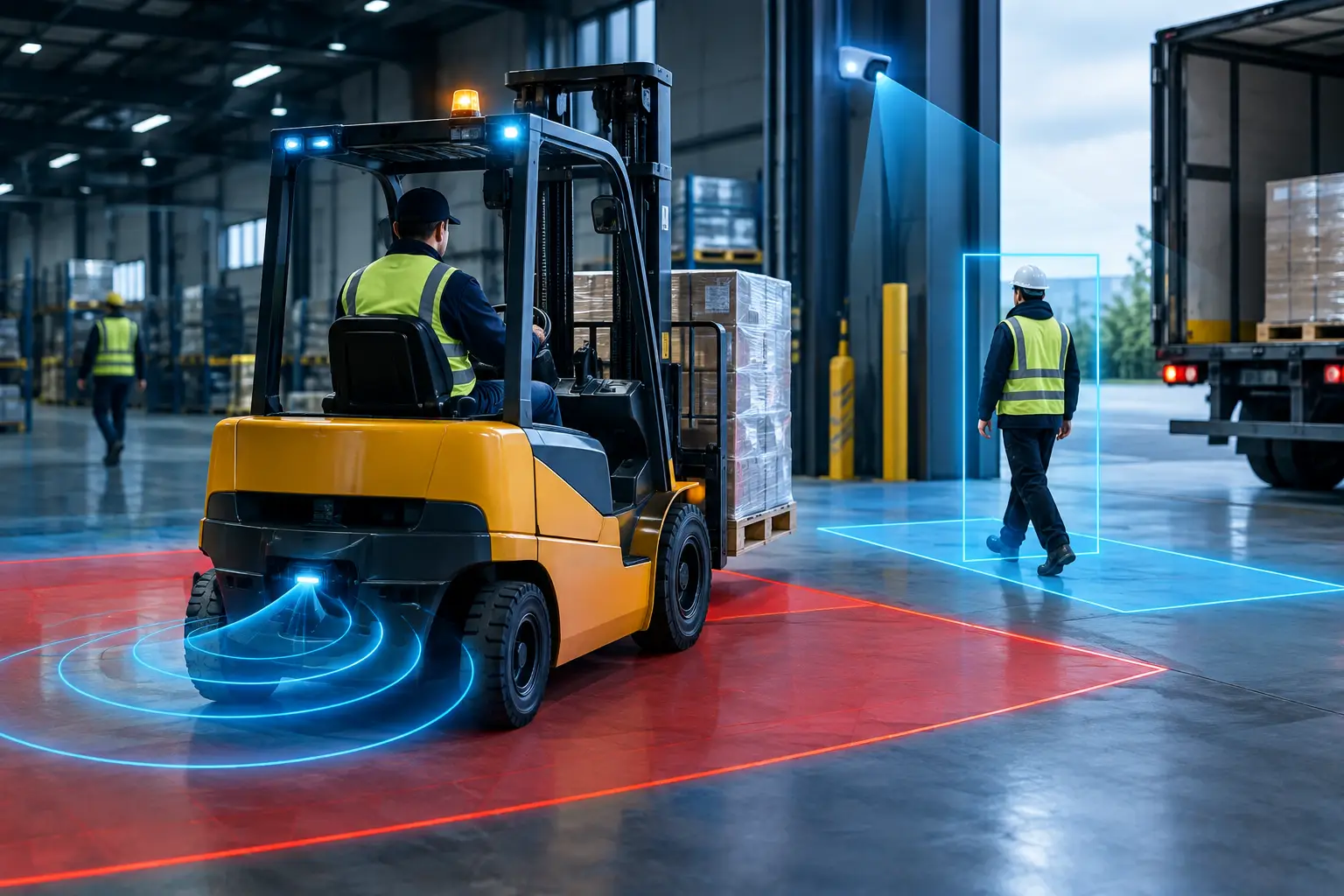
Active warnings are particularly useful where blind corners cannot be eliminated through layout changes. Motion-triggered visual and audible alerts can notify approaching forklift operators and pedestrians before they enter a conflict zone. Blue or red safety light projections can provide an additional visual cue beyond the vehicle itself, especially at aisle exits.
Proximity warning systems may be appropriate where people and vehicles work close together or where pedestrian movement is variable. Vision AI safety monitoring can add another layer by identifying unsafe interactions, recurring intrusion into exclusion zones, or non-compliant traffic behavior. This information can help managers address the underlying pattern rather than respond only after an incident.
Technology should be selected carefully. An alert that activates constantly in a busy area can become background noise. Detection zones, warning timing, and device placement need to reflect actual approach speeds and line-of-sight conditions. Commissioning and periodic testing are as important as the equipment itself.
Control Speed and Define Right-of-Way
Speed turns a near miss into a serious collision. Set practical speed limits based on aisle width, load handling, pedestrian activity, surface condition, and stopping distance. A posted limit alone is rarely enough. The layout should make the safe behavior feel natural through turning radii, stop positions, barriers, and visible transitions into slower zones.
Right-of-way must be equally clear. Ambiguous rules lead to hesitation or assumptions, particularly when operators from different shifts or contractors use the same routes. Establish whether vehicles stop at all blind intersections, whether pedestrians cross only at marked points, and how drivers should proceed when another vehicle is already in the crossing.
Training should use the real intersections workers encounter, not generic examples. Walk operators and pedestrians through expected movement, blind spots, and response to warning devices. Supervisors should reinforce the standard consistently when production demand increases.
Design for Change, Not Just Opening Day
Warehouse layouts change. New racking, seasonal stock, revised picking methods, automation projects, and temporary staging can alter traffic flow quickly. An intersection that was safe six months ago may no longer provide sufficient sight distance or separation.
Review high-risk intersections after layout changes, equipment additions, and near misses. Look for practical indicators: fresh impact damage, encroachment into walkways, blocked markings, frequent horn use, complaints about visibility, or operators routinely taking wider turns than the lane permits. These signals often justify action before an injury or costly facility repair occurs.
Maintenance is part of the design. Replace damaged barriers, refresh worn markings, clean mirrors, test sensors and warning lights, and keep crossing zones free of stored materials. Safety controls only work when they remain visible, functional, and respected.
Build Intersections Around Predictable Decisions
The best intersection is not the one with the most equipment. It is the one where every person approaching it understands what to do before reaching the conflict point. Pedestrians know where to walk and wait. Forklift operators have enough visibility and space to slow, stop, and proceed safely. Managers can see whether the controls are working through fewer near misses, less equipment damage, and more consistent traffic behavior.
Accidents happen. But a disciplined intersection design process gives your operation practical ways to prevent them – protecting workers, preserving assets, and keeping material moving without unnecessary disruption.