A single forklift impact can do more than bend an upright. It can compromise load stability, interrupt picking activity, damage inventory, and create a hazard that remains unnoticed until the next shift. The practical rack protection benefits begin with preventing that first point of contact, but they extend much further into warehouse uptime, asset reliability, and worker safety.
Why Rack Damage Deserves Immediate Attention
Pallet racking is designed to carry substantial loads, not absorb repeated vehicle strikes. Even low-speed contact from a forklift can deform an upright, dislodge a beam, weaken a frame connection, or damage lower-level storage locations. A rack may still appear usable after an impact, which is why minor-looking incidents can become recurring operational risks.
The risk increases in facilities where forklifts work close to storage faces, aisles are tight, and operators manage frequent put-away or replenishment activity. Blind corners, congested staging areas, uneven traffic flow, and limited visibility all raise the likelihood of contact. Loading areas and high-turnover picking zones often deserve particular attention because they combine pressure for speed with repeated vehicle movement.
Rack protection is not a substitute for safe driving practices, traffic management, or operator training. It is an engineering control that limits the consequences when human error, restricted visibility, or changing site conditions result in an impact. That distinction matters. Accidents happen, but the facility can be designed to reduce the damage they cause.
Rack Protection Benefits for Safety and Operations
The clearest benefit is the protection of people working near storage systems. A damaged rack can create instability in the structure and uncertainty around the loads it supports. By shielding exposed uprights, end frames, and vulnerable corners from forklift contact, protection barriers help maintain the designed condition of the racking system and reduce the likelihood of a more serious event.
There is also a direct asset-protection benefit. Replacing an upright or repairing a damaged rack bay is rarely limited to the cost of one component. Teams may need to isolate the area, unload pallets, move stock, inspect adjacent sections, coordinate repairs, and validate the area before returning it to service. In a busy distribution center, that disruption can affect throughput well beyond the damaged aisle.
Effective protection also helps preserve inventory. A vehicle strike can transmit force into the rack, potentially shifting pallets or affecting stored products. This is especially relevant for high-value goods, fragile packaging, or operations that rely on consistent stock availability. Preventing the impact at the rack base is often far less costly than managing damaged inventory and interrupted order fulfillment.
From a management perspective, rack protection supports a more controlled safety culture. When physical safeguards are visible at identified risk points, they reinforce traffic rules and make operating boundaries clear. They also give supervisors a practical way to show that risk assessments are being translated into physical improvements, not left as paperwork.
Where Racking Is Most Vulnerable
Not every rack location requires the same type or level of protection. The highest-risk areas are usually those where a forklift has limited maneuvering room or where traffic approaches the rack at an angle. Rack ends are a common exposure point because they sit at the entrance to aisles and can be struck during turns.
Uprights at ground level are another priority. They are close to forklift forks, carriage assemblies, pallets, and vehicle counterweights. A small positioning error during storage or retrieval can result in contact, particularly when drivers are working quickly or visibility is obstructed by the load.
Other locations often worth evaluating include cross-aisle intersections, transfer areas, staging zones, pedestrian crossings near storage, and rack sections close to dock operations. In these areas, a rack guard may need to work alongside floor markings, safety barriers, warning lights, or forklift-pedestrian separation measures. The right answer depends on the traffic pattern, turning radius, vehicle type, load dimensions, and available space.
Choosing Protection That Matches the Hazard
Rack protection should be selected based on the credible impact risk, not simply installed because a product is available. A low-profile upright guard may be appropriate where occasional, low-speed contact is the main concern. Heavy-duty steel barriers or end-of-aisle protection may be more suitable where forklifts turn frequently, travel paths converge, or the potential impact energy is greater.
The installation method matters as much as the guard itself. Protection must be securely fixed, correctly positioned, and able to take impact without transferring avoidable force into the rack structure. It should not obstruct pallet access, reduce safe aisle width, create trip hazards, or interfere with emergency and maintenance access.
Material selection also involves trade-offs. Highly visible polymer guards can improve visual awareness and are useful in certain environments, while steel systems may offer greater resistance in high-impact locations. Neither is automatically better. The decision should reflect the vehicle fleet, rack configuration, operating speed, frequency of exposure, and the likely angle of contact.
A common mistake is protecting only the most visibly damaged areas. Previous damage is useful evidence, but it is not the only indicator. Near-miss reports, forklift travel routes, observed turning behavior, and changes in storage layout can reveal risks before a strike occurs. A practical site assessment identifies both historic impact points and emerging exposure areas.
Protection Works Best With Traffic Controls
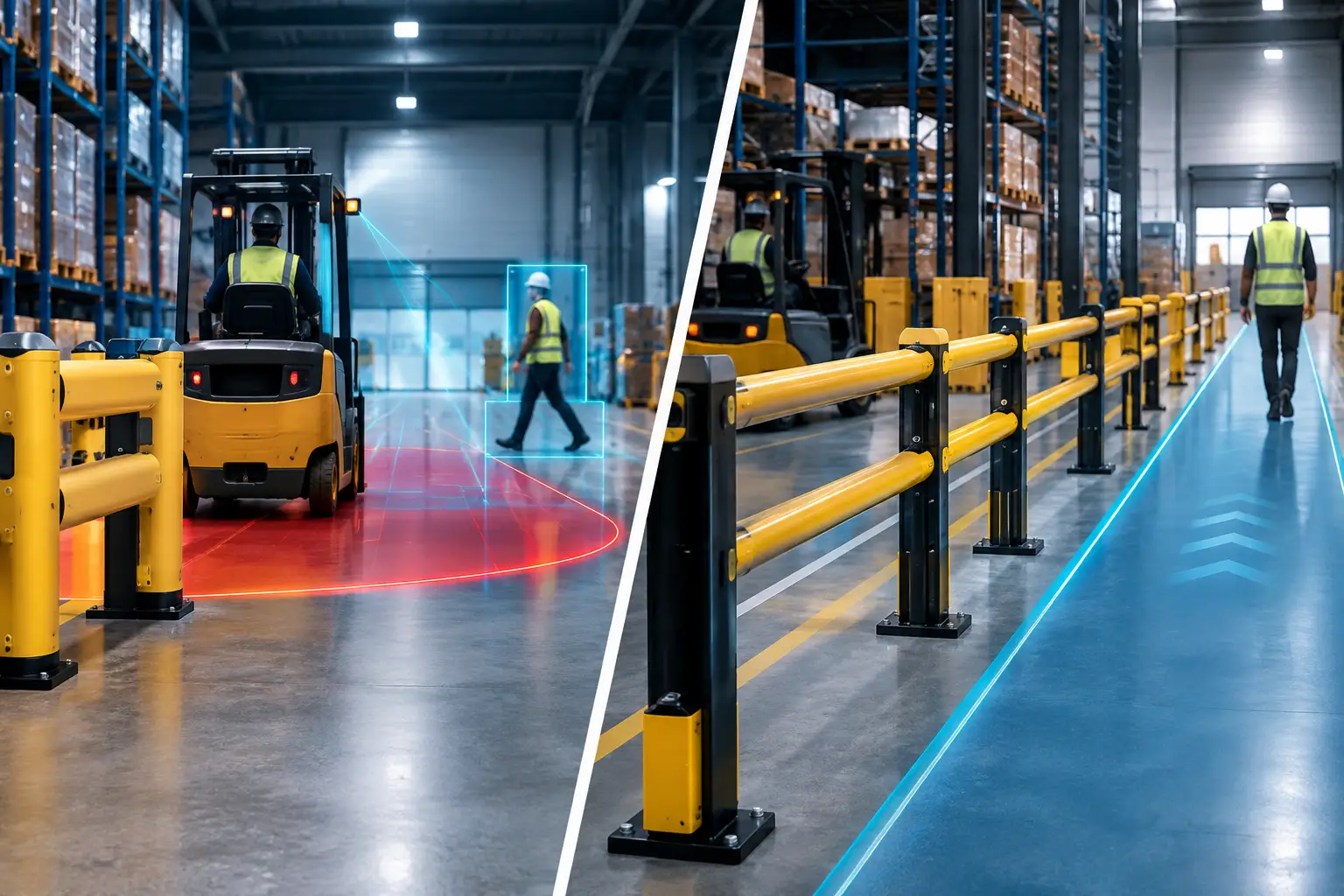
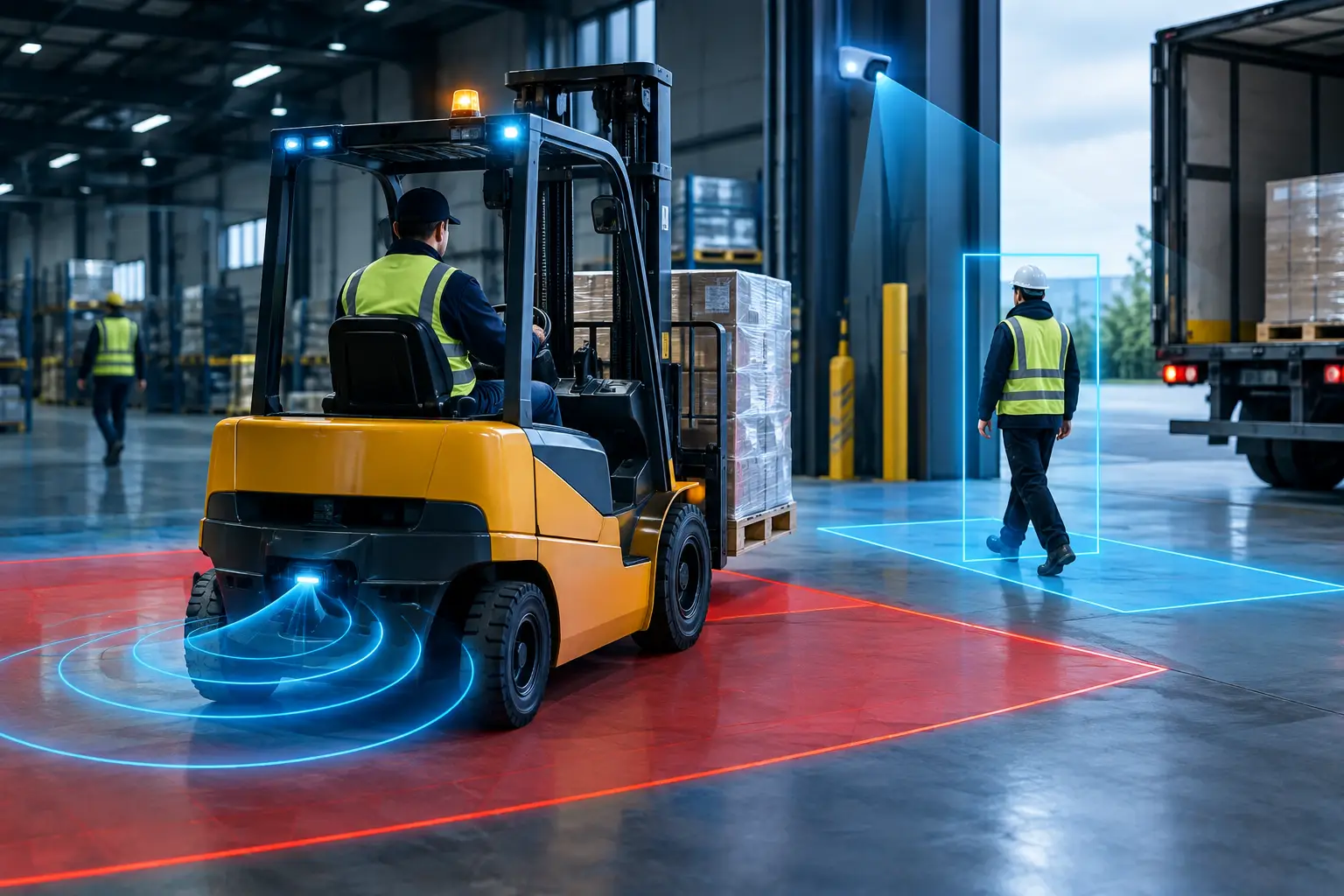
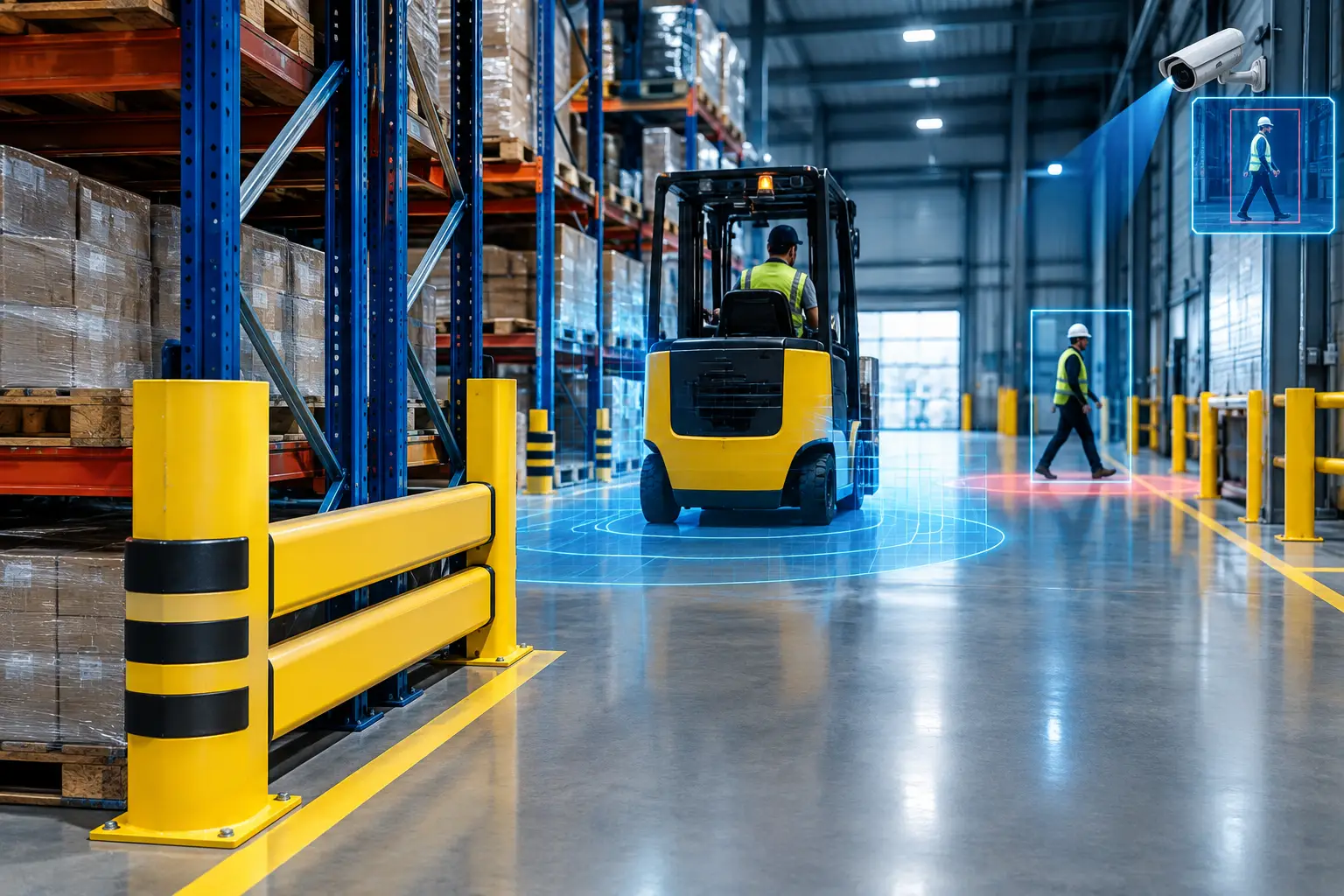
Physical rack protection is strongest when it is part of a wider warehouse safety strategy. Forklift routes should be clear and predictable, with sufficient room for turning and load handling. Pedestrian paths should be separated from vehicle activity wherever practical. Visual warnings, projected safety zones, proximity alerts, and intelligent monitoring technologies can further improve awareness in locations where visibility is poor.
For example, a rack end near a pedestrian crossing may require more than an upright guard. A combination of vehicle barriers, floor markings, warning systems, and traffic rules can help prevent both rack contact and forklift-pedestrian conflict. The goal is not to add equipment for its own sake. It is to apply controls that address how people, vehicles, and stored goods actually move through the facility.
This approach also improves operational consistency. When drivers understand designated travel lanes and protected assets are clearly marked, there is less uncertainty during busy periods. Clearer movement reduces hesitation, rework, and avoidable congestion while supporting safer material handling.
Inspection and Maintenance Keep Protection Effective
Rack protection needs inspection after a known impact and as part of routine facility checks. Guards that are loose, bent, cracked, or displaced may no longer provide their intended protection. More importantly, a damaged guard can signal that the rack behind it has also been affected.
Inspections should consider the full area, including upright condition, beam connections, anchors, base plates, rack alignment, and load placement. Any suspected structural damage should be assessed through the facility’s established rack inspection process before the area returns to normal use. Do not assume that a guard absorbed every force without consequence.
Maintenance records and impact reporting are valuable operational data. Over time, repeated contact in the same location may indicate a layout issue, inadequate aisle clearance, poor visibility, or a training gap. Replacing a damaged guard without addressing the cause can turn a preventable hazard into a recurring maintenance expense.
Turning Impact Data Into Better Decisions
The most effective facilities use rack incidents and near misses to improve the system around them. If a specific aisle end is struck repeatedly, consider whether travel direction, staging practices, rack placement, or vehicle selection is contributing to the problem. If damage occurs during peak shifts, congestion or workload pressure may need attention.
SysGuard approaches rack protection as part of a broader risk-reduction effort. Engineering assessment can help organizations identify vulnerable rack locations, select protection suited to the impact risk, and coordinate the solution with forklift safety, barrier systems, warning technologies, and site traffic controls.
The right protection does not merely cover a vulnerable upright. It gives your team more time, more control, and fewer opportunities for a routine forklift movement to become a costly disruption. Start with the rack locations your operators pass every day, because those are the points where a practical safeguard can make the greatest difference.