A loading dock can change from quiet to high-risk in seconds. A reversing truck arrives, a forklift crosses the apron, a driver steps down from a cab, and a warehouse team rushes to meet a dispatch deadline. This loading dock traffic guide sets out how to control those movements before routine activity becomes a vehicle-pedestrian collision, a trailer departure, or costly facility damage.
The objective is not simply to move vehicles faster. It is to make every movement predictable, visible, and controlled. When people, forklifts, trucks, and trailers all use the same space without clear rules or engineered safeguards, workers are left to make split-second judgments in blind spots and changing conditions. Accidents happen. But you can prevent them through better traffic design, disciplined operating procedures, and safety technology that supports the people doing the work.
Start With the Actual Traffic Pattern
A useful loading dock traffic plan begins with observation, not assumptions. Walk the area during peak receiving and dispatch periods. Follow a truck from gate entry through positioning, loading or unloading, departure, and exit. Then observe forklift operators, dock workers, pedestrians, and visiting drivers using the same space.
Look for conflict points: truck reversing routes that cross pedestrian access, forklifts emerging from trailer openings, people walking between parked vehicles, and staging areas that force operators to make tight turns with blocked sightlines. Congestion is often treated as a productivity issue, but it is also a safety signal. When queues form near dock doors or drivers wait in unmarked areas, traffic controls may not match the actual volume of work.
Conditions change by shift, season, product type, and carrier schedule. A layout that works for palletized inbound goods may become unsafe when oversized loads, returnable packaging, or high dispatch volumes require additional staging. The traffic plan should account for normal operations as well as predictable exceptions.
Separate People From Moving Equipment
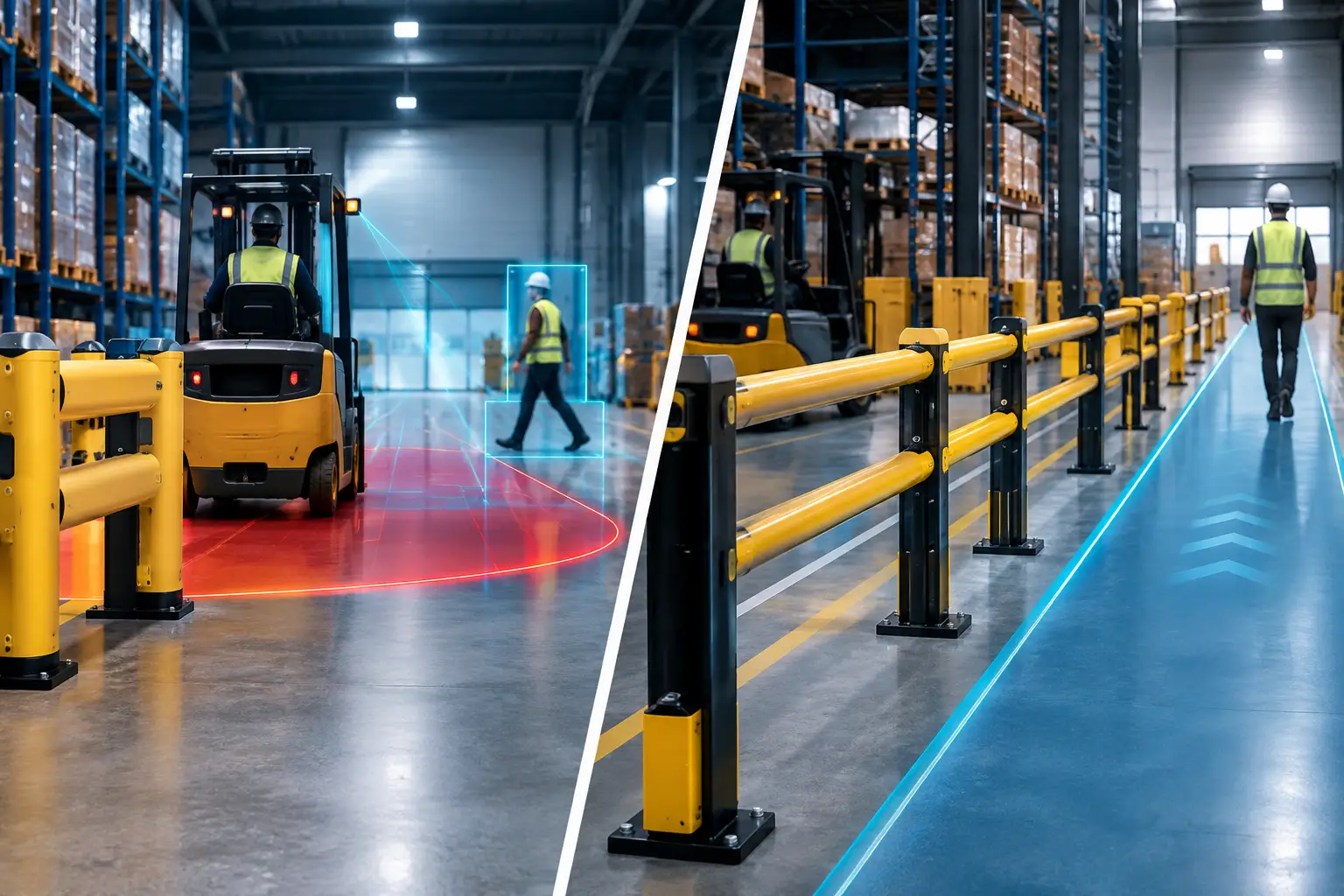
Physical separation is the most dependable way to reduce forklift-pedestrian and vehicle-pedestrian exposure. Painted lines can help guide movement, but paint alone does not stop a forklift, truck, or distracted person from entering a hazardous path. Use it as part of a system, not as the system itself.
Where pedestrians must access offices, restrooms, check-in points, or dock doors, establish dedicated walkways with clear crossing points. Safety barriers, guardrails, and gates can prevent people from taking shortcuts through vehicle zones. At crossings, provide a deliberate point of interaction: stop markings, warning signs, floor projection, audible alerts, and good lighting all reinforce the need for both pedestrians and operators to check for each other.
Forklift routes should be as direct as practical and should avoid unnecessary crossings with truck lanes. In tighter facilities, complete separation may not be possible. In those cases, reduce exposure by controlling who can enter the shared zone, lowering travel speeds, improving visibility around corners, and using proximity warning or Vision AI monitoring where interaction risk is frequent.
Design for the Driver Who Does Not Know Your Site
Third-party truck drivers may visit a facility only once. They may not understand local traffic rules, loading sequences, pedestrian restrictions, or where they are expected to wait. A clear arrival process is therefore a traffic control, not an administrative detail.
Direct drivers to a designated check-in location away from active loading lanes. Provide simple site instructions covering speed limits, reversing expectations, waiting areas, pedestrian routes, and when it is safe to leave the cab. Signage should be visible from a truck cab and positioned before a decision point, not after a driver has already entered the wrong lane.
Where language differences are common, use clear symbols, color coding, and visual instructions alongside concise written information. The goal is not to give drivers a long policy document. It is to make the safe route obvious from the moment they enter the yard.
Control the Truck at the Dock Door
A dock door creates a concentrated risk zone. The trailer, forklift, dock worker, and loading equipment must operate in sequence. If that sequence breaks down, a trailer can move unexpectedly while a forklift is inside, or loading can begin before the vehicle is fully secured.
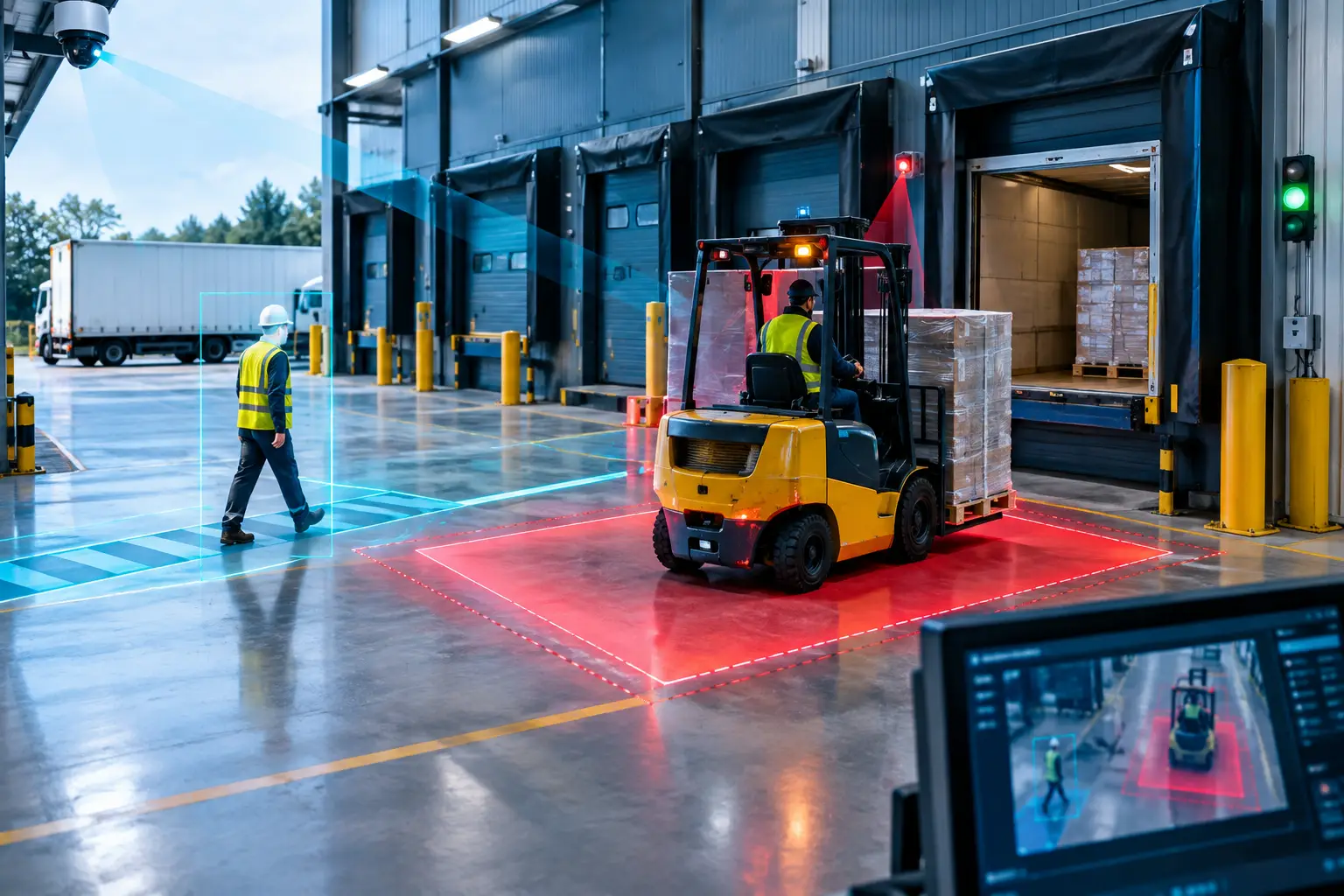
Vehicle restraint systems, wheel chocks where appropriate, dock communication lights, and clear release procedures help establish positive control of the trailer. The key principle is simple: no loading activity should begin until the truck is correctly positioned and secured, and no truck should depart until the dock team has confirmed that loading is complete and the area is clear.
Visual status indicators are especially valuable because they reduce reliance on verbal messages passed through several people. An external signal can tell the driver whether to remain at the dock, while an internal indicator tells dock personnel whether the trailer is safe to enter. This reduces confusion during shift changes, busy dispatch periods, and multi-door operations.
Traffic controls must also account for trailer creep, early departure, and incorrect vehicle positioning. These are not rare theoretical events. They are foreseeable failures that require engineered controls and disciplined procedures.
Make Reversing a Managed Activity
Reversing trucks and forklifts have restricted visibility, even with mirrors, cameras, and trained operators. The safest approach is to reduce the need for reversing wherever site layout allows. One-way yard systems, designated turning areas, and angled parking or dock approaches can reduce complex maneuvers.
When reversing is necessary, keep the route free of pedestrians, parked equipment, loose pallets, and staging materials. Use marked exclusion zones near reversing paths. A trained banksman or spotter can add control in complex situations, but the process must be defined. The spotter needs a safe position, clear authority to stop the movement, and agreed communication with the driver. A person standing in a blind spot is not a control.
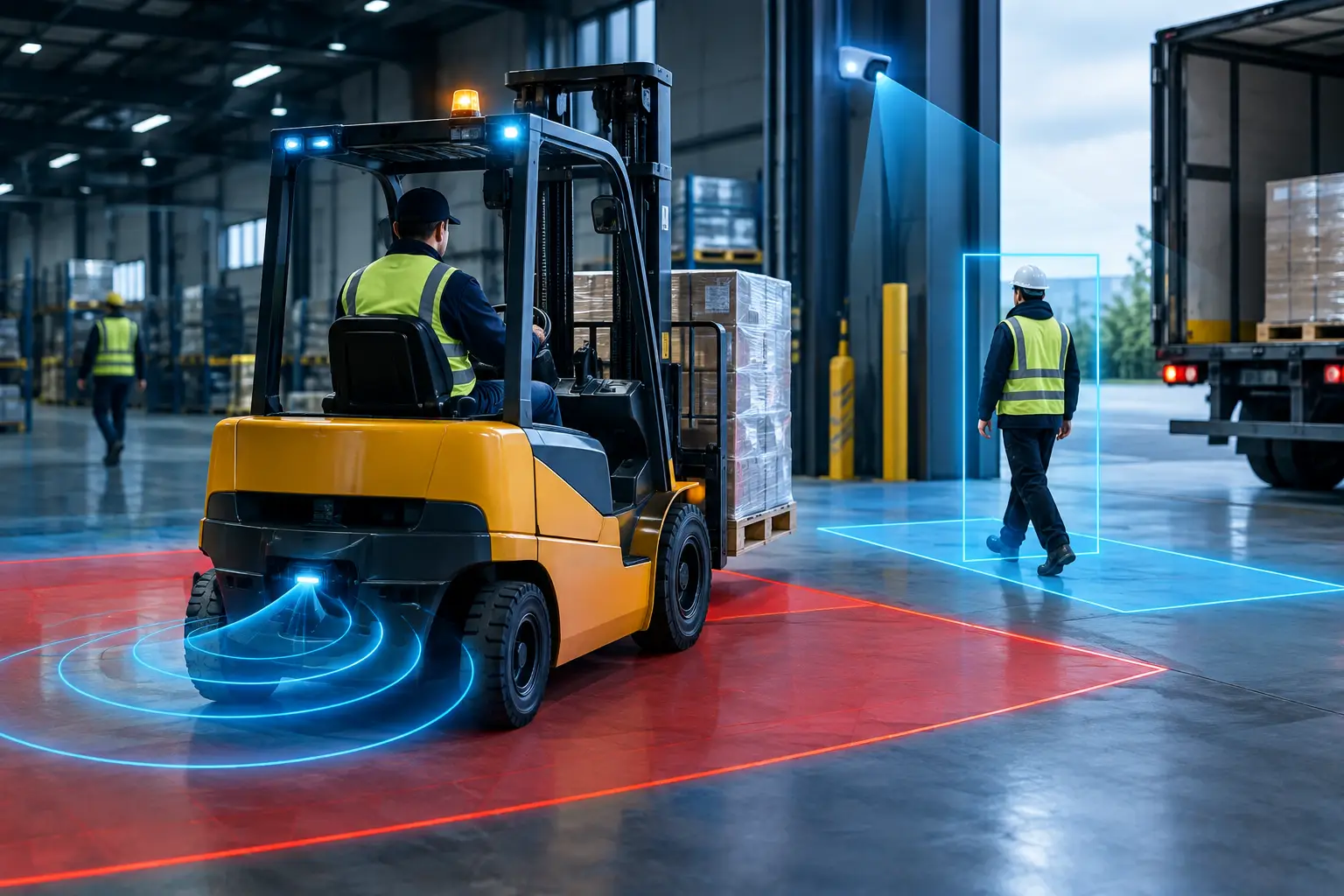
Audible and visual warning systems can increase awareness when a vehicle begins moving or enters a crossing zone. However, alarms should support good layout and operating rules, not compensate for poor traffic design. In a noisy dock environment, workers can become accustomed to repeated alarms. Targeted warnings activated by actual movement or detected conflict are generally more meaningful than constant background noise.
Manage Forklift Travel Beyond the Door
Loading dock safety does not end at the dock plate. Forklifts often travel between doors, staging lanes, racking, wrapping stations, and dispatch areas. Their route may intersect with pedestrians retrieving documents, drivers checking loads, or employees moving between work areas.
Set practical speed limits based on visibility, turning radius, surface conditions, load type, and traffic density. A single site-wide speed may be easy to communicate, but high-risk areas often need lower limits than open travel aisles. Operators also need sufficient space to turn without clipping dock structures, barriers, or stored goods.
Blind corners deserve particular attention. Convex mirrors may improve sightlines in some locations, but they do not remove the risk of a person entering a path at the wrong moment. Floor projection systems, intersection warnings, proximity detection, and Vision AI monitoring can provide an additional layer of awareness at high-frequency conflict points. The right technology depends on the layout, traffic volume, and the behavior risk being addressed.
Keep Dock Areas Clear and Visible
Poor housekeeping creates traffic hazards. Empty pallets, stretch wrap, damaged equipment, loose dock plates, and temporary staging can narrow routes or hide trip hazards near moving vehicles. At a loading dock, clutter also changes how people behave: they step around obstructions, walk outside marked routes, or stand closer to vehicle paths than intended.
Define where goods can be staged and how long they may remain there. Keep emergency access, pedestrian routes, dock edges, and vehicle turning zones free from stored materials. Lighting should be adequate at dock approaches, inside trailers, near crossing points, and across outdoor yards during early or late operating hours.
Weather and surface conditions require the same attention. Wet dock aprons, uneven pavement, glare, and poor drainage can affect braking, traction, and visibility. A traffic guide should assign responsibility for identifying and correcting these changing conditions before vehicle movements continue.
Train for Decisions, Then Verify the System
Workers need more than a reminder to be careful. Forklift operators, dock teams, supervisors, and visiting drivers should understand their specific role in the traffic plan: where they may travel, when they must stop, how dock status is communicated, and what to do when the normal flow is disrupted.
Supervisors should regularly verify whether the plan works in practice. Are pedestrians using the designated routes? Are trailers being secured before forklift entry? Are warning devices visible and functional? Are new staging habits creating unplanned vehicle conflicts? Near misses, equipment strikes, congestion, and repeated shortcut behavior are valuable evidence that controls need adjustment.
Review traffic arrangements after changes to dock doors, fleet size, operating hours, product flow, or warehouse layout. Safety controls should evolve with the operation rather than remain fixed on a drawing created years earlier.
A safer dock is built when workers do not have to guess where a truck will move, whether a trailer is secure, or how to cross an active route. Make safe movement the easiest movement, and every shift has a stronger chance of ending without injury, damage, or disruption.