A pallet rack collapse rarely begins with one dramatic failure. More often, it starts with a forklift impact that seems minor, an overloaded beam level, an unapproved repair, or a damaged upright left in service during a busy shift. Understanding what causes pallet rack collapse helps warehouse leaders intervene while the issue is still a manageable maintenance task, rather than a serious injury, product loss, and operational shutdown.
For facilities that rely on forklifts, dense storage, and fast-moving inventory, racking is structural equipment, not simply shelving. Its safe performance depends on the condition of every upright, beam, connector, anchor, pallet, and load. When one component is compromised, the forces can transfer through an entire bay or aisle quickly.
What Causes Pallet Rack Collapse in Warehouses?
Pallet racking is designed to carry specified loads in a defined configuration. Collapse occurs when the structure is damaged, incorrectly assembled, overloaded, altered without engineering review, or exposed to forces it was not designed to withstand. In many cases, several conditions combine.
A bent upright may still support inventory for a time. Add a second forklift strike, uneven loading, or a missing beam safety lock, however, and the available safety margin can disappear. That is why rack safety cannot depend only on reacting to obvious failures. It requires routine inspection, clear reporting, traffic controls, and disciplined loading practices.
Forklift impacts and upright damage
Forklift contact is one of the most common initiating events. Uprights positioned at aisle ends and lower beam levels are especially vulnerable during turning, reversing, and put-away activity. Even a low-speed impact can bend an upright, damage a diagonal brace, loosen an anchor, or deform a beam connector.
The concern is not cosmetic damage. An upright is a load-bearing member, and deformation changes how it carries weight. A rack may appear stable after an impact but have significantly reduced capacity. Repeated contact at the same location compounds the damage and increases the likelihood of progressive failure.
Damage should be reported immediately, assessed by a competent person, and controlled before the location returns to normal service. Depending on severity, this may mean unloading the affected bay, isolating it from forklift traffic, and arranging replacement components. Straightening a damaged upright in place or using improvised repairs can introduce further structural uncertainty.
Overloading and incorrect load distribution
Every racking system has rated capacities for beam levels, bays, and frames. Problems arise when inventory weight exceeds those limits, when pallet weights are unknown, or when load changes are made without reviewing the rack design. A facility may begin storing heavier products, different pallet formats, or more units per location while keeping the original configuration.
Distribution matters as much as total weight. Loads should sit evenly on both beams, remain within the designed beam span, and be placed consistently across the bay. Concentrating very heavy pallets on one side, storing loads with an overhang that interferes with adjacent positions, or placing a pallet partly on a beam can create dangerous localized forces.
Pallet condition is part of this calculation. Broken stringers, damaged deck boards, and poorly supported loads can fail during placement or retrieval. When a pallet drops or shifts suddenly, it can strike racking members and destabilize the storage level below.
Missing, damaged, or improperly fitted components
Rack systems work as connected structures. Beams, braces, safety locks, anchors, shims, row spacers, and frame protectors each have a role. Missing beam safety locks can allow a beam to lift out of its connector during a forklift strike. Loose or missing anchors can reduce a frame’s resistance to movement. Damaged braces can compromise the frame’s ability to resist side loads.
Component compatibility is equally critical. Mixing parts from different rack systems, installing non-approved beams, or changing beam elevations without confirming capacity may create connections that look acceptable but have not been engineered to work together. Only compatible, manufacturer-approved components should be used, with changes reviewed against the actual loads and layout.
Poor installation, floor condition, and unapproved modifications
A rack may be at risk from the day it is installed if it is not level, plumb, correctly anchored, or assembled according to its design. Uneven floors, unsuitable shimming, and incorrect anchor placement can affect load paths through the structure. This is particularly relevant when facilities relocate, expand, or reconfigure storage under time pressure.
Operational modifications also need control. Removing beams to create clearance, adding decking, changing aisle widths, using racks for non-standard loads, or installing accessories can alter capacity and stability. A change that improves short-term storage density may introduce a larger structural risk if it is not assessed first.
How a Local Failure Becomes a Larger Collapse
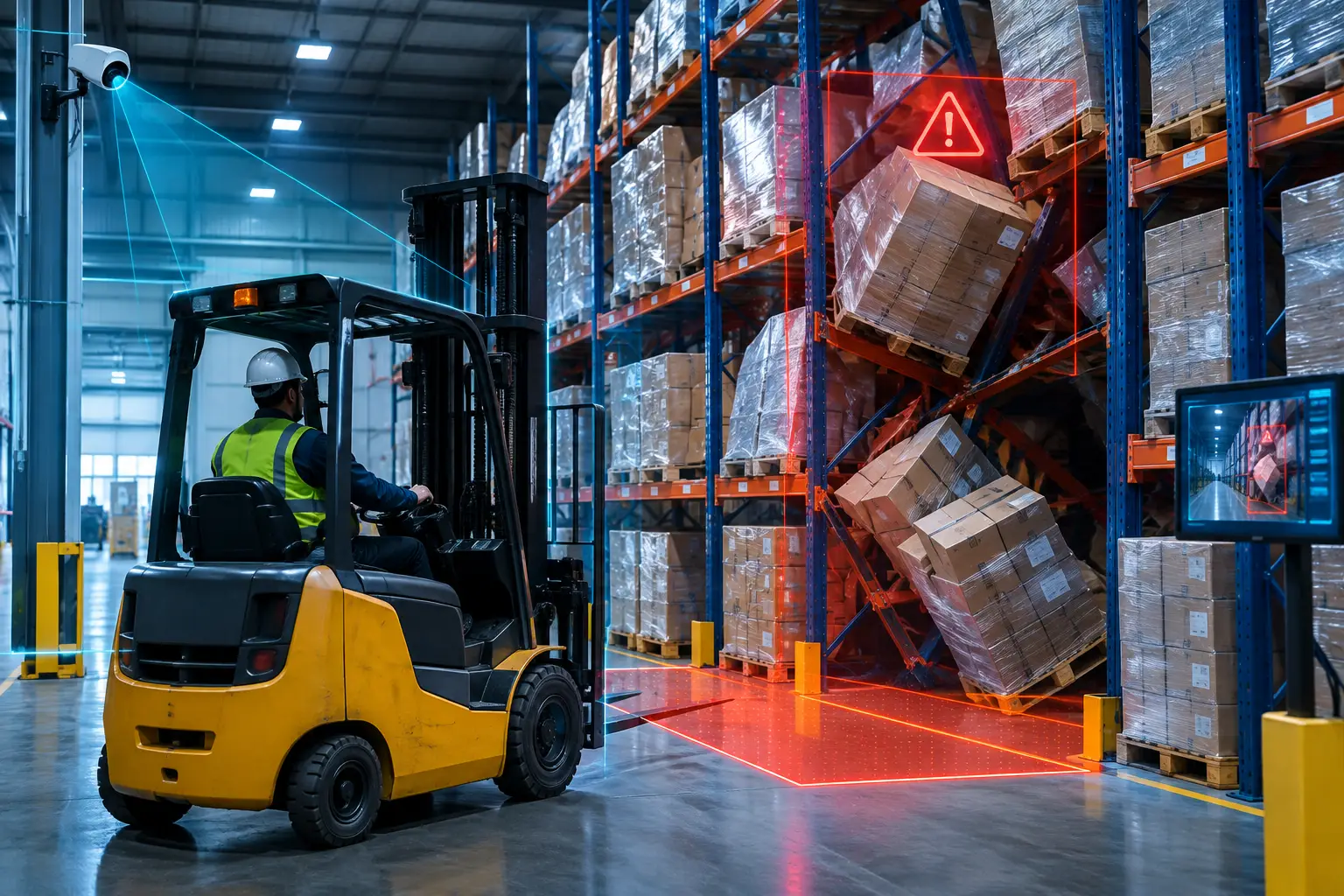
Pallet rack collapse is often progressive. When a damaged upright buckles or a beam connection fails, the load it carried shifts suddenly to nearby members. Those members may then exceed their own capacity. In back-to-back rows, movement can spread through row spacers and shared loads, turning a single-bay failure into an aisle-wide event.
This is why the consequences extend beyond damaged inventory. A collapse can place forklift operators, pickers, and maintenance teams in the path of falling pallets and steel members. It can also block travel routes, disrupt order fulfillment, damage equipment, and require a lengthy investigation and reinstatement process.
The operational lesson is clear: do not treat rack damage as routine wear and tear. It is a leading indicator that deserves the same attention as any other serious warehouse hazard.
Practical Controls That Reduce Collapse Risk
The strongest rack safety program combines engineering controls, operating discipline, and inspection. No single measure can compensate for unsafe loading, repeated impacts, and delayed repairs occurring at the same time.
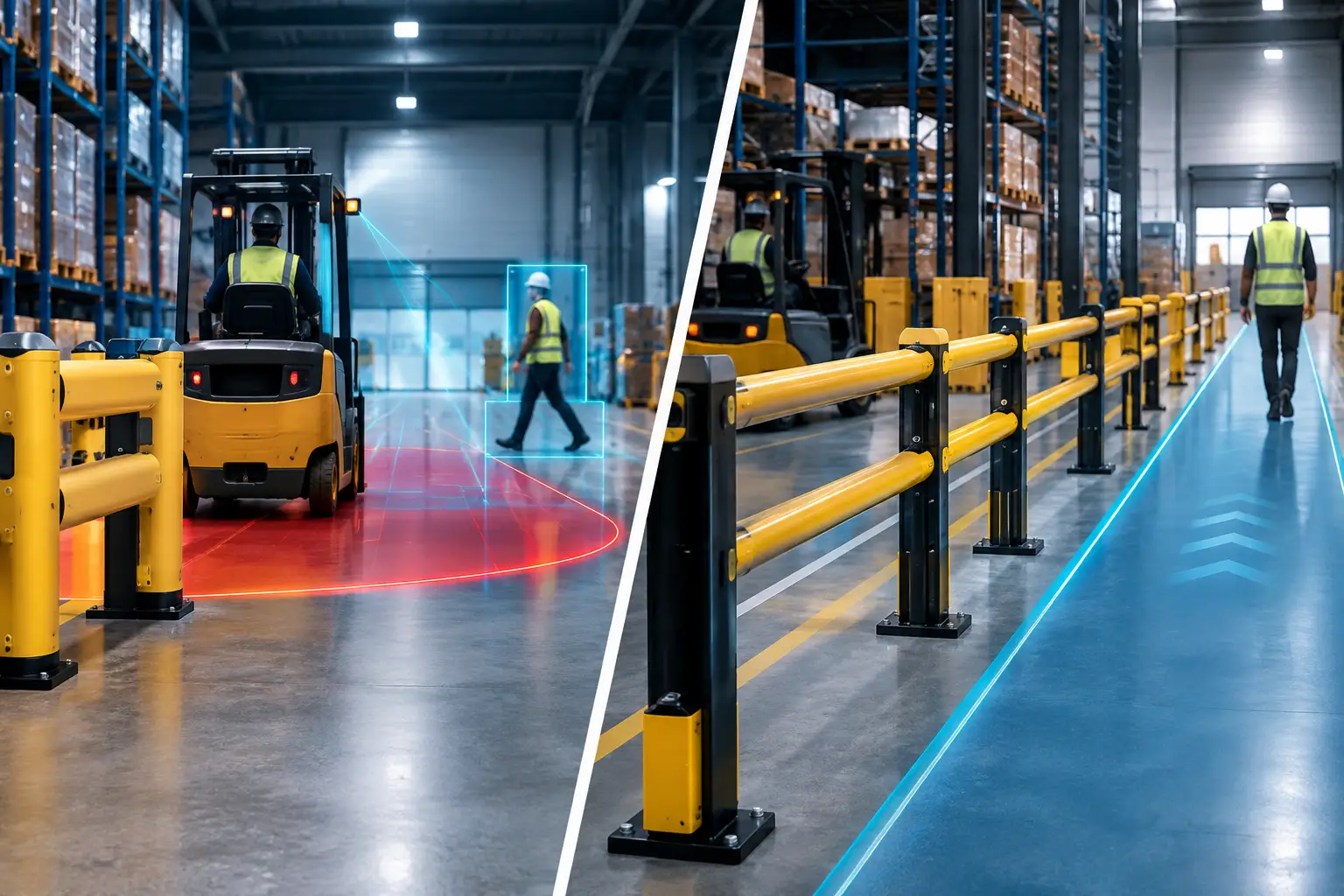
Start by protecting the areas most exposed to forklifts. Upright protectors, end-of-aisle barriers, and properly designed safety barriers can absorb or deflect low-level impacts before they reach critical rack members. These controls should support, not replace, clear traffic routes, adequate aisle space, and operator practices that reduce contact in the first place.
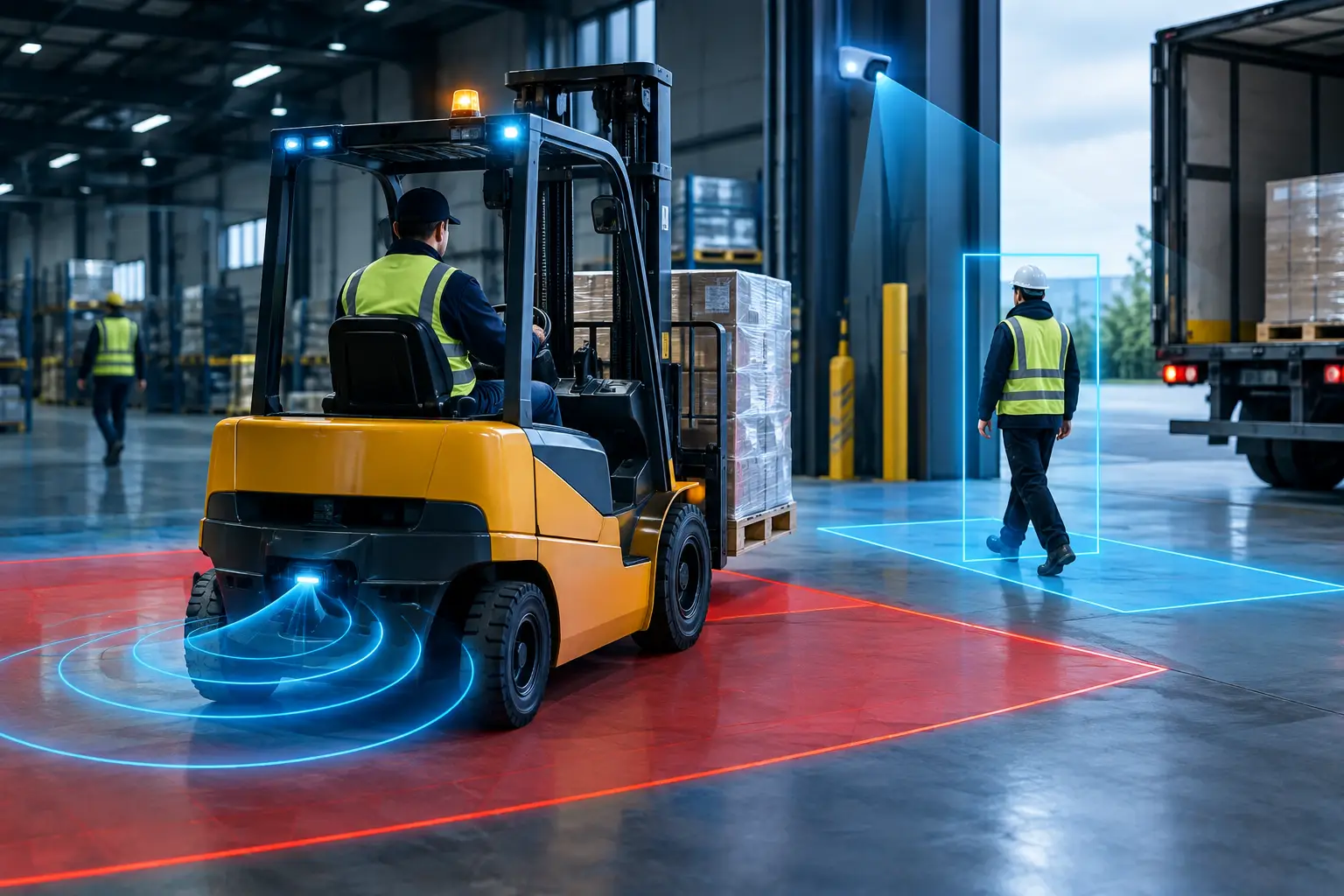
Where pedestrian and forklift routes intersect, visual warning systems, projected safety zones, proximity alerts, and Vision AI monitoring can help identify conflict points and unsafe vehicle behavior. The right technology depends on the site. A narrow-aisle, high-throughput distribution center has different risks from a manufacturing warehouse with frequent cross-traffic and irregular loads.
Loading controls deserve equal attention. Display rack load notices where teams can see them, maintain accurate pallet weight data, and define rules for pallet quality, placement, and storage of non-standard items. Supervisors should verify that changes in inventory profile do not exceed the system’s original design assumptions.
A practical program should also include these four actions:
- Train forklift operators and warehouse teams to report every rack impact, not only visibly severe damage.
- Inspect racking routinely, with formal documented reviews at intervals appropriate to traffic volume, load type, and damage history.
- Tag, isolate, and unload damaged locations promptly when their condition warrants removal from service.
- Use qualified technical support for repairs, replacements, capacity changes, and layout modifications.
Make Reporting Easy and Response Consistent
Many rack failures are preventable, but only if people report damage without hesitation. Operators may avoid reporting a minor strike if the process is unclear or if they assume it will delay work. That creates a gap between the real condition of the rack and what management believes is safe to use.
A simple response process closes that gap. Define who receives the report, who assesses the damage, what temporary controls are available, and who can authorize the bay for reuse. Make the process visible to operators and supervisors. When employees see that reports lead to fast, practical action rather than blame, reporting quality improves.
Inspection findings should also be used to identify patterns. Repeated impacts at one aisle end may point to insufficient turning space, poor visibility, congestion, or a need for better physical protection. Frequent beam damage may indicate unsuitable pallet handling or inadequate operator clearance. The goal is to remove the recurring cause, not merely replace damaged steel.
Treat Rack Damage as a Preventable Risk
A safe rack system is not defined by whether it is still standing at the end of a shift. It is defined by whether its structure, loading practices, and surrounding traffic controls remain within safe operating conditions every day. SysGuard helps facilities assess the interaction between forklift movement, rack protection, warning technologies, and operating practices so that damage risks are addressed at their source.
Every worker deserves to return home safely every day. Protecting pallet racking before small defects become structural failures is one practical way to make that commitment visible on the warehouse floor.