A loading dock can move hundreds of pallets in a shift, with trucks arriving on different schedules, forklifts crossing active lanes, and workers operating beside unprotected dock edges. That concentration of movement makes loading dock safety Indonesia a critical operational concern, not a checklist exercise. One poorly secured trailer, rushed maneuver, or unclear pedestrian route can lead to serious injury, damaged stock, facility disruption, and avoidable downtime.
The strongest loading dock safety programs do not rely on workers reacting perfectly to hazards. They design risk out of routine activities through clear traffic controls, physical protection, engineered equipment, and active monitoring. Accidents happen. But with the right controls, they can be prevented.
Why Loading Docks Create High-Consequence Risks
Loading docks bring multiple hazards into a compact work zone. Trucks reverse and depart, forklifts transfer heavy loads, pedestrians handle paperwork or guide vehicles, and dock doors open onto elevated edges. The risk increases when operations are under pressure to meet dispatch times or turn vehicles around quickly.
In Indonesia, facilities may also manage varied fleet types, third-party drivers with different site familiarity, wet-weather conditions, and busy logistics schedules. These factors do not create risk on their own, but they make consistent control more important. A procedure that depends on every driver and operator making the right judgment every time is not enough.
The most serious loading dock incidents often involve one of four failures: a vehicle moves away while loading is underway, a person enters a forklift path, a forklift approaches an open dock edge, or communication breaks down between the driver and dock team. These are predictable events. They need engineered barriers and visible operating rules.
Start With the Vehicle-to-Dock Interface
A trailer or truck must remain securely positioned before a forklift enters, exits, or works inside the vehicle. If it creeps forward, pulls away early, or shifts unexpectedly, the consequences can be immediate. A forklift can fall through the gap between the dock and vehicle, damaging equipment and placing its operator at significant risk.
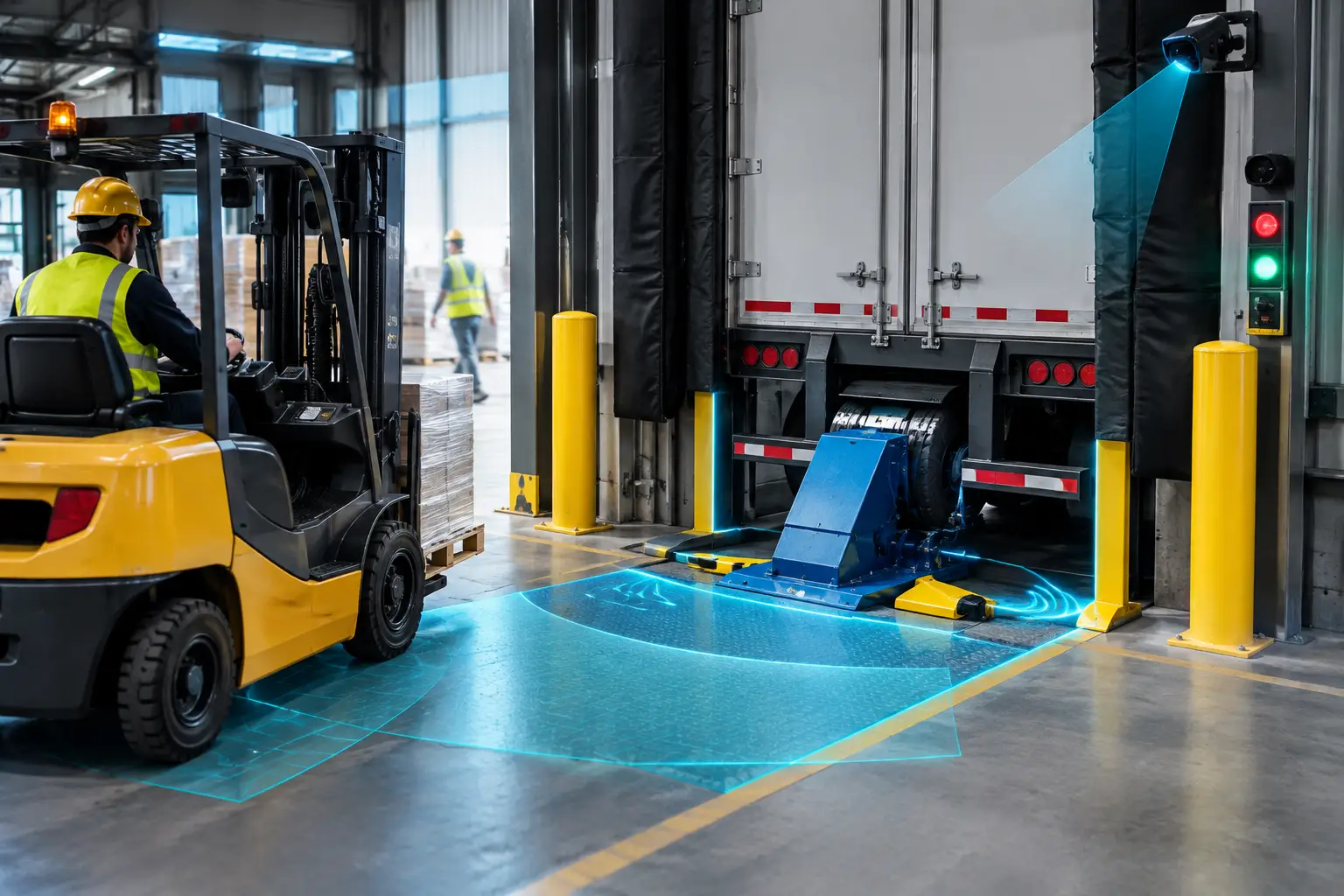
Vehicle restraint systems provide a stronger control than wheel chocks alone. Depending on the vehicle mix and dock design, a restraint can engage the trailer or prevent movement through a controlled wheel-based system. Integrated visual indicators help the driver and dock team confirm whether it is safe to proceed.
The right approach depends on operating conditions. Wheel chocks may be suitable for lower-volume locations where vehicle compatibility is consistent and use can be verified. However, they are vulnerable to incorrect placement, omission, and poor ground conditions. At high-throughput docks, or where loading teams cannot reliably confirm restraint status, automated or interlocked vehicle restraint systems provide greater consistency.
Dock door interlocks add another layer of protection. They can prevent a door from opening until the vehicle is safely restrained, or provide clear warning when the restraint is not engaged. This reduces reliance on radio calls, hand signals, or assumptions made during busy shifts.
Control Forklift Movement Before It Reaches the Dock Edge
Forklifts are essential to dock productivity, but they also create a high-risk interface at the dock face. An open doorway without a correctly positioned vehicle is an unprotected fall hazard. A distracted operator, a failed communication step, or a driver leaving too soon can turn a normal transfer into a severe incident.
Dock barriers and safety gates should protect open dock doors whenever a truck is absent. A well-designed barrier creates a physical stop, not merely a visual reminder. It should be selected for the traffic and impact risks present at the facility, with appropriate strength, visibility, and operating method.
Forklift speed is another factor. Operators need sufficient control to stop safely when a dock status changes, especially when visibility is reduced by loads, trailers, or congestion. Clearly marked approach zones, speed controls, warning lights, and audible alerts can reinforce safe movement. Where risk is elevated, proximity warning technology can notify operators when they are approaching a restricted dock edge or pedestrian area.
Loading plates and dock levelers also require disciplined use. They must be appropriate for the vehicle, load capacity, and equipment crossing them. A leveler or plate is not simply a bridge. It is a critical transfer point that needs inspection, correct positioning, and protection from premature vehicle movement.
Separate People From Mobile Equipment
Pedestrians should not need to negotiate with forklifts for space. Yet loading docks frequently require dispatch staff, drivers, supervisors, and warehouse teams to move through areas where powered industrial vehicles are active. Paint on the floor helps communicate intent, but painted lines alone do not stop a forklift or create safe separation.
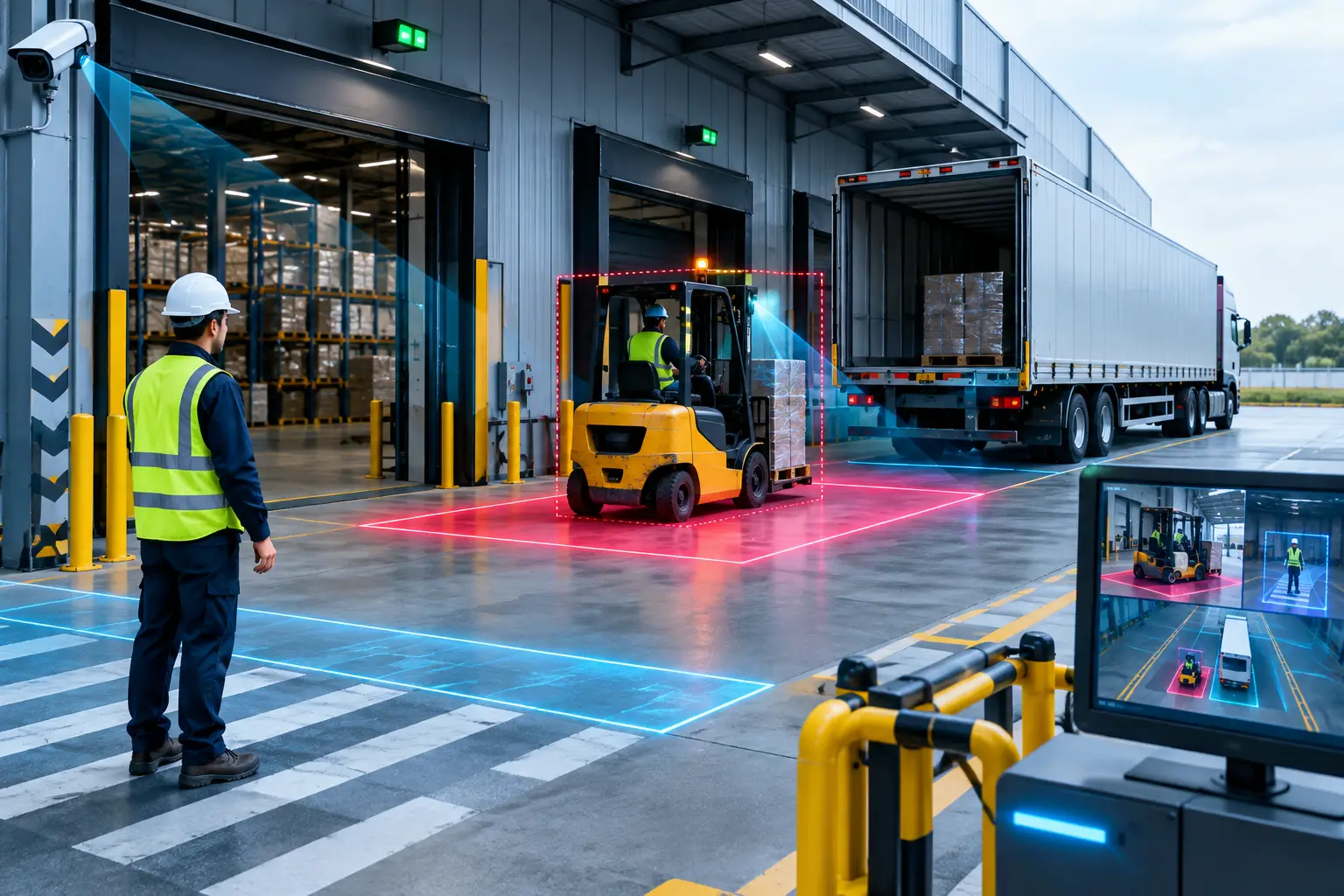
Effective pedestrian management combines designated walkways, controlled crossing points, physical barriers, and clear access rules. Drivers should have a defined place to wait while loading takes place, rather than walking around the dock to check progress. Documentation areas, rest points, and driver communication points should sit outside active forklift lanes wherever practical.
Visibility must be treated as a system issue. Forklift loads can block the operator’s forward view, while parked vehicles, dock structures, and stacked goods can hide pedestrians from sight. Blue spotlights, projected warning lines, audible alarms, and intersection alerts can improve awareness, but they work best alongside well-designed traffic routes. Technology should reinforce safe behavior, not compensate for an unsafe layout.
Use Clear Dock Status Signals
At a busy dock, everyone needs to understand the loading status without guessing. Is the vehicle restrained? Is the door safe to open? Is loading active? Can the driver leave? Ambiguity is a hazard.
External and internal dock lights are useful because they communicate status to the people who need it most. A driver can see whether departure is permitted, while the dock team can verify whether the vehicle is secured or loading is still in progress. When linked to vehicle restraints and door controls, status lights can turn procedures into enforced sequences.
Visual management should be simple enough to work across shifts, contractors, and visiting drivers. Signs, floor markings, and lights must be visible in real operating conditions, including low light, rain, glare, and peak-hour congestion. If workers need to interpret a complicated signal scheme, the system is likely to fail when pressure rises.
Build Safety Into Daily Dock Discipline
Engineering controls reduce risk, but they need operating discipline to remain effective. Supervisors should review dock conditions at the beginning of shifts and after layout changes, equipment damage, or unusual vehicle arrivals. Small changes, such as a new carrier type or temporary storage near a dock door, can introduce risks that standard procedures do not cover.
A practical dock inspection should verify the condition of restraints, levelers, barriers, warning lights, floor markings, and pedestrian routes. It should also confirm that damaged safety equipment is removed from service or repaired promptly. A bent barrier, failed light, or worn dock plate is not a minor maintenance issue when it protects people working around moving vehicles.
Training should focus on the decisions workers make at the dock: when a forklift may enter a trailer, what confirms the vehicle is secure, where drivers must wait, and what to do when equipment or conditions are abnormal. Short, scenario-based refresher sessions are often more effective than occasional classroom-only instruction because they connect directly to the risks workers see every day.
Make Risk Visible With Data and Observation
Not every loading dock risk results in an incident. Near misses, hard braking events, unauthorized pedestrian entries, and repeated restraint bypasses are early warnings. Organizations that capture and act on these signals can correct weak controls before someone is injured.
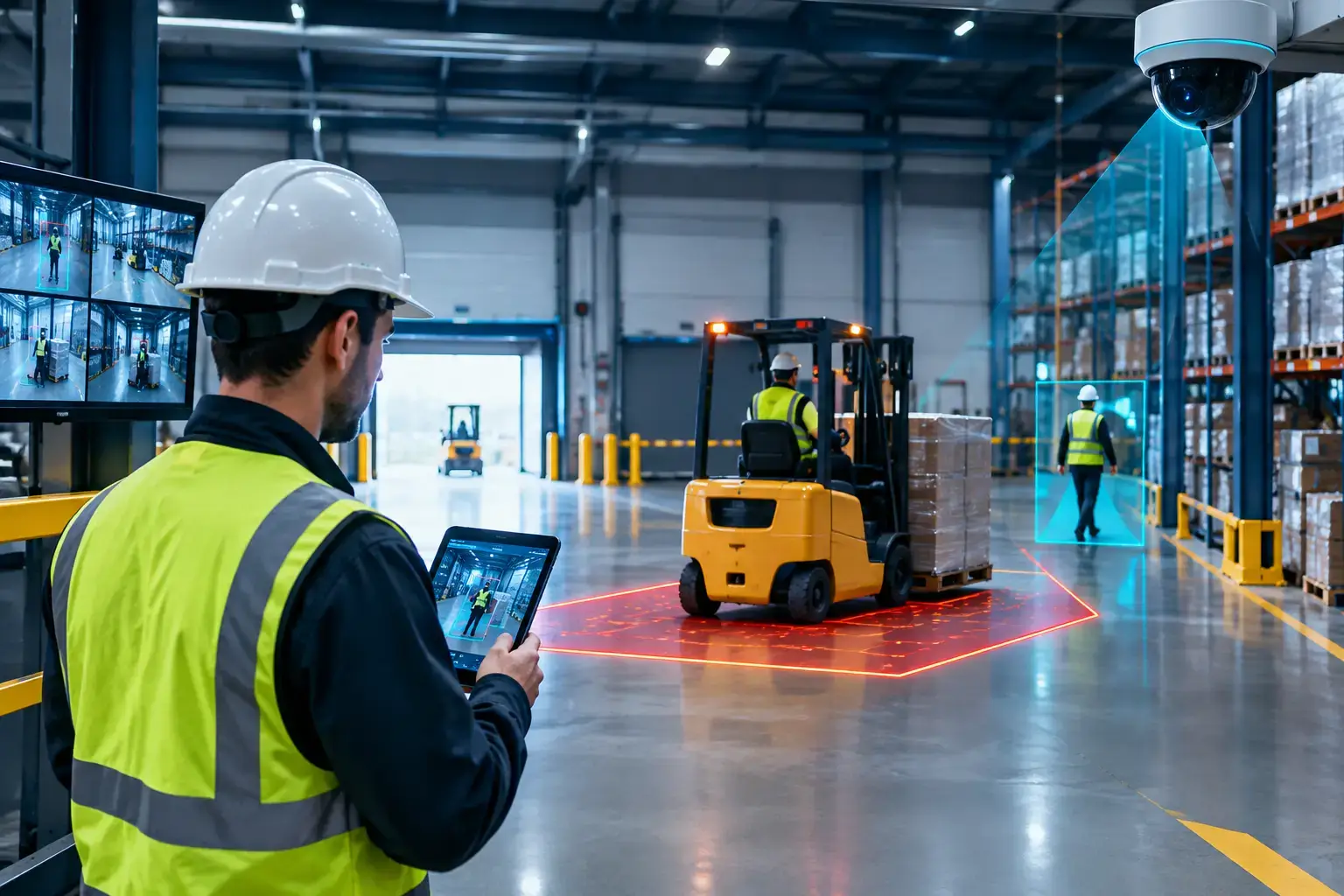
Vision AI safety monitoring can help identify recurring patterns such as people entering restricted zones, forklifts operating too close to pedestrians, or unsafe movement around dock doors. Used correctly, this technology supports supervisors with objective observations rather than replacing their judgment. The goal is not to monitor people for its own sake. It is to identify where the working environment allows unsafe interactions to occur.
The most valuable data is actionable. If one dock experiences frequent congestion, the answer may be revised scheduling, a dedicated pedestrian route, additional barriers, or a different staging arrangement. If drivers regularly leave their waiting area, the communication process may need improvement. Safety performance improves when observations lead to physical and procedural changes.
A Safer Dock Supports a More Reliable Operation
Loading dock safety is not separate from productivity. Vehicle restraint, traffic segregation, dock-edge protection, and clear status signaling reduce the interruptions caused by incidents, damaged equipment, and uncertain handovers. They also make the work easier to manage during peak volumes and staff changes.
SysGuard helps facilities assess these interactions as a complete operating system: people, vehicles, equipment, dock infrastructure, and the decisions made between them. The best improvement is rarely a single device. It is a set of controls matched to the site’s actual vehicle flow, forklift activity, and risk exposure.
Every truck departure, pallet transfer, and forklift movement is an opportunity to prove that safety controls are working. Design the dock so the safe action is the normal action, even when the shift is busy.