A forklift traveling only a few miles per hour can still cause severe injury, rack damage, or a costly loading bay incident. So, are forklift speed limiters effective? Yes, when they are used as one control within a well-designed traffic management plan. No, when a facility treats a lower top speed as a substitute for separating people and vehicles, improving sightlines, or addressing unsafe operator behavior.
Speed limiters reduce the likelihood and severity of certain forklift incidents by placing a physical ceiling on travel speed. That matters in busy warehouses, manufacturing plants, and distribution centers where forklifts operate near pedestrians, racking, dock doors, and constrained turning areas. But their value depends on where they are applied, how speeds are set, and what other controls support them.
What Forklift Speed Limiters Actually Control
A forklift speed limiter prevents a truck from exceeding a preset travel speed. Depending on the equipment and system configuration, the limit may apply at all times or only in specific conditions, such as when the forklift is inside a pedestrian-heavy zone, approaching an intersection, traveling outdoors, or operating with an elevated load.
The safety benefit is straightforward: lower speed gives operators more time to identify hazards, react, and stop. It also reduces the energy involved if a collision occurs. In a warehouse aisle, that can mean the difference between a controlled stop and an impact with racking, inventory, another vehicle, or a person.
However, a limiter controls maximum speed, not every movement that creates risk. It does not ensure the operator checks mirrors, sounds the horn at blind corners, travels with a stable load, or keeps a safe following distance. It also cannot prevent a pedestrian from stepping unexpectedly into a travel lane.
Are Forklift Speed Limiters Effective for Every Risk?
Forklift speed limiters are particularly effective where a consistent, predictable speed is needed. High-traffic intersections, narrow aisles, dock approaches, entrances, and areas with frequent pedestrian movement are common examples. In these locations, a fixed speed limit helps create a more controlled operating environment and reduces reliance on individual judgment under pressure.
They are also valuable where facilities face repeated low-speed damage. Minor impacts with doors, barriers, racking, and stored goods can create downtime, maintenance costs, and secondary hazards. Reducing vehicle speed can lower both incident frequency and the extent of damage when contact does occur.
Their effectiveness is more limited in complex or poorly controlled environments. Consider a blind intersection where a forklift is restricted to a low speed but pedestrians can enter from either side without warning. The lower speed helps, but the core hazard remains. A physical pedestrian barrier, designated walkway, floor projection warning, audible alert, mirror, or proximity detection system may be needed to address the exposure more directly.
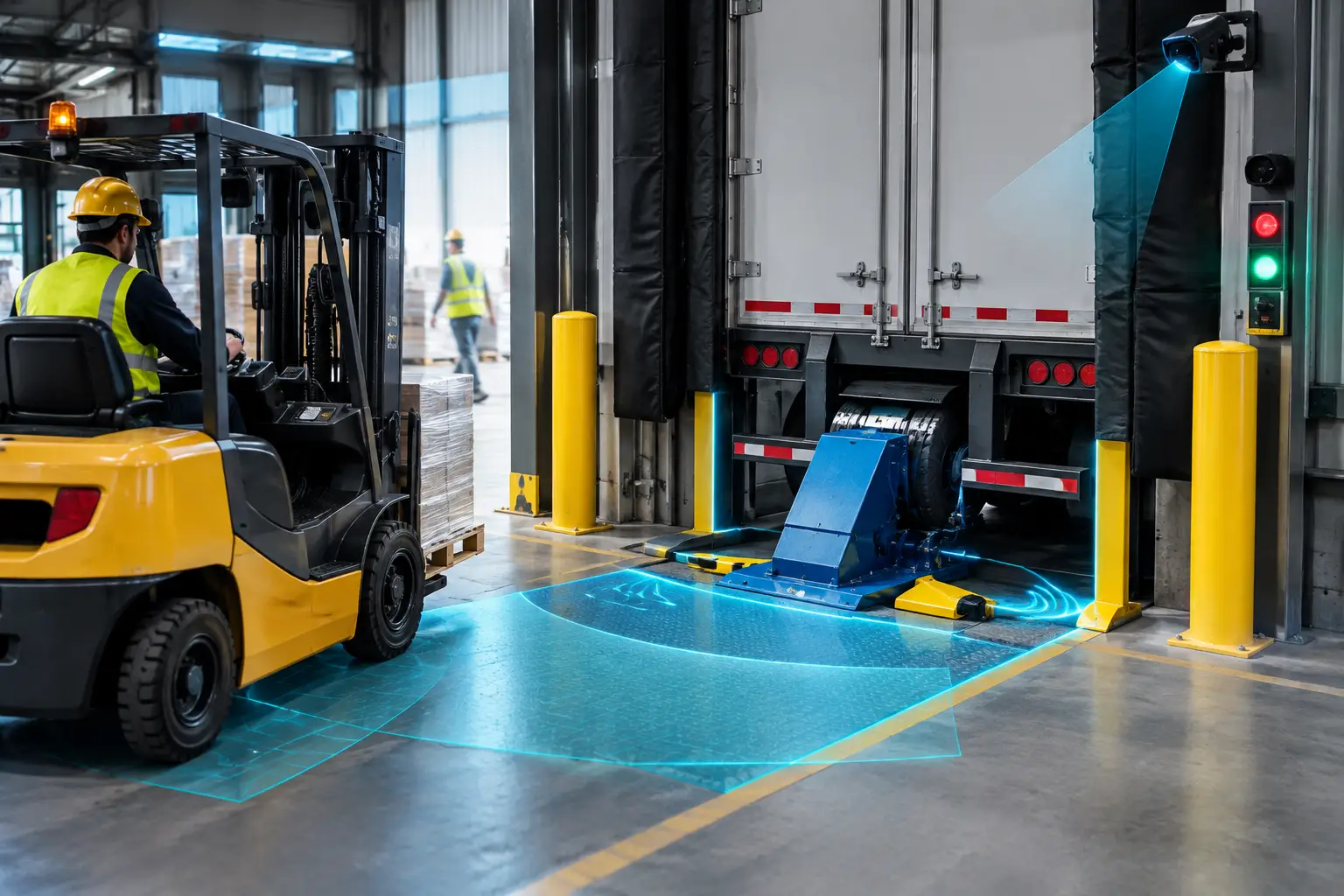
The same principle applies at loading bays. A speed limiter can improve approach control, but it does not confirm that a trailer is secured, a dock door is safe to enter, or pedestrians are clear of the operating area. Each risk requires its own appropriate control.
The Risk of Setting One Speed Everywhere
A single sitewide limit is simple to communicate, but it is not always the safest or most productive arrangement. A speed that is appropriate on a clear outdoor transport route may be too fast near packing stations. Conversely, an unnecessarily low limit on long, segregated routes can create frustration, encourage workarounds, and reduce throughput without delivering a meaningful safety improvement.
A better approach is to define speed by risk zone. The assessment should consider pedestrian exposure, visibility, aisle width, surface condition, turning requirements, load characteristics, traffic volume, and stopping distance. Areas with mixed traffic and limited visibility typically need the strongest controls and the lowest speeds.
Where Zoned Speed Control Delivers More Value
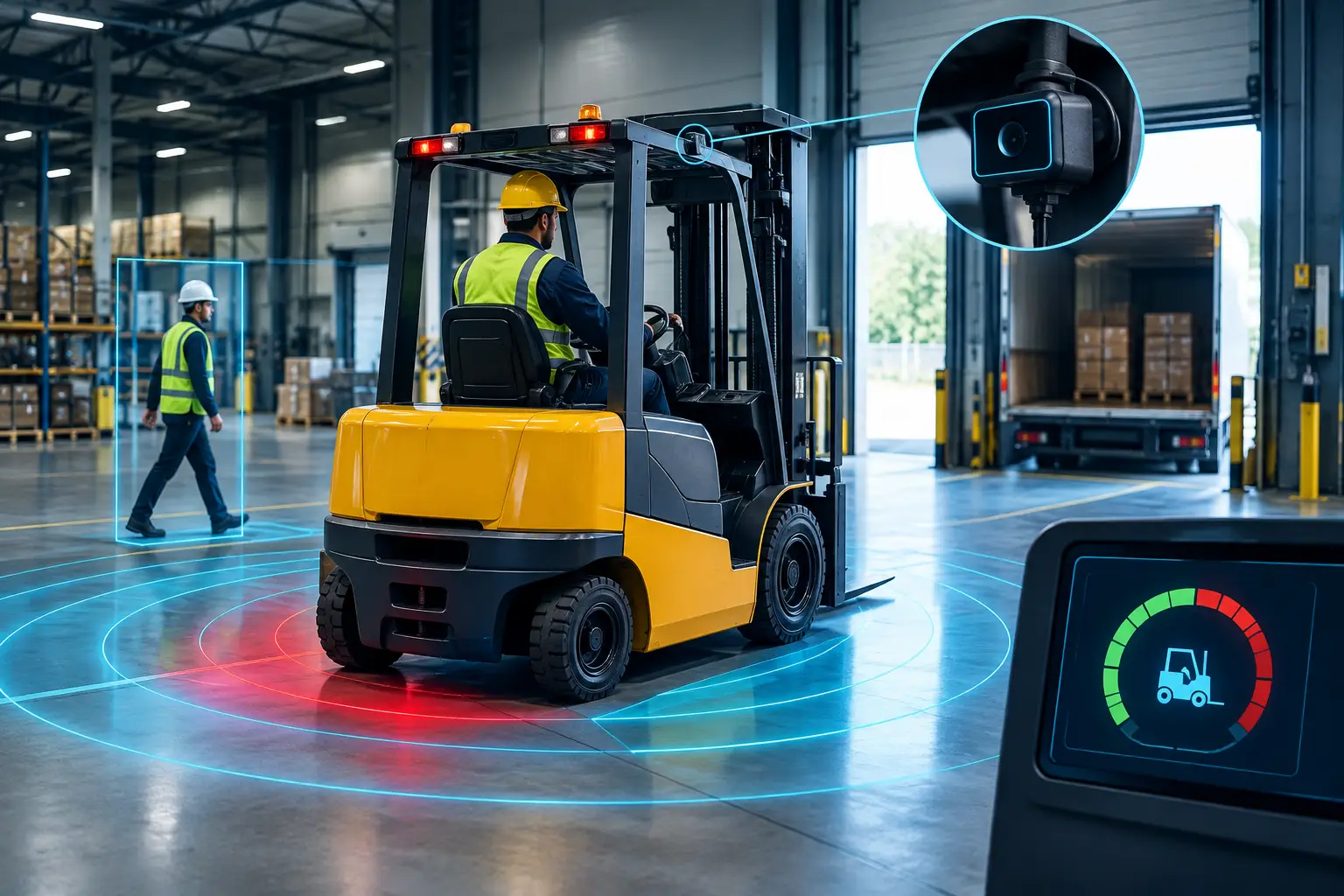
Modern forklift safety systems can apply different limits in different areas rather than restricting the truck to one permanent setting. These systems may use location-based controls, access points, sensors, or other site-specific triggers to reduce speed automatically when a forklift enters a higher-risk zone.
This is useful because operational risk changes throughout a facility. A forklift may need to travel efficiently along a controlled route, then slow automatically near a crosswalk, a production line, a charging area, or a loading bay. The operator does not need to remember every change in site conditions, and supervisors have a more consistent control in place.
Zoned speed control is especially helpful in facilities where layout changes, shift patterns, or production demand make manual enforcement difficult. It can support a clearer traffic plan by making the expected operating behavior visible and repeatable.
That said, automatic speed reduction must be engineered carefully. Limits should activate early enough to provide a controlled deceleration, particularly when forklifts carry loads. The system must also be suitable for the vehicle type, travel surface, and operating conditions. Abrupt or poorly configured intervention can affect load stability, operator confidence, and workflow.
Speed Limiters Work Best With Layered Controls
The strongest forklift safety programs do not ask one technology to solve every problem. They combine controls that reduce the chance of an incident with controls that reduce the consequences if one occurs.
For forklift and pedestrian areas, this often means separating travel routes wherever practical, using clearly marked crossing points, and installing barriers in locations where pedestrians should not enter. At blind corners, visual or audible warnings and safety floor projection can alert people before the forklift reaches the intersection. Proximity warning systems can add another layer where physical separation is not possible.
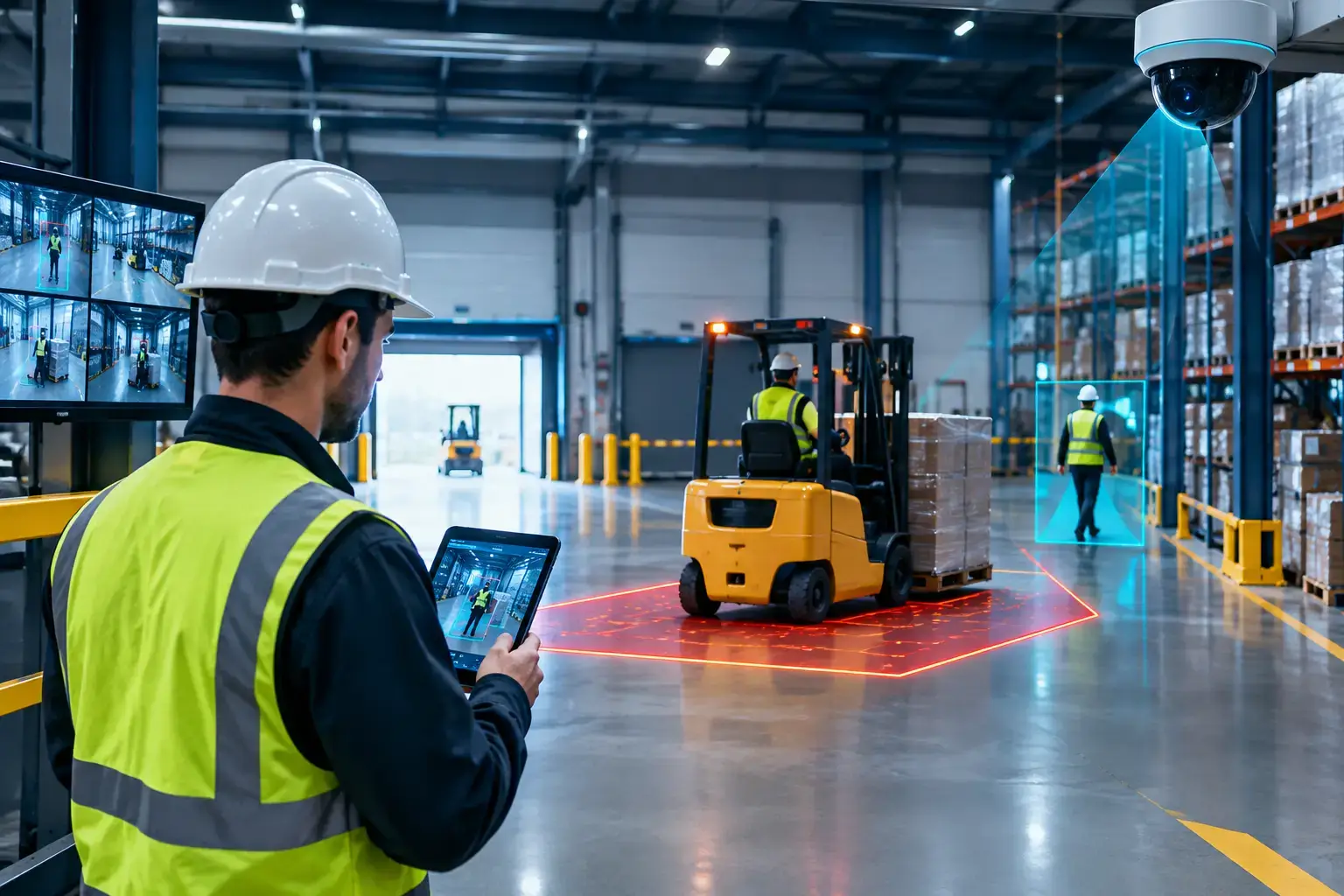
Vision AI safety monitoring can also help facilities understand whether speed is the main issue. It may reveal repeated near misses at a particular crossing, pedestrians taking shortcuts through a vehicle lane, operators failing to stop at intersections, or congestion during a specific part of the shift. Those findings allow the safety team to target the underlying condition instead of lowering speeds across the entire facility.
Training and supervision remain essential. A limiter should reinforce safe operating standards, not create a false sense of security. Operators still need to adjust speed for wet floors, uneven surfaces, unstable loads, restricted visibility, and people working nearby. A truck traveling below its maximum permitted speed can still be moving too fast for the immediate conditions.
How to Decide Whether a Speed Limiter Is the Right Control
Start with incident data, near-miss reports, and direct observation of forklift routes. Look for recurring damage locations, areas where operators brake sharply, points where pedestrians and forklifts regularly cross, and tasks that require frequent reversing or tight turns. A practical assessment should involve operators as well as EHS, engineering, and operations teams. Operators often know where visibility, congestion, and delivery pressure create real risk.
Then identify the specific problem. If forklifts routinely enter a busy crossing too quickly, zoned speed control may be highly effective. If a pedestrian walkway runs directly beside a travel lane with no separation, barriers and route redesign may provide a greater reduction in risk. If collisions happen because trailers move unexpectedly at the dock, vehicle restraint and loading bay controls should take priority.
Before implementation, establish what success looks like. Useful measures include reductions in speeding observations, harsh braking events, near misses, equipment damage, and traffic-related downtime. Review these results after installation and adjust speed settings if the control is either too restrictive or not sufficiently reducing exposure.
Maintenance matters as well. Limiters, sensors, warning devices, and supporting infrastructure need inspection and testing as part of the facility’s safety management process. A safety control that is bypassed, poorly calibrated, or no longer aligned with the site layout cannot deliver reliable protection.
The Practical Verdict on Forklift Speed Limiters
Forklift speed limiters are effective at reducing excessive speed and making vehicle movement more predictable. They are not a complete collision-prevention strategy. Their greatest value comes when they are targeted at high-risk zones and supported by pedestrian segregation, clear traffic rules, warning technology, competent operator practices, and regular review.
Every worker deserves to return home safely every day. Start by examining where people and forklifts share space, then apply the control that addresses the hazard at its source. A well-set speed limiter can be a meaningful part of that solution, but the safer facility is the one designed so that a single mistake does not become an accident.