A forklift camera system review should begin where incidents usually begin: at the point where an operator cannot clearly see a pedestrian, rack upright, load edge, or reversing path. Forklift cameras can reduce blind spots and improve maneuvering confidence, but a screen on the dashboard does not automatically create a safer operation. The right system must suit the vehicle, the task, the environment, and the specific risk identified in the facility.
For warehouse and plant leaders, the useful question is not simply, “Which camera has the best image?” It is, “Will this system help operators make safer decisions in the seconds that matter?” That distinction separates a practical safety control from an accessory that sees little real use.
What a Forklift Camera System Can Solve
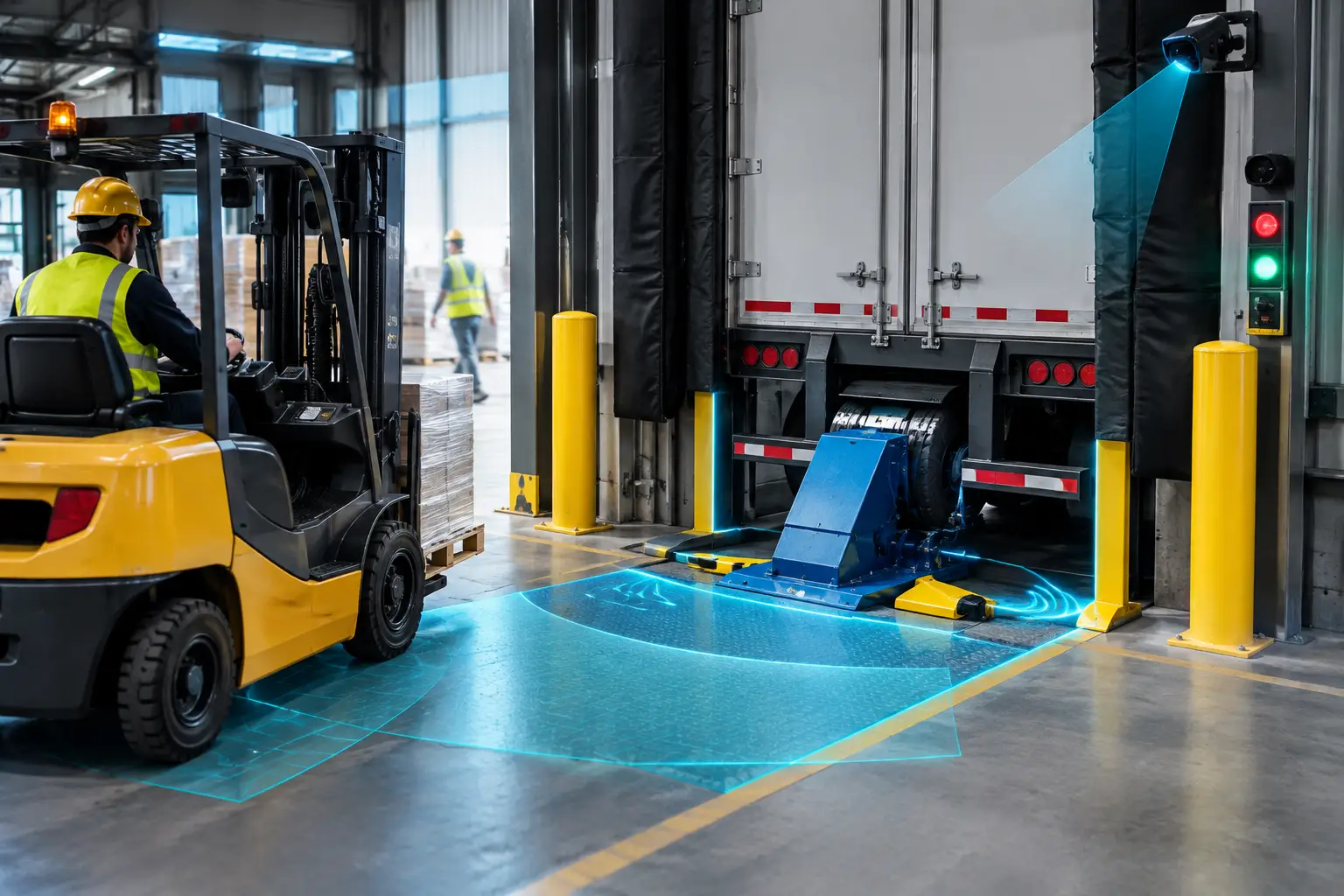
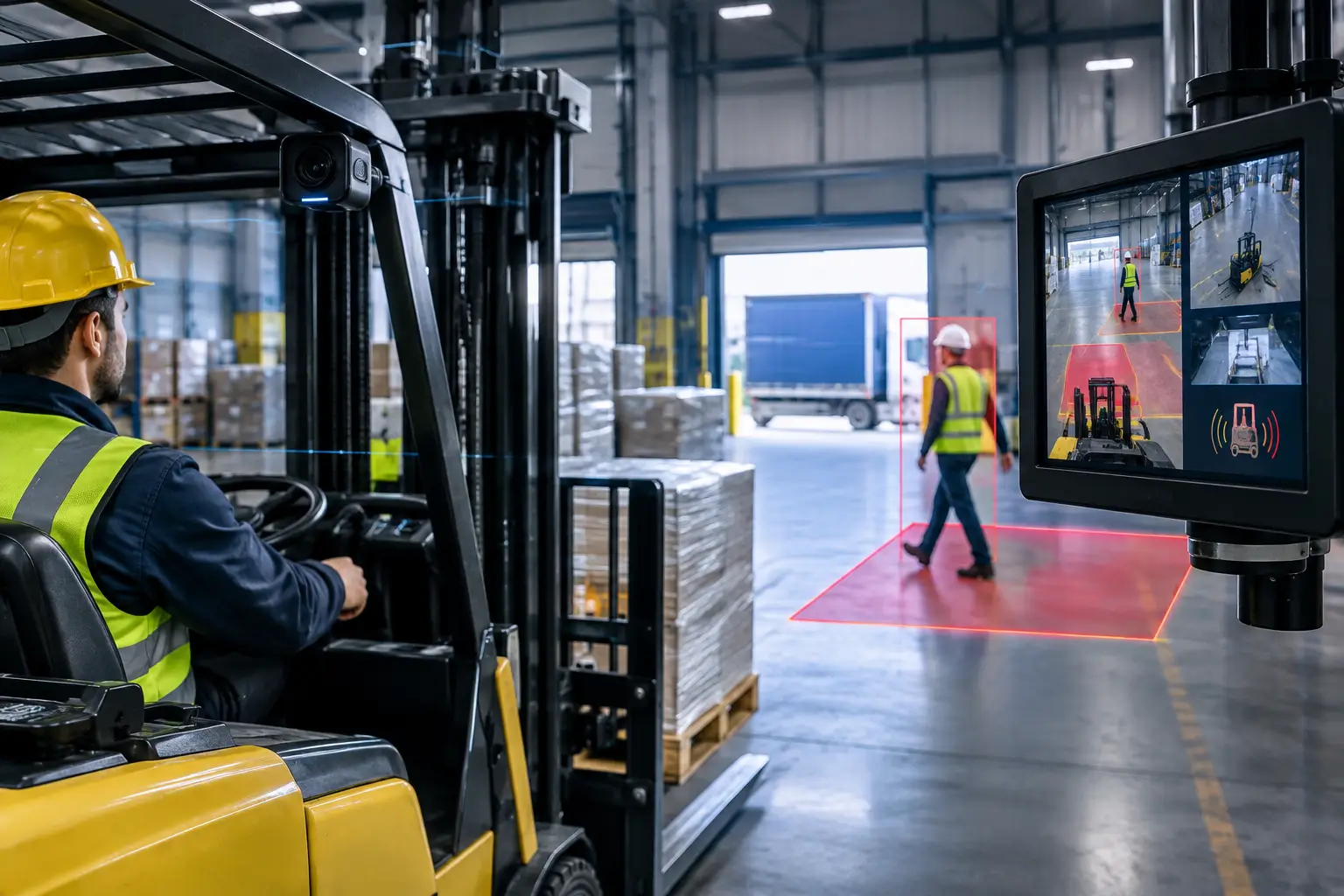
A forklift camera system gives the operator a view that mirrors alone cannot provide. Typical applications include rear-view visibility during reversing, forward-facing views where a carried load blocks sightlines, and fork-tip views for precise load placement at height. In loading bays, cameras can also help operators judge trailer entry, dock alignment, and clearance around dock equipment.
The value is strongest where visibility is repeatedly restricted by the job itself. A counterbalance forklift traveling in reverse with a high pallet, a reach truck placing stock in upper racking, or a machine working in narrow aisles all present different visibility challenges. A camera should be selected to address the task, not installed because it appears to be a general safety upgrade.
Cameras also protect operations beyond personal safety. Better visibility can reduce impacts with racking, doors, stock, trailers, and material handling equipment. Fewer minor collisions can mean less unplanned repair work, less disruption to picking or production, and a clearer record of disciplined vehicle operation.
Forklift Camera System Review: The Criteria That Matter
Image quality matters, but it is only one part of the assessment. A camera system used on industrial vehicles must remain usable through vibration, dust, glare, changing light, frequent washdown where applicable, and long operating hours. An excellent image in a product demonstration has limited value if the camera lens is constantly obscured or the monitor becomes unreadable in bright conditions.
Camera position and field of view
The camera location determines whether the system actually addresses the hazard. Rear-view cameras should provide a meaningful view of the travel path behind the truck, including low-level obstacles that may be hidden close to the counterweight. A forward-facing camera may be useful when a load blocks the operator’s direct view, while a fork-mounted camera can support accurate positioning in racking.
A wider viewing angle is not always better. Very wide lenses can make objects appear farther away than they are and may distort distances near the edge of the frame. The objective is a useful, interpretable image, not the largest possible picture. During a site assessment, the camera view should be tested with actual loads, normal travel routes, and the operators who perform the work.
Low-light performance and glare control
Many facilities have uneven lighting. Trailer interiors, staging zones, high-bay storage, and early-shift outdoor work can create sharp transitions between bright and dark areas. A camera should deliver a clear image in these conditions without excessive glare, washed-out highlights, or delayed adjustment when moving between light levels.
Infrared or low-light capability can improve visibility, but it should be evaluated under real operating conditions. A camera cannot compensate for inadequate workplace illumination, dirty lenses, or a route with poor traffic separation. It is one control within a broader safety plan.
Monitor design and operator usability
A monitor must be positioned where it can be checked naturally without obstructing the operator’s view or encouraging prolonged screen attention. If it is too low, too far away, or affected by reflections, operators may ignore it. If it is too prominent, it can distract from direct observation of the travel path.
The display should provide a sharp image with minimal lag. Even small delays can be problematic when a forklift is turning in a congested aisle or reversing near people. Controls should be simple enough for operators to understand quickly, and the system should start reliably with the vehicle rather than requiring a separate routine that is easily missed.
Durability, wiring, and maintenance
Industrial camera systems are exposed to shock, vibration, impacts, and contamination. Camera housings, connectors, brackets, cables, and mounting points deserve as much attention as the camera specification. Poor routing can leave cables exposed to mast movement, pinch points, or accidental damage during servicing.
Maintenance requirements should be realistic. A lens that needs regular cleaning may still be appropriate, but the task should be included in daily pre-use checks. Supervisors should also have a clear process for reporting damaged brackets, blurred images, intermittent signals, or loose monitor mounts. A camera that is installed but not maintained can create misplaced confidence.
Where Cameras Have Limits
A forklift camera expands visibility. It does not replace operator training, controlled travel speeds, clear pedestrian routes, or active awareness. Operators still need to look in the direction of travel, follow site traffic rules, sound warnings where required, and stop when the path is unclear.
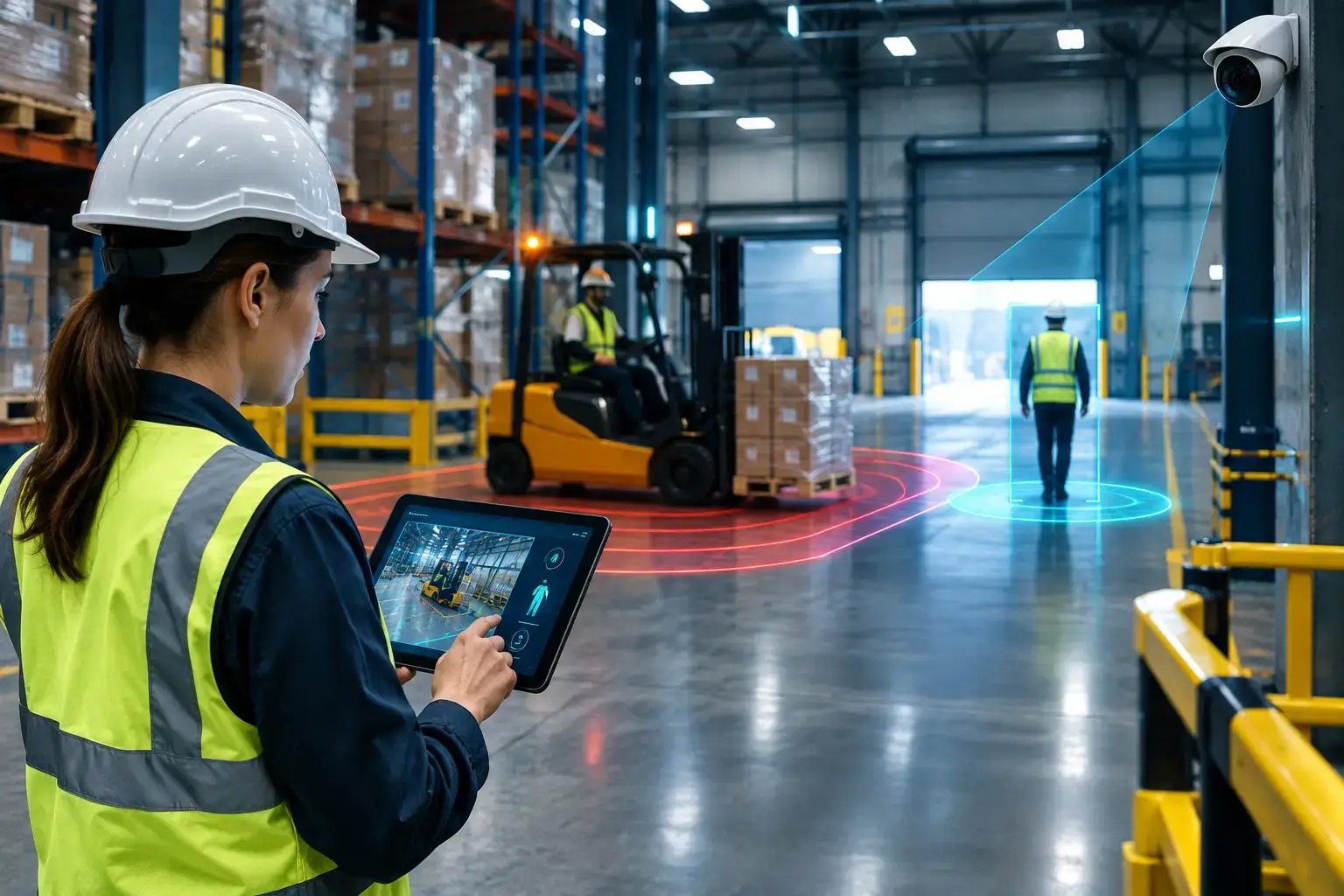
Most importantly, a standard camera system does not reliably detect a person and independently assess collision risk. In busy shared spaces, a camera may show a pedestrian only after the operator looks at the screen. That is why higher-risk forklift-pedestrian interfaces may require additional controls such as pedestrian segregation, projected warning lights, proximity alerts, or Vision AI safety monitoring.
The appropriate solution depends on the risk. For a forklift placing pallets at height, a fork camera may be the priority. For a truck reversing through a mixed-traffic staging area, rear visibility may need to be supported by warning systems and stronger traffic management. For blind intersections, facility-based alerts or detection technology may provide greater risk reduction than another vehicle-mounted camera.
Installation Is Part of the Safety Outcome
A technically capable camera can still fail as a safety control if installation is rushed. Before fitting equipment, assess the forklift model, mast configuration, load type, visibility restrictions, power supply, and the operating environment. Consider whether the camera location will be exposed to impact, whether the monitor interferes with controls or sightlines, and how the system will be serviced.
Installation should also account for the forklift manufacturer’s requirements and the vehicle’s operating integrity. Secure mounting, protected wiring, and proper commissioning reduce the risk of equipment failure and avoid creating new hazards. After installation, test the system with operators completing representative tasks rather than only checking the image while the vehicle is stationary.
A short operator briefing is essential. Operators should understand what the camera is intended to show, when to rely on direct observation instead, how to keep the lens clear, and how to report faults. This is not about adding complexity. It is about ensuring the technology supports consistent safe behavior.
How to Evaluate Value Beyond Purchase Price
The lowest-cost camera is rarely the lowest-cost option over its working life. Repeated replacement, cable repairs, poor image quality, downtime, and operator rejection can quickly outweigh the initial saving. Conversely, the most advanced system may be excessive where a simpler configuration fully addresses the documented hazard.
A practical evaluation considers incident history, near-miss reports, damage patterns, operating hours, fleet size, and the consequences of a collision. If the facility regularly experiences rack strikes during high-level placement, improved fork visibility may produce measurable reductions in damage and rework. If near misses occur during reversing around pedestrians, camera systems should be assessed as one layer in a wider collision-prevention strategy.
Procurement teams should also consider standardization across the fleet. Consistent monitor placement, camera views, maintenance procedures, and operator familiarization make a system easier to manage. Where different forklift types perform different roles, standardization does not mean identical equipment. It means a clear, repeatable approach to controlling each vehicle’s risks.
Choosing the Right System for the Task
The best forklift camera system is the one that solves a verified visibility problem without adding distraction, maintenance burden, or false confidence. Start with a focused risk assessment of routes, loads, blind spots, pedestrian interactions, and recurring damage points. Then test the proposed solution in the actual operating environment before committing across the fleet.
Every worker deserves to return home safely every day. A well-specified camera system can help make that outcome more likely when it is treated as part of a disciplined safety program, supported by sound traffic management, trained operators, and controls that match the risks on the floor.