A forklift can move a pallet in seconds, but one blocked sightline, unstable load, or unexpected pedestrian can change the outcome just as quickly. This top forklift safety checklist gives warehouse and operations leaders a practical way to control the risks that arise before, during, and after every shift. It is not paperwork for paperwork’s sake. A well-run inspection and traffic-control process prevents injuries, avoids costly damage, and keeps operations moving.
Why a forklift checklist needs more than a vehicle inspection
Daily pre-use inspections are essential, but a safe forklift operation depends on more than the condition of the truck. The operating environment matters just as much: pedestrian movement, rack layout, floor conditions, dock edges, trailer stability, lighting, and the way loads are prepared all influence risk.
A checklist should therefore work at two levels. Operators need a consistent pre-shift process that confirms the forklift is safe to use. Supervisors and EHS teams need a broader control process that identifies repeat hazards, weak traffic segregation, and locations where equipment, people, and vehicles are coming too close.
If the same issue appears repeatedly – damaged pallets, blocked aisles, speeding at intersections, or poor visibility near staging areas – treat it as a system failure, not an individual oversight. Correcting the underlying condition is more effective than repeatedly reminding operators to be careful.
Top forklift safety checklist: pre-shift vehicle checks
The inspection should be completed at the start of each shift and whenever an operator takes over a different forklift. Use the manufacturer’s operating guidance and the site’s risk assessment to define acceptable conditions. If a critical control is defective, tag the unit out of service and escalate it promptly.
1. Verify the forklift’s basic operating condition
Begin with a walk-around before starting the truck. Check for visible leaks, loose components, damaged tires or wheels, cracked forks, worn fork heels, and distortion in the mast, carriage, chains, or overhead guard. Confirm that the data plate is present and legible, as it defines the truck’s approved capacity and configuration.
For electric forklifts, inspect the battery condition, connectors, cables, and restraint. For internal-combustion units, check fluid levels and look for fuel-system leaks. Battery charging and refueling areas should be controlled separately, with clear access and no ignition risks introduced into the work area.
2. Test controls, warnings, and visibility aids
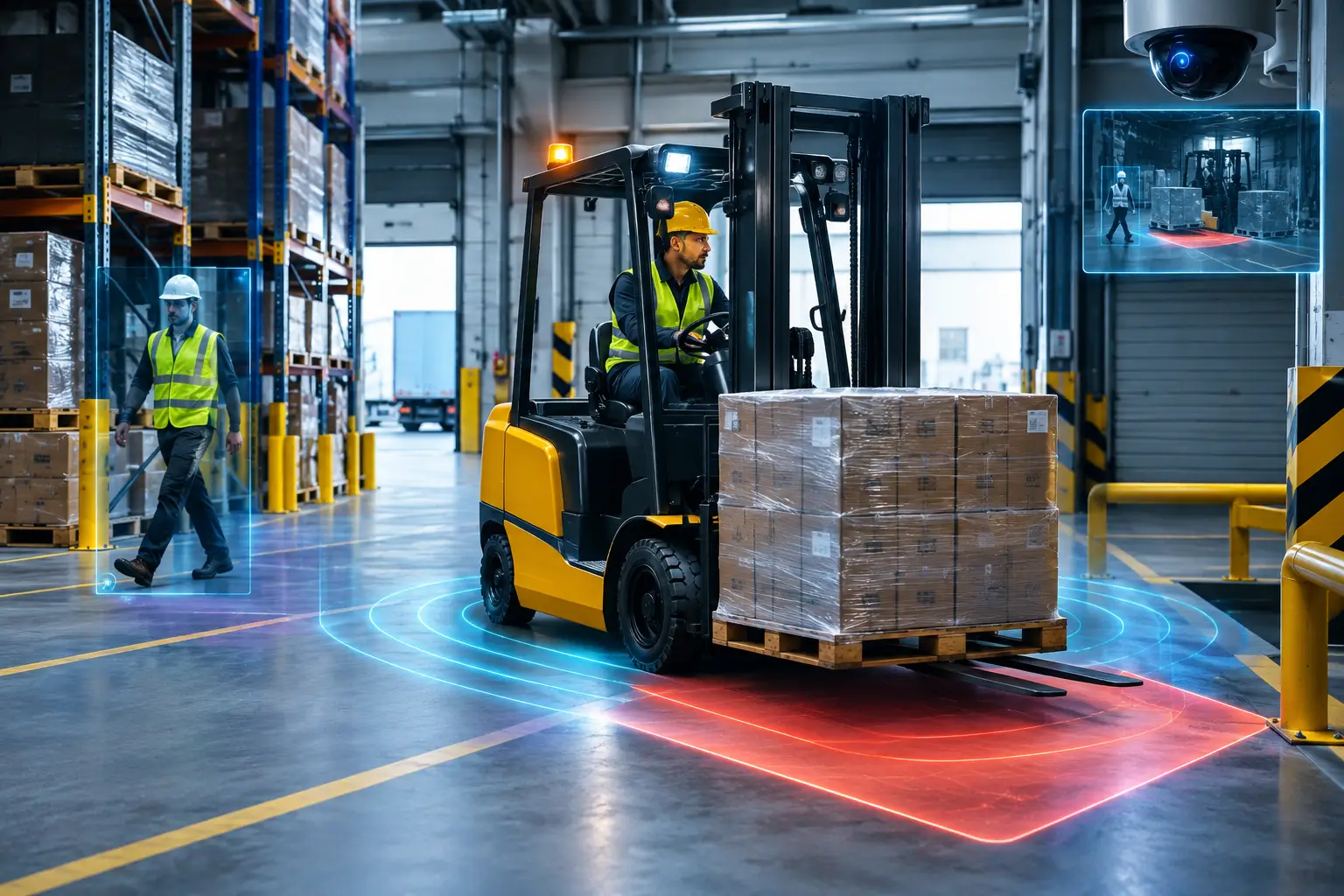
Once seated and properly restrained, test steering, brakes, parking brake, horn, lights, reverse alarm, and any fitted warning devices. Check lift, tilt, side-shift, and other hydraulic functions without a load. Mirrors, cameras, blue spotlights, red-zone projection, and proximity warning systems should be clean, visible, and functioning as intended.
Technology supports operator awareness, but it cannot compensate for unsafe behavior or poor site layout. A camera may improve rear visibility, for example, while a blind intersection still requires speed control, warning alerts, and pedestrian separation.
3. Confirm forks and attachments match the task
Forks must be evenly positioned, secured, and free from cracks, bends, excessive wear, or unauthorized repairs. Verify that any attachment is approved for the forklift and that the revised capacity information is available to the operator. A clamp, rotator, extension, or work platform can significantly alter load center, visibility, and stability.
Do not assume a load is safe because it fits physically between the forks. Its weight, dimensions, center of gravity, packaging condition, and lifting points all affect stability. When the load is uncertain, stop and verify it before lifting.
Checklist for safe loads and travel
Many forklift incidents occur while the truck is moving rather than while lifting. This part of the checklist should be reinforced through supervisor observation and routine traffic reviews, particularly during busy receiving, dispatch, and replenishment periods.
4. Inspect every load before lifting
Check that the pallet is sound, the load is stable, and the product is not overhanging in a way that could strike racking, pedestrians, or other vehicles. Damaged pallets, loose shrink wrap, uneven stacking, and unsecured long loads need correction before travel. Never use the forks to push, pull, or stabilize a load in an improvised manner.
Position the forks fully under the load where possible, lift only high enough to clear the floor, and tilt the mast back as appropriate for stable travel. Keep the load low while moving. Travel in reverse where the load blocks forward visibility, while ensuring the operator maintains a clear path and follows site rules for reversing.
5. Control speed, turning, and stopping distance
Speed limits are only effective when they reflect real operating conditions. A dry, open aisle may permit different travel behavior than a congested cross-aisle, cold-store entrance, ramp, or wet loading area. Operators must slow down for turns, uneven surfaces, doorways, restricted visibility, and areas shared with pedestrians.
Avoid sharp turns, sudden braking, and abrupt changes in direction. These actions can destabilize a load or contribute to a tip-over. Operators should never jump from a tipping forklift. The seat belt or restraint system is a primary protection because it helps keep the operator within the protective zone of the overhead guard.
6. Keep aisles and rack interfaces clear
Aisles should provide enough width for the truck, load, and safe clearance from racking and stored goods. Keep travel routes free of discarded pallets, debris, temporary staging, and damaged product. Small obstructions can force an operator toward a rack upright or into an adjacent pedestrian route.
Recurring rack strikes deserve immediate investigation. They may indicate poor aisle design, inadequate turning space, inconsistent pallet placement, poor lighting, or a need for physical rack protection. Repainting floor lines alone rarely solves a layout problem.
Pedestrian and forklift separation checklist
The highest-risk areas are often where people and forklifts must work close together: picking zones, cross-aisles, production interfaces, battery rooms, entrances, and loading bays. The preferred control is physical separation, not reliance on eye contact or hand signals.
7. Define routes, crossings, and exclusion zones
Mark dedicated pedestrian walkways and forklift lanes clearly, but support markings with barriers, guardrails, gates, or other physical controls wherever practical. Designated crossings should be limited, well-lit, and positioned where both parties have sufficient sight distance.
At blind corners and doorways, consider convex mirrors, projected warning lights, audible alerts, and speed-control measures. For higher-risk areas, proximity warning systems or Vision AI monitoring can provide an added layer of detection and intervention. The right technology depends on the site: a busy mixed-use aisle may require a different solution than a controlled high-bay storage zone.
8. Remove assumptions from communication
Pedestrians should not walk behind, beneath, or alongside a forklift that is maneuvering a load. Operators should not proceed until they have confirmed the travel path is clear. Eye contact can help, but it is not a dependable control in noisy or fast-moving operations.
Set clear rules for contractors, visitors, and office staff entering operational areas. They may not understand right-of-way procedures, vehicle blind spots, or restricted zones. A brief site induction and controlled access are practical safeguards.
Loading bay and trailer checks
Loading bays combine forklift movement, changing floor levels, pedestrian activity, and third-party vehicle operations. A dock incident can result from a simple breakdown in coordination, such as a truck departing while loading is still underway.
9. Secure the vehicle before entry
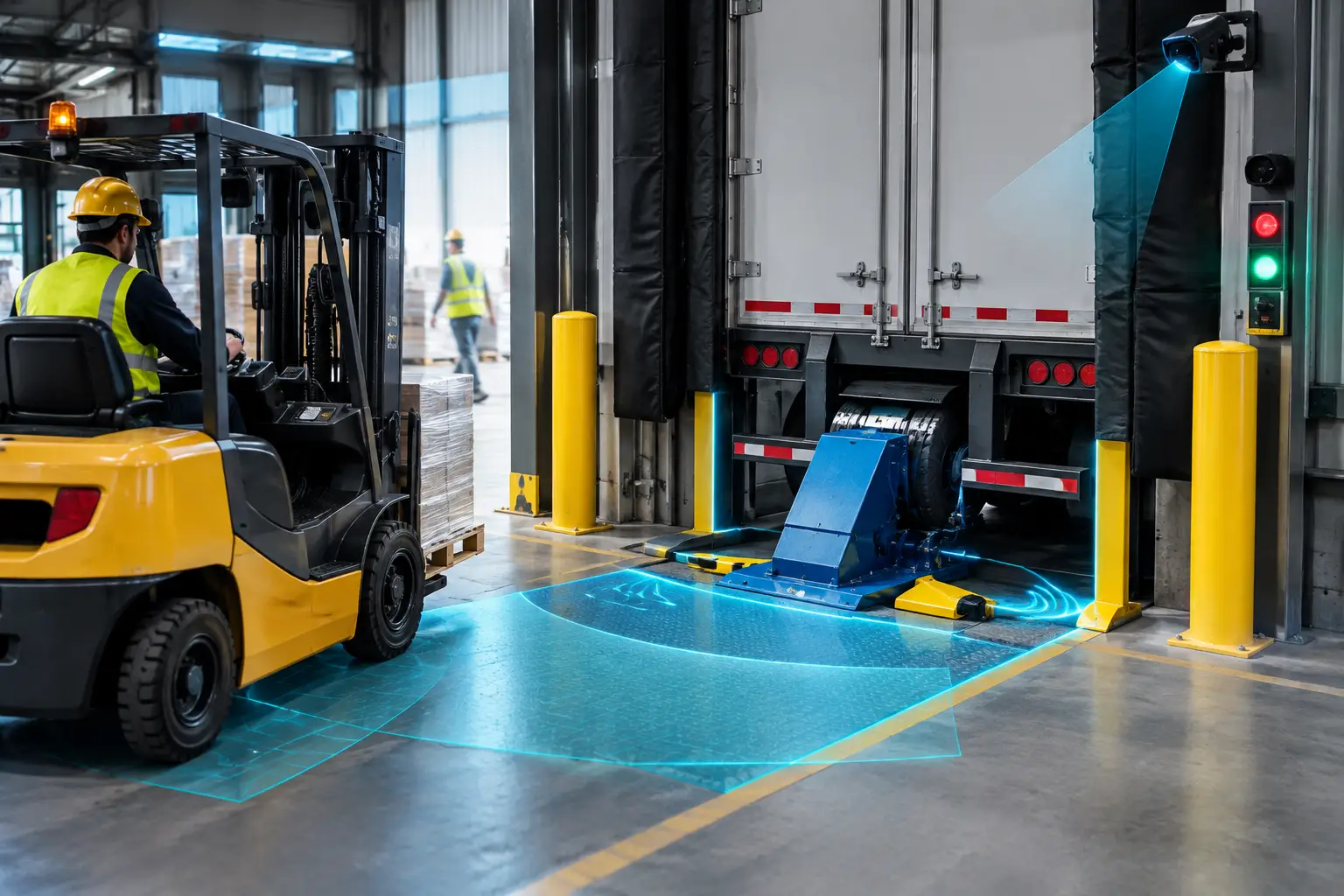
Before a forklift enters a trailer, confirm that the vehicle is secured using the site’s approved process. Depending on the bay and vehicle type, this may include a vehicle restraint system, wheel chocks, dock lock, trailer stand, and clear driver communication. The method must prevent premature departure and reduce trailer movement during loading.
Inspect the dock plate or leveler, trailer floor, and trailer condition before use. Ensure adequate lighting inside the trailer and check for gaps, damage, moisture, or load shift. Do not enter a trailer that cannot safely support the combined weight of the forklift and load.
10. Review incidents, near misses, and damage trends
A checklist delivers value only when findings lead to action. Supervisors should record defects, near misses, rack impacts, pedestrian encroachments, and dock events in a consistent format. Review patterns weekly or monthly, then assign ownership and deadlines for corrective work.
This is where safety technology can provide stronger evidence. Vision AI monitoring, impact detection, and intelligent warning systems can identify recurring behaviors or high-risk locations that routine observations may miss. Use the data to improve route design, coaching, maintenance priorities, and investment decisions – not simply to measure activity.
Make the checklist part of operational control
A forklift safety checklist should be short enough for operators to use faithfully and detailed enough to identify genuine risks. Digital forms can improve completion records and escalation speed, while paper systems may still suit smaller operations with disciplined supervision. The better option is the one your team will complete accurately and act upon every day.
Accidents happen. But many forklift incidents are preventable when equipment condition, load handling, pedestrian separation, and loading-bay controls are managed together. Every worker deserves to return home safely every day, and each completed check is an opportunity to make that outcome more certain.