A pallet moved without a driver is not automatically a safer pallet move. Forklift automation changes how materials travel through a facility, but it also changes where risks appear. A vehicle that follows a programmed route can still encounter a person, a misplaced pallet, a blocked aisle, or an unexpected loading activity. The objective is not simply to automate transport. It is to design a safer operating system around it.
For warehouse, manufacturing, and logistics leaders, the strongest case for automation is often consistency. Automated forklifts can handle repetitive, predictable movements with greater schedule discipline and less dependence on manual travel. Yet the safety outcome depends on the quality of the site design, traffic management, sensing technology, and daily operating controls that support the vehicle.
What Forklift Automation Changes on the Floor
Forklift automation generally includes automated guided vehicles (AGVs), autonomous mobile robots (AMRs), and automated forklift systems that transport, stack, retrieve, or transfer loads with limited human intervention. Some follow fixed guidance such as magnetic tape, reflectors, or mapped routes. Others use sensors and onboard navigation to adapt their path within defined operating areas.
This can reduce exposure to several familiar risks: repetitive manual driving, inconsistent travel paths, speeding, sharp turning, and operator fatigue during high-volume transport tasks. Automated vehicles can also create more predictable material flow between receiving, production, storage, and dispatch areas.
However, predictability is not the same as safety. A manual forklift operator can make judgments based on eye contact, hand signals, unusual noise, or a worker stepping into an aisle. An automated vehicle responds only to the conditions it can detect, interpret, and act upon. That distinction must shape the safety strategy.
A successful project starts by identifying which movements are suitable for automation. Repetitive point-to-point pallet transport in a controlled area is often a stronger first application than mixed traffic work in congested staging zones. Activities involving irregular loads, frequent route changes, poor floor conditions, or high pedestrian interaction may require additional controls or may remain better suited to trained manual operators.
Forklift Automation Needs a Traffic Plan, Not Just Technology
Automated vehicles must operate within a clear set of physical and operational rules. Without them, efficiency gains can be lost to frequent stops, route conflicts, near misses, and uncertainty among workers.
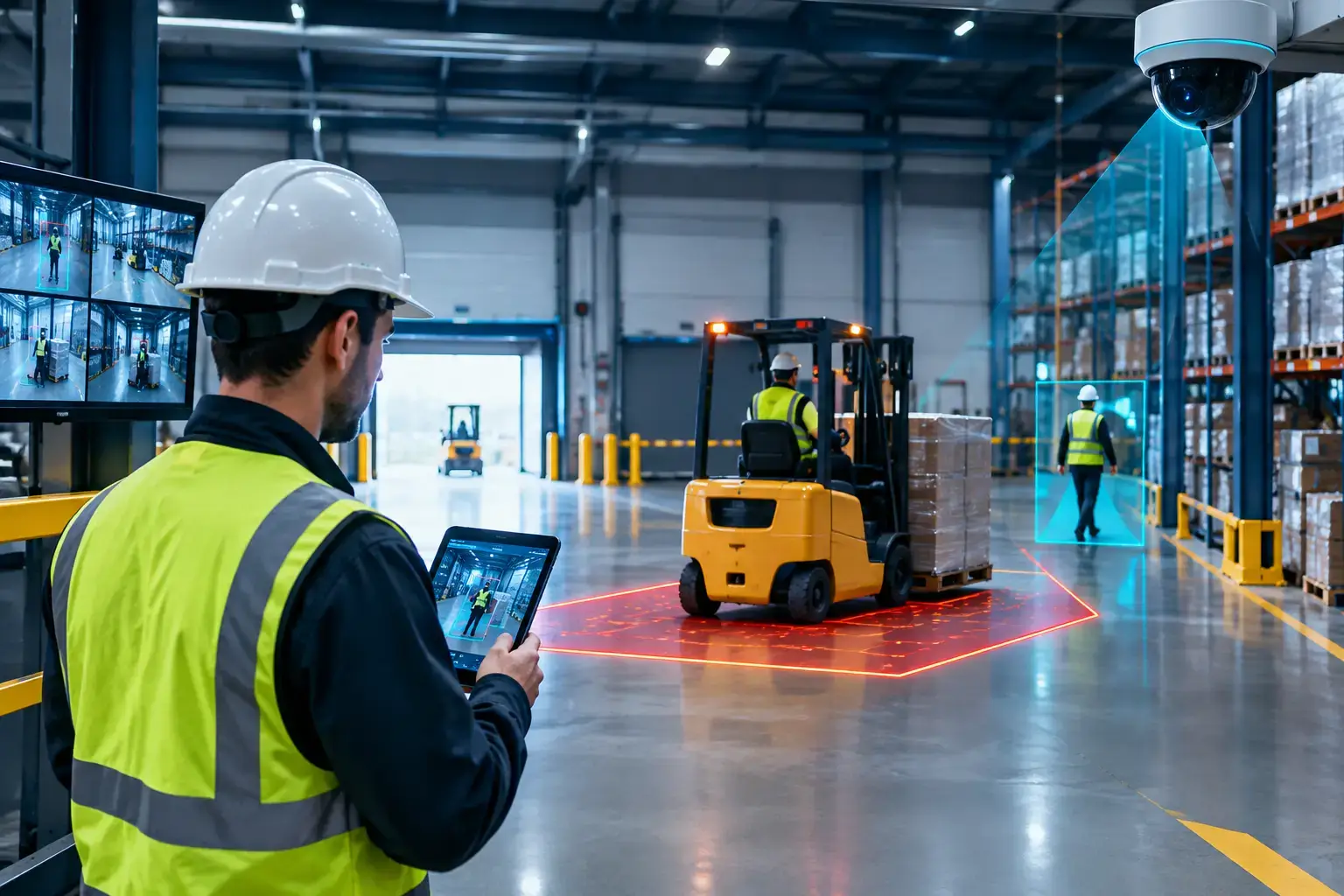
Start with the travel route. Separate automated vehicle lanes from pedestrian walkways wherever practical, especially at crossings, doorways, workstations, and blind corners. Physical safety barriers, guardrails, and rack protection can prevent people or other vehicles from entering restricted travel zones unintentionally. Floor markings and projected safety zones can reinforce the boundary, but visual markings alone are rarely enough in busy facilities.
Crossings deserve particular attention. A worker may assume an automated forklift will always stop, while the vehicle may be approaching with a load that affects its stopping distance or sensor coverage. Clearly marked crossing points, active visual warnings, audible alerts, and controlled access help create a shared understanding of who has priority and when it is safe to enter.
Intersections should also be designed for visibility. Mirrors, warning lights, projected symbols, and speed controls can reduce surprises where fixed structures, racking, or stored goods obstruct sightlines. In higher-risk areas, intelligent warning systems can alert both pedestrians and vehicle operators when a potential interaction is developing.
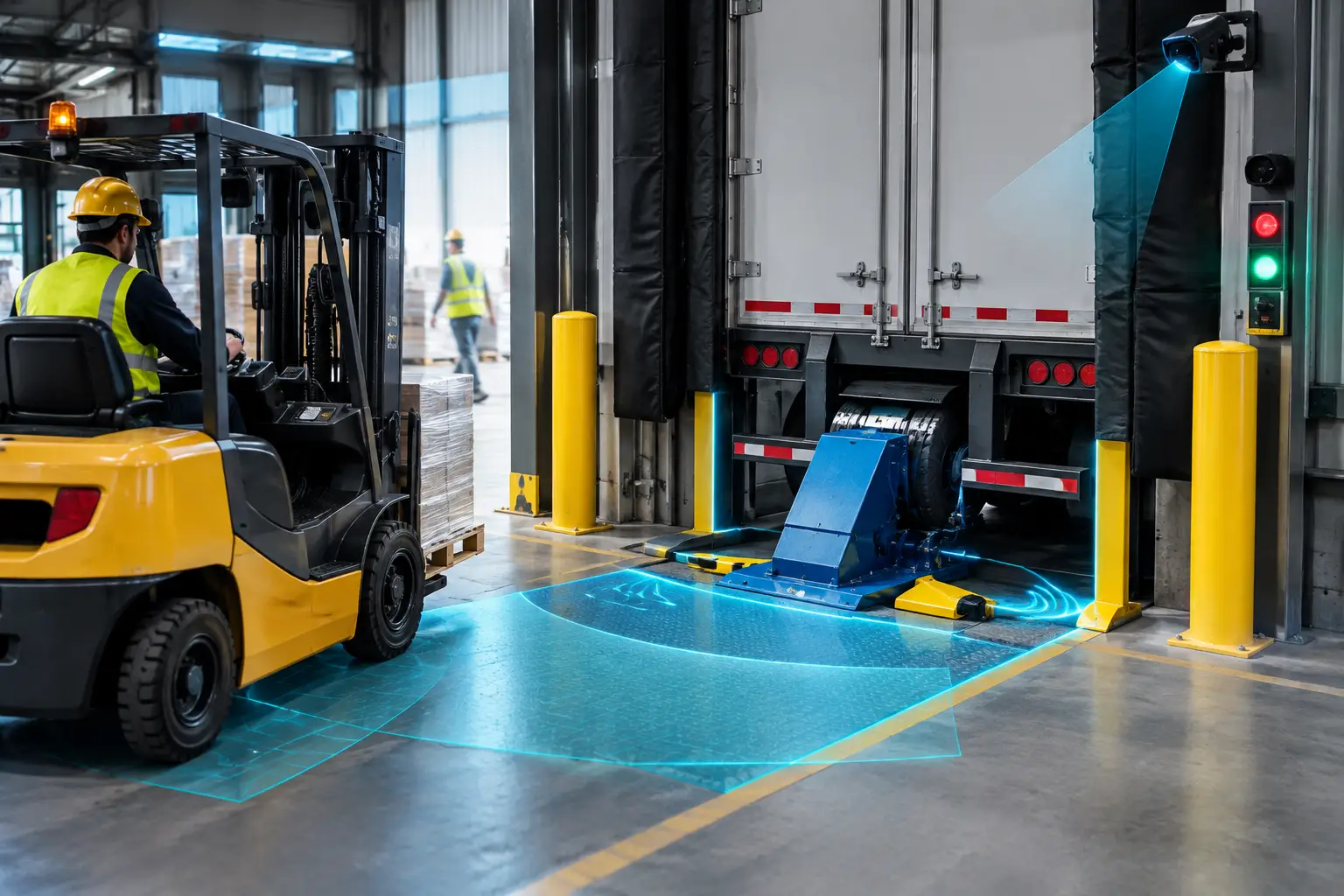
Loading bays require their own review. Automated transport may deliver pallets to a staging area, but trailer loading, dock approach, and vehicle restraint activities still introduce changing conditions. The movement of trucks, opening of dock doors, and presence of drivers or loading teams must be coordinated with the automated workflow. A route that is safe during normal storage operations may become hazardous during peak dispatch periods.
Pedestrian Protection Must Be Designed Into the System
Pedestrian interaction remains one of the most serious concerns in forklift environments. Automation can reduce some driver-related risks, but it does not remove the need to protect people from moving equipment.
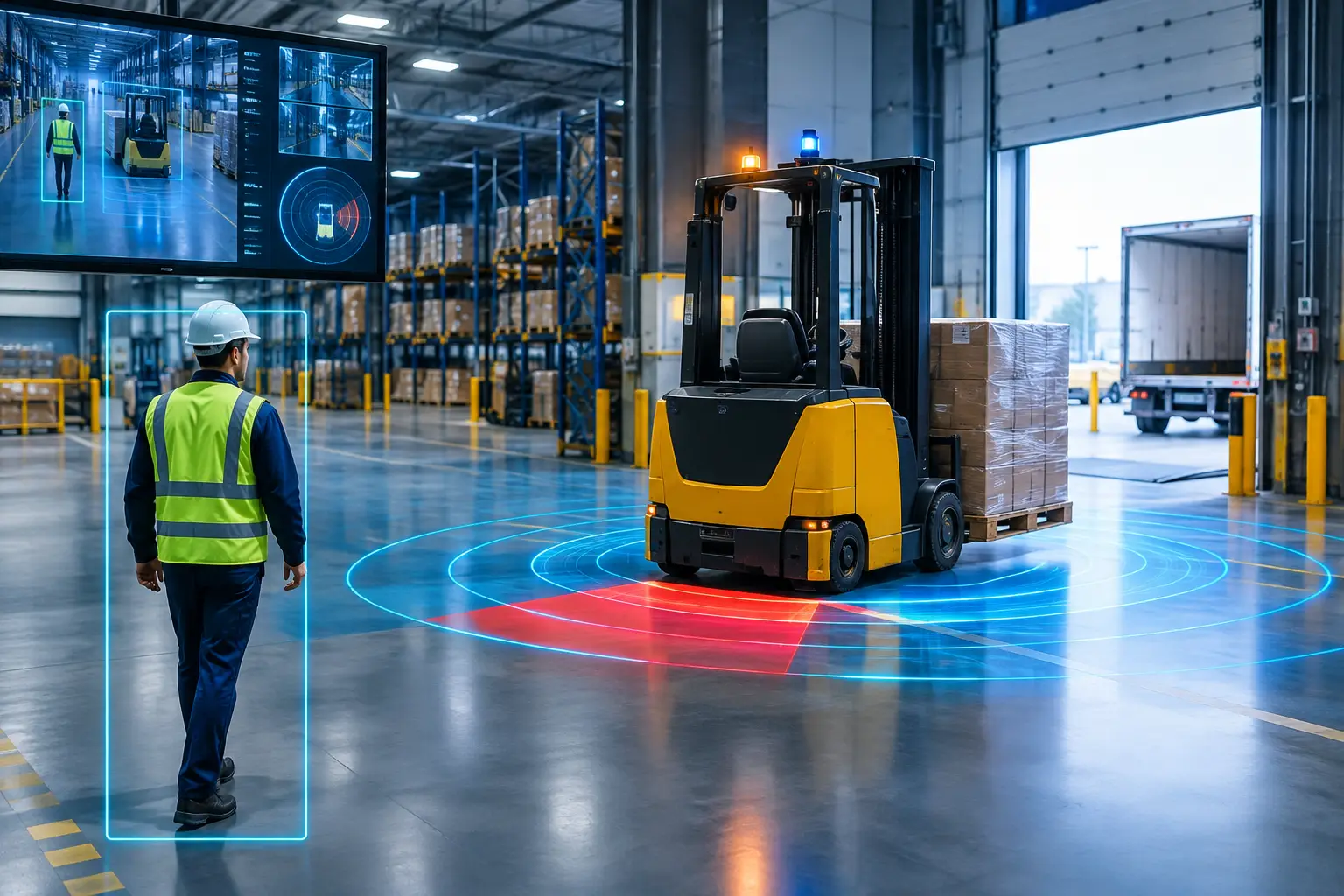
Automated forklifts typically use laser scanners, cameras, sensors, or other detection technologies to identify obstacles. These systems are valuable, but their effectiveness depends on configuration, maintenance, environmental conditions, and the vehicle’s operating speed. Dust, glare, damaged reflectors, floor debris, unusual load profiles, and blind spots can affect how reliably a hazard is detected.
This is why layered protection is more reliable than a single safeguard. Facility design should combine segregation, speed management, warning systems, and worker procedures. In areas where separation is difficult, proximity warning technology and Vision AI safety monitoring can add another level of awareness by identifying unsafe interactions or restricted-zone entries before they become incidents.
The goal is not to make workers responsible for avoiding automated vehicles at all times. The system should make the safe action obvious and supported by the environment. Workers need to know which areas are restricted, how vehicles signal their movement, what happens when a vehicle stops, and how to report an abnormal condition without entering a hazardous zone.
The Safety Case Depends on Load and Environment
A forklift without a load behaves differently from one carrying a high, wide, unstable, or irregular pallet. Automated operation does not change basic load stability principles. It may introduce new concerns when sensors are partially obscured by the load, when pallet quality varies, or when the vehicle must operate near racking and fixed equipment with limited clearance.
Before deployment, assess the real loads moving through the facility, not only ideal pallet specifications. Consider overhang, wrapping, damaged pallets, variable weights, and changes in load height. If the automated forklift will interface with conveyors, stretch wrappers, production lines, or dock staging areas, the handoff points require careful engineering and testing.
Floor condition is equally important. Uneven surfaces, ramp transitions, drainage channels, debris, and poor traction can affect travel accuracy and braking performance. Automated systems should be evaluated across actual operating conditions, including peak activity periods, not only during a clean demonstration route.
Facilities also need a practical plan for exceptions. What happens when a pallet falls, a route is blocked, a battery needs service, or the system identifies an object it cannot classify? Workers should not improvise around a stopped vehicle. Clear escalation procedures, authorized intervention roles, and safe isolation methods keep a minor disruption from becoming a serious event.
Safe Forklift Automation Requires People to Be Prepared
Automation changes jobs, responsibilities, and decision-making. Operators may become system monitors. Supervisors may need to manage automated traffic alongside conventional forklifts. Maintenance teams may take on responsibilities for sensors, safety scanners, charging areas, and software-related fault conditions.
Training should reflect these changes. It should cover normal operating behavior, warning signals, restricted zones, emergency-stop locations, response to vehicle faults, and the rules for interacting with an automated forklift. Teams also need to understand what not to do, including stepping around safety barriers, moving route markers, placing materials in travel lanes, or attempting to restart equipment without authorization.
Engaging workers early improves both safety and adoption. The people who work near automated routes can identify blind corners, unofficial shortcuts, seasonal congestion, and process variations that may not appear on a layout drawing. Their input helps turn a technically capable system into one that works safely in daily operations.
Measuring Whether Automation Is Actually Reducing Risk
Productivity measures matter, but they do not tell the whole safety story. A faster transport cycle is not a success if it increases pedestrian exposure or creates frequent emergency stops. Organizations should monitor leading indicators such as restricted-zone entries, near misses, route obstructions, manual interventions, safety scanner activations, and recurring fault locations.
These data points reveal where the process is under stress. Repeated vehicle stops at one intersection may indicate poor pedestrian flow. Frequent obstacle alerts near a workstation may show that staging practices need to change. A pattern of manual overrides may signal that the route or operating rules do not match reality.
Periodic review is essential because warehouses do not remain static. Racking layouts change, production volumes shift, temporary storage expands, and new employees join the operation. Safety controls that were effective at commissioning can become inadequate as the facility evolves.
SysGuard approaches warehouse safety as an engineered operating environment, where vehicle technology, pedestrian protection, visual warnings, barriers, and site procedures must work together. The right solution is rarely the most automated option. It is the one that reduces exposure to harm while supporting a reliable flow of work.
Every worker deserves to return home safely every day. When forklift automation is planned around that responsibility, it can become more than a productivity investment. It can help create a warehouse where movement is predictable, hazards are controlled, and safety is built into every route.