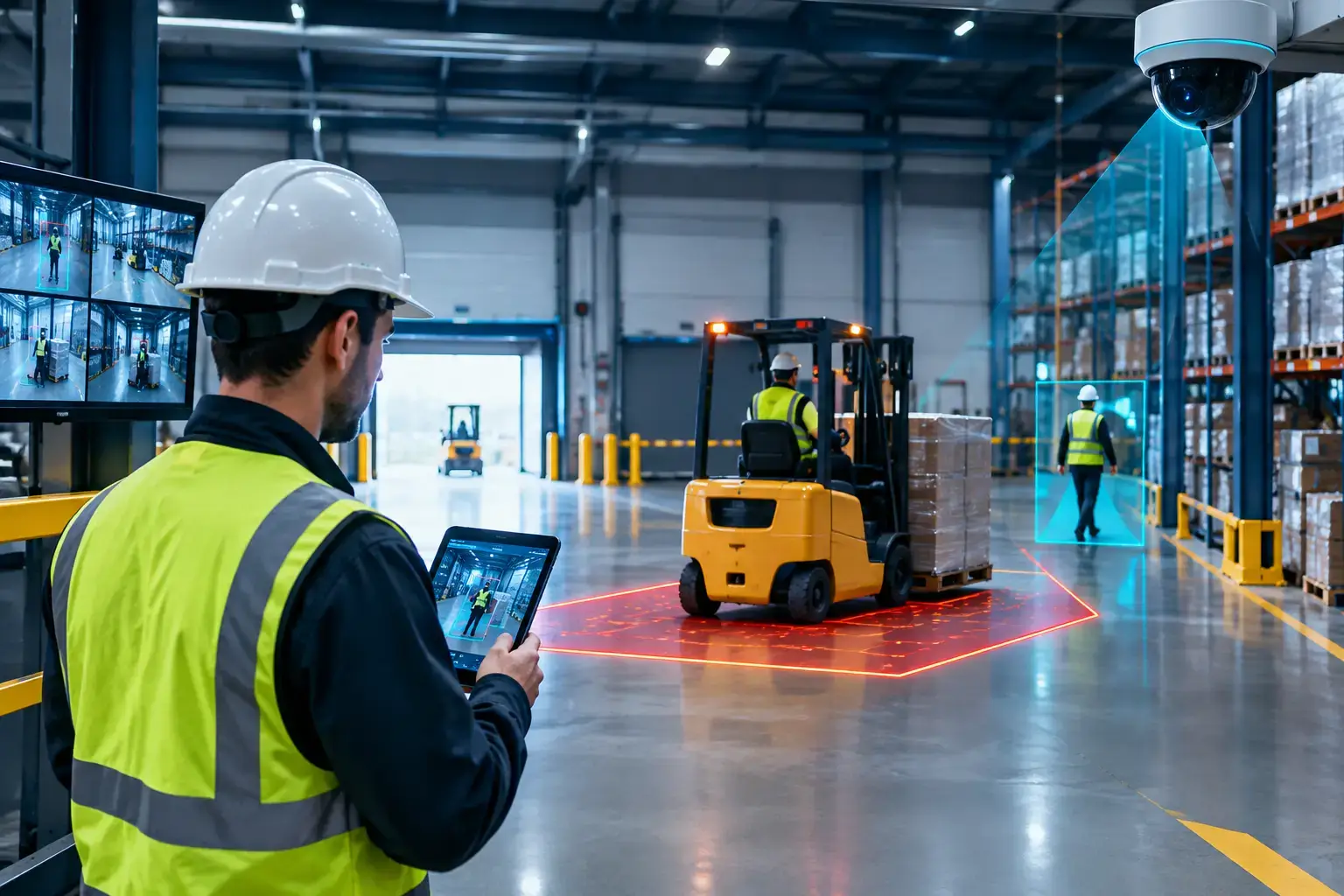
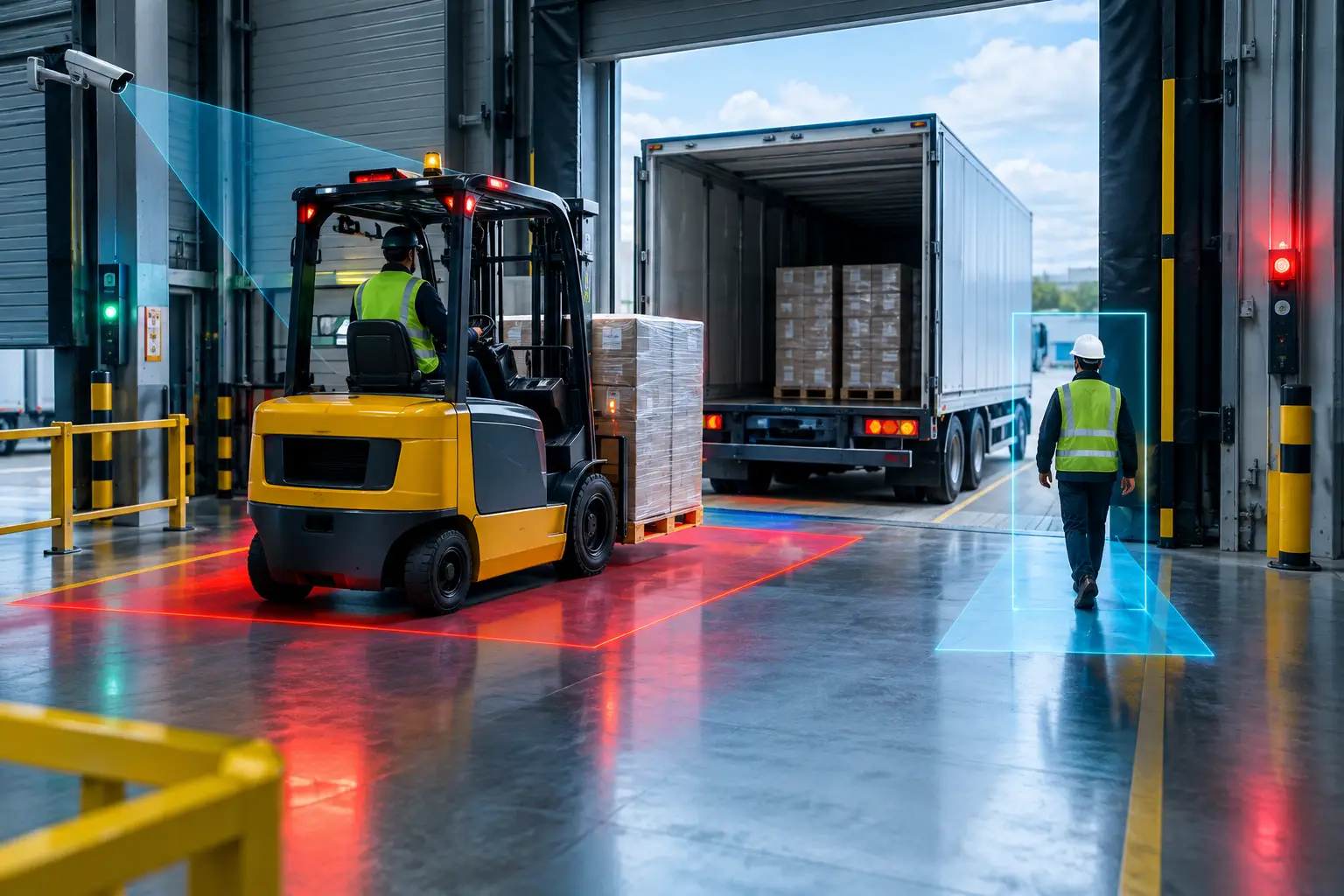
A loading bay can look controlled right up to the moment a trailer moves unexpectedly. A forklift is inside, the dock leveler is in use, and a worker is crossing the threshold. One premature departure, trailer creep event, or communication failure can turn a routine transfer into a serious incident. Smart dock technology addresses this gap by connecting vehicle restraint, dock controls, warning signals, and operating status into a coordinated safety process.
For warehouse and facility leaders, the objective is not simply to add more equipment at the dock. It is to prevent conflicting actions before people, forklifts, products, and infrastructure are exposed to risk. The right system makes safe actions easier to follow and unsafe actions harder to take.
Why Loading Bays Need Better Controls
Loading bays bring together several moving elements that do not naturally operate at the same pace. Trucks arrive and depart according to transport schedules. Forklift operators work to loading targets. Dock personnel open doors, operate levelers, and manage paperwork. Drivers may be waiting, resting, or preparing to leave. Without clear controls, each party may assume the bay is ready when it is not.
Trailer movement is one of the most serious hazards. A vehicle can pull away early, creep away from the dock under repeated forklift traffic, or shift because its brakes are not effectively applied. When this happens, the gap between trailer and building can open suddenly. A forklift, load, or worker can fall from the dock edge, while the facility may also sustain expensive damage to doors, bumpers, levelers, and dock structures.
Other common risks include forklifts entering an unsecured trailer, dock doors being opened before a vehicle is correctly positioned, and a loading operation continuing when the trailer condition is not suitable. Painted floor lines, signs, and verbal instructions help, but they rely heavily on consistent human attention across every shift. At busy facilities, that is not enough on its own.
The limits of disconnected dock equipment
A wheel chock, a dock leveler, and a traffic light can each serve a useful purpose. But when they work independently, personnel must remember the correct sequence and manually confirm each condition. The system may show a green light even though a restraint has not engaged, or a dock door may be opened before the vehicle is properly secured.
Smart dock technology turns individual safety devices into an interlocked operating sequence. Instead of relying on memory or visual judgment alone, the dock responds to actual conditions at the vehicle and bay.
What Smart Dock Technology Does
At its core, smart dock technology uses sensors, controls, restraints, visual signals, and logic to manage loading and unloading activities safely. It confirms whether a truck is present, whether it is secured, whether the dock door can be opened, and whether the bay is safe for forklift access.
The precise configuration depends on the site, trailer fleet, dock layout, and operating method. A high-throughput distribution center with many carrier types may require a different approach from a manufacturing facility receiving a smaller number of scheduled vehicles. However, the safety principle remains the same: vehicle movement and dock access should be controlled as one process.
Vehicle restraints provide the critical physical control
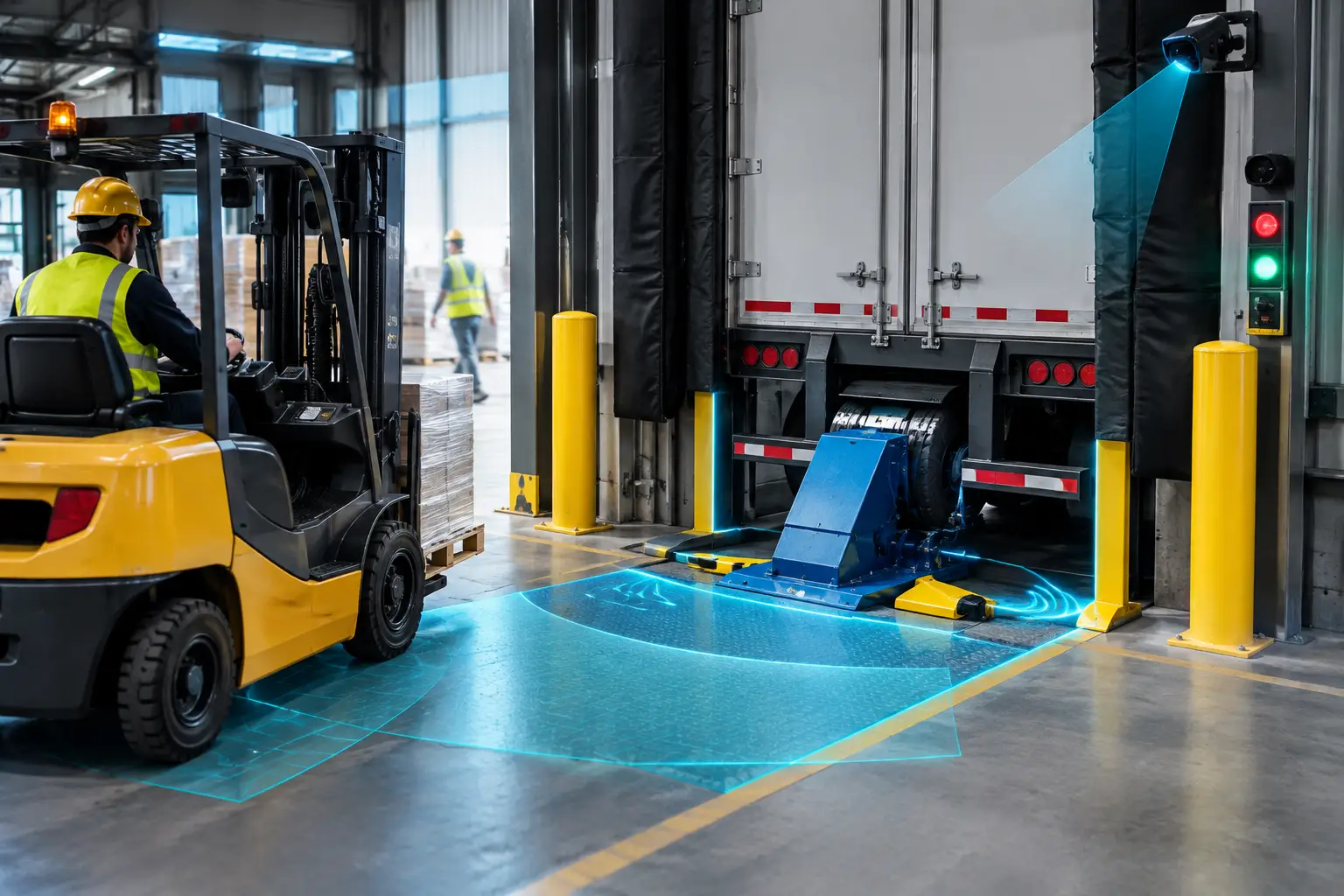
Vehicle restraint systems are often the foundation of a smart dock setup. Depending on the trailer design and operating conditions, a restraint may engage a trailer’s rear impact guard or use another engineered method to help prevent premature departure and trailer creep.
Unlike relying only on wheel chocks, a properly selected restraint can provide a visible, controlled connection between the trailer and the dock position. It also creates an opportunity for interlocking. Once engagement is confirmed, the system can permit the dock door or leveler to operate. If engagement is lost or cannot be verified, the system can maintain a warning state and restrict the next step.
This does not mean every site should use the same restraint design. Trailers with damaged, missing, unusually low, or nonstandard rear guards may require additional assessment. A technology decision should follow a review of the vehicle mix, approach grades, dock geometry, traffic flow, and the condition of existing dock equipment.
Interlocks prevent unsafe sequences
Interlocking is where smart dock technology provides its greatest operational value. An interlock links equipment functions so that one action cannot occur until a required safety condition has been met.
For example, a typical sequence may require the truck to be positioned at the dock before the restraint can engage. The restraint must then confirm engagement before the internal dock control allows the door to open or the leveler to deploy. During loading, external signals tell the driver to remain in place, while internal indicators show dock personnel that the trailer is secured.
When loading is complete, the sequence is reversed. The leveler is stored, the door is closed, and the area is cleared before the restraint is released. This reduces ambiguity at the handoff point between dock personnel and drivers.
Clear status signals improve communication
Loading bays are noisy, busy environments. Audible and visual alert systems provide immediate status information without requiring people to interpret hand signals, search for a supervisor, or depend on radio communication.
Inside the building, a visible indicator can show whether the trailer is secure and whether forklift entry is permitted. Outside, a traffic signal can instruct the driver to remain stopped or advise when departure is allowed. Some installations add audible warnings for abnormal conditions, such as an attempted departure while the restraint remains engaged.
Signals should be designed for the people who use them. Colors, labels, audible alarms, and control locations must be clear, consistent, and visible from normal working positions. A signal that operators cannot see, understand, or trust will not improve behavior.
Where Data and Monitoring Add Value
Smart dock technology can also create useful operating data. Dock events such as vehicle arrival, restraint engagement, release, door opening, and abnormal alarms can be recorded for review. For operations leaders, this makes recurring issues easier to identify.
If one bay frequently reports failed restraint engagement, the cause could be trailer incompatibility, approach alignment, equipment wear, or an operating practice that needs attention. If drivers repeatedly attempt to leave before release, the issue may point to poor external communication or inconsistent scheduling. Data does not replace investigation, but it directs attention to where risk is building.
For larger facilities, dock status monitoring can support better coordination across shifts. Supervisors can see which bays are active, which are waiting for a vehicle, and which are in an alarm state. The practical benefit is faster intervention before a delay becomes an unsafe workaround.
Implementing Smart Dock Technology Effectively
A successful project begins with the workflow, not the product catalog. Start by mapping how vehicles arrive, check in, reverse into position, secure, load or unload, and depart. Include the people involved at each stage: drivers, forklift operators, shipping staff, supervisors, and maintenance teams.
Then assess the physical conditions at each bay. Trailer types, dock heights, yard grades, vehicle approach paths, lighting, existing doors and levelers, and forklift traffic patterns all affect the solution. Sites with mixed fleets may need adaptable restraint strategies and clearly defined procedures for exceptions.
The following actions are especially important during implementation:
- Review near misses, trailer movement events, dock damage, and loading delays to identify the highest-risk bays.
- Define the required safe sequence before selecting controls, restraints, or warning devices.
- Make sure the system provides clear internal and external communication for every loading state.
- Train both employees and regular drivers on normal operation, alarm conditions, and exception handling.
- Establish inspection and maintenance routines so restraints, sensors, lights, and interlocks remain dependable.
Training deserves more attention than it often receives. A smart system is not a replacement for disciplined work practices. Forklift operators still need to verify the entry condition before entering a trailer. Dock personnel still need to keep the threshold clear and follow the release sequence. Drivers still need clear instructions on where to wait and when they may leave. Technology reinforces these behaviors by making the correct condition visible and verifiable.
Balancing Safety, Throughput, and Reliability
Some operations teams worry that additional controls will slow loading activity. In practice, poor dock control already creates delays through rework, vehicle waiting, damaged equipment, investigations, and unplanned downtime. A well-designed system can reduce these disruptions by standardizing routine steps.
There are trade-offs. Highly automated controls may deliver stronger sequence enforcement, but they require proper installation, compatible equipment, maintenance support, and operator acceptance. A simpler system may suit a lower-volume facility, provided it still controls the critical risk of trailer movement and clearly communicates dock status.
The goal is not maximum automation for its own sake. It is a practical level of control that matches the severity of the hazard and the realities of the operation. Engineering support is valuable here because loading bay safety depends on how equipment, people, vehicles, and procedures interact in the real facility.
Every worker should be able to enter a trailer confident that it will still be there when the load is complete. Smart dock technology helps make that expectation part of the operating system, not a matter of luck or individual vigilance.