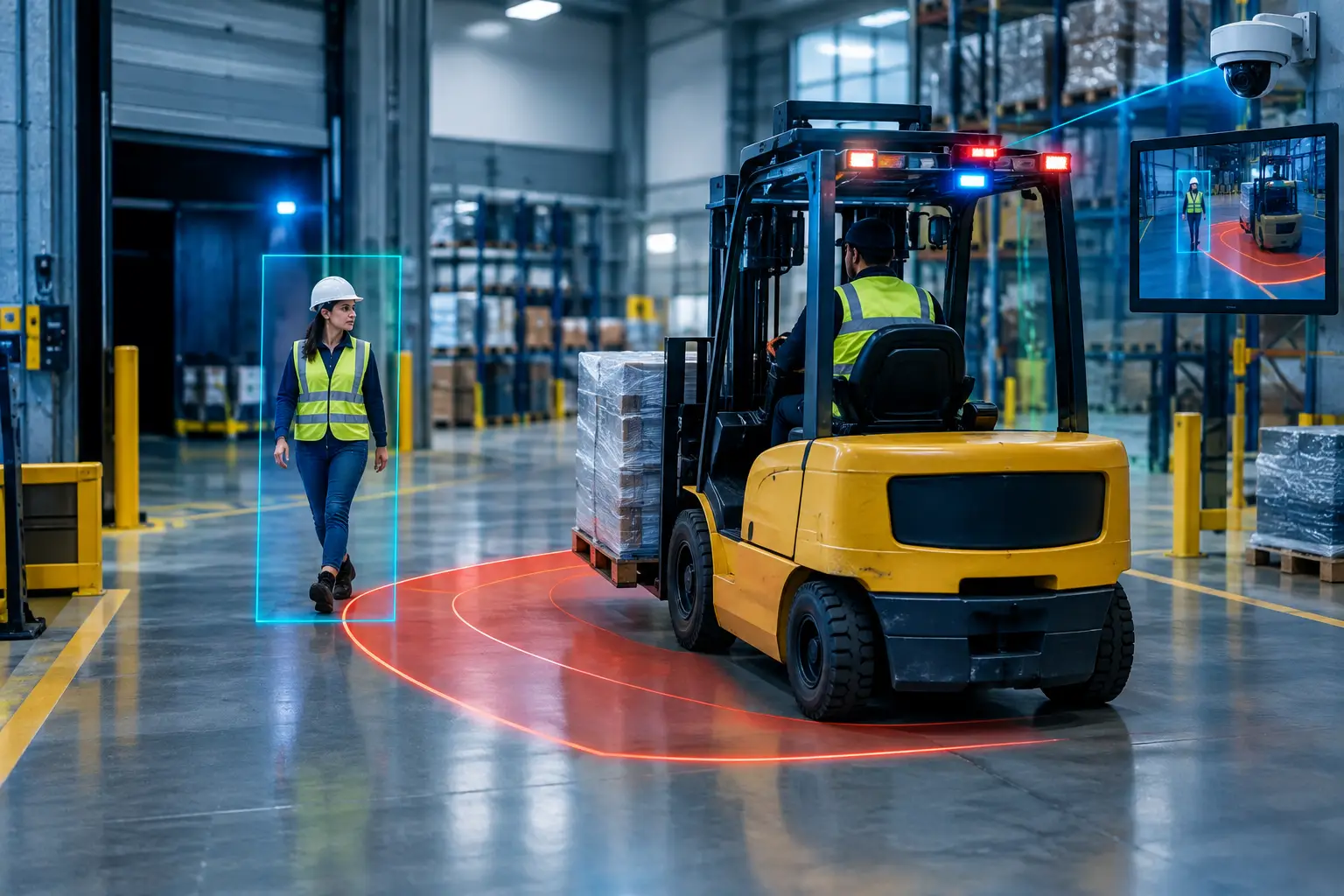
A pedestrian steps from behind a pallet stack just as a loaded forklift reverses from an aisle. The operator’s view is restricted by the load, the reversing alarm is competing with surrounding noise, and there is no physical separation between people and vehicles. These pedestrian injury examples are not random events. They are predictable outcomes of traffic routes, blind spots, and work practices that allow people and mobile equipment to occupy the same space without adequate controls.
For warehouse, manufacturing, and logistics leaders, the useful question is not simply who was at fault after an incident. It is where the operation allowed a foreseeable conflict to develop – and what practical change will stop it from happening again. Every worker deserves to return home safely every day. Effective pedestrian protection also reduces equipment damage, workflow interruptions, investigation time, and pressure on operations teams.
Common Pedestrian Injury Examples in Industrial Facilities
Pedestrian injuries in industrial environments range from minor contact events to life-altering crush incidents. The severity depends on vehicle speed, load weight, visibility, floor conditions, and whether the worker can move out of the vehicle’s path. Reviewing real exposure scenarios helps managers identify risk before an injury occurs.
Reversing forklift strikes a worker at an aisle intersection
A forklift operator reverses out of a rack aisle after collecting a pallet. A picker walking along the cross-aisle enters the same space at the same time. The operator checks mirrors, but the pedestrian approaches from a blind area created by the truck structure, racking, or the carried load.
This scenario often occurs where pedestrian walkways end abruptly at intersections or are marked only by worn floor paint. A painted line can support awareness, but it does not physically prevent a person from entering a reversing zone. Controls may include guarded crossings, dedicated pedestrian routes, intersection warning systems, speed management, and proximity alerts that activate before vehicle and pedestrian paths converge.
Pedestrian pinned between a forklift and fixed structure
Pinning incidents occur when a pedestrian stands near a wall, rack upright, staging area, dock face, or parked vehicle while a forklift turns, reverses, or maneuvers nearby. There may be only a few seconds to react. Even a low-speed impact can become severe when there is no escape path.
These events frequently expose poor space design rather than a single unsafe act. Congested travel lanes, informal storage, and staging that narrows a route all reduce the margin for error. Facility layouts should preserve sufficient clearance around pedestrian areas and prevent people from working in known crush zones. Physical barriers and controlled access can be more reliable than signs asking workers to keep clear.
Worker struck by a load or falling material
Not every pedestrian injury involves direct contact with the forklift itself. A worker can be injured when a poorly positioned, unstable, or elevated load shifts during travel or while the truck turns. Long loads and oversized cartons can also reduce the operator’s forward visibility, creating a dual hazard: restricted sightlines and material movement.
The appropriate control depends on the load and task. In some situations, changing the travel direction or using a designated spotter may improve visibility. In others, the better solution is redesigning the route so pedestrians are not exposed to material-handling paths at all. Load stability procedures and clear exclusion zones work together; neither is enough if people routinely walk beneath or beside moving loads.
Pedestrian hit at a loading bay or trailer approach
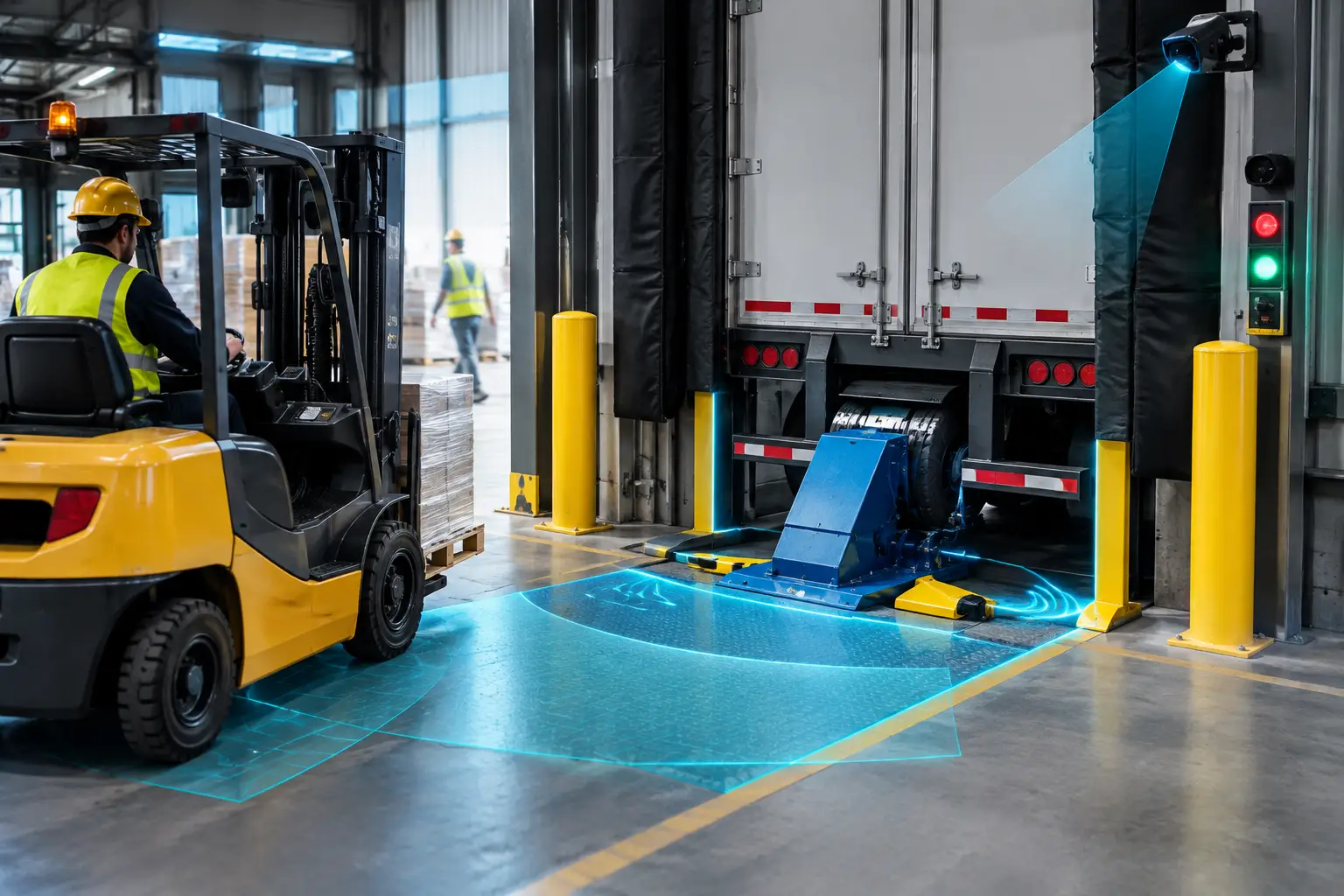
Loading bays combine forklifts, delivery drivers, warehouse teams, trailers, dock equipment, and changing schedules. A pedestrian may be struck while checking paperwork, walking around a trailer, crossing between dock doors, or entering an active loading area without realizing a vehicle is moving.
Visibility can be poor because of parked trailers, dock shelters, stacked goods, and uneven lighting. The risk rises further when communication between warehouse personnel and drivers is informal. Clearly separating pedestrian access from vehicle maneuvering areas, controlling entry to active bays, and using visual or audible warning systems can make the work zone easier to understand at a glance.
Contact with an automated or manually operated vehicle in a mixed-use zone
Facilities adopting automated guided vehicles, autonomous mobile robots, or advanced material-handling equipment can improve consistency and throughput. However, automation does not remove pedestrian risk. It changes how workers perceive and respond to moving equipment.
A worker may assume an automated vehicle will always detect and stop for them, while the equipment may have operating limits related to sensor coverage, speed, obstructions, or route conditions. Mixed-use areas need defined rules, visible operating boundaries, and technology that supports awareness. People should not have to guess whether a vehicle has detected them.
Why These Incidents Keep Repeating
Most pedestrian incidents are preceded by familiar warning signs: near misses at intersections, workers taking shortcuts through staging areas, forklifts reversing over long distances, blocked walkways, or repeated horn use in congested zones. When these conditions become routine, teams can normalize the risk because no serious injury has occurred yet.
Production pressure also plays a role. During peak periods, temporary pallets appear in travel lanes, new employees are assigned to unfamiliar zones, and operators may take faster routes to maintain output. A safety system that works only during ideal conditions is not a dependable system. Controls must account for real shift patterns, changing inventory, peak-volume congestion, and contractor or visitor movement.
Training remains necessary, but it should not carry the full burden of prevention. Telling pedestrians to remain alert and operators to drive carefully is reasonable, yet human attention is limited in noisy, fast-moving facilities. Stronger risk controls make the safe action the easier action.
Turning Pedestrian Injury Examples Into Better Controls
Start with the physical flow of people, forklifts, and loads. Observe each shift, not only the normal daytime operation. Map where pedestrians cross vehicle routes, where operators reverse, where visibility is obscured, and where congestion causes people to leave designated paths. Near-miss reports, equipment damage records, and worker feedback can reveal hazards that are not obvious in a layout drawing.
Then apply controls in layers. The most effective option is often to eliminate interaction by creating separate routes, barriers, gates, or restricted zones. Where separation is not possible, improve visibility and predictability through marked crossings, floor projection systems, mirrors, controlled travel directions, and speed limits appropriate for the space.
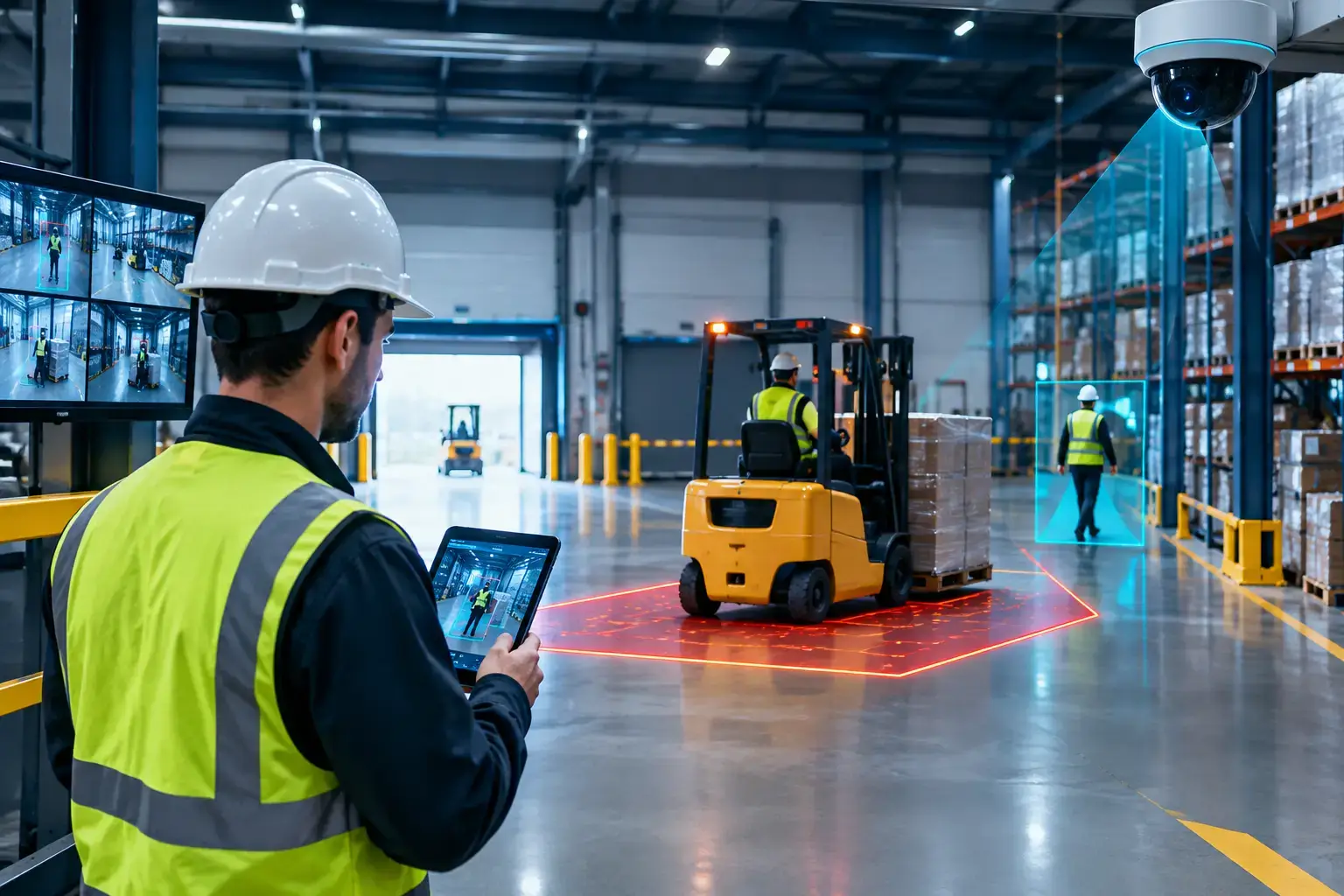
Intelligent warning technology provides another layer when people and vehicles must work near one another. Forklift-pedestrian proximity systems can alert operators and pedestrians before a collision occurs. Visual warnings are useful in noisy environments where an audible signal may be missed, while audible alerts can reinforce awareness in areas with obstructed views. The right combination depends on the task, ambient noise, traffic density, and the behavior the system is intended to influence.
Vision AI monitoring can add valuable insight in high-risk zones. It can identify recurring pedestrian-vehicle interactions, unsafe entries into restricted areas, or congestion patterns that warrant intervention. Used correctly, this information supports preventive action rather than waiting for an injury or serious near miss to reveal a weakness.
Technology should be commissioned and maintained as part of the operating environment. A warning device that is poorly positioned, too frequent, or ignored because of nuisance alerts will not deliver its intended protection. Test controls with the people who use the area, review performance after operational changes, and adjust settings or layouts when the risk pattern changes.
A More Practical Standard for Safety Performance
A facility should not judge pedestrian safety only by the absence of recordable injuries. A better measure is whether workers can move through the operation without relying on perfect timing, perfect visibility, or split-second decisions from forklift operators.
Ask whether a pedestrian can accidentally enter a vehicle path, whether an operator can see around common loads, and whether a worker has a protected place to stand during loading activity. If the answer is uncertain, the control needs improvement. SysGuard helps operations teams translate those questions into practical traffic management, warning, separation, and monitoring measures that fit the realities of industrial work.
The clearest lesson from pedestrian injury examples is also the most actionable: where people and vehicles share space, prevention must be designed into the space itself. Start with the next high-risk crossing, reversing zone, or loading bay. A focused change there can prevent the incident your team has been fortunate not to experience yet.