A bent rack upright is rarely just a maintenance issue. It can signal a forklift route that is too tight, a loading area with poor separation, or an operating practice that places people and inventory too close to impact zones. This rack protection planning guide helps warehouse and facility leaders turn those warning signs into practical controls before a minor collision becomes a rack collapse, product loss, or worker injury.
Rack protection should not be treated as an accessory added after damage occurs. It is part of a wider warehouse traffic-management strategy that considers rack layout, forklift movements, pedestrian access, visibility, loading practices, and the forces generated by daily operations. The right plan protects critical assets while supporting safer, more efficient material flow.
Start With the Risks Around the Rack
Every facility has different exposure points. A high-throughput distribution center with reach trucks faces different risks than a manufacturing warehouse served by counterbalance forklifts. The first step is to identify where vehicles can strike racking and why.
Walk the facility during active shifts, not only when aisles are clear. Observe turning movements at aisle ends, forklift reversing behavior, pallet placement, congestion near staging lanes, and the space available for operators to align loads. Review damage records as well. Repeated impact marks on the same uprights often reveal a design or traffic-flow issue rather than isolated operator error.
Pay close attention to rack ends, aisle intersections, corners beside loading or dispatch areas, and uprights near pedestrian doors. These are common collision points because drivers are turning, visibility is reduced, or activities compete for the same space. Lower-level beams and frame bases also deserve attention where pallets may be pushed, dragged, or set down incorrectly.
A practical assessment should consider four questions:
- Which rack components could be hit by forklifts, pallet jacks, or moving loads?
- How often do vehicles travel near those components, and at what speed?
- Does the available turning radius match the vehicle and load dimensions?
- Could an impact affect a pedestrian route, emergency access path, or a heavily loaded rack bay?
The goal is not simply to install barriers everywhere. It is to understand the likelihood and consequence of each impact scenario, then prioritize controls where they will reduce the most risk.
Define What Each Protection Measure Must Do
Rack protection products serve different functions. Selecting equipment without defining that function can leave significant gaps in the safety plan.
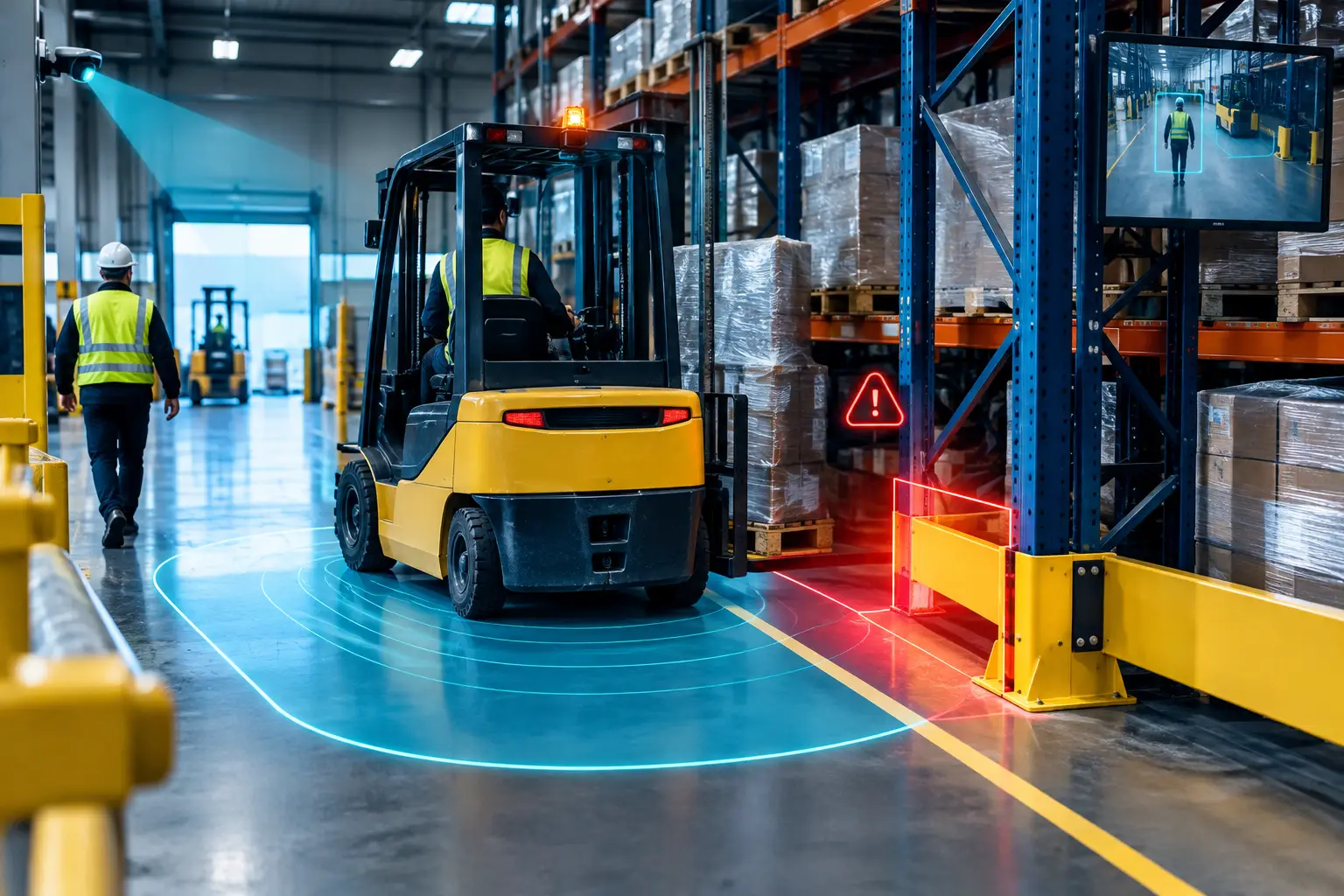
Upright protectors are designed to shield the lower portion of individual rack legs from low-level contact. They are often appropriate where impacts are light or occasional, particularly along internal rack faces. However, they may not be sufficient at busy aisle ends where a turning forklift can deliver greater force.
End-of-aisle barriers and heavy-duty rack-end protection create a more substantial physical boundary at exposed frame ends. These controls are commonly needed where forklifts enter, exit, or turn into narrow aisles. Their design should account for vehicle type, travel speed, load size, and the clearance required for safe maneuvering.
Guardrails and safety barriers may be the better choice when the objective is to separate a vehicle route from an entire rack face, workstation, pedestrian crossing, or staging area. In these locations, protection should redirect movement away from the hazard rather than rely on drivers to avoid it every time.
There is a trade-off between protection and usable space. A barrier that is too close to the rack can make access difficult and still allow loads or vehicle overhangs to strike the structure. A barrier placed too far into an aisle can create a new pinch point. Planning must therefore account for the full vehicle envelope, including forks, pallet overhang, rear swing, and turning path.
Consider Impact Energy, Not Just Product Size
A larger protector is not automatically the right protector. What matters is whether the selected system is suitable for the anticipated impact conditions and installed on a floor and layout that can support its intended performance.
A slow-moving electric pallet jack and a loaded counterbalance forklift do not present the same impact risk. Neither do a single accidental contact and a location exposed to hundreds of turning movements each day. Share actual vehicle details, load weights, travel speeds, and site drawings with the engineering team so protection can be matched to the operating environment.
Build Protection Into Warehouse Traffic Design
The strongest rack protection plan reduces the opportunity for impacts before relying on a barrier to absorb them. Start by making vehicle and pedestrian routes clear, predictable, and appropriately separated.
Aisles need enough width for the equipment in use, including the real turning behavior of loaded vehicles. Staging pallets at aisle ends may seem efficient during peak periods, but it can force forklifts into sharper turns and obstruct sightlines. If temporary staging is unavoidable, designate the area, set capacity limits, and keep it outside vehicle turning zones.
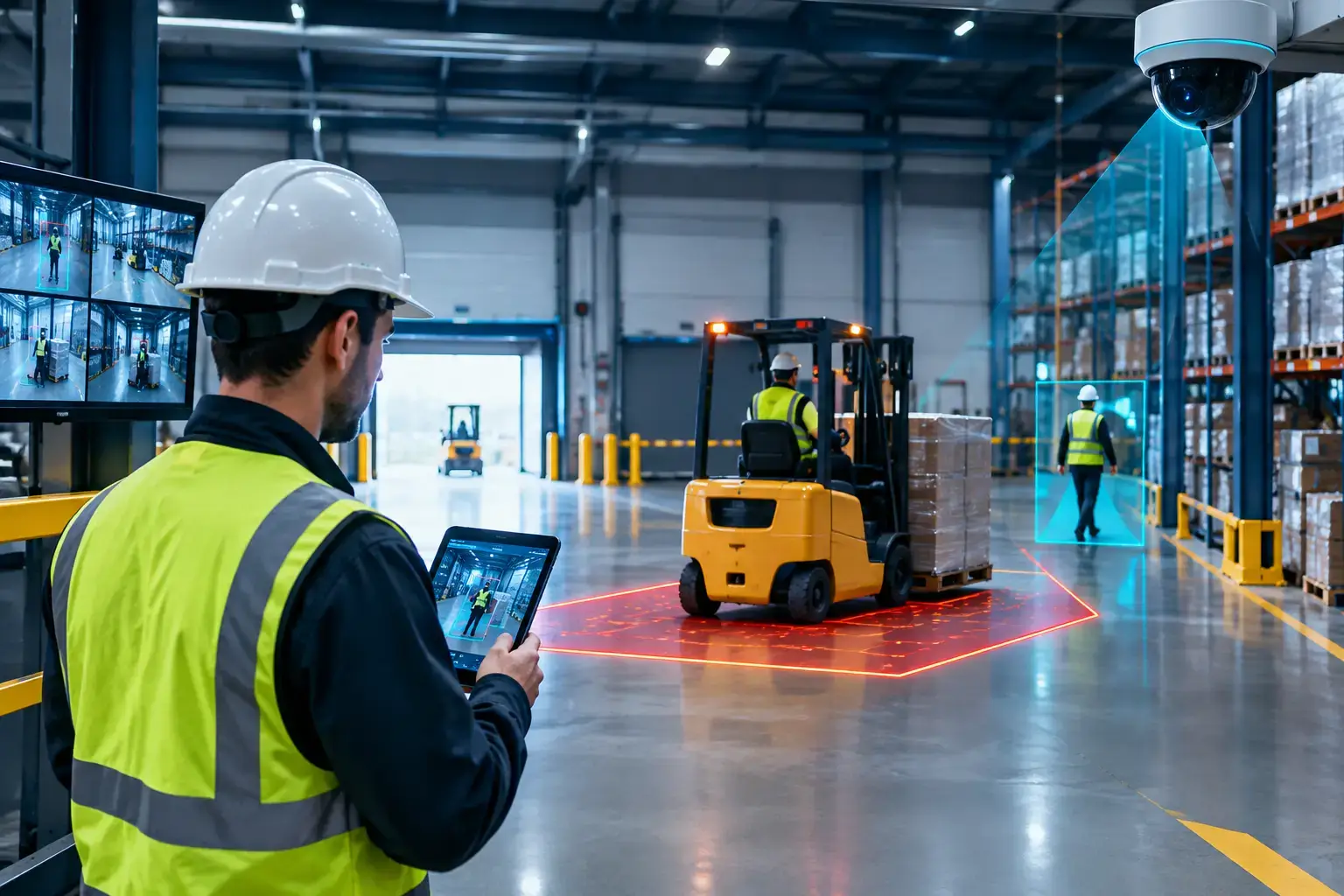
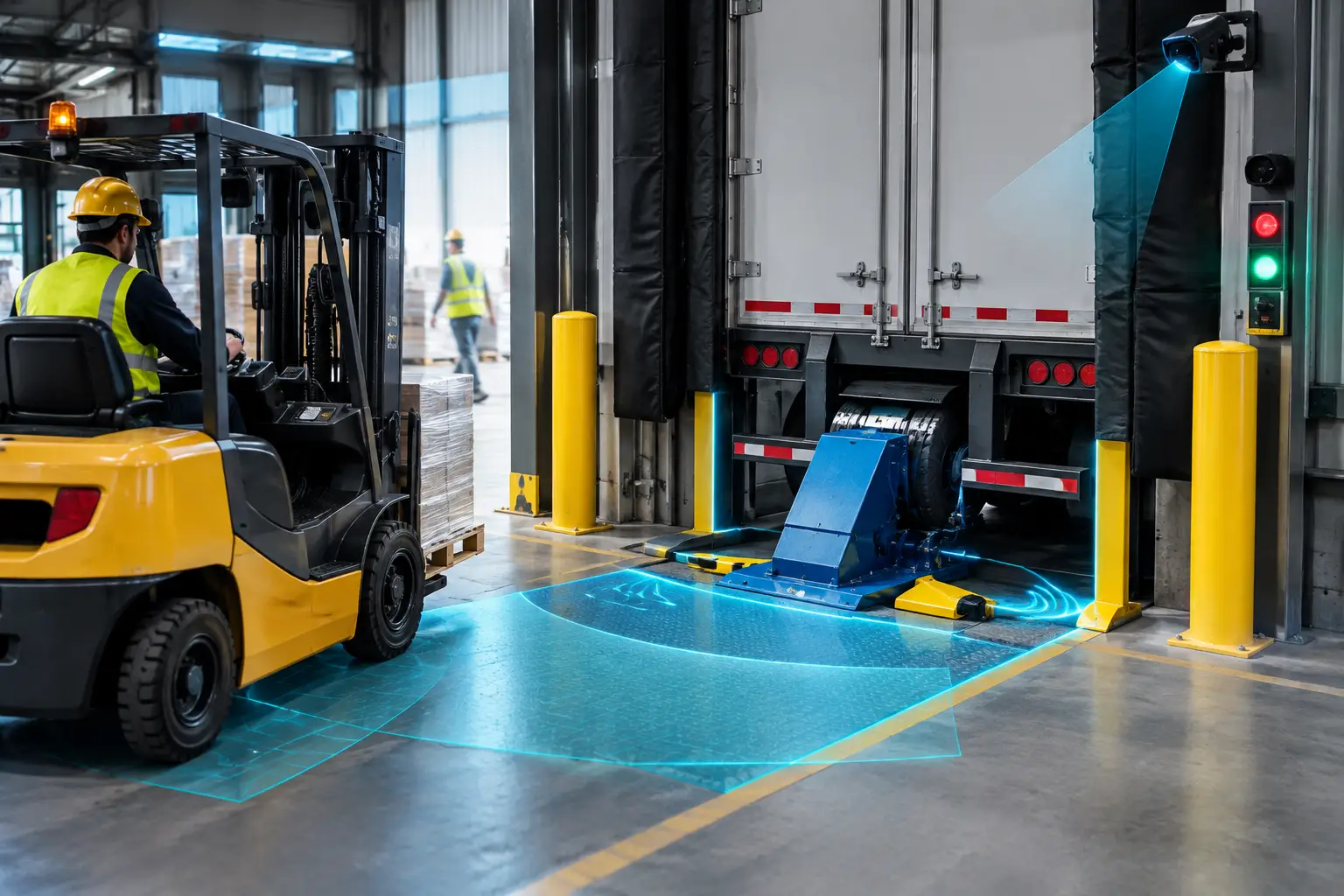
Visibility is equally important. Blind corners, tall pallet stacks, and cross-traffic at aisle ends increase the chance of a driver misjudging distance. Floor markings, warning signs, projected safety lines, audible alerts, and visual warning systems can reinforce safe travel behavior. At higher-risk intersections, intelligent proximity warning or Vision AI monitoring can help identify vehicle-pedestrian conflicts and unsafe operating patterns that routine inspections may miss.
These technologies do not replace physical rack protection. They complement it by addressing the behaviors and conditions that lead to impacts. A barrier protects the asset at the moment of contact; traffic controls help prevent that contact from occurring.
Plan Installation Around Real Operating Conditions
Installation quality affects both protection performance and daily usability. Before work begins, verify floor condition, slab thickness, anchor locations, rack clearances, and access requirements. Protection systems must be securely fixed and positioned so they do not interfere with rack loading, inspections, cleaning, or equipment servicing.
Schedule installation with operational disruption in mind. Busy dispatch zones or high-volume picking aisles may require phased work, temporary traffic rerouting, and clear communication with supervisors and forklift operators. An installation that ignores shift activity can create short-term hazards even when the finished system improves long-term safety.
It is also wise to coordinate rack protection with any planned layout changes. New forklift models, altered pallet dimensions, expanded staging areas, or automation projects can change impact exposure. Installing protection based only on the current layout may result in avoidable rework later.
Inspect Damage and Respond Consistently
Protection systems are not maintenance-free. After an impact, inspect both the barrier and the rack structure behind it. A protector may show visible deformation, loose anchors, cracked welds, or movement at the base. The absence of obvious damage does not guarantee that the rack has not been affected.
Create a simple reporting process that allows operators to report rack or barrier contact promptly. The response should include isolating any potentially damaged rack location, assessing the condition of the upright and anchors, documenting the event, and correcting the contributing cause. If the same area experiences repeated impacts, do not rely on replacement parts alone. Reassess the aisle geometry, traffic routing, visibility, and operating practice.
Routine inspections should distinguish between cosmetic marks and damage that affects structural integrity or barrier effectiveness. Facility teams benefit from clear escalation criteria so concerns are addressed consistently across shifts. This approach also builds useful evidence for maintenance planning and targeted safety improvements.
Make Rack Protection Part of an Ongoing Program
Effective rack protection planning is not a one-time capital purchase. It works best when it is connected to forklift training, traffic management, rack inspections, incident reporting, and layout reviews. Supervisors should understand why a protection system is in place and what changes in operating behavior are expected around it.
For larger or changing facilities, an engineering-led assessment can bring these elements together. SysGuard supports this process by evaluating operational risks and aligning rack protection with forklift safety controls, pedestrian separation, and practical site conditions.
The most useful question is not, “Where can we add a rack guard?” Ask instead, “Where could one collision interrupt our operation or put a worker at risk, and what combination of layout, technology, and physical protection will prevent it?” That question leads to decisions that protect more than racking. It protects people, inventory, uptime, and the confidence to keep operations moving safely.