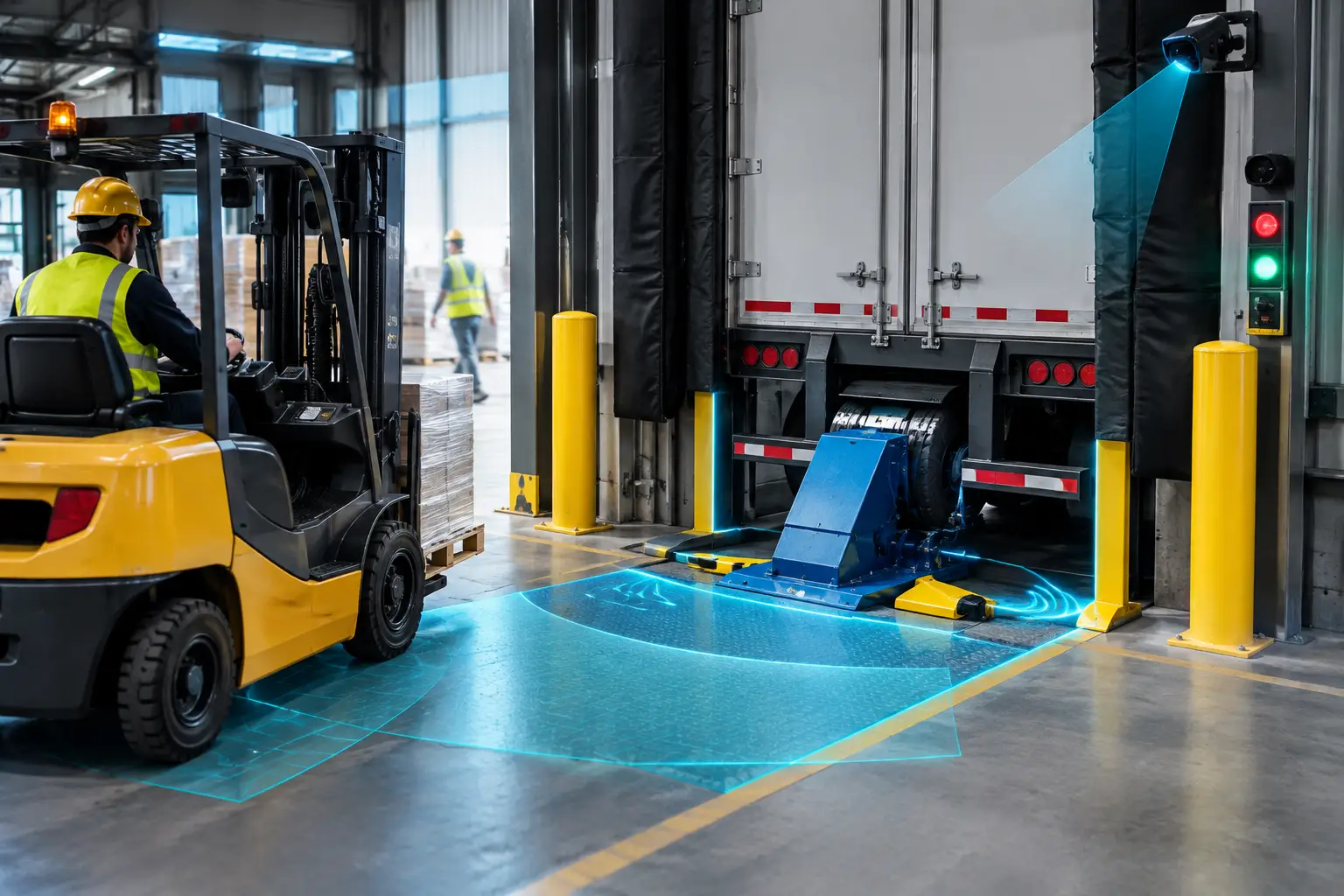
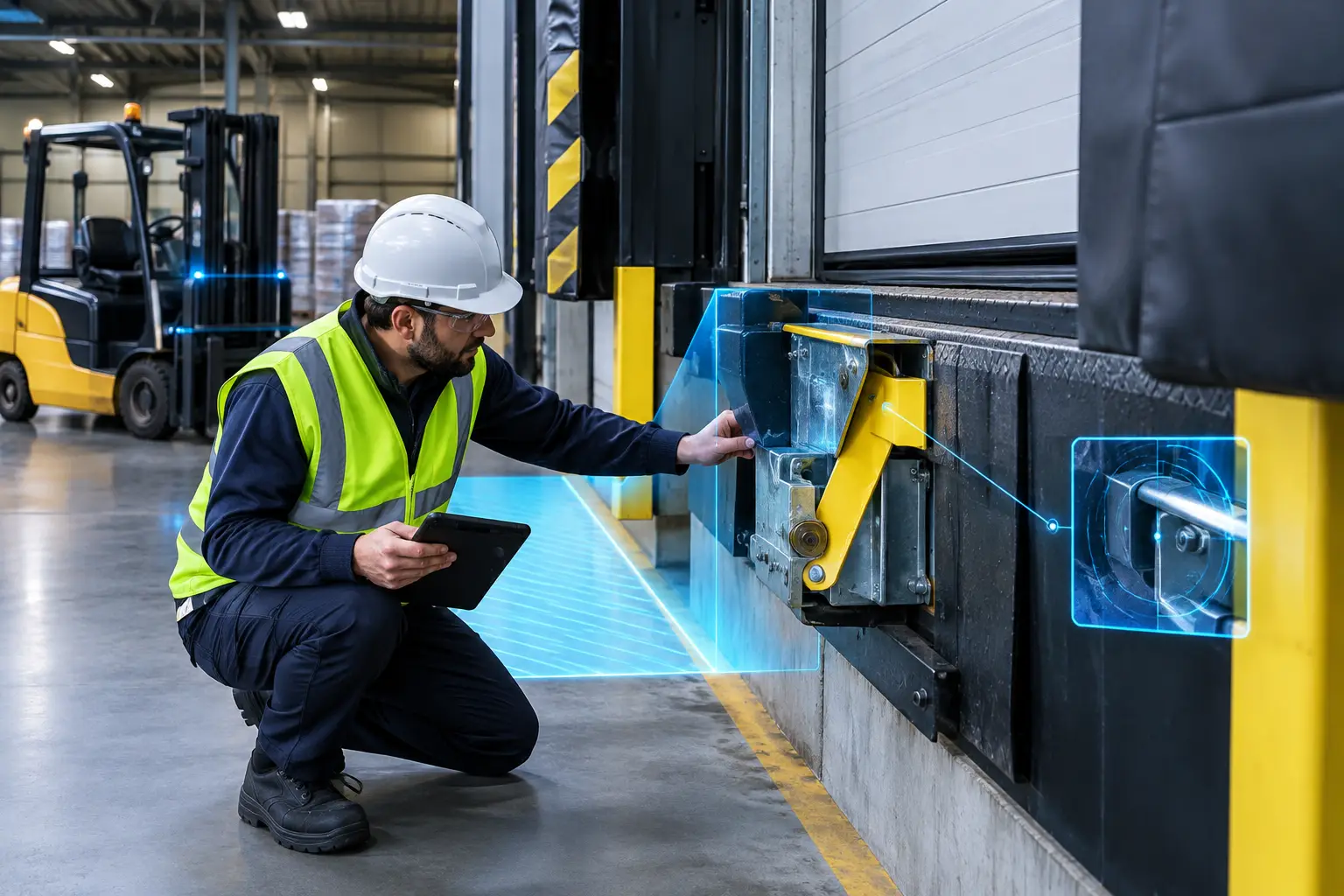
A trailer can appear secure at the loading bay while a worn hook, damaged sensor, or failed interlock leaves the restraint unable to do its job. Deciding how often to inspect dock restraints is therefore not an administrative task. It is a frontline control against trailer creep, unexpected departure, forklift falls, and damage to people, product, and equipment.
There is no single inspection interval that fits every loading operation. The right schedule depends on traffic volume, equipment type, trailer mix, operating conditions, and the manufacturer’s instructions. In most facilities, the strongest approach combines a visual check before each use, documented periodic inspections, and prompt assessment after any abnormal event.
How Often Should You Inspect Dock Restraints?
Dock restraints should receive a quick operational inspection before each loading or unloading cycle. The dock attendant, forklift operator, or designated loading bay employee should confirm that the device engages the trailer’s rear impact guard correctly and that its status indicators are working before a forklift enters the trailer.
This pre-use check is not a substitute for maintenance. It is the operational safeguard that catches obvious problems at the point where the risk is highest. If the hook does not rise, the restraint will not lock, the communication light gives the wrong signal, or the trailer’s rear impact guard is damaged or incompatible, loading should not proceed until the condition has been assessed and controlled.
A more detailed documented inspection should be completed at a planned interval set by the manufacturer, site risk assessment, and actual use. For high-throughput distribution centers, weekly or monthly documented inspections may be justified because the device cycles repeatedly and is exposed to more impacts. A low-volume facility may use a less frequent formal schedule, provided pre-use checks remain consistent and inspection records show that the equipment is being maintained.
At least annually, arrange a comprehensive inspection and preventive maintenance service by a competent technician or service provider. This review should cover mechanical wear, hydraulic or electrical operation, mounting integrity, communication systems, safety interlocks, and any adjustments required by the equipment manufacturer. Annual service is a baseline, not a reason to wait a year when the restraint shows signs of damage or unreliable operation.
Why Pre-Use Checks Matter at the Loading Bay
Dock restraints are exposed to conditions that can change quickly. Trailer rear impact guards vary in height, strength, and condition. Drivers may position trailers unevenly. Forklifts transfer repeated dynamic loads as they cross the dock leveler and enter the trailer. In busy operations, a restraint may complete dozens of cycles per shift.
A restraint that was functional during a monthly inspection can still be compromised by a trailer strike, debris buildup, corrosion, a bent component, or a damaged cable later that day. The pre-use inspection creates a pause before loading begins. It verifies that the restraint and the trailer are compatible and that the people at the bay receive clear, accurate signals about whether it is safe to enter.
The process should be simple enough to perform consistently. A complicated checklist that only exists on paper will not protect workers during peak dispatch periods. Make the inspection part of the loading sequence, with clear ownership and a defined action when a defect is found.
Before authorizing forklift entry, personnel should verify:
- The restraint is fully engaged with the trailer’s rear impact guard and is not resting against an unsuitable surface.
- Exterior and interior visual indicators communicate the correct vehicle and dock status.
- The dock leveler, overhead door, and restraint interlocks operate as intended, where fitted.
- There is no visible damage, excessive wear, loose mounting hardware, leaking fluid, frayed wiring, or obstruction around the restraint.
- The trailer is positioned correctly, its landing gear is stable, and the rear impact guard is not bent, missing, or visibly weakened.
If any point cannot be confirmed, treat the bay as unavailable. Use the site’s alternative safe loading procedure, such as directing the trailer to another suitable bay or securing it with an approved secondary control where applicable. Never ask an employee to compensate for a failed restraint by working faster, relying on verbal assurances, or entering a trailer before the condition is resolved.
Build a Formal Dock Restraint Inspection Schedule
A planned inspection program turns individual observations into reliable asset management. It also helps maintenance teams identify recurring issues before they become failures that interrupt shipping and receiving operations.
Start with the manufacturer’s maintenance requirements. These instructions specify lubrication points, adjustment tolerances, inspection criteria, approved replacement parts, and service intervals for that restraint model. They should be the foundation of the site program, particularly for powered hydraulic, electric, or automated restraint systems.
Next, adjust the frequency based on operating exposure. A dock that handles multiple shifts, heavy trailers, refrigerated deliveries, or frequent carrier changes has a different risk profile from a bay used a few times per week. Outdoor bays in wet, corrosive, or dusty environments may need closer attention because contamination and corrosion can affect moving parts, sensors, and indicator systems.
Review the defect history as well. Frequent hook alignment issues, damaged rear impact guards, false indicator signals, or repeated driver noncompliance point to a broader loading bay problem. The solution may involve equipment adjustment, clearer traffic controls, driver communication, improved lighting, refresher training, or a different restraint design. Inspection findings should inform these decisions rather than disappear into a completed form.
For many facilities, a practical structure includes pre-use checks at every trailer, a supervisor review on a weekly or monthly basis, and scheduled preventive maintenance at intervals appropriate to the equipment and usage. The exact calendar interval matters less than ensuring the process is documented, acted on, and consistently followed.
What a Detailed Inspection Should Examine
During a formal inspection, evaluate more than whether the restraint moves. A device may cycle without providing dependable holding performance or correct safety communication.
Mechanical components deserve close attention. Inspect the restraining hook or arm, pivot points, springs, welds, mounting plate, anchors, and frame for cracking, deformation, corrosion, wear, or loose fasteners. Confirm that the hook rises to the required position, captures the rear impact guard properly, and returns smoothly when released. Excessive play or inconsistent movement can indicate wear that affects engagement.
For powered equipment, inspect hydraulic lines and fittings for leaks, check fluid condition where relevant, and test motors, switches, wiring, sensors, and control panels. Verify that warning lights and audible alarms communicate the correct condition both inside and outside the dock. A green light shown to a driver while the restraint is not fully engaged creates a serious exposure, even if the mechanical device itself appears undamaged.
Also test the sequence of connected equipment. Where dock doors, levelers, and restraints are interlocked, the system should prevent unsafe combinations of movement. The aim is not simply to confirm that each component works on its own. It is to confirm that the complete loading bay system supports safe behavior under real operating conditions.
Inspect After Impacts, Near Misses, and Changes
Do not wait for the next scheduled inspection when an event may have affected restraint performance. A competent person should assess the device after a trailer pulls away against the restraint, a forklift strikes equipment at the bay, a driver reports difficulty docking, or a near miss involves trailer movement.
The same applies after changes to the facility or fleet. New trailer types, altered dock heights, a change in carriers, dock renovations, or new automation can affect restraint compatibility. Rear impact guards are not uniform, and a restraint that performs well with one fleet may not engage reliably with another. Validate the equipment against the trailers actually arriving at the site.
Clear defect reporting is essential. Employees need a simple way to remove a dock position from service, alert maintenance, and communicate the bay status to the next shift. Tagging, digital maintenance requests, and visible bay-status controls can all help, but only when responsibilities and response times are defined.
Make Inspection Results Drive Safer Operations
Inspection records should identify the dock location, restraint model, date, inspector, findings, corrective action, and return-to-service authorization. This information gives managers evidence of maintenance discipline, but its greater value is operational. It reveals whether a specific bay has repeated equipment damage, whether one carrier fleet creates compatibility issues, or whether faults increase during a certain shift.
Pair dock restraint inspections with observation of the full loading process. Are drivers following exterior signal instructions? Do forklift operators wait for the approved dock status? Are pedestrians kept clear of trailer movement zones? A vehicle restraint is a critical control, but it works best alongside disciplined procedures, visible communication, dock barriers, and warning systems.
Every loading bay has pressure to move the next trailer. A dependable inspection routine creates a better response to that pressure: stop, verify, correct the condition, then load. SysGuard helps facilities turn that discipline into practical loading bay controls that protect workers while keeping operations moving.