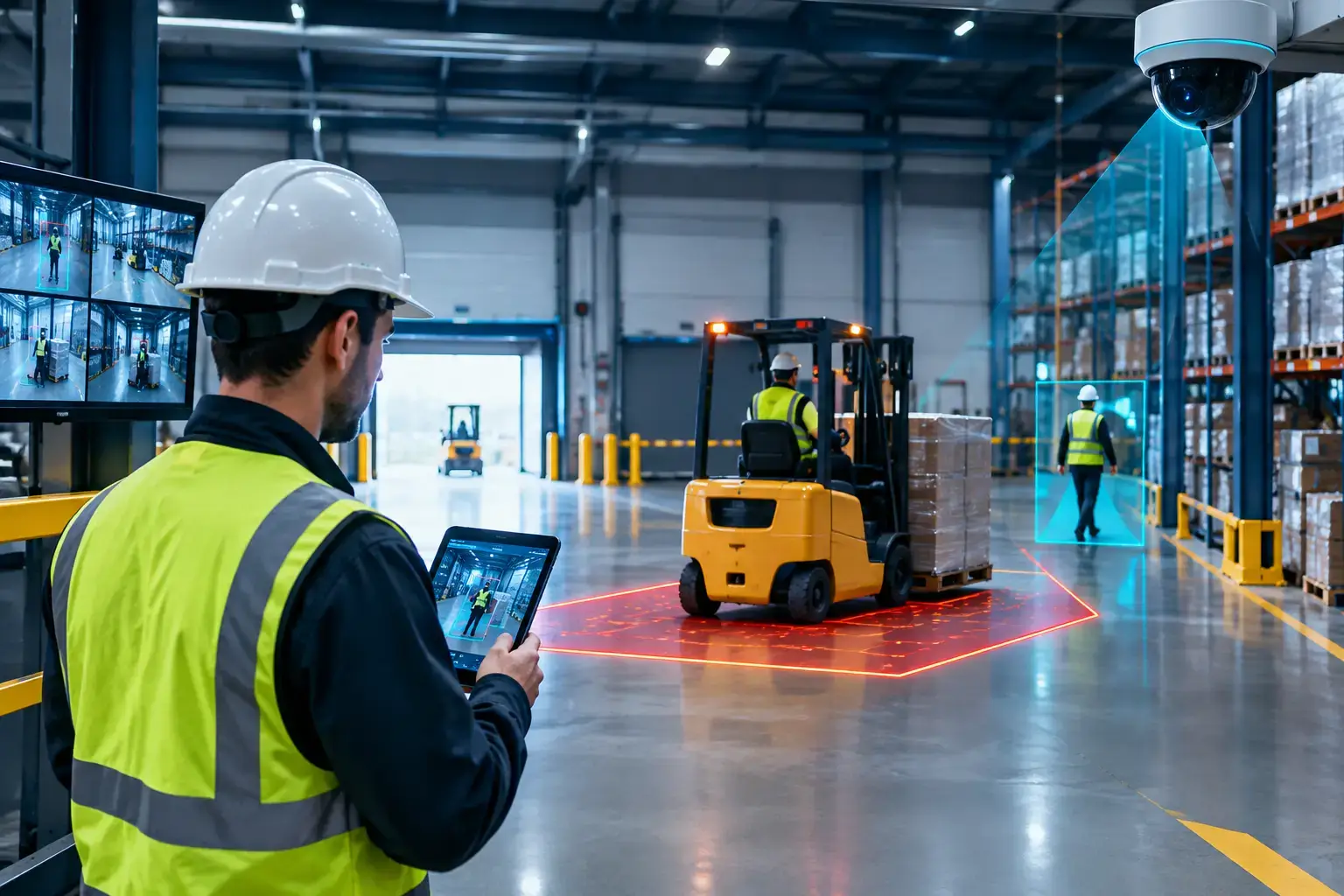
A forklift turns into a cross-aisle while a picker steps from a staging area. The work is routine, but the exposure is real: a missing high-visibility vest, helmet, or safety footwear can turn a minor lapse into a serious incident. So, can vision AI detect PPE in environments where people, vehicles, pallets, and changing light conditions make manual supervision difficult? Yes – when the system is designed, positioned, and managed for the actual operation.
Vision AI can help industrial sites identify whether workers are wearing specified personal protective equipment at defined locations or during defined tasks. It does not replace risk assessments, safety leadership, physical controls, or supervisor accountability. It gives EHS and operations teams a more consistent way to identify PPE gaps before those gaps contribute to an accident.
Can Vision AI Detect PPE Accurately?
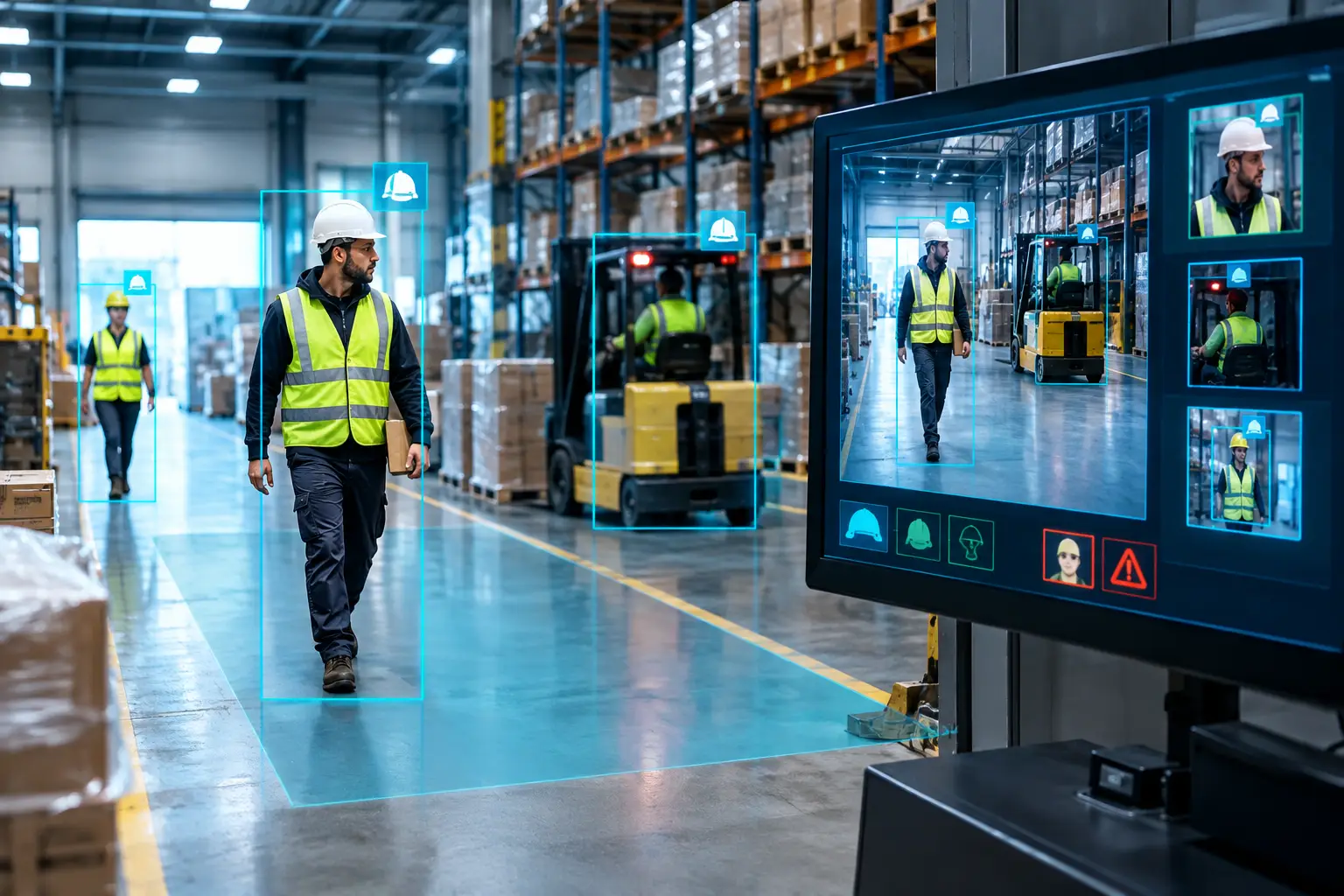
Vision AI uses camera feeds and trained computer vision models to recognize people, vehicles, work zones, and selected PPE items. Depending on the application, it can detect helmets, high-visibility vests, safety glasses, face coverings, gloves, and other visible equipment. When a required item is absent, the system can create an event, send an alert, or record the observation for review.
Accuracy depends less on a generic claim and more on site conditions. A helmet is generally easier to identify than clear safety glasses. A bright, reflective vest is easier to detect than a dark garment in a poorly lit loading bay. Gloves can be challenging when hands are obscured by cartons, tools, racking, or a vehicle cab.
The right question is not whether Vision AI is perfect. The practical question is whether it can provide reliable, useful detection for the PPE rules and risk areas that matter most at your facility. In many warehouses and plants, the answer is yes, particularly at controlled entry points, pedestrian lanes, dock approaches, production cells, and restricted work areas.
Where PPE Detection Creates the Most Value
PPE monitoring is most effective when it supports a specific risk control, not when it is deployed simply to observe a large area. High-risk transition points are often the best starting point. These are places where a worker moves from a low-risk area into an operating zone with forklift traffic, suspended-load exposure, moving equipment, or loading activity.
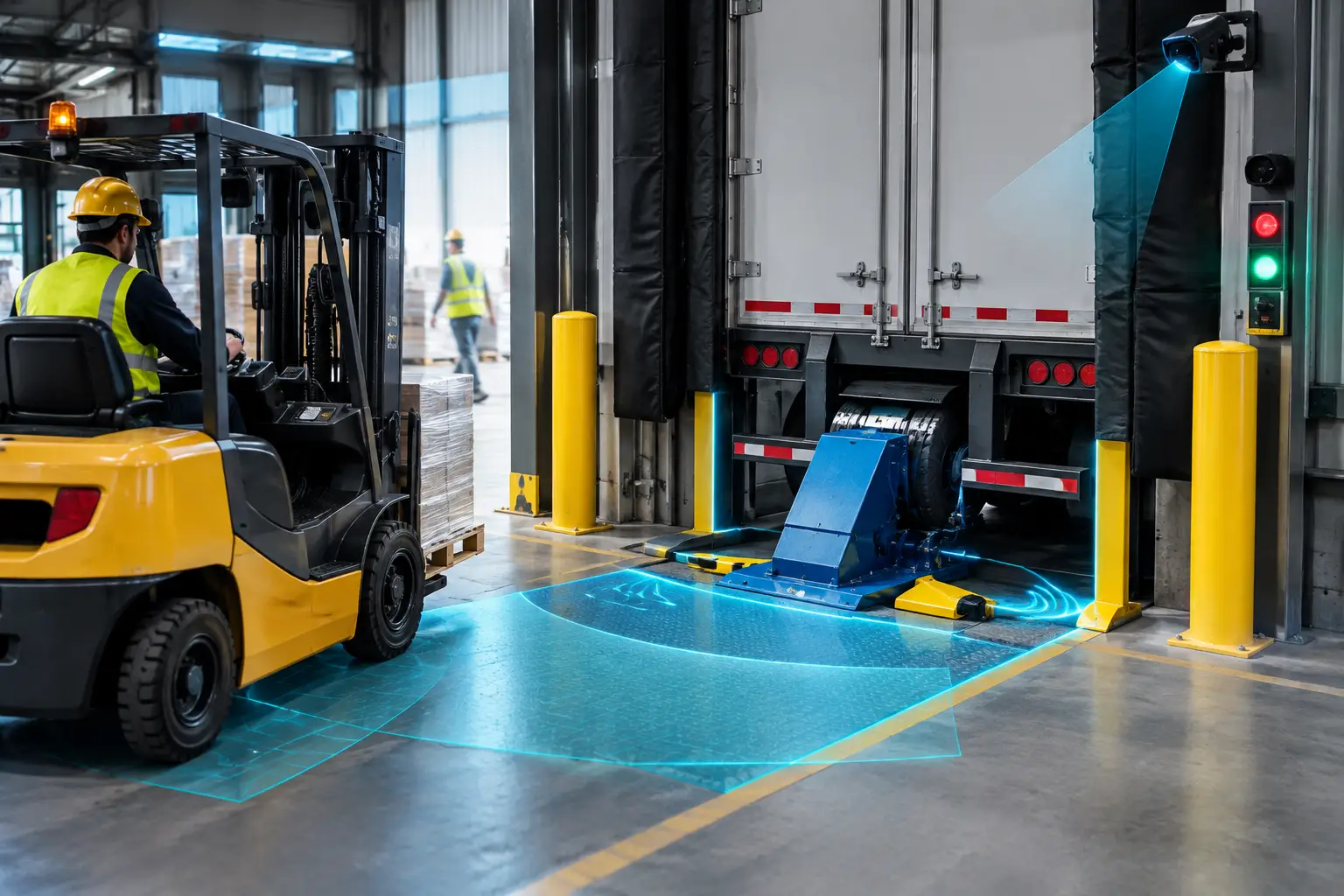
For example, a camera positioned at the entrance to a forklift operating area can verify whether personnel are wearing high-visibility clothing and required head protection before entering. At a loading bay, detection can support site rules for dock crews working around trailers, pallet jacks, and reversing vehicles. In manufacturing, the system may focus on access to a process area where eye protection or other task-specific PPE is mandatory.
This approach reduces unnecessary alerts. It also makes the response clearer. A missing vest in a lunchroom may not require action, while a missing vest at the edge of an active travel lane requires immediate intervention.
Detection is only one part of the control
A Vision AI alert should be connected to a practical response. That may mean a visual warning at an access point, a notification to a supervisor, or a dashboard event that reveals repeated non-compliance at a particular shift, entrance, or work zone.
For serious or immediate hazards, the response should be fast enough to prevent exposure. For recurring lower-level issues, trend data may be more valuable than an instant alarm. If several events occur near the same dock door, the underlying problem could be poor PPE availability, unclear signage, rushed dispatch activity, or a workflow that encourages shortcuts.
The goal is not to generate more alerts. The goal is to identify the conditions that allow unsafe behavior to repeat and correct them.
What Vision AI Can and Cannot See
Industrial teams should set realistic expectations before implementation. Vision AI identifies visible cues in a camera scene. It cannot confirm everything that a trained supervisor can assess in person.
It can often detect whether a person appears to be wearing a helmet or high-visibility vest. It may also distinguish between pedestrians and forklift operators, recognize entry into defined zones, and identify patterns such as repeated access without required equipment.
However, it cannot reliably determine whether PPE is the correct size, properly adjusted, undamaged, or appropriate for every task. A camera may see a helmet, but it cannot necessarily confirm that the chin strap is secure. It may identify safety glasses, but reflections, face angle, and distance can affect results. Where a task depends on correct fit or equipment condition, physical checks and supervisor observation remain necessary.
This distinction matters. Vision AI is an additional layer of control that improves visibility and consistency. It should not be treated as a substitute for training, clear site rules, PPE supply management, or physical separation between pedestrians and mobile equipment.
Designing a PPE Detection System for Real Operations
Successful deployments begin with a site walk and a clear definition of the risk being controlled. A system installed without considering traffic flow, camera angle, lighting, and worker movement can create blind spots or produce too many false alerts.
First, define the rule in operational terms. Rather than asking the system to monitor all PPE everywhere, specify the requirement: all pedestrians entering the dispatch lane must wear high-visibility vests and helmets, or all personnel entering a designated production cell must wear eye protection. Clear rules create clear detection logic.
Next, assess the viewing environment. Cameras need a usable line of sight to the PPE item being monitored. Backlighting at loading doors, shadows under mezzanines, dirty lenses, high camera placement, and visual obstruction from racking can all reduce performance. The installation should account for the normal path of travel, not an idealized one.
Then, decide how alerts will be handled. A warning that no one owns will quickly become background noise. Operations leaders should identify who receives events, what action is expected, and when trend data will be reviewed. A simple escalation process is often more effective than a complex workflow that cannot be maintained during busy shifts.
Finally, test the system with real workers, real uniforms, and normal operational conditions. This is where a safety technology partner can tune detection zones, adjust camera positions, and validate performance before the system becomes part of standard site practice.
Managing False Alerts Without Losing Trust
Every AI detection system involves trade-offs. If sensitivity is set too high, the system may flag uncertain cases and create alert fatigue. If it is set too low, it may miss events that should have been reviewed. The right balance depends on the severity of the hazard and the operational consequence of an alert.
False alerts should not be dismissed as a technology failure without investigation. They can reveal poor camera placement, changing lighting, variations in PPE color, or an unclear rule. A worker wearing a vest under an open jacket, for example, may be harder for a system to identify than a worker wearing the vest as the outermost garment.
Trust improves when workers understand the purpose of the system. The message should be direct: the objective is to prevent workplace injury, not to create a punitive monitoring culture. Every worker deserves to return home safely every day, and consistent PPE use is one part of making that happen.
Turning PPE Events Into Better Safety Decisions
The strongest value of Vision AI is not a single alert. It is the ability to see patterns that manual inspections may miss. Safety managers can review when PPE events occur, where they happen, which zones are most affected, and whether conditions change by shift or activity.
That information supports more targeted interventions. A facility may find that PPE gaps increase during shift handovers, when agency staff arrive, or during peak loading windows. The solution might be better induction, PPE stations at access points, clearer floor markings, revised supervisor coverage, or an access control process integrated with visual warnings.
PPE detection can also work alongside broader warehouse safety measures. Forklift-pedestrian separation, projected warning systems, proximity alerts, barriers, speed controls, and loading bay safeguards reduce exposure at the source. Vision AI adds situational awareness by showing whether people entering those higher-risk areas are following required protective measures.
A Practical Starting Point for Your Facility
Start with one high-risk zone where the PPE requirement is clear and the operational impact of non-compliance is meaningful. Measure the event rate, review alert quality, and document how supervisors respond. Once the process is proven, expand to other areas with different hazards and PPE requirements.
The best result comes from combining technology with sound safety design: clear pedestrian routes, effective forklift controls, properly maintained equipment, visible rules, and leaders who act on what the data shows. Vision AI can make PPE gaps easier to see, but the real improvement comes from using that visibility to prevent the next unsafe exposure.