A forklift entering a trailer is a point of no return. Once the truck crosses the dock edge, a driver pulling away too soon, a failed landing gear, or a shifted trailer can turn a routine loading task into a serious incident. The best trailer loading safeguards address that moment with controls that physically prevent movement, make unsafe conditions visible, and give every person at the dock a clear operating status.
Loading docks concentrate some of the highest-risk interactions in a facility. Forklifts, pedestrians, truck drivers, dock attendants, trailer equipment, and changing schedules all converge in a confined area. Effective protection is not one device at the dock door. It is a coordinated system that controls the trailer, the dock edge, vehicle movement, and communication between the people involved.
Why Trailer Loading Risk Is Different
A loaded forklift can weigh several tons. When it travels from the dock into a trailer, it depends on the trailer remaining level, secured, and properly supported. If the trailer moves away from the dock, the gap can open without warning. If the trailer creeps forward or its suspension changes height, the dock leveler may no longer provide a safe transition.
The consequences go beyond injury risk. A trailer departure incident can damage forklifts, dock doors, levelers, building structure, and cargo. It may also stop a shipping lane for investigation and repair at the precise time the operation needs throughput. The correct safeguard should therefore be assessed not only by its ability to prevent an incident, but also by its reliability under real loading conditions and its effect on dispatch flow.
Risk levels vary by site. High-volume distribution centers with frequent carrier changes face different challenges from manufacturing sites where trailers remain at the dock for extended periods. Yard layout, dock geometry, trailer types, driver behavior, and the use of double-deck or refrigerated trailers all affect the right control strategy.
Best Trailer Loading Safeguards Start With Positive Restraint
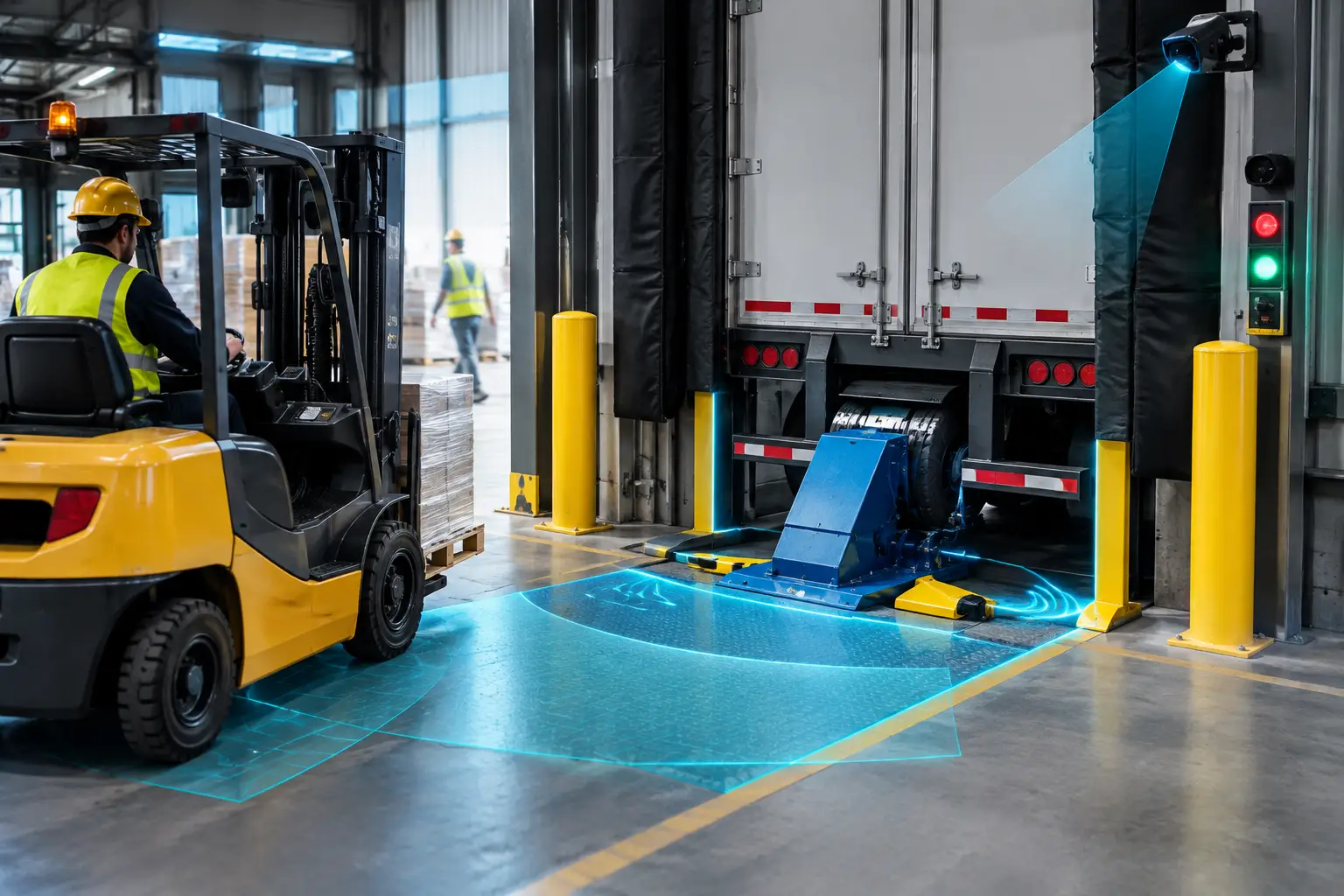
The most reliable way to control trailer movement is a vehicle restraint system that engages the trailer and prevents it from pulling away from the dock during loading. Unlike relying on a driver applying brakes or placing wheel chocks, a properly selected restraint creates a physical connection between the trailer and the building-side dock equipment.
Common restraint designs engage the trailer’s rear impact guard, often called the RIG bar. When correctly positioned and locked, the system resists premature departure and helps control trailer creep. Many systems also provide visual indicators at the dock and outside the building, showing when it is safe to load, when the trailer is secured, and when it is safe for the driver to depart.
This is particularly valuable where drivers may wait in the cab, where multiple languages are spoken, or where dock teams manage several doors at once. A clear red-and-green signal removes guesswork. The driver sees a red signal while loading is underway; dock personnel see confirmation that the trailer is restrained before forklift activity begins.
Positive restraint is not automatically suitable for every trailer. Some older trailers, damaged RIG bars, specialty bodies, and certain vehicle configurations may not be compatible. A dock assessment should identify these exceptions before installation. Where engagement cannot be assured, the operation needs an approved alternative process rather than an informal workaround.
Wheel Chocks Have a Role, but Not as the Only Control
Wheel chocks can reduce the chance of trailer rolling, especially on level surfaces and for low-risk or temporary applications. However, their performance depends heavily on correct placement, tire condition, pavement cleanliness, grade, and consistent worker behavior. They can be displaced, omitted during busy periods, or provide limited protection against a driver leaving before loading is complete.
For facilities with repeated forklift-to-trailer movements, wheel chocks are generally better treated as a supplementary control or a defined contingency measure. They should not be assumed to deliver the same level of protection as a positive vehicle restraint system. The aim is to select controls that do not rely solely on a person remembering a step under production pressure.
Control the Dock Edge and Trailer Condition
A secured trailer is only one part of the loading interface. The dock leveler, dock lip, trailer floor, and trailer support condition must safely carry the equipment and loads moving across them.
Dock levelers should be selected and maintained for the actual loading pattern, including the combined weight of forklifts, pallets, and dynamic forces created by repeated travel. A nominal capacity that looks adequate on paper may be insufficient if heavy lift trucks, concentrated loads, or high cycle counts are involved. Worn hinges, damaged lips, hydraulic issues, and uneven transitions should be corrected promptly because they increase impact, instability, and equipment damage.
Trailer support is another critical consideration. During loading or unloading, cargo distribution changes. In some operations, the trailer’s landing gear and suspension can experience conditions that increase the risk of trailer tip or instability. Trailer stands may be needed where uncoupled trailers are loaded, where heavy forklifts enter the trailer, or where site risk assessment identifies insufficient support.
The trailer floor itself deserves inspection. Soft spots, holes, contamination, loose boards, or inadequate floor capacity can cause a forklift to lose stability after it has entered the trailer. Dock personnel should have a simple way to stop loading and escalate defects before a forklift crosses the threshold.
Make Safe Status Impossible to Misread
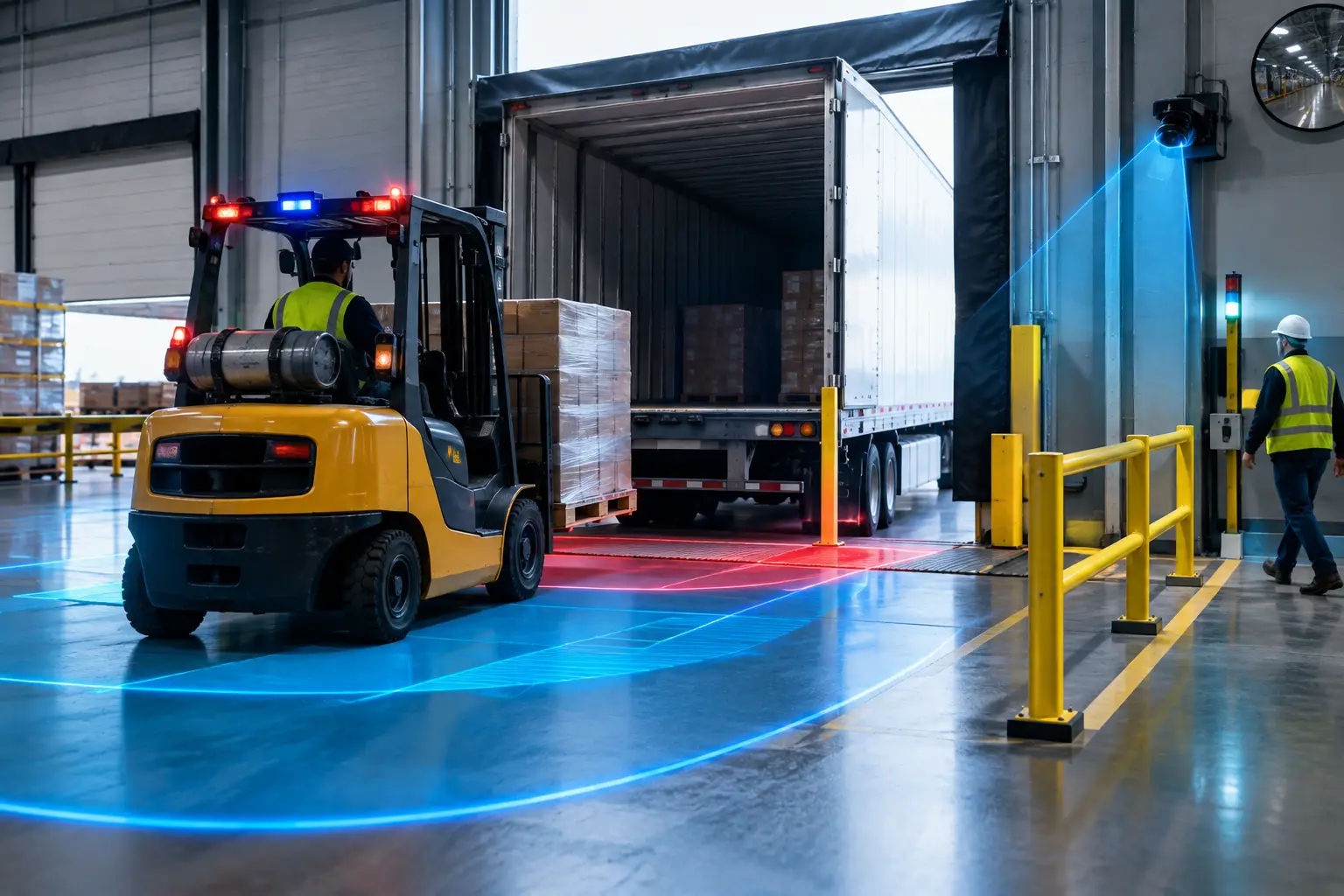
A restraint system is more effective when it is part of an interlocked communication process. The loading team needs to know that the trailer is secured. The driver needs to know that departure is prohibited. The system should make both conditions visible from the locations where decisions are made.
Audible and visual alerts can reinforce this process, particularly in noisy loading areas. Dock lights, external traffic lights, warning signs, and alarm functions should use consistent meanings across the facility. If green means “safe to proceed” at one dock and “driver may depart” at another, people will eventually make the wrong assumption.
For higher-risk operations, interlocks can link dock doors, vehicle restraints, and loading equipment status. For example, a door may remain closed until the trailer is confirmed secure, or an alarm may activate if restraint status changes while the door is in use. These controls should support the workflow, not create so many overrides that teams learn to bypass them.
A practical process should establish four conditions before loading begins:
- The trailer is positioned squarely against the dock and confirmed compatible with the loading bay.
- The restraint or approved alternative control is applied and indicated as secure.
- The dock leveler and trailer floor are checked for a safe transition and visible defects.
- The driver receives a clear instruction not to depart until the release signal is given.
Prevent Pedestrian Conflicts Around the Dock
Trailer loading safeguards also need to account for people on foot. Drivers may walk around the trailer, dock staff may handle paperwork, and pedestrians may cross behind vehicles or near open dock doors. These movements can overlap with forklift travel at exactly the wrong time.
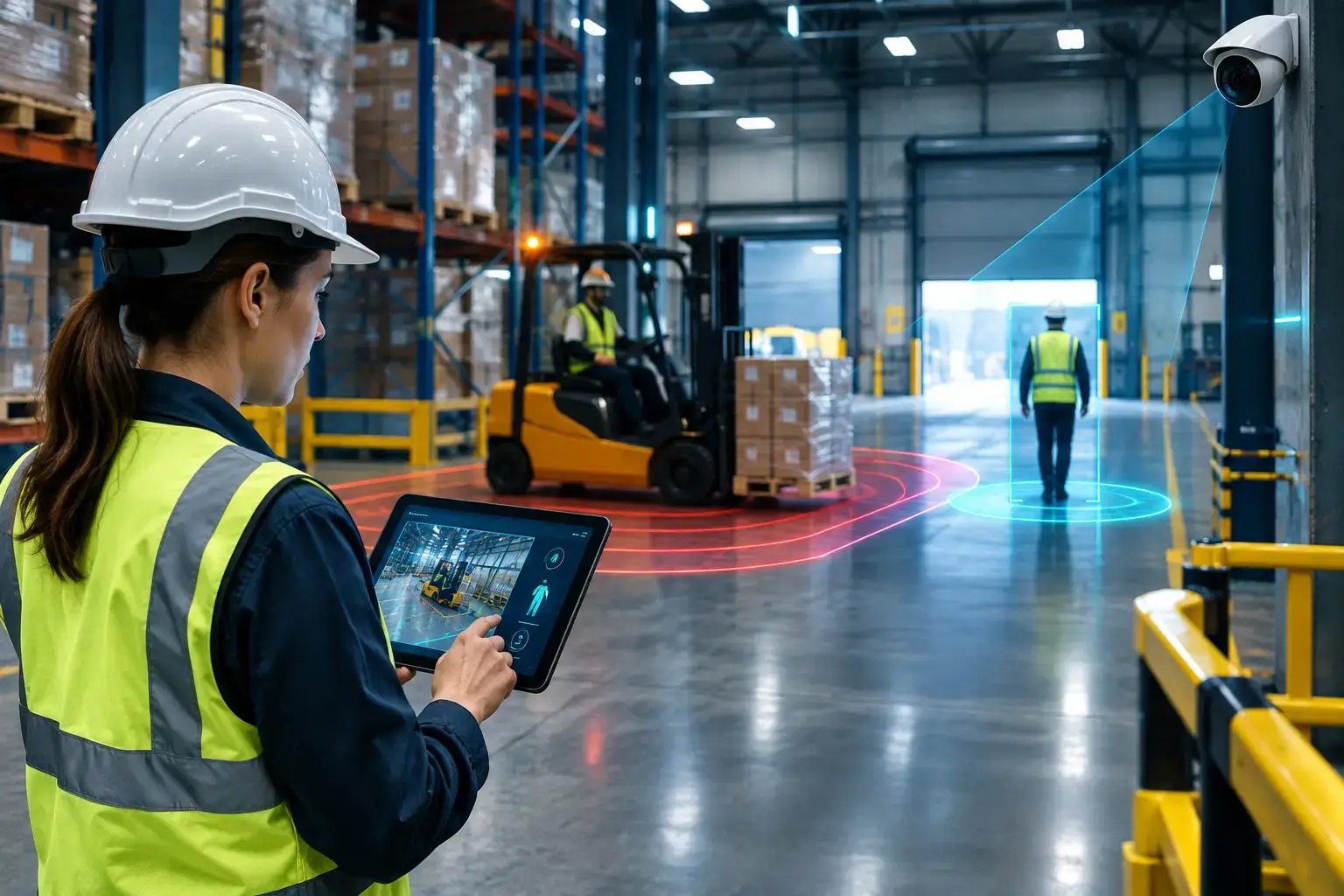
Separate pedestrian routes from forklift operating zones wherever layout allows. Use physical barriers, marked crossings, and access controls to prevent people from entering the trailer approach area without a task-related reason. At blind corners and door approaches, visual warning systems, projected floor warnings, or proximity alerts can provide an additional layer of awareness.
Technology should support disciplined traffic management, not replace it. Vision AI monitoring and intelligent warning systems can identify unsafe interactions, such as a pedestrian entering an active loading zone or a forklift approaching too quickly. Their greatest value is often in revealing recurring behaviors and high-risk locations that routine inspections miss.
Build Safeguards Into the Operating Standard
Even well-engineered equipment requires inspection, training, and maintenance. Restraint hooks, sensors, lights, control panels, levelers, barriers, and warning devices must be checked at a frequency that matches dock use. A system that appears functional but gives a false secure signal creates a more dangerous condition than a clearly unavailable dock.
Training should focus on decisions workers actually make: what a secure indication means, what to do when a trailer cannot be restrained, when loading must stop, and who has authority to release a vehicle. Drivers, forklift operators, and dock attendants need aligned instructions. A safe process breaks down quickly when one party believes loading is complete while another is still inside the trailer.
Incident reports, near-miss observations, damaged equipment records, and dock downtime should be reviewed together. Repeated dock leveler damage, trailer creep, override use, or driver communication failures are not isolated maintenance issues. They are signals that the loading safeguard strategy needs attention.
SysGuard approaches loading bay safety as an engineered risk-control system, combining vehicle restraints, warning technologies, traffic separation, and practical site implementation. The right arrangement depends on how your docks operate when schedules are tight, not only on what the dock looks like during a walkthrough.
Every worker deserves to return home safely every day. At the loading dock, that outcome is strengthened when the trailer cannot move, the loading status is clear, and the process gives people permission to stop work before a small deviation becomes a serious event.