A loading bay can change from controlled to high-risk in seconds. A truck reverses into position, a forklift moves to collect a pallet, a driver steps out to check a dock, and a warehouse employee takes a shortcut through the same area. Without clear separation and control, these routine movements can place people directly in the path of heavy equipment.
This loading bay traffic control guide helps operations leaders reduce those conflicts through practical site design, disciplined procedures, and safety technology. The objective is not to slow throughput. It is to create predictable vehicle and pedestrian movements so people, assets, and schedules are protected.
Why Loading Bay Traffic Control Deserves Special Attention
Loading bays bring together multiple risk sources in a compressed space: trucks, trailers, forklifts, pallet jacks, contractors, visiting drivers, dock workers, and pedestrians. Visibility is often limited by trailer bodies, stored goods, blind corners, noise, poor lighting, or changing weather conditions. During peak dispatch or receiving periods, time pressure can make unsafe shortcuts appear normal.
The most serious incidents usually involve uncontrolled interaction between people and moving vehicles. A forklift may reverse from a trailer with a restricted rear view. A truck may move away while loading activity is still underway. A pedestrian may enter a marked vehicle route because there is no practical alternative path.
Effective traffic control addresses the system behind these events. It defines who can enter the bay, where each person and vehicle may travel, when movement is permitted, and how hazards are communicated when conditions change.
Start With the Actual Movement Pattern
A traffic plan should be based on observation, not assumptions. Walk the loading bay during busy receiving and dispatch periods. Watch how trucks queue, how drivers report their arrival, where forklifts turn, and where people naturally cross vehicle routes. Near misses and congestion points often reveal hazards that are not visible on a site drawing.
Map every movement from arrival to departure. This includes trucks entering the property, queuing, reversing to docks, drivers checking in, trailer loading or unloading, forklift travel between storage and docks, pedestrian access, and vehicle exit. Identify points where movements cross, merge, reverse, or require a worker to stand near a vehicle.
This assessment should also consider non-routine work. A bay layout that works during ordinary operations may become unsafe when a trailer breaks down, a dock is closed, a contractor is on site, or seasonal volume increases. Traffic controls need enough flexibility to manage these conditions without allowing informal practices to take over.
Separate Pedestrians From Vehicles by Design
Physical separation is the strongest starting point because it does not rely entirely on a person remembering a rule in a busy moment. Clearly marked pedestrian walkways, protected crossing points, guardrails, safety barriers, and controlled access gates can prevent people from entering active vehicle zones.
A painted line alone is rarely sufficient where forklifts and trucks operate close to workers. Floor markings can fade, be blocked by pallets, or be ignored when people are under pressure. Where the consequence of a vehicle-pedestrian interaction is severe, use physical protection and create a route that is convenient enough for workers to follow.
Pedestrian routes should lead directly between practical destinations, such as the office, staging area, break area, and dock access point. If the safe route adds unnecessary distance or requires people to pass through a congested space, shortcuts will continue. Good traffic control works with real behavior rather than expecting perfect behavior.
Control Access to Active Dock Areas
Drivers and visitors should know where to report and when it is safe to approach the dock. A designated waiting area away from reversing zones gives drivers a clear place to remain while loading activity is underway. It also reduces the chance that someone will walk behind a truck or forklift to ask for an update.
Access controls should be particularly clear when a trailer is being loaded, unloaded, or prepared for departure. Use signs, barriers, gates, visual indicators, or controlled authorization procedures to show whether entry is permitted. The method depends on the layout and operating volume, but the rule should be simple: people do not enter an active vehicle area unless the work requires it and the movement is controlled.
Manage Reversing as a Planned Activity
Reversing is one of the highest-risk movements in any loading bay. Even experienced drivers can have blind spots behind trailers, around dock equipment, and near parked vehicles. Forklift operators also face restricted visibility when handling high, wide, or unstable loads.
Where possible, design the traffic flow to reduce reversing. One-way routes, drive-through bays, and designated turning areas can remove unnecessary maneuvering. However, many existing facilities have space constraints that make reversing unavoidable. In those cases, the task needs deliberate controls.
A practical reversing process may include a defined reversing zone, restricted pedestrian access, clear dock assignment, adequate lighting, marked stop points, and a trained spotter when conditions require one. The spotter must be positioned where they can see the driver, remain visible, and stay outside the vehicle’s path. A spotter is not a substitute for a safe layout, but it can provide an additional layer of control in constrained or unusual situations.
Audible alarms, warning lights, projected safety zones, and proximity warning systems can improve awareness around moving equipment. These technologies are most effective when matched to the hazard. A loud alarm may not provide enough warning in a noisy bay, while a visual alert may be less effective in direct sunlight or when it is not within a person’s line of sight. The right combination should reflect actual site conditions.
Link Dock Status to Vehicle Movement
A loading bay needs clear communication between the dock, forklift operators, and truck drivers. Confusion about whether a trailer is secured, loading is complete, or a truck may depart can lead to serious incidents and equipment damage.
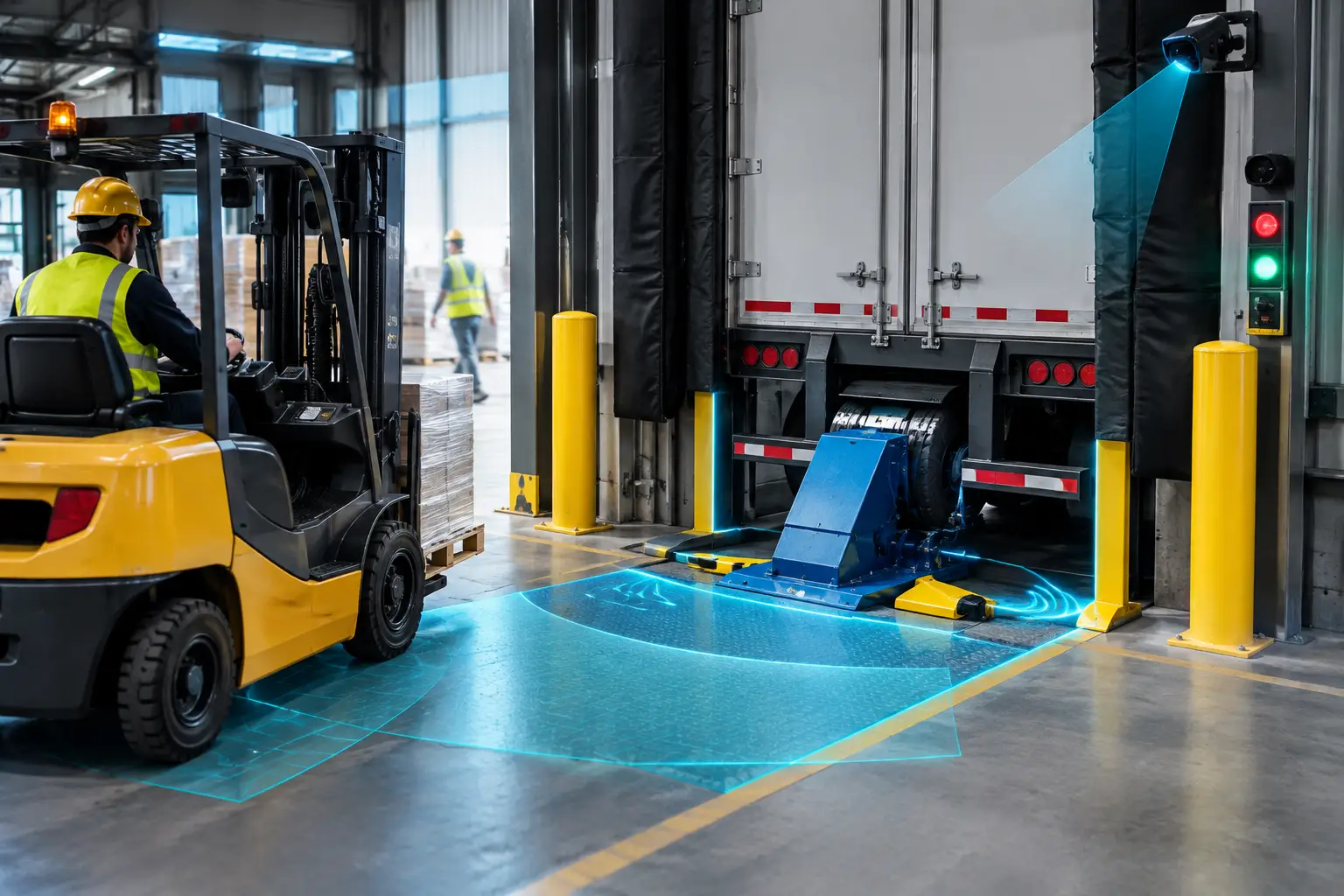
Vehicle restraint systems, dock communication lights, wheel chocks where appropriate, and clear operating procedures help prevent premature vehicle movement. The aim is to ensure the truck remains in a controlled position while people and forklifts are working in or around the trailer.
This is also where visual management matters. A driver should be able to understand the required action without relying on a verbal message passed through several people. Status indicators should be visible, consistent, and supported by training. For example, a clear sequence can show when a vehicle is approaching, secured, being loaded, ready for release, or authorized to depart.
Make Forklift Routes Predictable
Forklifts require space to turn, stop, and handle loads safely. When their travel routes overlap with truck movements or pedestrian crossings, risk rises quickly. Define forklift lanes and staging areas so operators are not forced to weave around parked vehicles, loose pallets, or workers on foot.
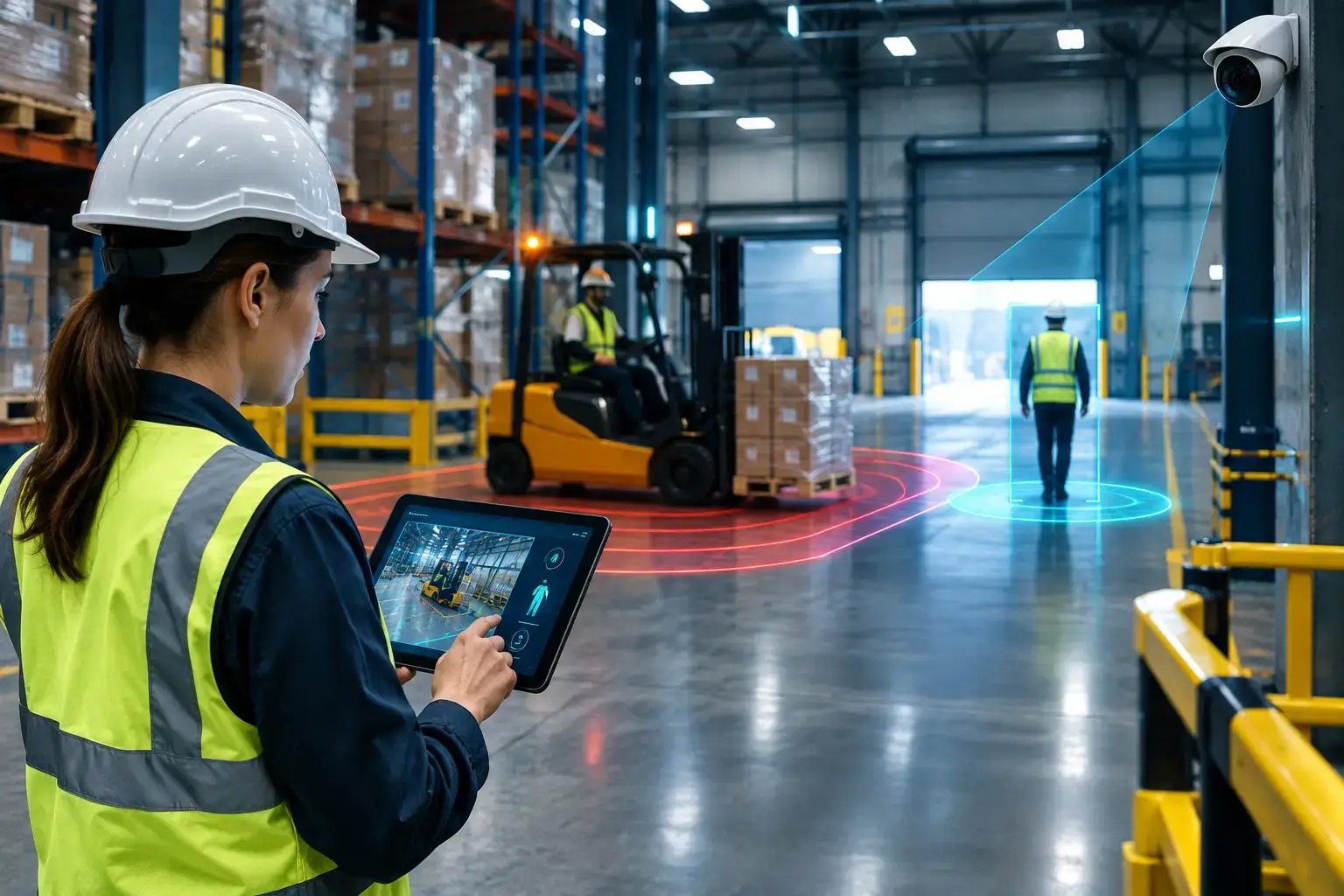
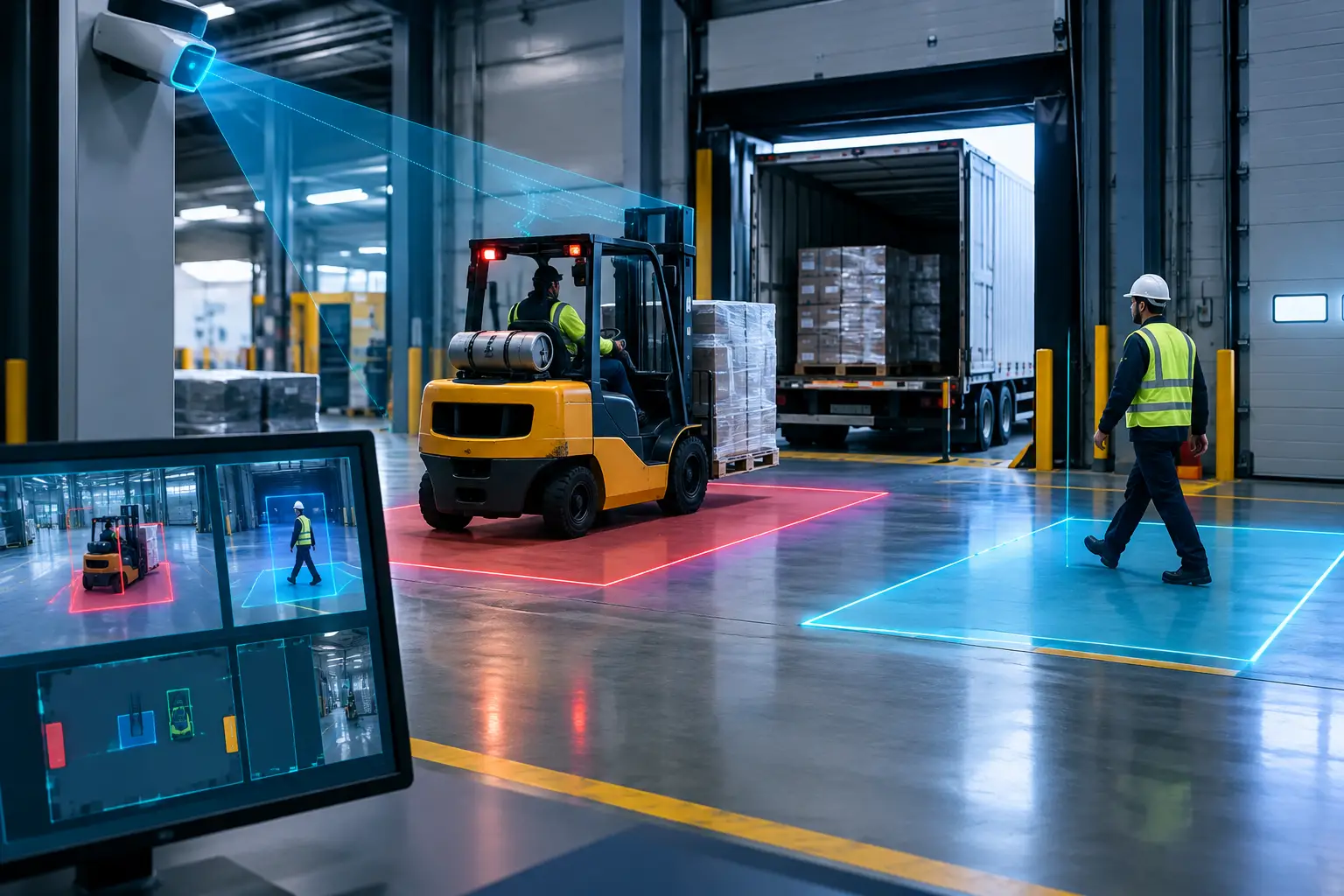
At intersections and blind corners, use measures that actively draw attention to approaching traffic. Convex mirrors can assist in some locations, but they depend on people looking at the right moment. Warning lights, audible alerts, floor projection, and Vision AI monitoring can add stronger awareness where line-of-sight risks are persistent.
Vision AI safety monitoring is especially valuable at repeat high-risk points, such as dock crossings and shared forklift-pedestrian routes. It can identify unsafe proximity, detect unauthorized entry into restricted zones, and provide data on recurring behaviors. The purpose is not simply to record an incident after it happens. It is to identify patterns early and improve controls before an injury or costly disruption occurs.
Build Procedures That Work Under Pressure
Traffic rules that only work during quiet periods will fail when the facility is at full capacity. Procedures should be short, role-specific, and reinforced through supervision. Truck drivers need instructions for arrival, check-in, waiting, dock positioning, and departure. Forklift operators need defined routes, speed expectations, and clear authority to stop work when a pedestrian enters their operating zone.
A strong loading bay control plan typically covers:
- designated vehicle entry, exit, queuing, and dock assignment routes;
- protected pedestrian walkways, crossings, and restricted areas;
- reversing controls, including when a spotter or additional exclusion zone is required;
- trailer securing, loading authorization, and release procedures; and
- inspection, reporting, and review of near misses, congestion, and damaged controls.
Training should include the reasons behind each control. Workers are more likely to follow a pedestrian route or stop at a gate when they understand the blind spots, crush zones, and vehicle movements it is designed to manage. Refresh training after layout changes, new equipment installation, process changes, or an increase in temporary labor.
Inspect, Measure, and Improve the Plan
A loading bay layout is not fixed simply because lines have been painted and signs installed. Review the traffic plan after near misses, incidents, equipment damage, workflow changes, or major increases in volume. Look for practical indicators such as blocked walkways, frequent horn use, unplanned reversing, repeated barrier strikes, drivers waiting in unsafe locations, or forklift operators taking alternate routes.
Maintenance is equally important. Damaged barriers, faded markings, failed warning lights, and poorly positioned signs weaken the control system over time. Routine inspections should confirm that safeguards remain visible, functional, and suited to the current operation.
The best loading bays make safe behavior the easy behavior. When routes are logical, access is controlled, vehicle movement is visible, and hazards are actively monitored, teams can maintain throughput without accepting preventable risk. Every worker deserves to return home safely every day, and that starts with controlling the movements that place them closest to danger.