A loading dock can shift from routine to high-risk in seconds. A trailer moves before unloading is complete, a forklift operator loses sight of a pedestrian, or a worker steps into an open dock position. To reduce loading dock injuries, facilities need more than warning signs and periodic reminders. They need controls that account for moving vehicles, changing conditions, human behavior, and the pace of daily operations.
For warehouse and facility leaders, the goal is not to slow the dock down. It is to make safe movement the normal way work gets done. The right combination of traffic management, engineered safeguards, clear procedures, and monitoring can protect people while reducing trailer damage, product loss, and operational disruption.
Why loading docks create concentrated risk
Loading bays bring several hazards into one confined area: trucks arriving and departing, forklifts transferring loads, pedestrians checking paperwork, dock doors opening and closing, and workers operating around elevated edges. These activities often happen under time pressure, particularly during shift changes, dispatch cutoffs, or high-volume receiving periods.
The most serious incidents usually occur when one part of the operation is not synchronized with another. A forklift may enter a trailer that is not properly secured. A driver may pull away without knowing loading is still underway. A pedestrian may walk behind a reversing vehicle or cross a forklift lane because the intended route is unclear.
Surface conditions add another layer of risk. Uneven dock plates, damaged dock edges, poor lighting, wet floors, and obstructed travel paths can turn a minor mistake into a fall, collision, or dropped-load incident. These risks are not separate problems. They interact, which is why isolated fixes often provide limited results.
Start with the movement of people, forklifts, and trucks
An effective dock safety program begins with observing how work actually moves through the area, not how it is expected to move on paper. Walk the dock during busy receiving and shipping windows. Trace the routes of truck drivers, forklift operators, loaders, checkers, and supervisors. Pay attention to the informal shortcuts people use when the dock is congested.
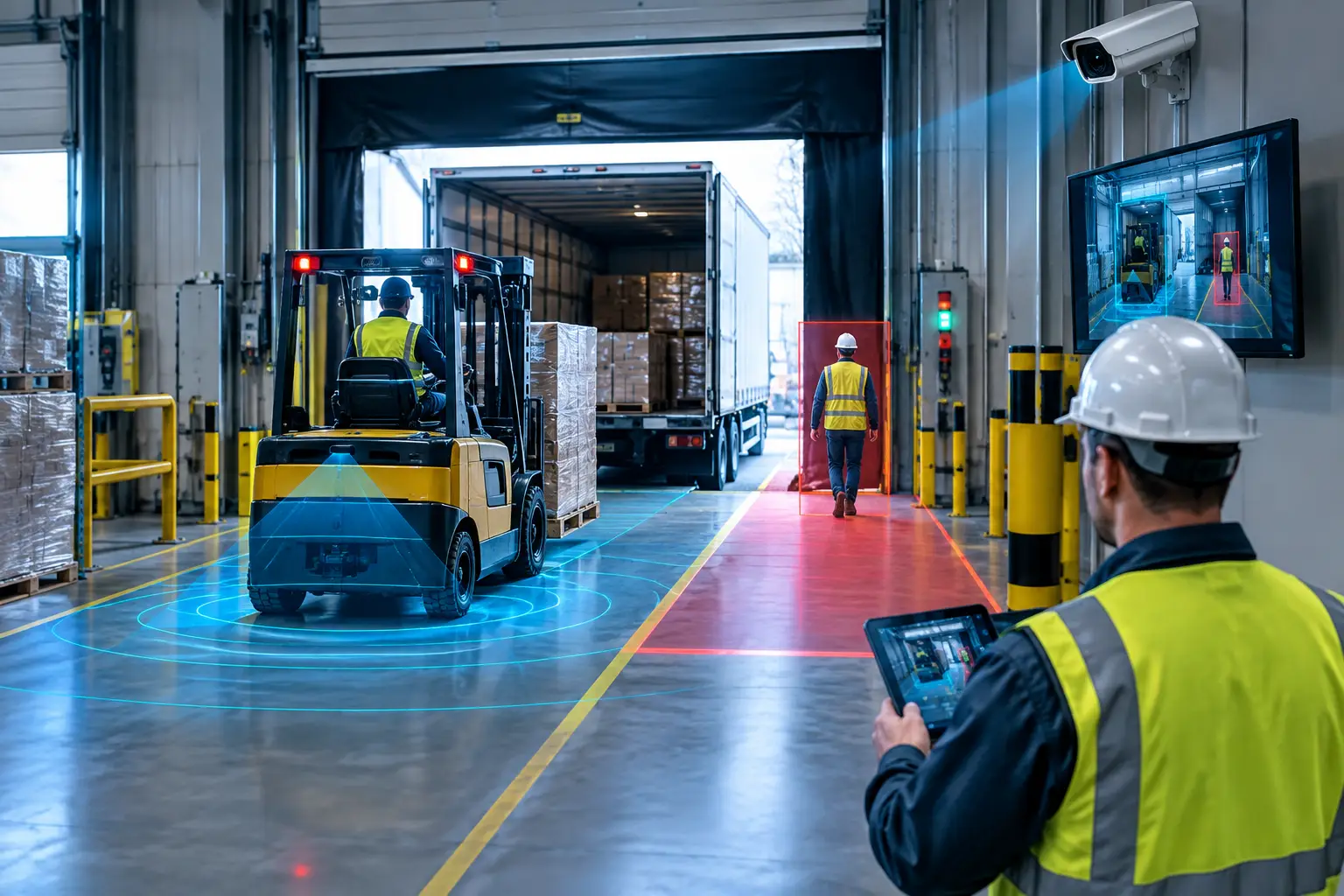
Separate pedestrian and forklift travel wherever practical. Marked walkways, protected crossing points, physical barriers, and designated waiting zones help make safe routes obvious. Floor markings alone can be useful, but they can be overlooked when workers are focused on a load, a handheld device, or a reversing vehicle. In higher-risk crossing areas, projected warning zones, audible alerts, and proximity warning systems add a more active layer of protection.
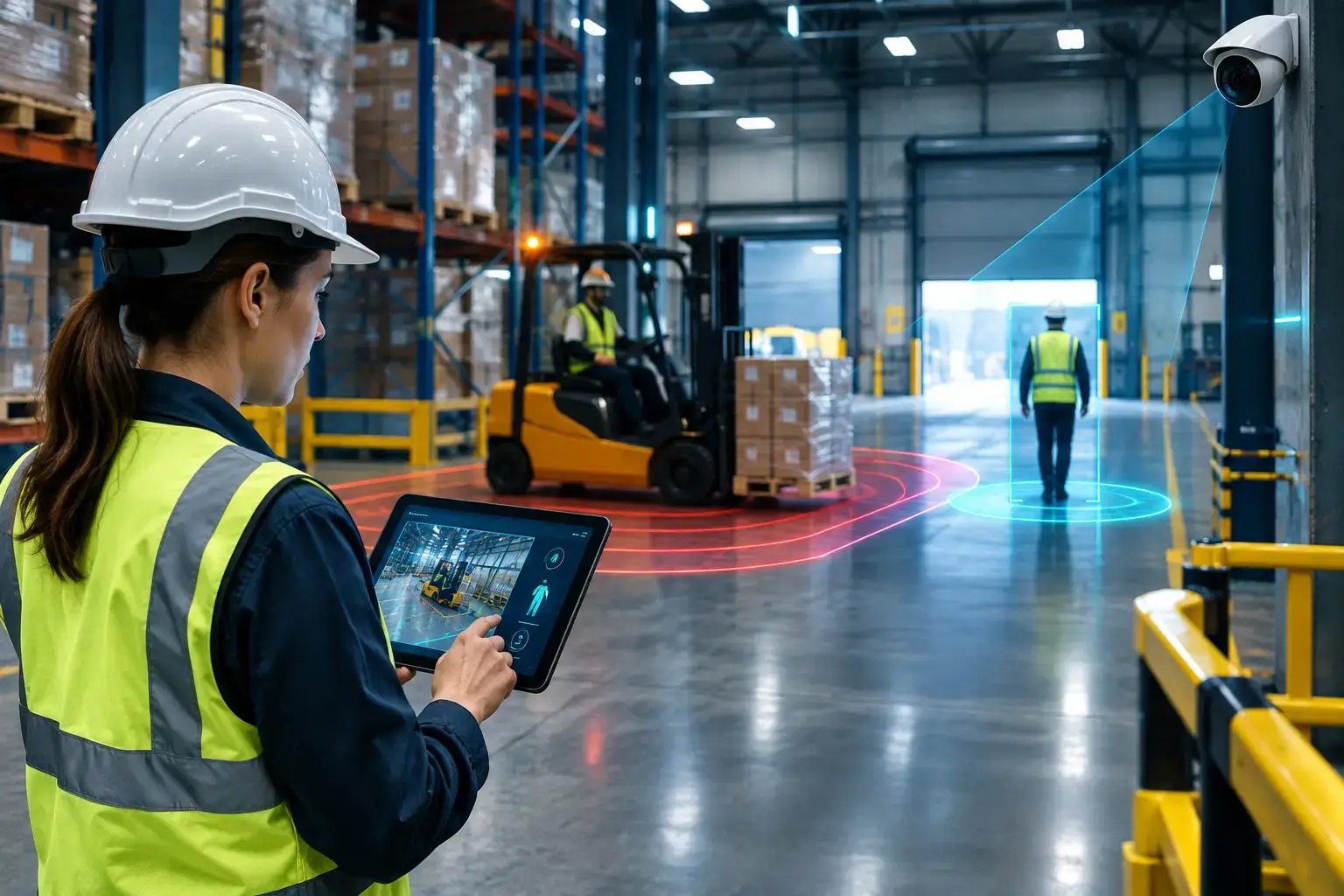
Forklift routes should also be designed for visibility. Blind corners, trailer entrances, staging areas, and door approaches deserve particular attention. Convex mirrors may help in some locations, but they do not eliminate the need to control speed, restrict pedestrian access, and alert operators to people entering the travel path. Vision AI safety monitoring can provide another level of awareness by identifying unsafe interactions, such as pedestrians entering active forklift zones or vehicles traveling outside defined routes.
Prevent trailer movement before loading begins
Trailer creep and premature departure are among the most consequential dock hazards because the people at risk may be inside the trailer when it moves. Wheel chocks can be part of a control plan, but their effectiveness depends on correct placement, inspection, ground conditions, and consistent use. In busy operations, these variables can make a manual-only approach unreliable.
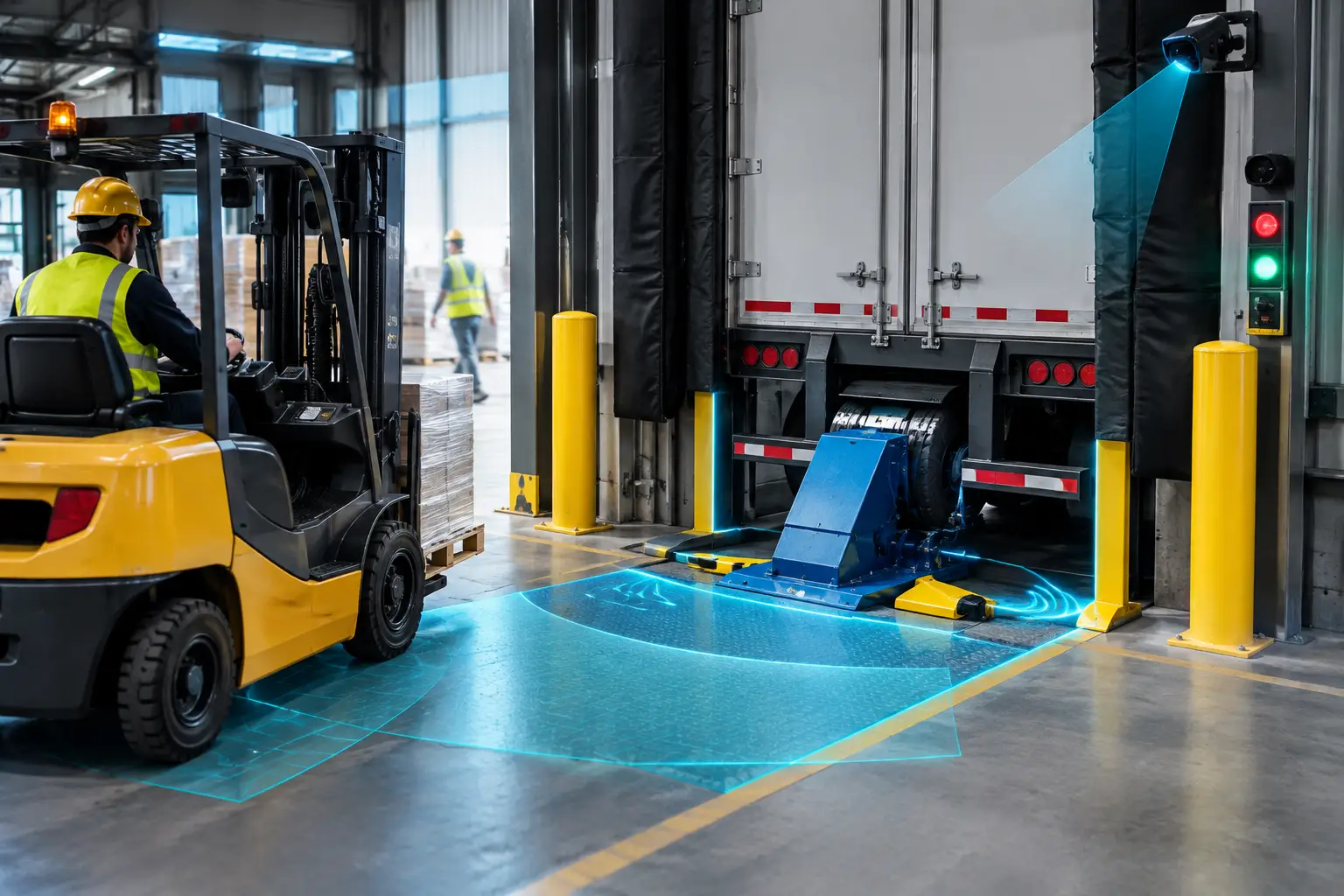
Vehicle restraint systems provide a stronger engineered control by helping prevent a trailer from leaving the dock while loading or unloading is underway. The most effective setup links the restraint status to clear visual communication for both dock personnel and drivers. A driver should be able to see when it is safe to depart, while the dock team should know whether the trailer is secured before a forklift enters.
This process must account for trailer variation. Different underride guard designs, trailer conditions, and dock configurations may affect the suitability of a restraint method. Where a facility handles a mixed fleet, an assessment should identify exceptions and define a safe alternative procedure rather than allowing teams to improvise under pressure.
Make trailer status impossible to misread
Confusion is a recurring cause of loading dock incidents. A simple, standardized sequence reduces it: vehicle arrives, vehicle is positioned, restraint is engaged, the dock is released for work, and only then does loading or unloading begin. Departure follows the reverse sequence.
Status lights, interlocked dock equipment, and visual indicators help reinforce this sequence. They are most valuable when the signals are unambiguous and visible from the positions where decisions are made. A light that cannot be seen by a driver, or a procedure that requires a supervisor to confirm every step, creates room for error during peak activity.
Control open edges, dock gaps, and trailer entry
A dock door is an elevated opening, not just a point of transfer. When no trailer is present, workers can be exposed to fall hazards at the dock edge. Dock gates or other physical edge protection should be used where open-door activity is necessary or where personnel may work near an unprotected edge. The protection must fit the operational flow so it is used consistently rather than bypassed for convenience.
Dock levelers and plates need routine inspection because they carry forklifts, workers, and loads across the gap between building and trailer. Bent plates, damaged lips, worn surfaces, and poor alignment can create instability. Any equipment that does not sit securely or show clear signs of wear should be removed from service until it is assessed and repaired.
Trailer floors also deserve attention before entry. Damaged flooring, debris, moisture, and uneven load distribution can affect forklift stability and pedestrian footing. Operators should have a clear process for reporting unsafe trailer conditions without feeling pressured to continue the task.
Use technology where attention is most likely to fail
Technology is not a substitute for disciplined operations, but it can reduce reliance on perfect human attention. This matters at loading docks because operators often work amid noise, time pressure, restricted sightlines, and frequent interruptions.
Audible and visual warning systems can alert personnel to truck movement, forklift approach, dock door activity, or pedestrian presence. Proximity detection can warn forklift operators and pedestrians when they enter a collision zone. Safety floor projection can create highly visible exclusion areas that remain easier to see than painted lines in changing light or high-traffic conditions.
The best technology choice depends on the risk. A facility with frequent trailer departures may prioritize restraint interlocks and external communication lights. A congested cross-dock operation may gain more from pedestrian segregation, warning systems, and forklift-pedestrian detection. A site with recurring near misses but limited incident detail may benefit from Vision AI monitoring to identify where unsafe behaviors and traffic conflicts occur.
The practical question is not, “What is the most advanced system available?” It is, “Which control addresses the failure point we see most often?”
Build procedures around real dock conditions
Written procedures are necessary, but they must match the conditions workers face. If a rule requires employees to take a long route around active traffic, they may create their own shortcut. If a loading sequence adds unclear handoffs, workers may skip steps when the dock is under pressure. Good procedures make the safe choice the easy choice.
Training should focus on recognizable dock scenarios: an unrestrained trailer, a blocked pedestrian route, a dock plate that does not sit correctly, an unexpected driver movement, or a person entering a forklift operating zone. Supervisors should reinforce these controls through regular observation and immediate correction, not only after an incident.
Near-miss reporting is particularly useful at loading docks. A near miss involving trailer movement, a pedestrian-forklift conflict, or a damaged dock plate is evidence of a weak control before someone is injured. Review these events for patterns, then correct the physical layout, equipment condition, communication method, or workflow that allowed the exposure.
Measure whether controls are working
Incident rates alone do not tell the whole story. A dock may have no recordable injuries for months while unsafe conditions continue to develop. Leading indicators provide earlier warning: restraint usage rates, damaged equipment findings, blocked walkway observations, pedestrian entries into restricted zones, speeding alerts, and recurring near-miss locations.
Review this information with operations, maintenance, and safety teams together. Loading dock risk often crosses departmental boundaries. Maintenance may see repeated damage to a door or leveler, while operations sees trailer delays and EHS sees near-miss reports. Combining those observations creates a clearer picture of the underlying problem.
SysGuard approaches loading bay safety as an engineered operational challenge, bringing together assessment, safety technology, implementation, training, and ongoing support. The objective is not simply to add equipment. It is to create controls that workers can understand, supervisors can manage, and facilities can sustain through changing volumes and operating conditions.
Every worker at the dock is relying on the system around them to work as intended. Start with the next high-risk movement in your operation, make that movement safer by design, and build outward from there.