A trailer that moves while a forklift is crossing the dock plate creates a high-consequence hazard in seconds. Vehicle restraint alternatives can help manage this risk where conventional dock restraints are unsuitable, but they should never be treated as interchangeable by default. The right approach depends on trailer types, dock geometry, traffic flow, operating discipline, and the severity of a potential premature departure.
For loading bay managers, the question is not simply which device to buy. It is whether the full system prevents a driver from leaving too early, warns the forklift operator of an unsafe condition, and keeps the dock position controlled until loading is complete. Accidents happen. But well-designed controls can prevent the conditions that allow them to happen.
Why Vehicle Restraint Alternatives Are Needed
A conventional vehicle restraint engages a trailer’s rear impact guard to help prevent trailer creep and early departure during loading. It remains a strong control where trailer geometry, dock design, and operating conditions support reliable engagement.
However, not every facility handles a consistent trailer fleet. Some operations receive vehicles with damaged, low, recessed, or incompatible rear impact guards. Others manage box trucks, straight trucks, container vehicles, or mixed regional fleets where a fixed dock restraint cannot reliably engage every vehicle. Uneven approach grades, narrow dock aprons, and older loading bay layouts can also limit installation options.
In these conditions, a restraint that cannot engage consistently may create false confidence. The safer decision is to identify the specific failure mode at each dock and build a layered alternative that addresses it. A solution for trailer creep is not necessarily a solution for premature departure, and a warning light is not a physical barrier.
The Risks an Alternative Must Control
Loading bay controls should be selected against real operational hazards, not product categories. The main risks are trailer movement away from the dock, movement toward the building, a driver departing while loading is underway, and a forklift entering a trailer that is not safely supported or properly positioned.
The consequences extend beyond forklift damage. A shifting trailer can cause a forklift fall from the dock, trap an operator between equipment and the trailer, damage a dock leveler, or interrupt a critical shipping schedule. Even a near miss can lead to equipment inspections, bay closure, delayed dispatch, and loss of confidence among the workforce.
An effective alternative should therefore provide three functions: control vehicle movement where feasible, clearly communicate dock status to both drivers and warehouse teams, and prevent unsafe loading activity when the dock is not ready.
Practical Vehicle Restraint Alternatives
Wheel chocks and wheel-based systems
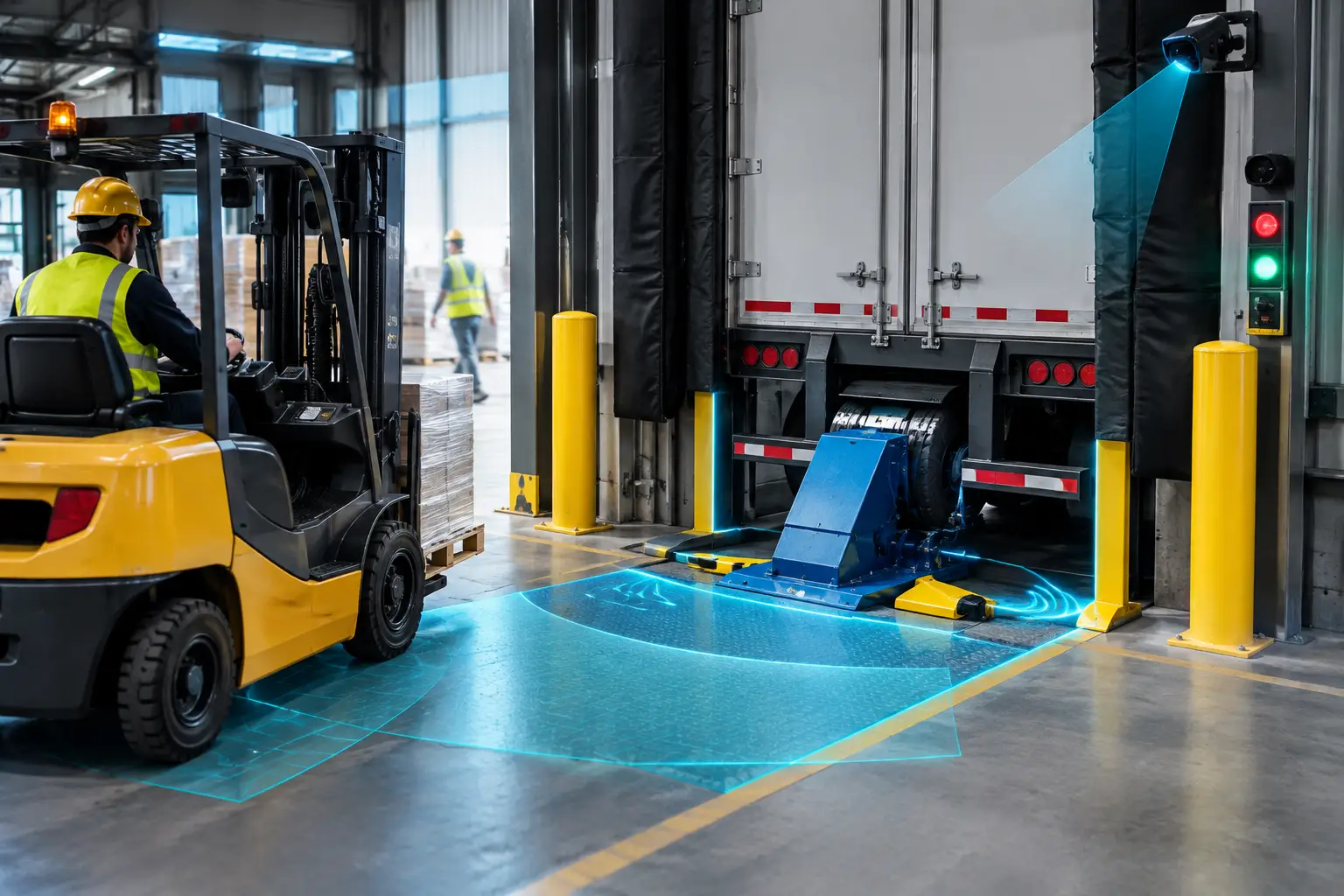
Wheel chocks are often the first alternative considered because they are familiar and relatively simple. When correctly placed against trailer wheels on a suitable surface, they can help limit trailer creep. They are most useful where dock geometry or trailer designs prevent reliable engagement by a rear-impact-guard restraint.
Their limitation is dependence on people. Chocks must be available, positioned correctly, inspected, and removed only after loading is complete. Wet surfaces, damaged pavement, poor wheel access, and inconsistent driver behavior can reduce effectiveness. A basic chock should not be relied upon as the only control for high-frequency bays or operations with significant forklift traffic.
Powered or monitored wheel-based restraint systems provide a stronger option. These can apply controlled force at the wheel and may be integrated with dock signals or door controls. They are particularly worth assessing for facilities with diverse trailers but consistent wheel access.
Dock communication systems
External red and green signals give truck drivers a clear instruction: remain stopped until the loading operation is complete. Internal signals tell forklift operators whether it is safe to enter the trailer. Audible alarms can reinforce these visual messages where noise, congestion, or obstructed sightlines are common.
Communication systems do not physically stop a vehicle from leaving. Their value lies in removing ambiguity. A driver should never need to guess whether a dock is still active, and a forklift operator should never need to rely on hand signals or assumptions before entering a trailer.
For higher-risk operations, signals should be tied to a defined dock sequence. For example, the outside signal remains red while the trailer is being loaded, while the inside signal only permits forklift movement after the vehicle is confirmed in position and the dock equipment is ready.
Dock door and leveler interlocks
Interlocks make unsafe actions harder to perform. A dock door can be prevented from opening until a trailer is present, or a dock leveler can be controlled so it cannot be deployed unless defined conditions are met. Depending on the design, an interlock can also keep the external traffic signal red while the leveler is in use.
This approach is effective because it connects equipment status to human behavior. It does not rely solely on memory, radio calls, or paperwork. However, it requires careful engineering. The control logic must match the actual loading process, including exception handling for incompatible vehicles, maintenance activity, and manual override procedures.
Trailer presence detection and warning systems
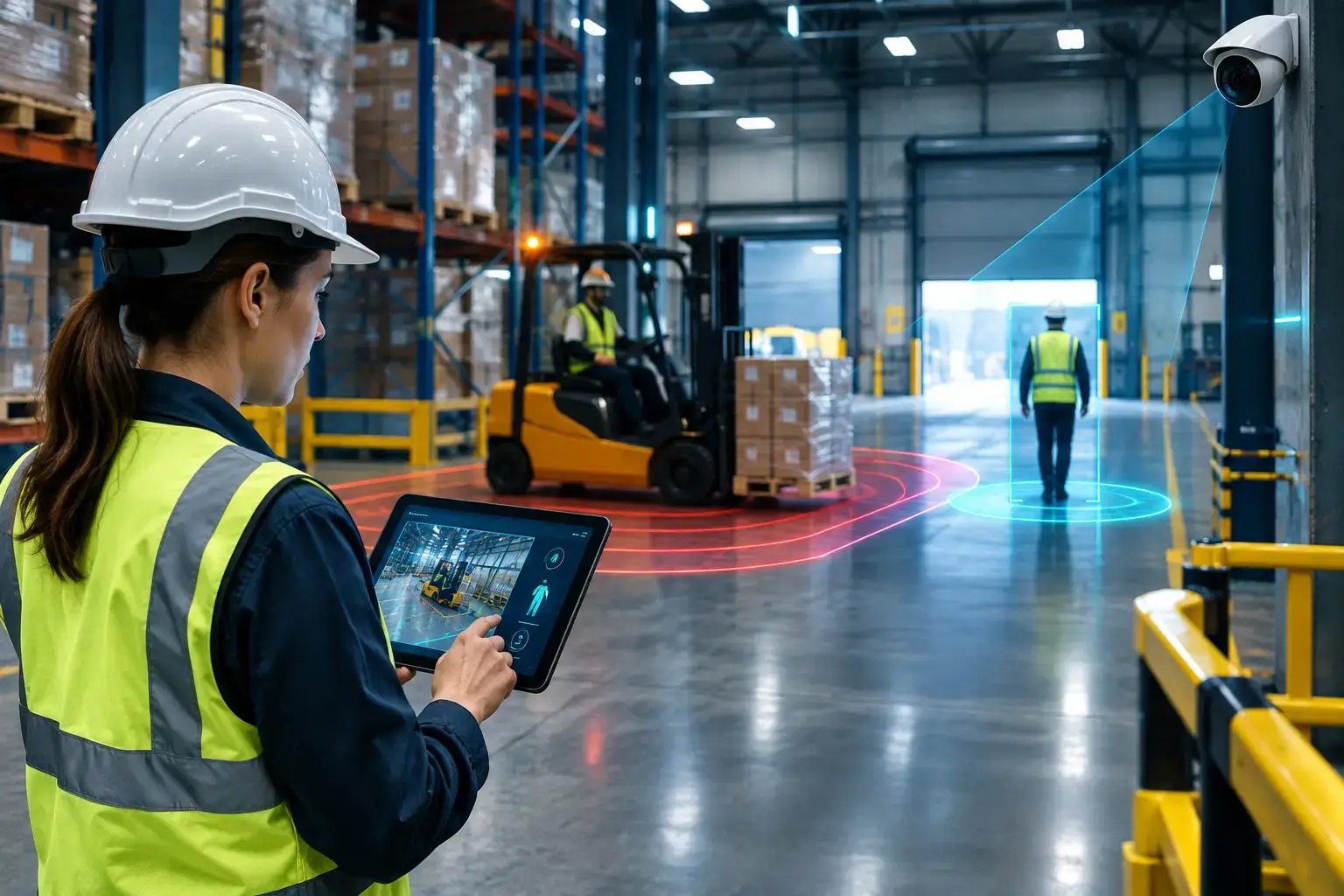
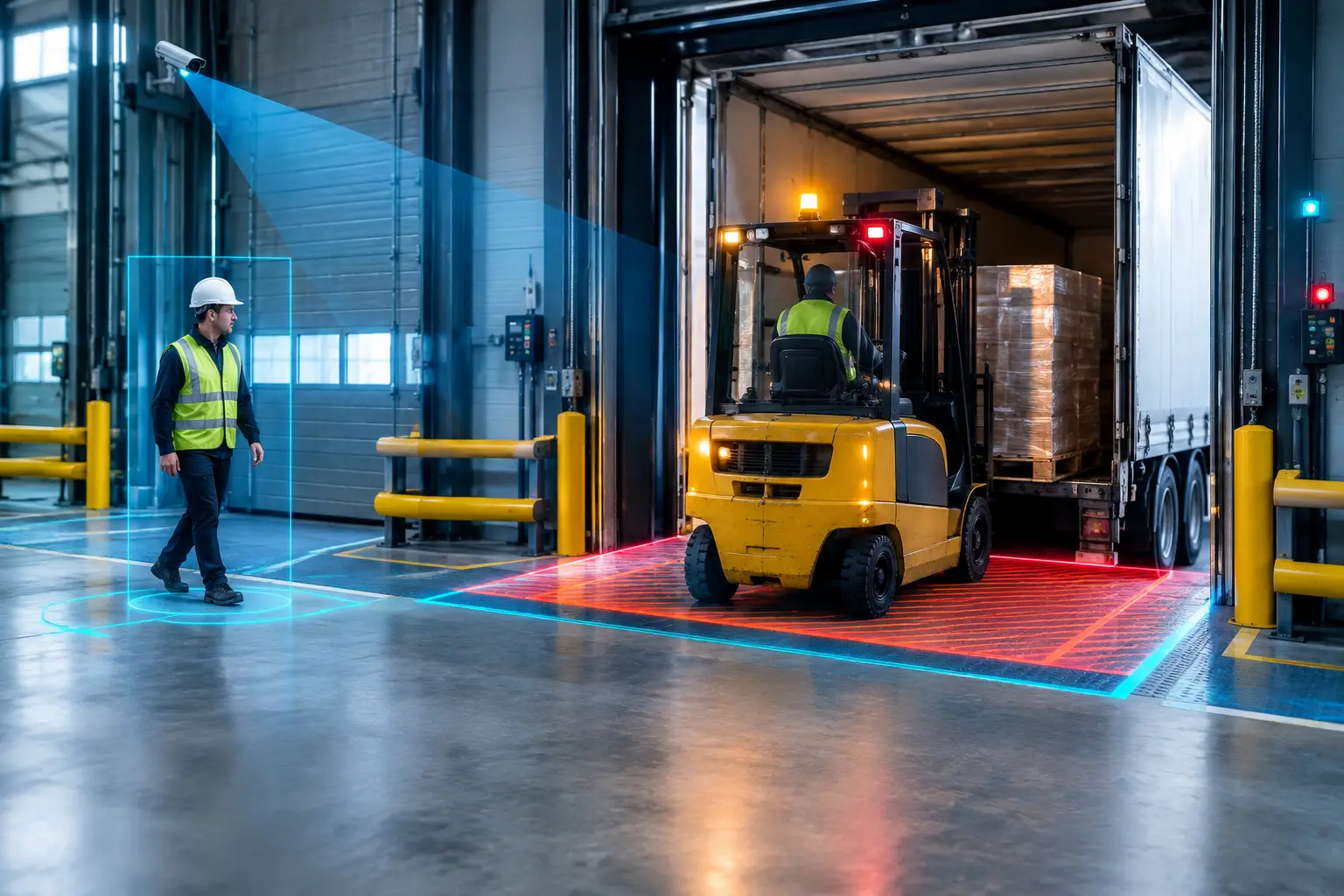
Sensors can detect whether a vehicle is positioned at the dock and whether it remains present during loading. If the trailer moves unexpectedly, an audible and visual warning can alert the forklift operator and dock team immediately. Some systems can be integrated with powered doors, levelers, lights, and access controls to create a coordinated bay safety sequence.
Presence detection is valuable as a secondary control and as a way to improve visibility of changing conditions. It is not, by itself, a substitute for physical restraint where early departure is a credible risk. Its strength is rapid detection and escalation, particularly in busy logistics environments where supervisors cannot monitor every dock continuously.
Pedestrian and forklift exclusion controls
Where a vehicle cannot be physically restrained, controlling who can enter the hazard zone becomes even more important. Dock barriers, gate systems, floor projections, warning lights, and clearly defined forklift travel paths can prevent people from standing in pinch points or crossing behind trailers during active loading.
These measures do not hold the vehicle in place, but they reduce exposure if a movement event occurs. They are especially relevant at bays where drivers, warehouse associates, and forklift operators share constrained space. A loading bay safety plan should account for all three groups, not just the vehicle.
Choose Controls Based on the Operating Scenario
A good assessment starts at the dock, not in a catalog. Observe arrivals, reversing, driver check-in, wheel chocking, door opening, forklift entry, loading completion, and release. The details often reveal gaps that procedures alone have failed to control.
Consider these practical questions:
- Which vehicles use the bay, and how often do incompatible trailers arrive?
- Can a vehicle move because of slope, vibration, loading forces, or driver error?
- What positive indication tells the forklift operator the trailer is safe to enter?
- What physically or procedurally prevents the driver from departing early?
- How are exceptions managed when equipment is unavailable or a trailer cannot be restrained?
A high-volume distribution center handling mixed vehicles may need monitored wheel restraint, interlocked dock equipment, and red-green communication at every active bay. A lower-volume manufacturing dock with occasional inbound deliveries may use certified wheel chocks, disciplined driver check-in, clear signals, and a controlled loading sequence. The answer depends on the risk, but the control must be reliable enough for the task.
Avoid Replacing Engineering Controls With Procedures Alone
Procedures matter, particularly for driver communication and abnormal conditions. But procedural controls are vulnerable to shift changes, language barriers, time pressure, and simple human error. A rule requiring drivers to remain in a waiting area is helpful, yet it does not stop an unauthorized departure. A checklist confirms intent, but it does not detect trailer movement.
The most dependable loading bays combine physical or engineered controls with clear operating procedures. Technology should make the safe action obvious and the unsafe action difficult. Training should explain why each step exists, not merely require a signature.
Build a Layered Loading Bay Safety Plan
The strongest alternative is often a combination rather than a single device. A facility may use wheel-based control to limit movement, external driver signals to prevent departure, internal forklift signals to manage entry, and interlocks to ensure the dock equipment follows the intended sequence. Where movement is detected, audible and visual alerts provide immediate warning.
This layered approach also improves resilience. If one control is unavailable, supervisors can follow a documented exception process rather than allowing work to continue under unclear conditions. It supports better risk assessments, reduces preventable equipment damage, and gives operations teams a consistent way to manage diverse vehicles.
SysGuard helps industrial facilities assess loading bay hazards as part of a wider safety system that includes traffic management, warning technology, barriers, and operational controls. The objective is practical: protect the people working at the dock while keeping goods moving safely.
Before selecting a vehicle restraint alternative, walk the loading sequence with the people who operate it every day. The best solution is the one that controls the real movement risk, communicates clearly under pressure, and remains dependable across every shift.