A bent rack upright is rarely just a maintenance issue. It can trigger pallet damage, rack instability, blocked aisles, unplanned inspections, and costly disruption to warehouse operations. Knowing how to choose rack protectors starts with understanding where forklifts, reach trucks, pallet jacks, and pedestrians are most exposed to impact risk.
Rack protection should not be selected solely by appearance, price, or a standard product size. The right solution must match the rack structure, vehicle traffic, operating speeds, aisle geometry, and the severity of likely impacts. A protector that is too light for the environment may transfer force into the upright. One that is poorly positioned may leave the real collision point exposed.
Start With the Actual Impact Risk
Every warehouse has different damage patterns. In a high-throughput distribution center, the lower rack uprights at aisle entrances may face repeated contact from forklifts turning with loads. In a manufacturing facility, the greater risk may be from pallet movement near production staging areas. Loading zones can introduce another hazard when vehicles, dock equipment, and stored materials compete for limited space.
Walk the facility and review where damage has already occurred. Look for scraped paint, distorted uprights, cracked concrete, damaged guards, and recurring pallet strikes. Near-miss reports and operator feedback are also useful because not every impact leaves visible structural damage.
Consider four factors together: vehicle type, travel speed, load size, and maneuvering space. A counterbalance forklift traveling through a narrow cross aisle creates a very different hazard than a pedestrian-operated pallet jack in a low-speed picking area. The protection level should reflect the likely impact energy, not just the presence of a rack.
How to Choose Rack Protectors by Rack Location
Not every upright needs the same level of protection. Focusing protection where exposure is highest helps control costs while addressing the most significant risks.
End-of-aisle uprights are commonly the first priority. They are exposed to turning vehicles, wide loads, and operators entering or exiting aisles. Heavy-duty end-of-aisle barriers or rack-end protectors can create a physical stand-off distance between mobile equipment and the rack structure.
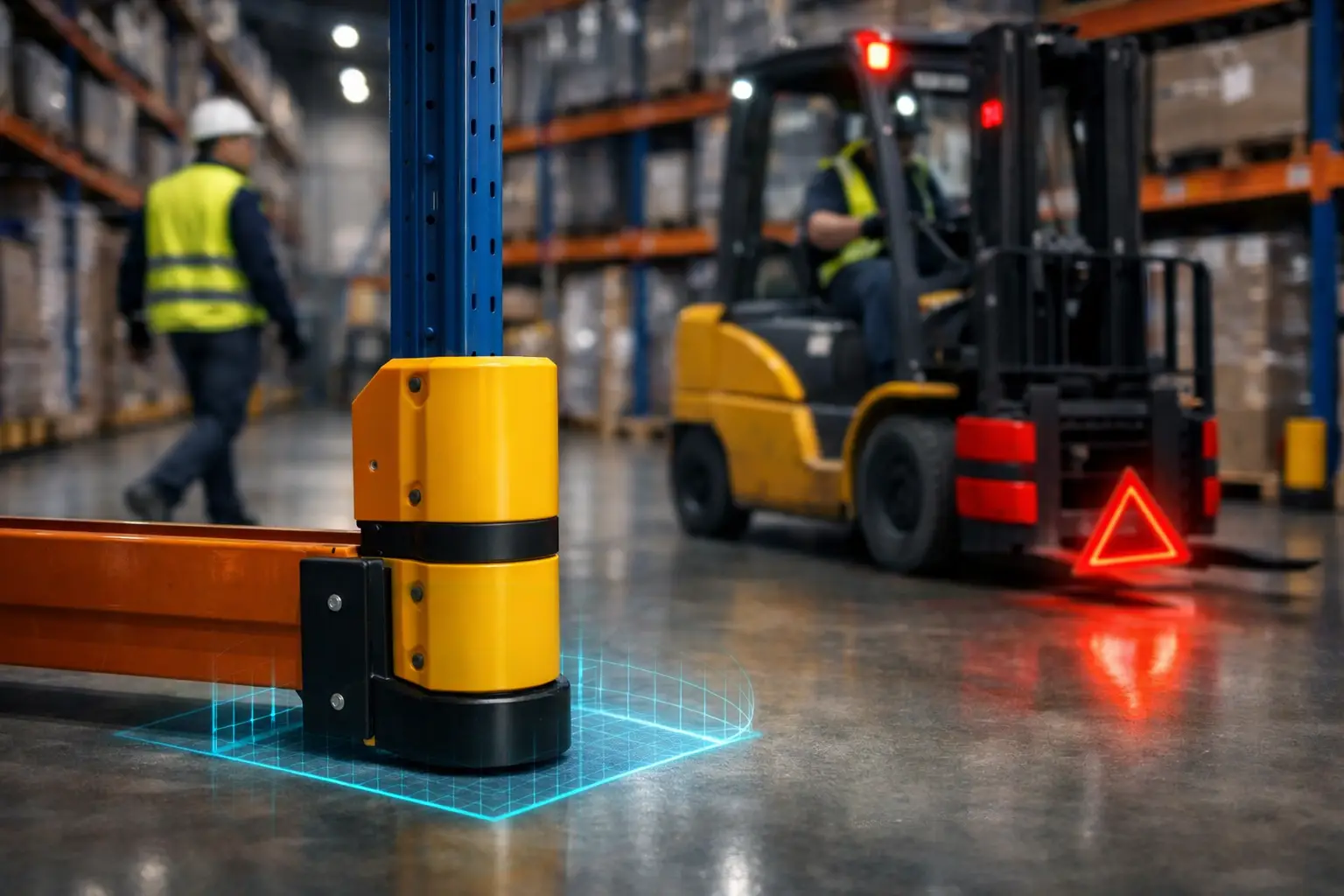
Intermediate uprights may need individual protection where aisles are narrow, storage locations are frequently replenished, or lift trucks operate close to the rack face. Upright guards are designed to protect the lower portion of the rack leg, where even a relatively low-level strike can compromise alignment or create a point of concern during rack inspections.
Rack corners, cross aisles, staging areas, and locations beside conveyor transfers may also require protection. The most effective approach is based on traffic behavior. Protect the locations where equipment actually turns, reverses, and handles loads, rather than applying the same product across every rack line.
Match the Protector to the Type of Impact
Rack protectors are not interchangeable. Their design determines how they react when struck and how much force they can help manage.
Steel guards and barriers are often suitable for high-impact areas, particularly where powered industrial trucks operate regularly. They can provide substantial physical resistance, but they must be correctly anchored and positioned. A heavy steel guard installed too close to an upright can still allow impact force to reach the rack.
Polymer or flexible protectors are often used for lower-energy contact and repeated minor impacts. They may absorb or deflect small strikes while reducing visible damage to the upright. However, they are not a replacement for engineered barriers in locations exposed to heavy forklift collisions.
Column-style guards, upright wraps, and low-profile protectors can be useful where space is limited. Their value depends on clearance. If a guard reduces aisle width or creates a new snag point for pallets, it may introduce an operational problem while solving another.
The key question is not which material is best in general. It is whether the protector has the right impact performance for the vehicle and operating conditions at that exact location.
Check Compatibility With Your Rack System
Before specifying protection, confirm the rack upright profile, base plate configuration, frame depth, beam levels, and available floor space. Rack systems vary significantly, and a protector that fits one upright profile may not secure properly on another.
Measure the distance from the rack face to the travel path, as well as the turning radius of the vehicles using that aisle. This helps determine whether a protector can be installed without restricting forklift movement or pallet handling. Clearance must also account for load overhang, not only the vehicle body.
For floor-mounted barriers, assess slab condition, anchor requirements, and the presence of expansion joints or underground services. Anchors are part of the protective system. If the floor cannot support the selected anchoring arrangement, the barrier may not perform as intended during an impact.
When racks have existing damage, do not assume that installing a guard resolves the issue. Damaged uprights, bracing, anchors, or base plates should be assessed before protection is added. A rack protector prevents future strikes; it does not restore structural capacity.
Consider Traffic Flow, Not Just Rack Geometry
Rack protection performs best when combined with sensible traffic management. A guard can reduce the consequences of a collision, but it cannot eliminate the conditions causing frequent collisions.
Review whether forklifts are making sharp turns into aisles, reversing near rack ends, or sharing routes with pedestrians. Check whether staging locations force operators to pass too close to storage structures. Poor lighting, congested travel lanes, blind intersections, and inconsistent travel rules can increase contact risk even when rack protection is installed.
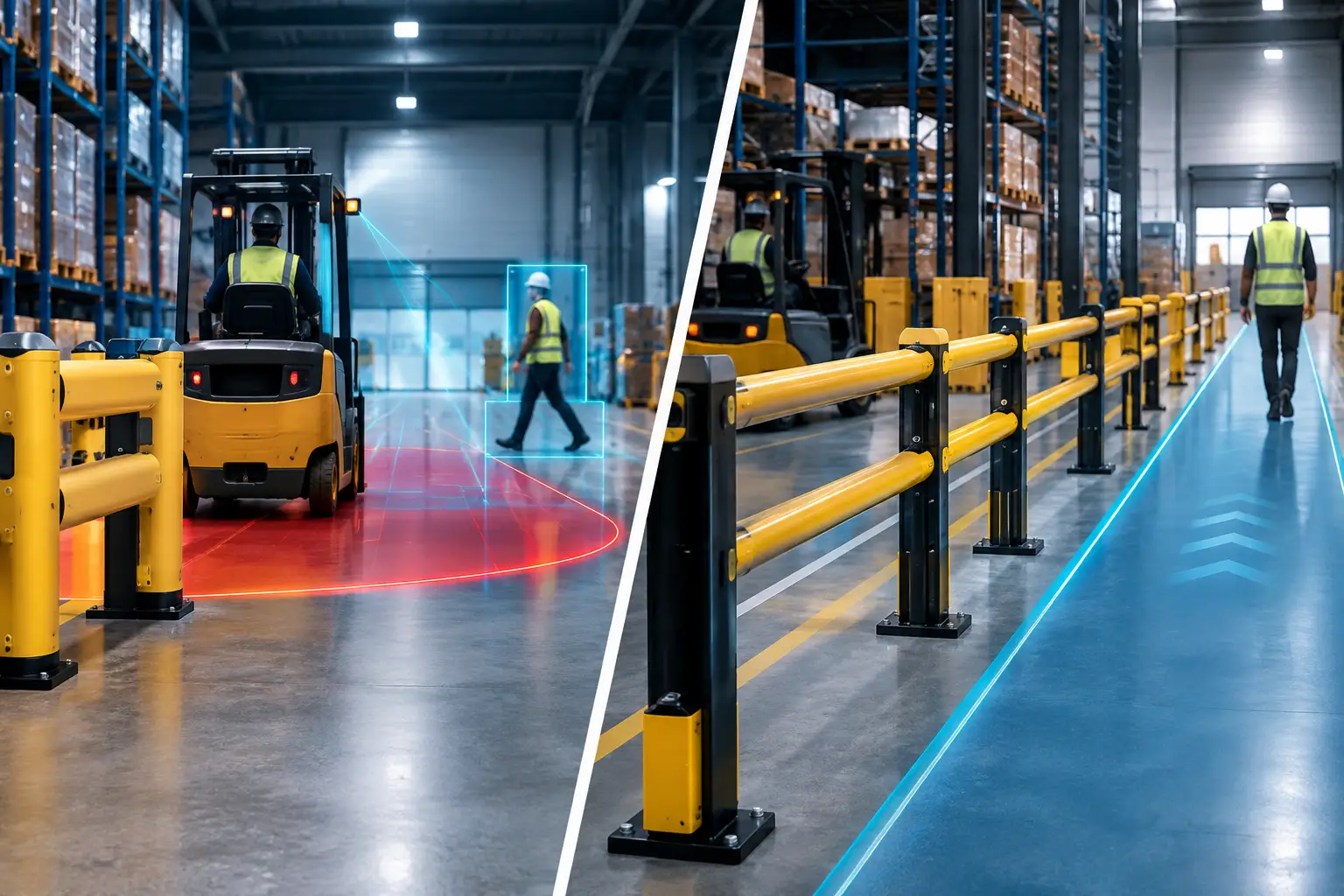
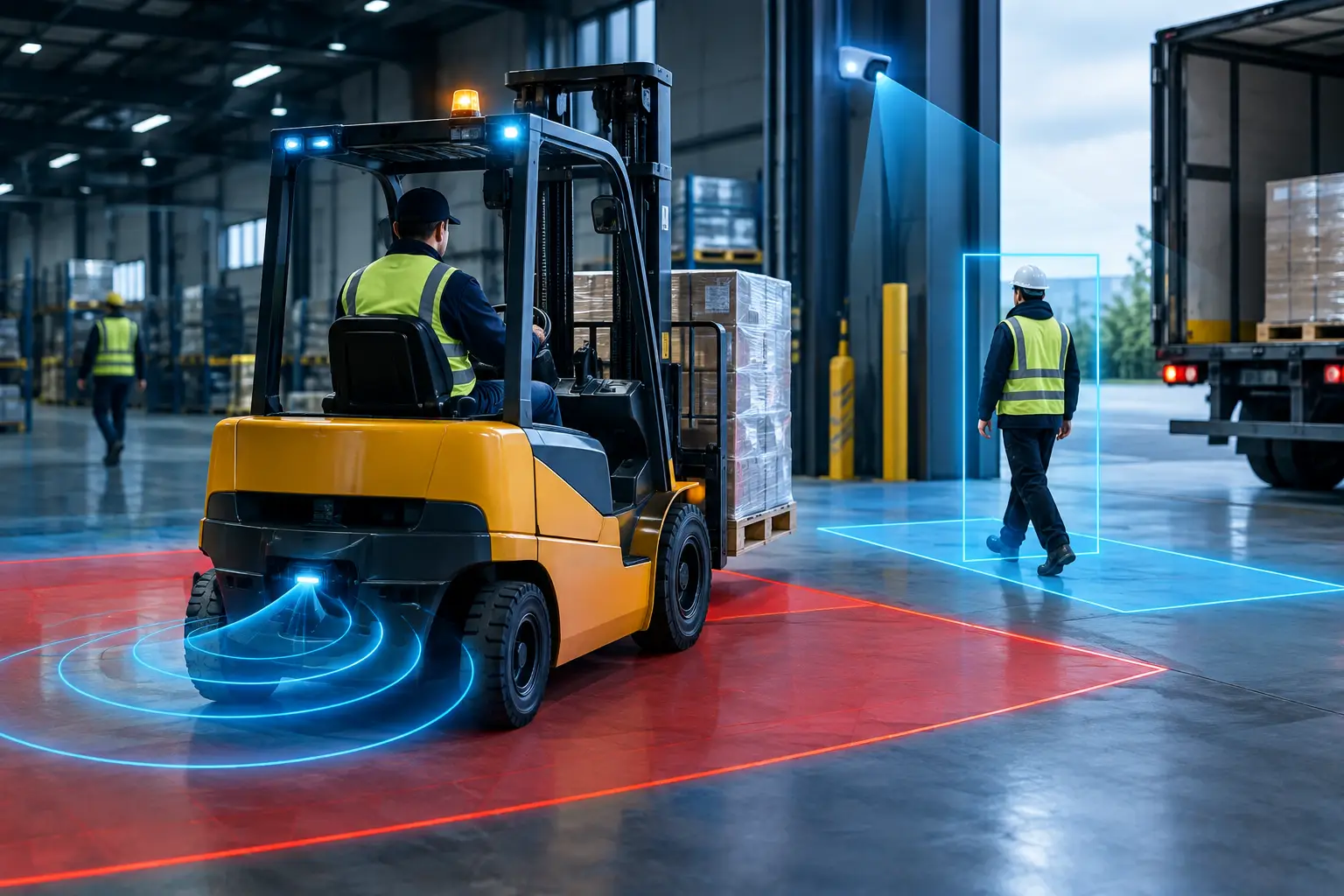
In higher-risk areas, rack protectors may need to work alongside floor markings, physical safety barriers, warning lights, projected safety zones, or forklift-pedestrian warning systems. This layered approach is particularly valuable where there is limited room to separate people, vehicles, and storage infrastructure.
The goal is not to surround every rack with steel. The goal is to create a safer operating layout in which vehicle movements are predictable, hazards are visible, and critical rack components are less exposed.
Prioritize Installation Quality and Maintainability
A well-designed protector can underperform if it is installed incorrectly. Positioning, anchor torque, stand-off distance, and alignment all affect its ability to handle impact. Installation should follow the product design and account for the actual site conditions, rather than relying on a generic layout.
Choose solutions that can be inspected easily. Warehouse teams should be able to identify bent barriers, loose anchors, cracked protective components, and contact marks during routine safety checks. A protector that has absorbed a significant impact may need repair or replacement even if it appears broadly intact.
Maintenance planning matters because repeated low-level contact can gradually loosen anchors or shift a barrier out of position. Include rack protectors in your rack inspection and facility maintenance program. Record impact incidents, inspect the surrounding rack frame, and investigate recurring strikes at the same location.
If a particular upright is repeatedly hit, treat that pattern as operational data. It may indicate insufficient aisle width, poor traffic routing, inadequate operator visibility, or a need for a stronger protection system.
Balance Protection With Operational Efficiency
The highest-rated barrier is not automatically the right choice if it blocks access, reduces usable aisle width, or makes normal handling more difficult. Conversely, selecting a minimal guard only because it occupies less space can leave a critical rack location underprotected.
An effective selection balances impact resistance, available clearance, installation constraints, and the cost of disruption if a rack is damaged. For many sites, the best result comes from applying heavy-duty protection at exposed rack ends and using more compact upright protection in lower-risk areas.
Engaging an experienced warehouse safety and engineering partner can help validate the layout before installation. A site assessment can identify collision hotspots, confirm product compatibility, and recommend protection that supports both asset protection and safe material flow.
Rack protectors are a practical control against a common warehouse hazard, but their real value comes from correct placement and informed selection. Protect the uprights most likely to be struck, keep traffic routes clear, inspect equipment after impacts, and use every collision as an opportunity to strengthen the operation before the next one occurs.