A forklift turning into a blind warehouse aisle does not need a reminder that people may be nearby. It needs controls that reduce the chance of impact before a person and vehicle occupy the same space. That is the practical question behind speed limiters versus proximity alerts: should a facility control vehicle speed, warn people of danger, or use both?
The answer depends on the hazard. A speed limiter reduces the energy of a potential collision. A proximity alert detects a developing conflict and warns the operator, pedestrian, or both. Neither is a substitute for effective traffic segregation, clear sightlines, trained operators, and disciplined work processes. Used in the right locations, however, these technologies can close gaps that painted lines and procedures alone cannot reliably manage.
Speed limiters versus proximity alerts: the core difference
Speed limiters are preventive vehicle controls. They cap a forklift’s travel speed continuously or reduce it automatically in selected zones, such as pedestrian crossings, doorways, loading bays, intersections, and narrow aisles. Their value is straightforward: lower speed gives an operator more time to react and reduces stopping distance and collision force.
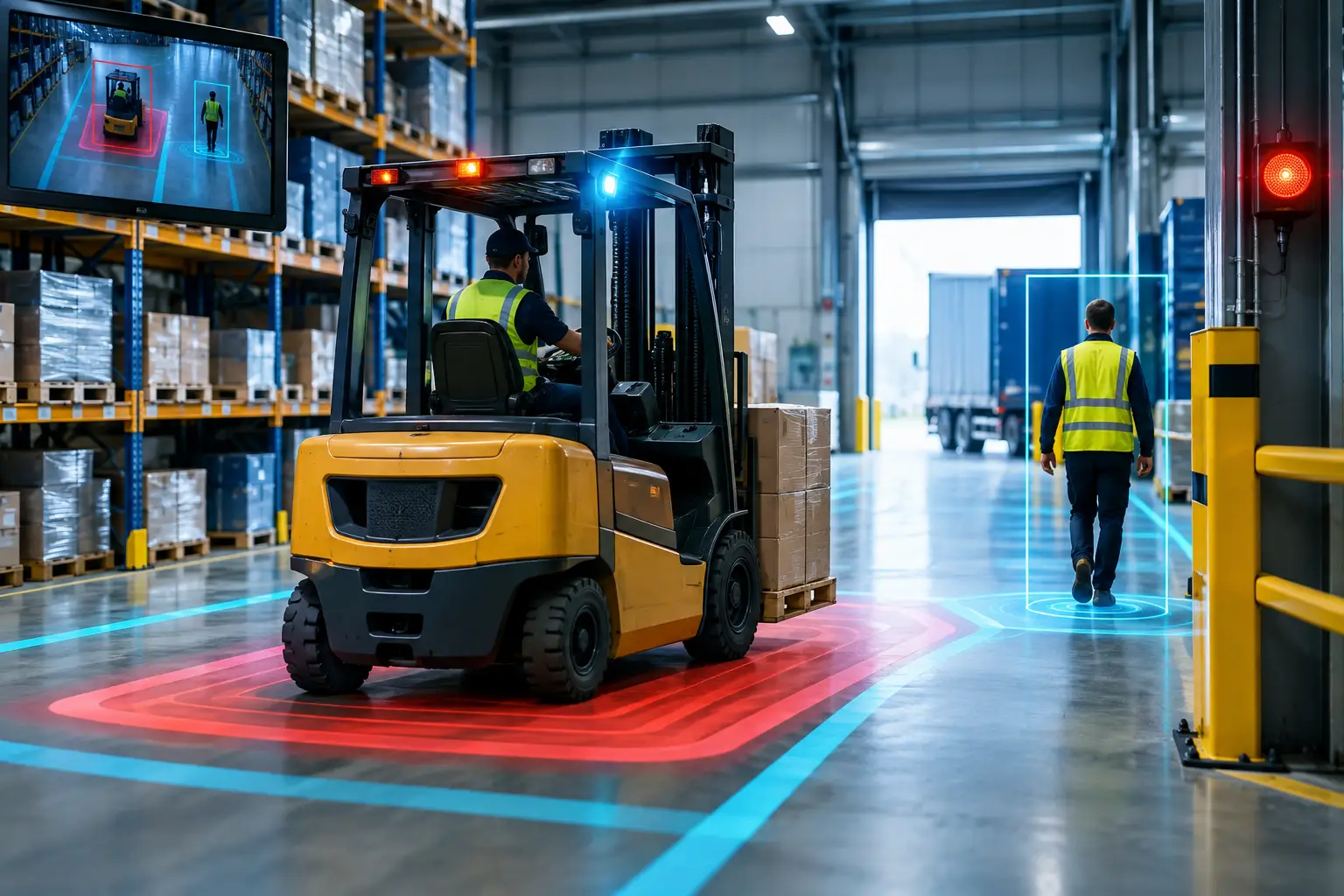
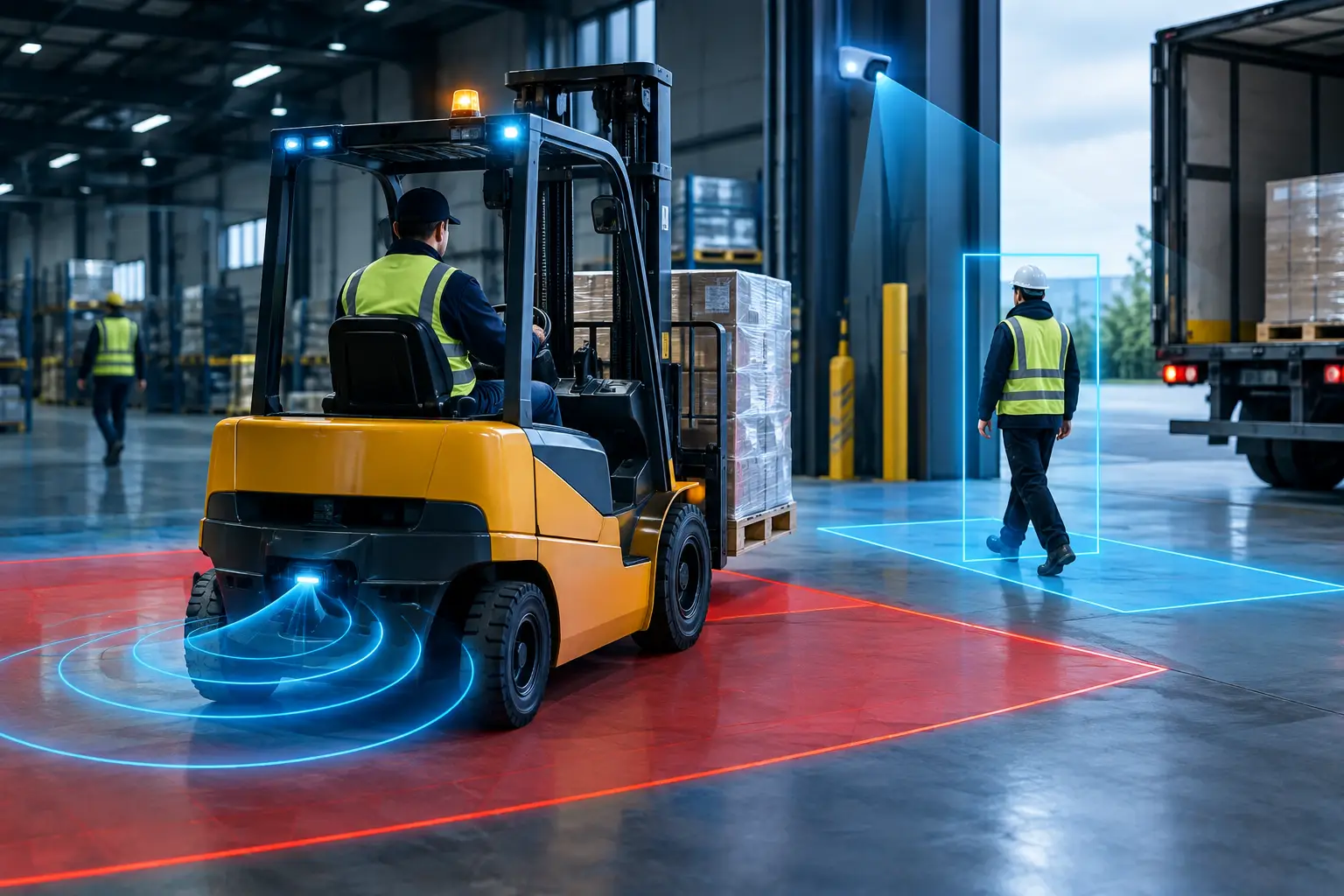
Proximity alerts are detection and warning controls. Depending on the technology, they can identify a tagged pedestrian, another vehicle, or an object within a defined detection zone. The system may activate visual and audible warnings, vibrate a wearable device, project a warning onto the floor, or trigger an intervention such as speed reduction. Their value is situational awareness, particularly where an operator’s view is restricted or pedestrian movements are unpredictable.
The distinction matters during risk assessment. A speed limiter manages how fast a vehicle can travel. A proximity system manages awareness of a specific conflict. One reduces severity and improves control. The other can provide an early warning when separation fails.
Where speed limiters deliver the strongest control
Speed is a contributing factor in many forklift incidents, but it is especially significant where visibility, stopping distance, or turning stability are constrained. A practical limiter strategy often uses different speed settings for different operating environments rather than imposing one low speed across an entire site.
In open travel lanes, a site may allow a higher controlled speed where pedestrian access is restricted and sightlines are clear. At crosswalks, rack ends, staging areas, battery charging approaches, and busy loading zones, automatic speed reduction can be more appropriate. The objective is not to slow every task unnecessarily. It is to prevent a forklift from entering a higher-risk zone at a speed that leaves too little margin for error.
Speed limiters are particularly useful because they do not depend on a moment-by-moment decision by the operator. An experienced operator may be attentive, but pallet loads, noise, congestion, fatigue, and schedule pressure can still affect judgment. A properly configured limiter applies the same control every time a vehicle enters the zone.
There are trade-offs. A blanket speed cap may cause operators to seek shortcuts, create bottlenecks, or encourage unsafe overtaking if traffic design is poor. It can also mask other hazards, such as blind corners or pedestrian access through vehicle-only routes. Limiters should therefore be configured around actual travel patterns, not selected as a generic setting.
Speed control is not only about collision force
Reduced speed also improves vehicle stability, protects racking and doors, and lowers the likelihood of load shift during turns. In a loading bay environment, controlled approach speeds can reduce damage to dock equipment and trailers. These operational gains matter because a forklift strike can lead to downtime, investigation, repairs, and disrupted throughput even when no injury occurs.
When proximity alerts add protection
Proximity alerts are most valuable where people and mobile equipment must work near one another despite reasonable segregation efforts. Examples include order-picking zones, production interfaces, staging areas, shared access points, and facilities with frequent contractor or visitor movement.
A warning system can address hazards that speed reduction alone cannot. A forklift traveling slowly may still strike a worker who steps out from behind stacked materials. Likewise, an operator backing with a large load may have limited rearward visibility even at a controlled speed. In these cases, an alert can give both parties an opportunity to stop, step away, or reassess the movement.
The technology should match the risk. Tag-based systems can be effective when the facility needs dependable identification of authorized pedestrians in forklift zones. Detection systems using sensors or Vision AI can support locations where people cannot reasonably be expected to carry tags, or where the facility needs to identify behavior and zone incursions. Audible and visual alerts are useful, but their effectiveness depends on how they are designed. A warning that is too frequent, too vague, or easily lost in a noisy operation will quickly become background noise.
This is why alert zoning and escalation are critical. A system may use a caution zone for early awareness and a danger zone for immediate action. The alarm should be meaningful, targeted, and tested under real operating conditions, including shift changes and peak activity periods.
Why alerts alone can create a false sense of security
A proximity alert does not physically stop a forklift unless it is integrated with a vehicle intervention function. Even then, detection limitations, system settings, equipment maintenance, and human response time must be considered. An alert is a layer of protection, not permission to work without separation.
Overreliance can also introduce alarm fatigue. If operators receive alerts every time they pass a pedestrian behind a barrier or work near a busy but controlled area, they may begin to ignore them. Facilities should avoid installing detection zones without first defining the event that requires action.
Ask a simple operational question: when the alarm activates, what should the operator and pedestrian do differently? If the answer is unclear, the control needs further design. The most effective systems support a documented traffic rule, such as stopping before entering a shared zone, waiting for a pedestrian to clear a crossing, or restricting access during vehicle movements.
The strongest approach is often a layered one
For high-risk forklift-pedestrian interfaces, the choice is rarely speed limiter or proximity alert. A layered approach is often more effective:
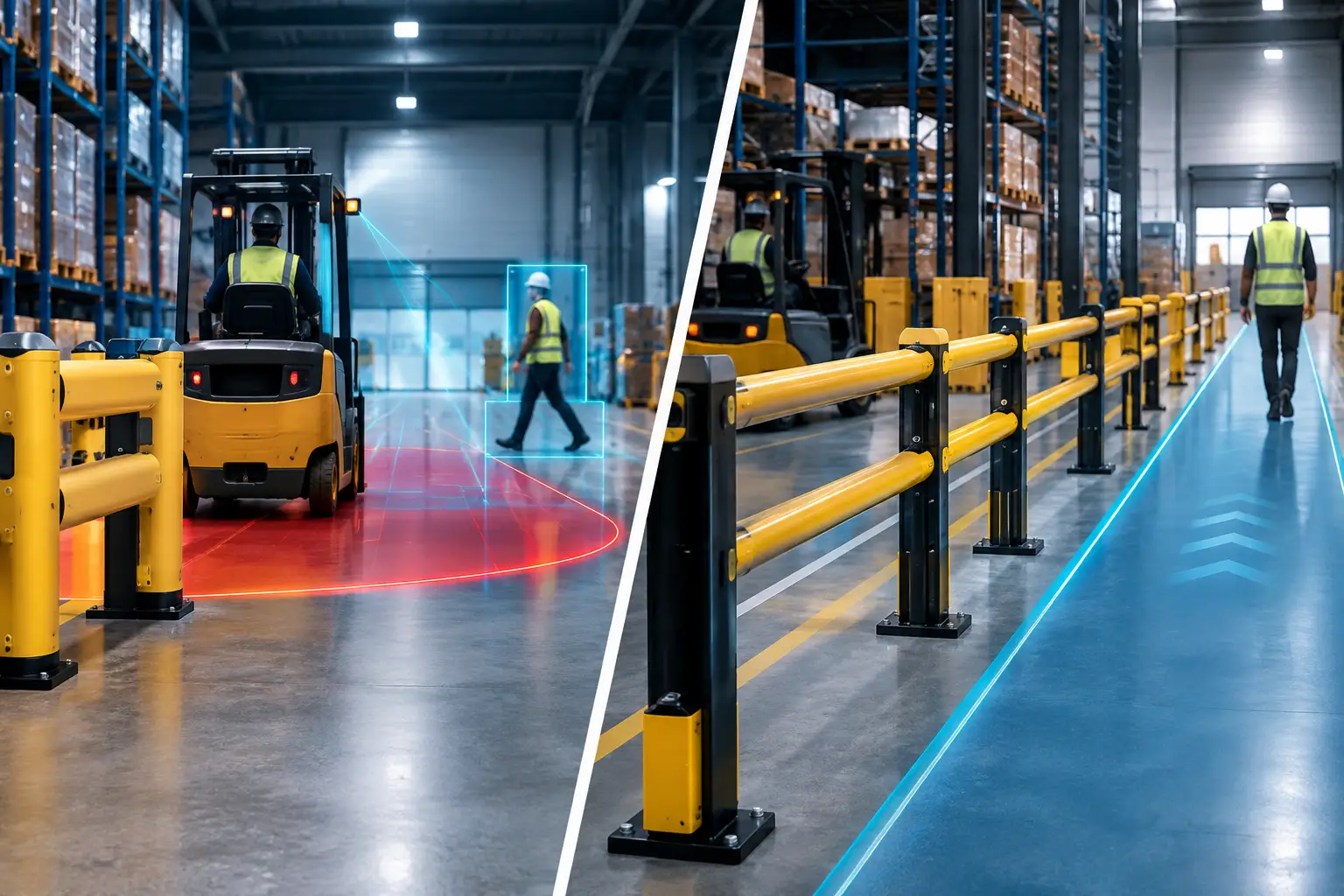
- Physical separation and designated routes reduce opportunities for interaction.
- Speed control limits the consequence when a conflict develops.
- Proximity detection provides active warning when people and vehicles come too close.
- Visual controls, such as floor projection and intersection warnings, improve awareness at known conflict points.
- Training, supervision, inspections, and maintenance keep the system effective over time.
Each layer addresses a different failure mode. Barriers cannot cover every operational interface. A speed limiter cannot detect a person stepping into a blind area. An alert cannot compensate for a vehicle route that forces pedestrians through loading traffic. Together, the controls create more time, distance, and visibility around the moment that matters most.
How to choose the right control for your facility
Start with incident history and near-miss data, but do not wait for an injury before acting. Observe vehicle routes across different shifts. Identify blind corners, reversing points, doorways, temporary staging areas, and locations where pedestrians routinely cross forklift paths. Pay close attention to where normal workarounds occur, because these are often where written traffic rules do not match real operations.
Then assess the nature of the risk. If excessive or inconsistent speed is the primary issue, zone-based speed limiting may deliver an immediate improvement. If the primary issue is poor visibility or unpredictable pedestrian exposure, a proximity warning system may be more appropriate. If the area combines restricted sightlines, high traffic density, and unavoidable shared movement, both controls should be considered alongside changes to layout and traffic flow.
Implementation details determine whether the investment performs. Speed settings should be validated against vehicle type, load conditions, aisle width, gradients, and stopping performance. Alert systems should be tested for detection range, false alarms, coverage around obstructions, and response behavior. Operators and pedestrians need practical instruction on what each signal means and what action is expected.
A competent safety technology partner can help translate the risk assessment into workable zone design, equipment configuration, installation, commissioning, and ongoing maintenance. The goal is not to add technology for its own sake. It is to create controls that fit the pace and realities of the operation.
Every worker deserves to return home safely every day. Where forklifts and pedestrians share space, the best decision is the one that gives people more time to see, react, and stay separated before a near miss becomes an accident.