A trailer moving even a few inches during loading can create a serious gap between the dock and trailer bed. Forklifts can lose support, loads can shift, and workers can be exposed to a fall or crush hazard. When assessing dock locks versus wheel chocks, the real question is not which device is more familiar. It is which control best addresses the vehicle movement risks at your specific loading bay.
Both solutions are intended to prevent trailer movement while goods are transferred. However, they work differently, depend on different human actions, and provide very different levels of control, visibility, and integration. For facilities with frequent forklift loading, high trailer turnover, or multiple dock positions, those differences have direct consequences for accident prevention and operational continuity.
Why Trailer Movement Is a Loading Bay Risk
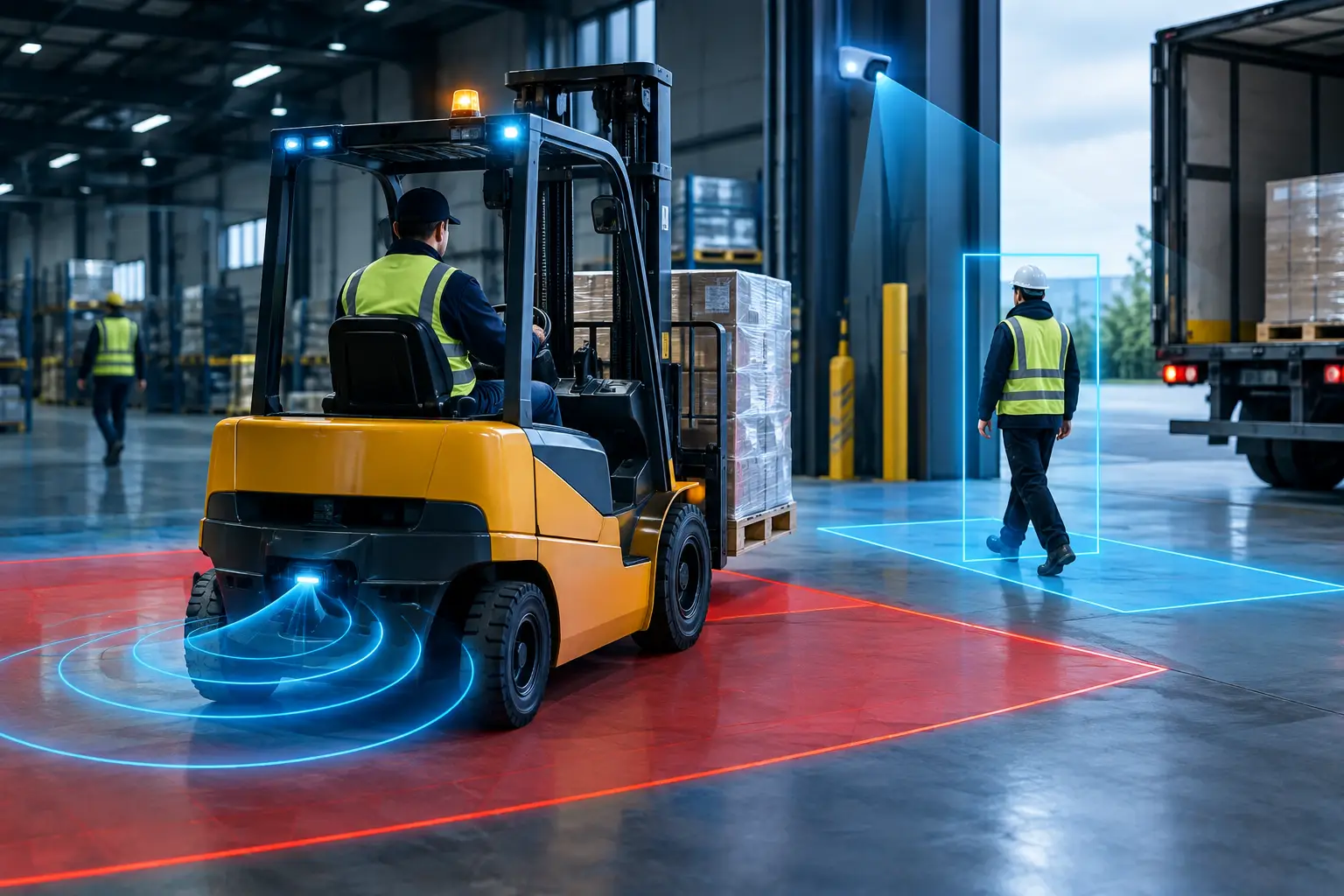
Loading docks are active interfaces between warehouse operations and yard traffic. A forklift operator may cross the dock leveler dozens of times during a loading cycle, often while carrying a pallet that limits forward visibility. Any unexpected trailer movement can change the slope or position of the leveler, create a gap at the dock face, or cause the trailer to pull away while equipment and personnel are still inside.
The risk is not limited to a driver leaving early. Trailer creep can occur as forklifts enter and exit, especially when loads are heavy, trailer floors are uneven, or the yard surface is wet or sloped. Air suspension systems, landing gear condition, trailer brake performance, and wheel condition can also affect stability.
An effective control should do more than place an obstacle in front of a wheel. It should support a clear, repeatable process: secure the vehicle, verify that it is secure, control loading activity, and prevent release until the dock is clear.
Dock Locks Versus Wheel Chocks: The Core Difference
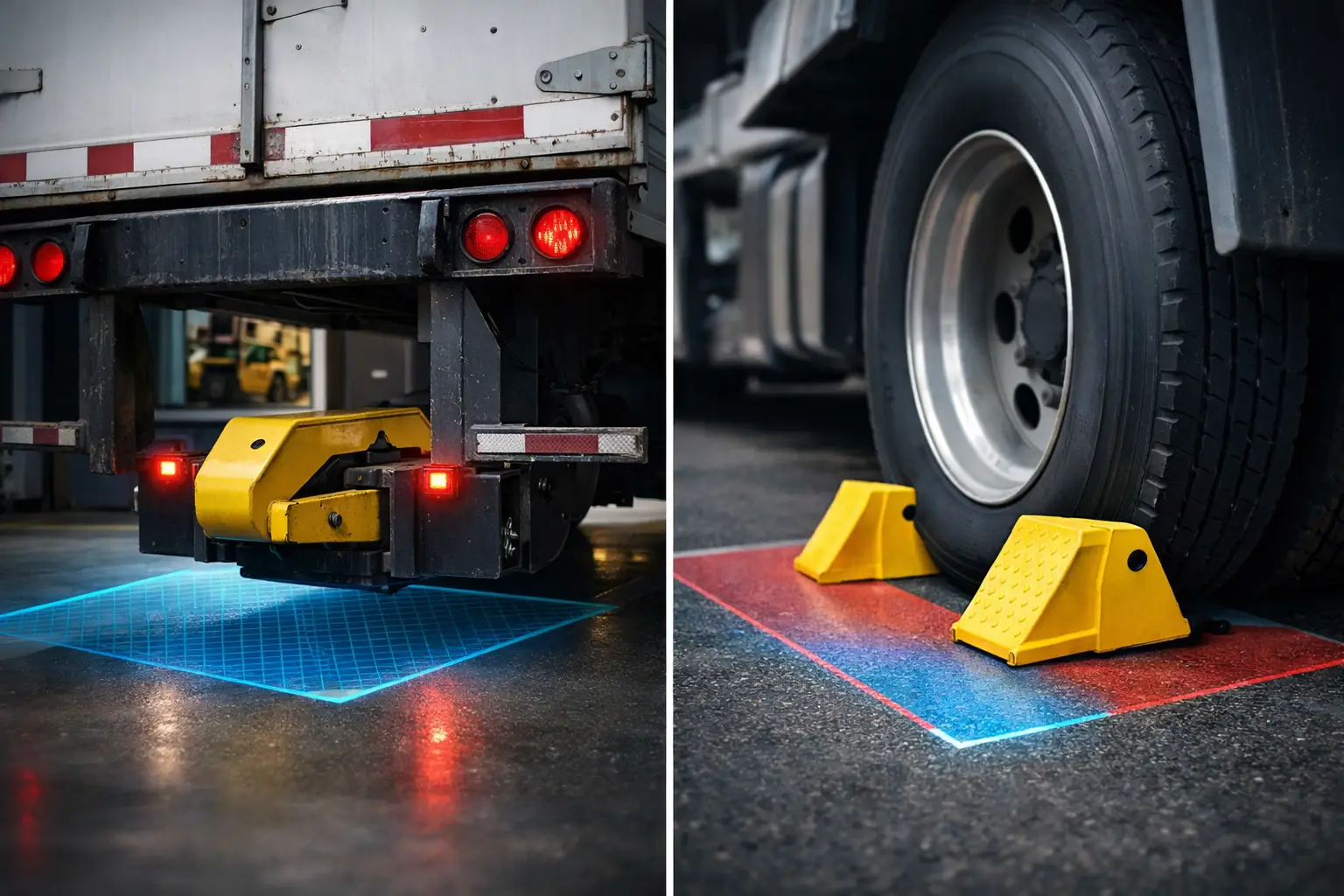
A dock lock, also called a vehicle restraint, is a mechanical or powered system installed at the dock face. It typically engages the trailer’s rear impact guard, commonly known as the ICC bar, to help prevent the trailer from moving away from the dock. Many systems include exterior and interior lights that communicate restraint status to the driver and dock team.
Wheel chocks are physical blocks placed against trailer tires to resist movement. They are generally portable, simple to deploy, and widely understood by yard personnel. Their effectiveness depends on proper placement, adequate contact with the tire, surface conditions, and consistent use by the people involved.
The distinction matters because a dock lock is typically an engineered, dock-mounted control with visible status indication. Wheel chocks are a manual control that relies heavily on procedural discipline. Neither should be selected based on price alone, because the cost of a loading bay incident can include injury, equipment damage, downtime, product loss, and investigation time.
Where Dock Locks Provide Stronger Control
Dock locks are particularly suited to operations where trailers are loaded or unloaded repeatedly throughout the day. Once engaged, the restraint provides a positive control at the rear of the trailer and can make the vehicle’s secured status clear to both the driver and warehouse team.
Better communication between yard and dock teams
One of the most valuable features of a dock lock system is its ability to communicate status. Exterior indicator lights can show the driver whether it is safe to depart. Interior lights can show forklift operators whether the trailer is restrained. This reduces dependence on verbal calls, hand signals, or assumptions between people working on opposite sides of the dock door.
In more controlled installations, the restraint can be integrated with dock doors, levelers, warning alarms, or loading bay interlocks. For example, dock activity can be restricted until the vehicle is properly secured. This helps turn safety expectations into a physical operating sequence rather than a rule that can be missed during a busy shift.
Reduced dependence on manual placement
Wheel chocks must be retrieved, positioned correctly, and removed at the right time. A dock lock does not eliminate the need for training or inspection, but it reduces the number of manual steps required to secure the trailer. That is significant in facilities managing tight dispatch schedules, multiple dock doors, and changing teams.
A more consistent control for forklift loading
Forklift traffic creates repeated horizontal forces at the dock interface. A vehicle restraint is designed specifically to resist trailer separation from the loading bay. When selected, installed, and maintained correctly, it can provide a more consistent control than a process that depends on chocks being placed correctly every time.
Limitations of Dock Locks to Plan For
A dock lock is not a universal answer for every trailer or loading configuration. Most hook-style restraints require a compatible, sound rear impact guard at an appropriate height. Damaged guards, unusual trailer designs, lift-gate trailers, and certain specialized vehicles may not engage reliably.
This is why a dock survey matters before specifying equipment. Dock height, approach grade, trailer mix, impact guard geometry, door layout, and the condition of the dock face all affect whether a conventional vehicle restraint will perform as intended. In mixed fleets, a facility may need an alternative restraint method or a documented procedure for non-compatible vehicles.
Dock locks also require installation, inspection, and maintenance. Mechanical components, sensors, lights, and control panels must remain functional. A restraint that is bypassed because its status signal is unclear or its hook is not maintained creates a false sense of security. Preventive maintenance and operator training are part of the control, not optional add-ons.
When Wheel Chocks May Be Appropriate
Wheel chocks can be appropriate for lower-volume docks, temporary loading locations, specific vehicle types that cannot be restrained by a dock lock, or situations where a fixed restraint system is not practical. They are also useful as an additional control in certain operating procedures, provided their role is clear.
Their strengths are simplicity, portability, and low initial cost. However, their limitations need to be assessed honestly. Chocks can be misplaced, set on the wrong side of the tire, positioned on poor surfaces, or removed before loading is complete. They may also be less effective where wheel sizes vary significantly, the ground is uneven, or the trailer is subject to substantial loading forces.
The key challenge is verification. A forklift operator inside the trailer may not know whether chocks are in place or whether they have been moved. Unlike a vehicle restraint with visible indicators, a chock-based process often requires supervisors and operators to rely on manual checks and communication.
Selecting the Right Control for Your Dock
The right choice should follow a loading bay risk assessment rather than a one-size-fits-all purchasing decision. Consider the operating conditions that create movement risk and the reliability of the controls currently in place.
Key factors include:
- Trailer types, rear impact guard compatibility, and frequency of non-standard vehicles
- Number of loading cycles, forklift traffic, and typical load weights
- Dock height, yard slope, surface condition, and weather exposure
- Driver behavior, contractor access, and shift-change communication
- Whether visual warnings, interlocks, and dock equipment integration are needed
For a high-throughput distribution center, a dock lock system with clear inside and outside status signaling will often provide a stronger primary control. For a smaller operation with occasional deliveries or incompatible trailers, properly specified wheel chocks may remain necessary. Many sites benefit from a combined approach: vehicle restraints for compatible trailers and a defined, supervised method for exceptions.
Make the Loading Sequence Visible and Repeatable
The best equipment cannot compensate for an unclear process. Every loading bay should have a defined sequence that employees, drivers, and contractors can follow consistently. The vehicle arrives, is positioned, secured, verified, loaded or unloaded, checked clear, and released. Each stage should have an accountable person and an obvious signal that the next stage can begin.
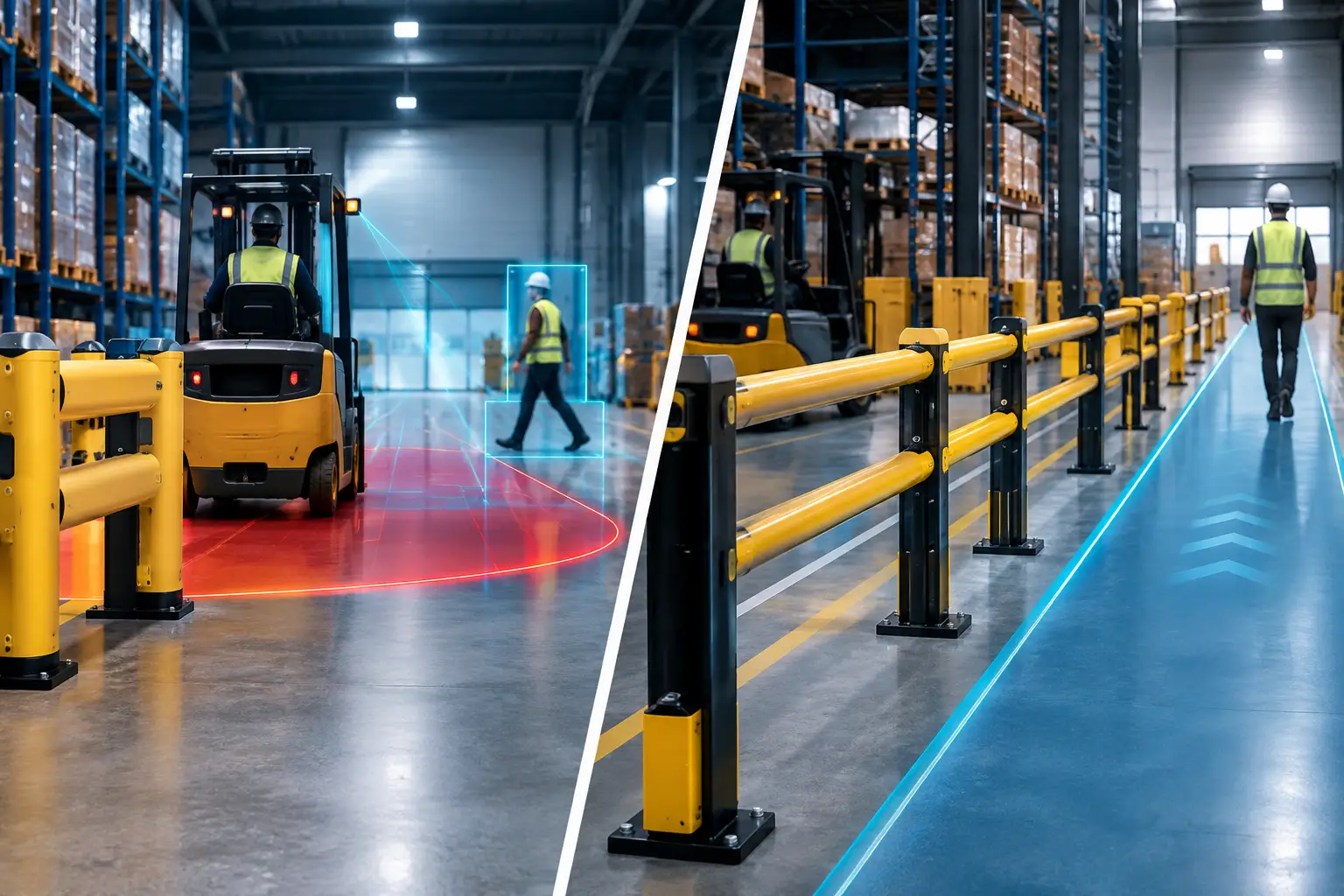
Visual alerts, audible warnings, dock status lights, and equipment interlocks can strengthen this sequence by making unsafe conditions harder to ignore. These controls are especially useful where drivers do not share the same language, where third-party carriers visit frequently, or where dock teams work under time pressure.
Training should focus on the real failure modes: early departure, trailer creep, incompatible impact guards, damaged restraint components, missing chocks, and attempts to enter an unsecured trailer. Supervisors should also review near misses. A trailer that shifts without causing injury is still a warning that the control system needs attention.
A loading dock should never depend on assumption. Whether your operation uses dock locks, wheel chocks, or both, the objective is the same: give every forklift operator and dock worker clear confirmation that the trailer will remain where it should until the job is finished. Every worker deserves to return home safely every day.